Your Legal Rights If Police Use Pellet Guns During Protests in India
Quick Answer
When police use pellet guns during a protest, the injuries can be severe and permanent. Victims in Uttar Pradesh often ask: What legal remedies and compensation are available if I or a family member is injured by pellet guns used by police during a protest?
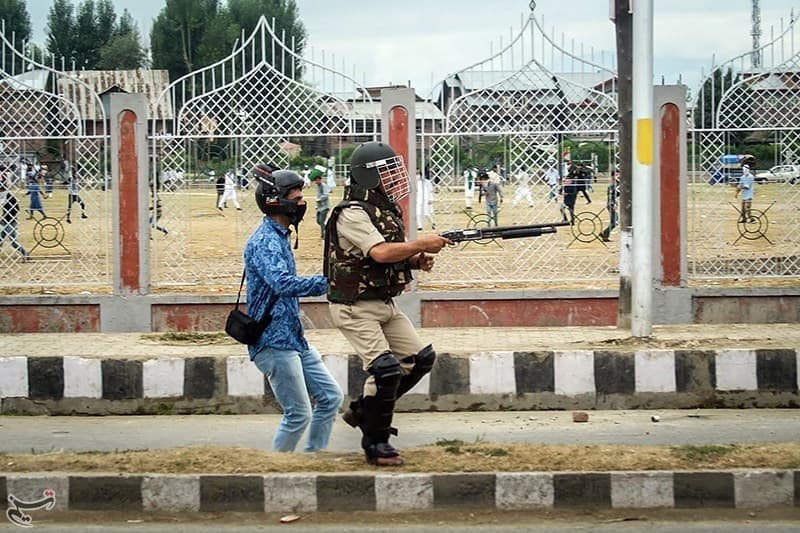
When police use pellet guns during a protest, the injuries can be severe and permanent. Victims in Uttar Pradesh often ask: What legal remedies and compensation are available if I or a family member is injured by pellet guns used by police during a protest? This article explains your rights under the Constitution and the new criminal codes, and the practical steps you can take from Lucknow or anywhere in UP.
While no specific Supreme Court or Allahabad High Court judgment on pellet guns exists, the legal framework of Article 21 (right to life), Article 19(1)(a) and (b) (freedom of speech and peaceful assembly), and the provisions of the Bharatiya Nyaya Sanhita, 2023 (BNS) and Bharatiya Nagarik Suraksha Sanhita, 2023 (BNSS) provide strong remedies. You can file a criminal complaint, seek compensation from the State, or approach the Allahabad High Court for a writ petition. For more on protest-related arrests, read our article on legal rights during protest arrest.
In pellet-injury matters the evidence disappears fastest, so the first thing I press families in Uttar Pradesh to do is secure the government hospital's original medico-legal report, the pellet-extraction and X-ray records, and photographs of the wounds, because once a person is discharged the causal link to police firing becomes far harder to prove. My experience is that a writ petition for compensation before the Lucknow Bench of the Allahabad High Court, coupled with a demand for a magisterial inquiry into whether the use of force was proportionate, moves much faster than waiting for the police to register an FIR against their own personnel, which in these cases they almost never do voluntarily. My candid opinion is that compensation here flows from the State's constitutional liability for excessive force, not from any charity, and courts respond best when you frame it as a violation of the victim's right to life rather than as an ordinary tort claim.
Table of Contents
Need Immediate Legal Help?
If you're facing a legal emergency in Lucknow, don't wait. Contact experienced criminal lawyer Advocate Onkar Pandey for immediate assistance.
What constitutes unlawful use of pellet guns?
Police use of pellet guns is governed by the principle of proportionality. The Supreme Court in Amit Sahni v. Commissioner of Police (2020) 10 SCC 439 held that protest regulation must be lawful and proportionate to the threat to public order. Pellet guns, which cause serious injury, should only be used as a last resort when non-lethal methods fail.
Under the Bharatiya Nyaya Sanhita, 2023, several sections apply to excessive force during protests:
| BNS Section | Offence | Maximum Punishment |
|---|---|---|
| Section 115 | Voluntarily causing hurt | Up to 1 year imprisonment or fine |
| Section 117 | Voluntarily causing grievous hurt | Up to 7 years imprisonment and fine |
| Section 121 | Hurt by dangerous weapons or means | Up to 3 years imprisonment or fine |
| Section 123 | Grievous hurt by dangerous weapons or means | Up to 10 years imprisonment and fine |
| Section 124 | Act endangering life or personal safety of others | Up to 5 years imprisonment or fine |
| Section 127 | Wrongful restraint | Up to 1 month imprisonment or fine |
| Section 129 | Wrongful confinement | Up to 1 year imprisonment or fine |
If police use pellet guns without justification, they may be liable under these provisions. The BNSS, 2023 also lays down arrest procedures (Sections 35-37, 41) that must be followed even during protests. Non-compliance can be challenged in court. If a false counter-FIR is filed against you, you may need to file a quashing petition under Section 528 BNSS; learn more about our FIR quashing services.
Criminal remedies: Filing an FIR and complaint
If you or a family member is injured by pellet gun fire, the first step is to file a First Information Report (FIR) at the local police station. The police must register the FIR under the relevant BNS sections. If the police refuse to register, you can approach the Superintendent of Police or the Chief Judicial Magistrate (CJM) Lucknow under Section 175 BNSS (old Section 156(3) CrPC).
- Collect medical evidence and photographs of injuries immediately.
- File an FIR at the local police station under relevant BNS sections.
- If FIR is refused, approach the Superintendent of Police or the CJM Court under Section 175 BNSS.
- Alternatively, file a private criminal complaint before the CJM or Sessions Court.
In many cases, the police may not cooperate. You can then file a private criminal complaint before the CJM Court, Lucknow, or the Sessions Court, Lucknow for offences triable by the Sessions Court. The court can order an investigation under Section 175 BNSS.
For serious injuries, the case may be investigated by the Crime Branch or CID. You can also seek anticipatory bail under Section 482 BNSS (old Section 438 CrPC) if you fear arrest – though in protest cases, the victim is usually the complainant, not the accused. For more on arrest rights, see our article on arrest rights for protesters.
The timeline for filing a complaint is crucial. Under the Limitation Act, 1963, the period for filing a criminal complaint for hurt is one year from the date of incident. For grievous hurt, it is three years. Medical evidence and photographs are essential.
Compensation from the State: Constitutional and civil remedies
Beyond criminal remedies, you can claim monetary compensation from the State for violating your fundamental rights. The Supreme Court in Rudul Sah v. State of Bihar (1983) 4 SCC 141 established the principle of constitutional tort – the State must pay compensation for illegal acts that violate Article 21. Similarly, D.K. Basu v. State of West Bengal (1997) 1 SCC 416 laid down guidelines for police accountability and compensation for custodial violence, which by analogy apply to excessive force during protests.
To claim compensation, you can file a writ petition under Article 226 before the Allahabad High Court (Lucknow Bench) or the Supreme Court under Article 32. The petition must state:
- Details of the incident (date, place, police unit involved)
- Medical reports and evidence of injury
- How the force was disproportionate
- Violation of Article 19(1)(a)/(b) and Article 21
- Specific relief sought (compensation amount, prosecution of officers)
The quantum of compensation depends on the severity of injury. The Supreme Court has awarded amounts ranging from ₹1 lakh to ₹10 lakh for serious injuries. In cases of permanent disability or death, higher compensation is granted. The court may also order the State to take disciplinary action against the police officers involved.
Civil suits for damages under the Law of Torts are also possible, but they are time-consuming. The writ route is faster and more effective. For more on filing a writ, contact a Lucknow High Court lawyer.
Legal Consultation
Talk directly to Advocate Onkar Pandey
Explain your matter over a call or WhatsApp. If you take the case forward, the consultation fee adjusts into your overall fee, so there is no separate charge to begin.
Role of the Allahabad High Court Lucknow Bench in protest cases
The Allahabad High Court (Lucknow Bench) has jurisdiction over police actions in the Lucknow division and across Uttar Pradesh. You can file a writ of habeas corpus if someone is illegally detained after a protest, or a writ of mandamus to compel the police to register an FIR or investigate. The court can also issue interim orders to stop further use of force.
| Type of Writ | Purpose | Typical Timeframe |
|---|---|---|
| Habeas Corpus | Challenge illegal detention | Heard within 2-3 days |
| Mandamus | Compel police to register FIR or investigate | Listed within 2-3 weeks |
| Certiorari | Quash illegal orders | Listed within 2-3 weeks |
In many protest-related cases, the court has directed the State to provide medical treatment and pay interim compensation. The court's inherent powers under Section 528 BNSS (old Section 482 CrPC) can be used to quash false FIRs or to ensure justice. However, pellet-gun-specific orders are rare; the court applies general principles of proportionality and fundamental rights.
If you are arrested during a protest, you can apply for bail under the relevant BNSS provisions. For bailable offences, bail is a right under Section 480 BNSS. For non-bailable offences, the High Court can grant bail under Section 484 BNSS (old Section 439 CrPC). For more on bail, see our bail and anticipatory bail services.
It is advisable to engage a lawyer who practices at the Allahabad High Court Lucknow Bench to file the petition. The court typically lists such matters within 2-3 weeks of filing. For urgent cases, an interim application can be heard within 2-3 days. Fees for filing a writ petition range from ₹15,000 to ₹30,000 depending on the complexity.
Practitioner's Note from the Lucknow Bench
- File the petition at the Lucknow Bench if the incident occurred in Lucknow or nearby districts (Barabanki, Hardoi, Unnao).
- Carry multiple copies of the medical report, FIR copy (if any), and supporting affidavit.
- Expect listing within 2-3 weeks; interim applications can be heard in 2-3 days.
- Fee range: ₹15,000 to ₹30,000 depending on complexity.
In our practice before the Lucknow Bench, such applications are typically listed within 2-3 weeks of filing. Urgent interim applications can be heard within 2-3 days. The court expects the petitioner to have filed a prior representation to the police or the District Magistrate before approaching the High Court. Judges often ask for medical evidence, photographs, and the names of the officers involved. Compensation claims are usually heard in the first instance by a Division Bench dealing with public interest litigation. We recommend filing the petition at the Lucknow Bench if the incident occurred in the Lucknow region or nearby districts. For incidents in other parts of UP, the Allahabad main bench may be more appropriate.
About the Author
Advocate Onkar Pandey is a practicing lawyer at the Allahabad High Court Lucknow Bench with over 25 years of experience in criminal law, bail matters, FIR quashing, and family law. Enrolled with the Bar Council of Uttar Pradesh (No. UP/4825/1999), he provides expert legal guidance to clients across Uttar Pradesh from his chamber at A-406, High Court, Lucknow. For a consultation on pellet gun injury cases, contact Advocate Onkar Pandey at +91 98392 71553.
Frequently Asked Questions
Can I file an FIR if police use pellet guns against me during a protest?+
Yes, you can file an FIR under the relevant BNS sections such as 115 (hurt), 117 (grievous hurt), or 121 (hurt by dangerous weapons). If the police refuse to register, approach the Superintendent of Police or the Chief Judicial Magistrate (CJM) Lucknow under Section 175 BNSS.
What compensation can I claim for pellet gun injuries?+
Based on the Supreme Court's rulings in Rudul Sah v. State of Bihar and D.K. Basu v. State of West Bengal, you can claim compensation for violation of Article 21. The amount depends on injury severity, typically ranging from ₹1 lakh to ₹10 lakh. File a writ petition under Article 226 before the Allahabad High Court Lucknow Bench.
Is there a time limit to file a criminal complaint for pellet gun injury?+
Under the Limitation Act, 1963, the period to file a criminal complaint for hurt is one year from the date of incident. For grievous hurt, it is three years. Medical evidence is crucial to prove the nature of injury.
Can I get anticipatory bail if I am accused of rioting during a protest where pellet guns were used?+
Yes, you can apply for anticipatory bail under Section 482 BNSS (old Section 438 CrPC) before the Sessions Court or the High Court. The court will consider the proportionality of the police action. For more details, see our article on arrest rights for protesters.
Which court should I approach for compensation in Lucknow?+
You can file a writ petition under Article 226 before the Allahabad High Court Lucknow Bench. Alternatively, a civil suit for damages can be filed in the District Court Lucknow, but the writ route is faster. The High Court typically lists such matters within 2-3 weeks.
What evidence do I need to prove excessive force by police?+
Collect medical reports, photographs of injuries, video footage, witness statements, and the FIR (if any). Also note the names or badge numbers of police officers involved. The court may also consider the number of pellet gun shots fired and the area of the body hit.
Can the Allahabad High Court order the police to stop using pellet guns?+
The High Court can issue a writ of mandamus directing the police to follow guidelines on use of force. However, specific bans on pellet guns are rare. The court can order the State to adopt less lethal alternatives and ensure proportionality.
Related Guides
Related Services
Get Expert Legal Advice in Lucknow
20+ years experience in criminal law at Lucknow High Court. Available 24/7 for emergencies.
Disclaimer: This article is for general information purposes only and does not constitute legal advice. Every case is unique and requires specific legal analysis. For advice specific to your situation, please consult Advocate Onkar Pandey or another qualified attorney in Lucknow.