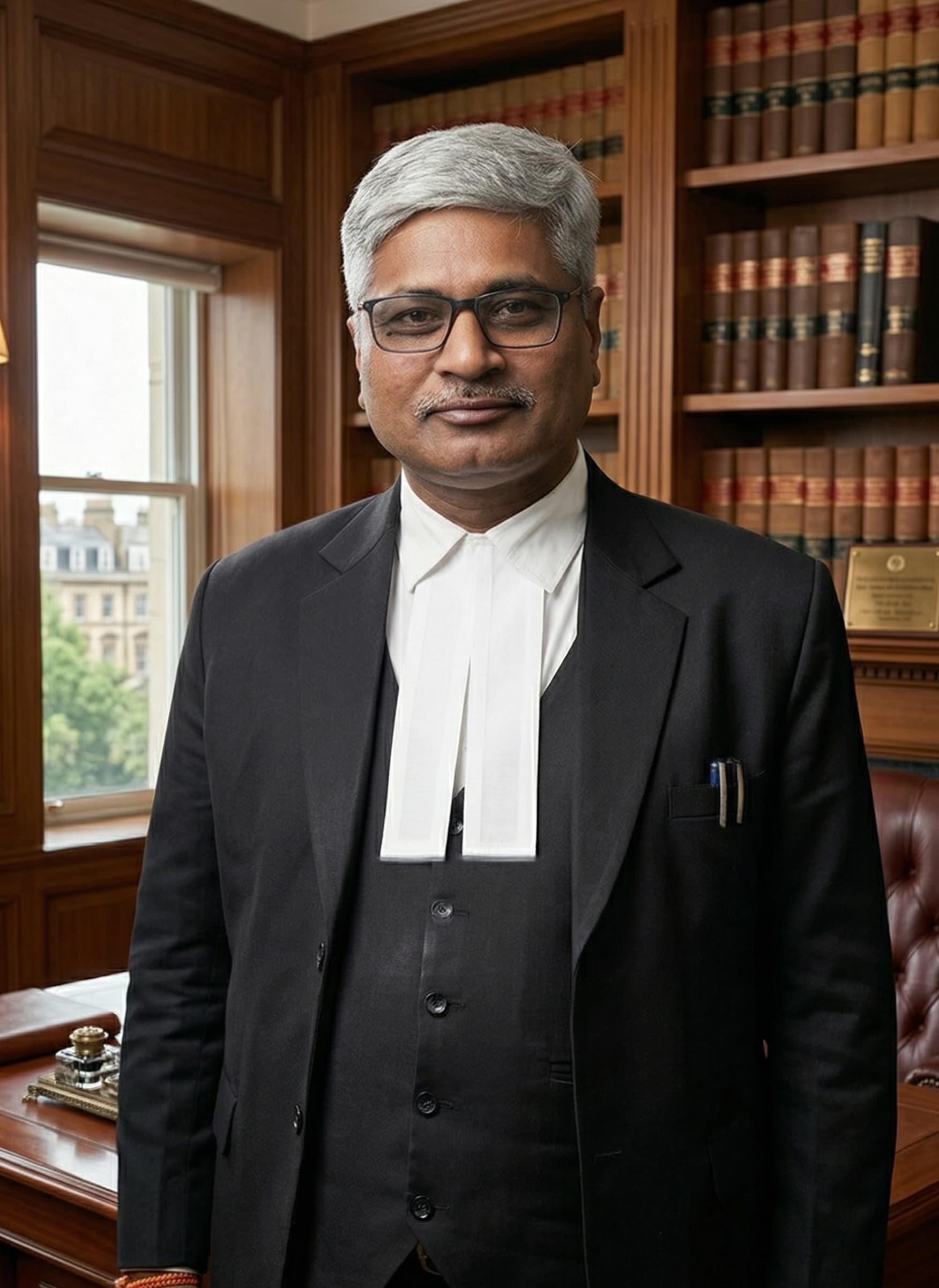
Speak directly with Adv. Onkar Pandey. Get an honest assessment and clear advice on your options, no jargon, no pressure.
"The earlier you seek legal advice, the more we can do for you. Call before it's too late."
500+ Cases24/7 Bail HelpDirect Advocate AccessLucknow High Court
Adv. Onkar Pandey
Bar Council No. UP 4825-1999
Overview
Service law matters involve complex interplay of service rules, administrative law, and constitutional rights. Advocate Onkar Pandey handles service and employment disputes through writ petitions at the Lucknow High Court, representing government employees, teachers, police personnel, and private sector employees in various service-related matters.
Our service law practice draws on extensive High Court experience to resolve employment issues including: wrongful termination and dismissal, promotion and seniority disputes, pay fixation and increment issues, pension and retirement benefits, disciplinary proceedings and departmental inquiries, transfer and posting grievances, compassionate appointment, and regularization of services.
We file writ petitions under Article 226 of the Constitution challenging illegal orders, represent clients in departmental proceedings, and handle appeals before appellate authorities. Our understanding of service law precedents and UP service rules enables us to craft effective legal strategies. Whether you're facing unjust disciplinary action or fighting for rightful promotion, we provide robust legal representation to protect your employment rights.
Why Choose Us for Service & Job Disputes
Expert knowledge of service rules and employment law
Strong writ petition drafting and advocacy
Representation in departmental inquiries
Appeals and review petitions
Quick interim relief in urgent matters
Coordination with service departments
Why Clients Choose Adv. Onkar Pandey
You Speak Directly to the Advocate. Every Time.
20+ years at Allahabad High Court, Lucknow Bench. When you call, Adv. Onkar Pandey picks up, not a junior, not a clerk. He reviews your case personally, explains your options in plain Hindi or English, and handles every hearing himself.
“I would like to express my sincere appreciation for Advocate Onkar Pandey for providing excellent legal services and professional guidance. Their knowledge, dedication, and supportive approach helped resolve my matter efficiently.”
N
Naveen Jha
Client
“I had a good experience with Adv. Onkar Pandey. He was polite, helpful, and explained everything patiently. Really appreciated his support and the way he handled things smoothly.”
N
Nandita Verma
Local Guide
“When I was cheated and helpless, I went to Sh. Onkar Pandey sir. He guided me in a very honest and clear way. I think he is the only honest person in this profession. Even he blessed me like his own child.”
C
Chandan
Client
“Pandeyji is our go to person when it comes to seeking legal advice. One thing that you can be sure of while reaching out to Pandeyji is that you will always get best legal opinion.”
A
Arpit
Client
Frequently Asked Questions
Common questions about service & job disputes in Lucknow
What is a service law writ petition?
A writ petition under Article 226 is filed in High Court challenging government or statutory authority orders related to employment. This includes challenging termination, suspension, denial of promotion, pay fixation errors, or any arbitrary action by employer. The High Court can quash illegal orders and direct authorities to take corrective action.
Can you help with wrongful termination?
Yes, we handle wrongful termination cases by filing writ petitions or appeals depending on the case. We examine whether termination followed proper procedure, whether principles of natural justice were followed, and whether reasons are valid. If termination is illegal, we seek reinstatement with back wages and continuity of service.
How do promotion disputes work?
Promotion disputes arise from seniority issues, bypassing in promotion panels, or non-application of proper promotion criteria. We file writ petitions challenging such actions, submitting evidence of superior claims and highlighting procedural violations. We also handle cases involving reservation policy in promotions.
What about pension and retirement issues?
We handle pension-related matters including: denial of pension, wrong calculation of pension, delay in pension release, commutation issues, and family pension disputes. We file representations, appeals, and writ petitions to ensure you receive correct pension benefits after dedicated service.
Can a government employee get a stay on suspension from Allahabad High Court?
Yes. A government employee who has been placed under suspension can file a writ petition under Article 226 of the Constitution at the Allahabad High Court Lucknow Bench challenging the suspension order and seeking an interim stay on it. The grounds for challenging a suspension are: non-adherence to the procedural requirements for suspension under the relevant service rules (e.g., UP Government Servants (Discipline and Appeal) Rules 1999 or Central Civil Services Rules), suspension that is disproportionate to the alleged misconduct, suspension after an inordinate delay in initiating departmental proceedings, or suspension as a punitive measure before any charge sheet is issued. Courts have consistently held that suspension pending inquiry is not a punishment but must be in the genuine interest of the inquiry, if it is punitive in effect or used as harassment, the High Court will intervene. An interim stay from the Lucknow Bench effectively restores the employee to duty pending the writ petition.
What is the time limit to challenge a dismissal order in UP?
The time limit to challenge a dismissal order depends on the applicable service rules and the forum chosen. For state government employees under the UP Government Servants (Discipline and Appeal) Rules, a departmental appeal must typically be filed within 45 days of the dismissal order. For central government employees, the CCS (CCA) Rules provide similar timelines. For writ petitions at the Allahabad High Court Lucknow Bench, the limitation is not fixed by statute but courts generally require petitions to be filed within 3 years of the impugned order under the applicable limitation principles, however, delay requires explanation and causes courts to be less sympathetic. The most important advice: challenge a dismissal order as soon as possible. Delay weakens your case and courts regularly refuse relief to employees who wait years before challenging illegal dismissal orders.
Is CAT (Central Administrative Tribunal) mandatory before going to High Court?
For central government employees, the Central Administrative Tribunal (CAT) is generally the mandatory first forum for service matter disputes under the Administrative Tribunals Act 1985. A central government employee must exhaust CAT remedies before approaching the High Court, the High Court will not directly entertain a writ petition on a service matter that falls within CAT's jurisdiction. For UP state government employees, there is no such mandatory CAT requirement, writ petitions go directly to the Allahabad High Court Lucknow Bench. We handle both: CAT Lucknow Bench cases for central government employees, and direct High Court writ petitions for UP state government employees, teachers, police personnel, and other state service employees. If the CAT decides against you, the High Court jurisdiction under Article 226/227 is available to challenge the CAT order itself.
Reach Advocate Onkar Pandey Directly
Available 24/7 for bail emergencies. All lines are active.