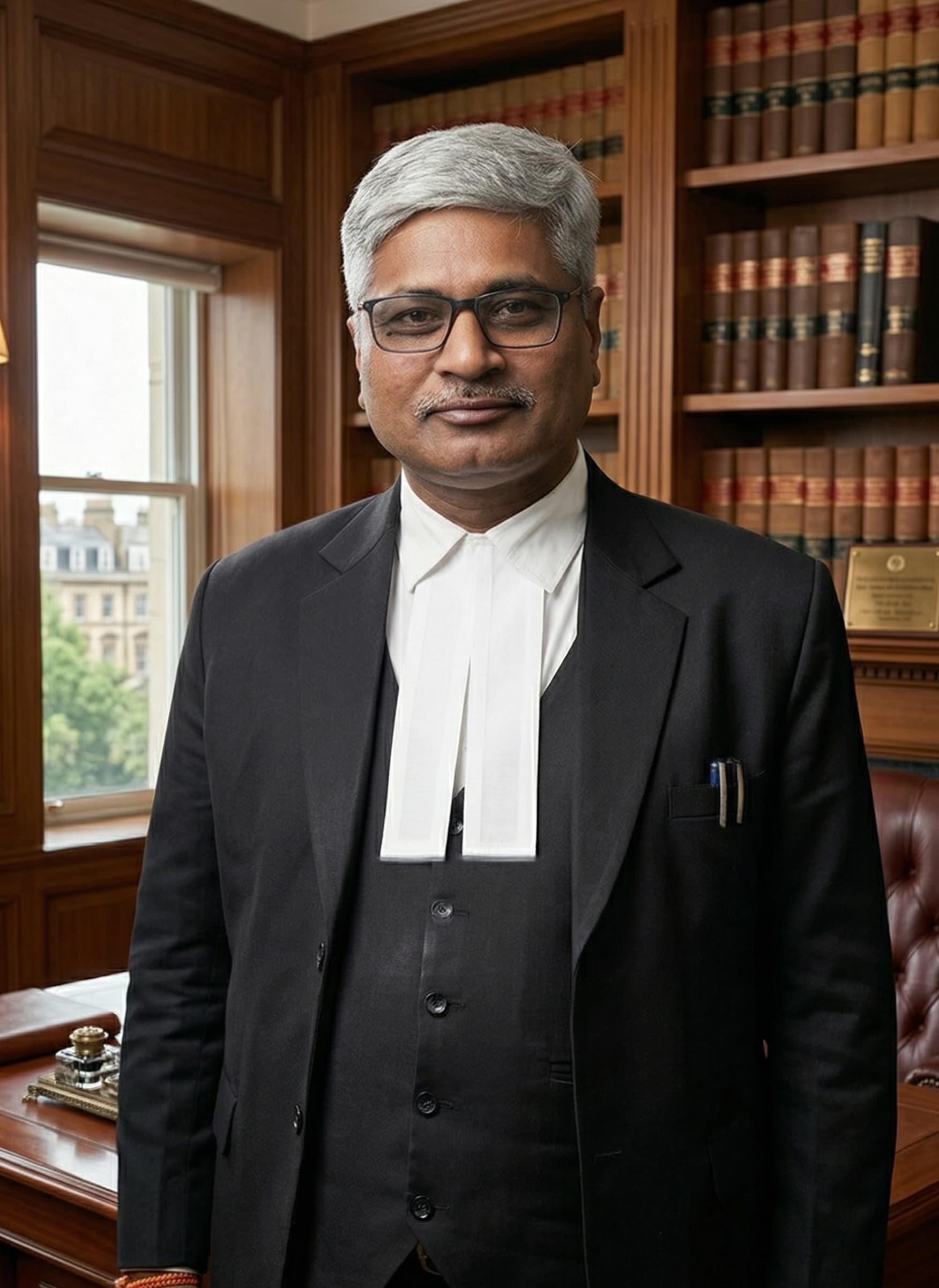
Speak directly with Adv. Onkar Pandey. Get an honest assessment and clear advice on your options, no jargon, no pressure.
"The earlier you seek legal advice, the more we can do for you. Call before it's too late."
500+ Cases24/7 Bail HelpDirect Advocate AccessLucknow High Court
Adv. Onkar Pandey
Bar Council No. UP 4825-1999
Overview
Family law matters require sensitivity, confidentiality, and expert legal knowledge. Advocate Onkar Pandey provides compassionate yet effective representation in divorce, maintenance, child custody, and domestic violence cases at the Lucknow Bench family courts. We understand the emotional complexity of family disputes and provide supportive legal guidance throughout the process.
Our family law practice covers divorce (mutual consent and contested), judicial separation, maintenance (wife and children), child custody and visitation rights, domestic violence protection orders, restitution of conjugal rights, and annulment of marriage. We handle cases under Hindu Marriage Act, Special Marriage Act, and personal laws applicable to different communities.
We represent both husbands and wives in matrimonial disputes, always prioritizing the best interests of children involved. Our approach balances aggressive advocacy with mediation and settlement efforts. Many family disputes benefit from amicable resolution, and we facilitate negotiations while protecting your legal rights. When court proceedings are necessary, we provide strong representation backed by thorough case preparation.
Why Choose Us for Family Law & Divorce
Sensitive handling of personal matters
Complete confidentiality maintained
Expert knowledge of matrimonial laws
Experience in both mediation and litigation
Child-focused approach in custody matters
Quick response to urgent protection needs
Why Clients Choose Adv. Onkar Pandey
You Speak Directly to the Advocate. Every Time.
20+ years at Allahabad High Court, Lucknow Bench. When you call, Adv. Onkar Pandey picks up, not a junior, not a clerk. He reviews your case personally, explains your options in plain Hindi or English, and handles every hearing himself.
“I would like to express my sincere appreciation for Advocate Onkar Pandey for providing excellent legal services and professional guidance. Their knowledge, dedication, and supportive approach helped resolve my matter efficiently.”
N
Naveen Jha
Client
“I had a good experience with Adv. Onkar Pandey. He was polite, helpful, and explained everything patiently. Really appreciated his support and the way he handled things smoothly.”
N
Nandita Verma
Local Guide
“When I was cheated and helpless, I went to Sh. Onkar Pandey sir. He guided me in a very honest and clear way. I think he is the only honest person in this profession. Even he blessed me like his own child.”
C
Chandan
Client
“Pandeyji is our go to person when it comes to seeking legal advice. One thing that you can be sure of while reaching out to Pandeyji is that you will always get best legal opinion.”
A
Arpit
Client
Frequently Asked Questions
Common questions about family law & divorce in Lucknow
How long does a divorce take in Lucknow?
Mutual consent divorce takes 6-18 months (minimum 6 months cooling period required). Contested divorce can take 2-5 years depending on complexity, evidence, and whether appeals are filed. We work to expedite proceedings while ensuring your rights are protected.
What are the grounds for divorce in India?
Under Hindu Marriage Act, grounds include: adultery, cruelty, desertion (2 years), conversion to another religion, mental disorder, communicable disease, renunciation, and presumption of death. Additional grounds available to wife include: polygamy, rape, sodomy, or bestiality. Other personal laws have different provisions.
How is child custody decided?
Child custody is decided based on the child's best interests, considering factors like: child's age, preference (if old enough), parent's capability to care, financial stability, moral character, and child's welfare. Generally, young children (below 5-7 years) are given to the mother unless there are strong contrary reasons.
Can I get maintenance during divorce proceedings?
Yes, you can file for interim maintenance under Section 24 of Hindu Marriage Act during divorce proceedings. This covers both living expenses and litigation costs. The amount depends on husband's income, wife's needs, and overall circumstances. We file such applications simultaneously with divorce proceedings.
What about domestic violence protection?
For domestic violence, you can file a complaint under the Domestic Violence Act, 2005 for protection orders, residence orders, maintenance, and compensation. This is a civil remedy available quickly. We also advise on criminal remedies under IPC Section 498A if applicable. Protection orders can be obtained within weeks.
What is the minimum time for mutual consent divorce in Lucknow?
Mutual consent divorce under Section 13B of the Hindu Marriage Act requires a mandatory cooling-off period of 6 months between the first motion (joint petition filing) and the second motion (final decree). This means the absolute minimum time from filing to divorce decree is 6 months. In practice at Lucknow Family Court, the total time is typically 8-18 months, accounting for scheduling delays and administrative processing. However, the Supreme Court in Amardeep Singh v. Harveen Kaur (2017) held that courts can waive the 6-month cooling period when the marriage has clearly irretrievably broken down and both parties have already separated for over a year. We assess each case for waiver eligibility to compress the timeline wherever possible.
Can maintenance be claimed before the divorce is finalised?
Yes, interim maintenance can be claimed at multiple stages before final divorce. Under Section 24 of the Hindu Marriage Act, either spouse can claim interim maintenance and litigation expenses from the date of filing the divorce petition until the case is disposed of, this covers day-to-day living expenses and the cost of fighting the divorce case. Under Section 144 BNSS (which replaced Section 125 CrPC from July 2024), a spouse can also claim maintenance at the Magistrate Court independently of any divorce proceedings. Under the Domestic Violence Act 2005, monetary relief including maintenance can be obtained from the JMFC court. We typically file the interim maintenance application simultaneously with the main divorce or separation proceedings so that financial support is in place from early in the case.
How is child custody decided in Lucknow Family Court?
Lucknow Family Court decides child custody based on the welfare principle, the paramount consideration is the child's best interest, not the rights or preferences of either parent. Factors the court weighs include: the child's age and gender (very young children are often placed with the mother under the tender years doctrine), existing bond with each parent, each parent's capacity to provide physical care and emotional stability, continuity of school and social environment, the child's own preference if the child is old enough to express a reasoned view, and the moral character of each parent. The court typically directs an inquiry by the Child Welfare Officer before making a final custody order. Interim custody is decided much faster, often within the first few hearings, and sets the practical arrangement while the case proceeds. We prepare detailed custody applications supported by school records, medical records, and character evidence to present the strongest possible case.
Reach Advocate Onkar Pandey Directly
Available 24/7 for bail emergencies. All lines are active.