Can police lodge an FIR under the UP Prohibition of Unlawful Conversion of Religion Act?
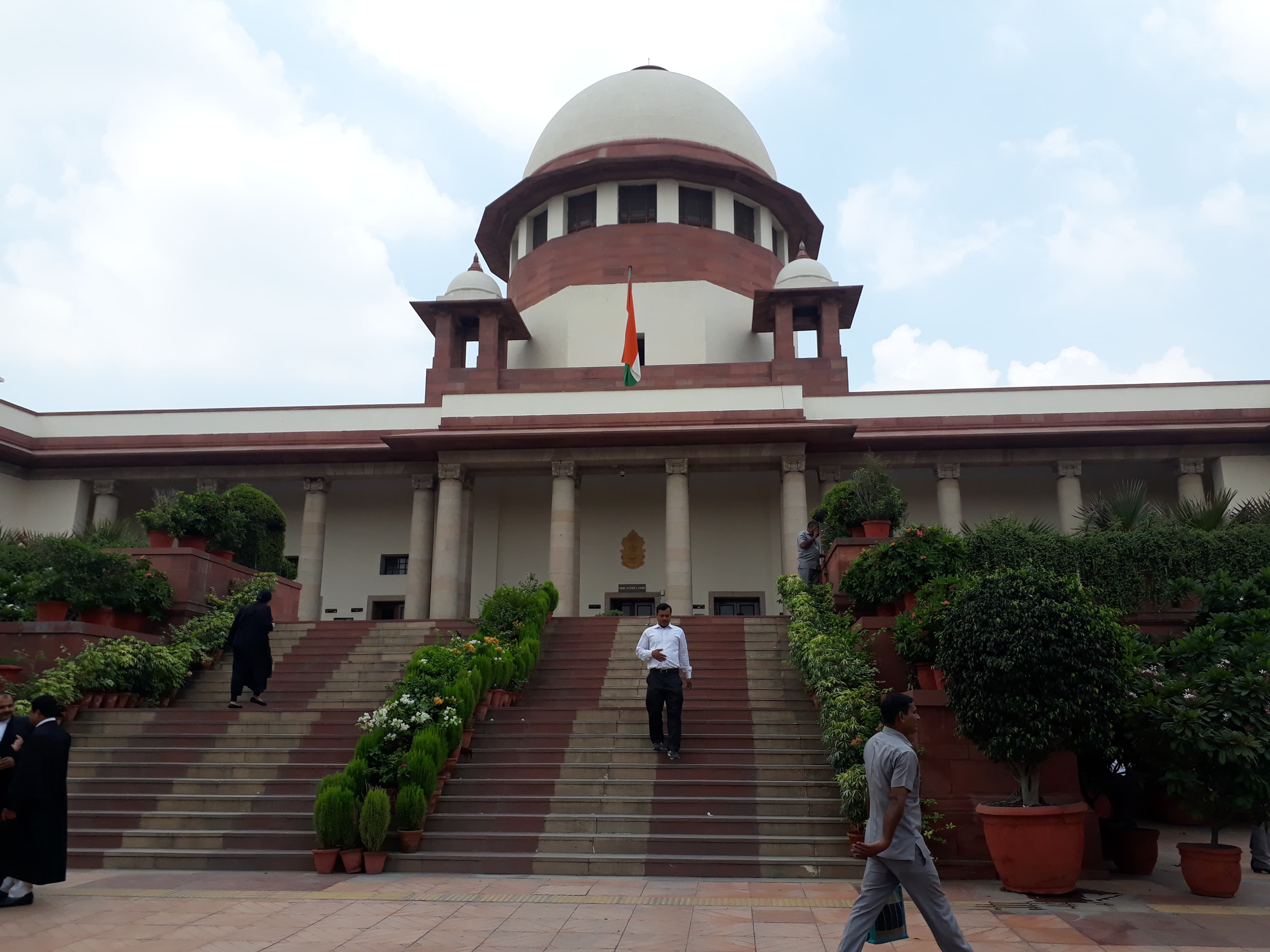
UP Conversion Act FIR Lucknow cases often begin with a practical question: can a police officer register a प्राथमिकी when the person said to have converted has not personally approached the police? The answer requires reading Section 4 of the Uttar Pradesh Prohibition of Unlawful Conversion of Religion Act, 2021 together with Sections 3 and 5.
The Allahabad High Court addressed this issue in Durga Yadav v. State of U.P., 2025, reported in secondary coverage as 2025AHC78127. The Court upheld police authority to register an FIR under the Act even where the informant was not the converted person or a close relative. This does not mean every complaint automatically proves an offence. The police must still investigate the facts, identify the alleged unlawful method of conversion and comply with criminal procedure.
This guide explains what an accused person, family member or interfaith couple should do after an FIR in Lucknow or elsewhere in Uttar Pradesh. For connected issues, see our guide to FIR quashing and consult a criminal lawyer in Lucknow after obtaining the FIR copy.
Table of Contents
Need Immediate Legal Help?
If you're facing a legal emergency in Lucknow, don't wait. Contact experienced criminal lawyer Advocate Onkar Pandey for immediate assistance.
What Sections 3, 4 and 5 of the UP Act do
Section 3 prohibits conversion from one religion to another by misrepresentation, force, undue influence, coercion, allurement, fraud or marriage where the marriage is used for an unlawful conversion. The allegation must concern an unlawful conversion or an attempt connected with the prohibited methods; interfaith association by itself is not enough.
Section 4 contains the complaint and FIR framework. The Allahabad High Court’s decision in Durga Yadav v. State of U.P. supports the proposition that police officers can register and investigate an FIR even where the person giving information is not the alleged converted person or a close relative.
Section 5 provides punishment for contravention of Section 3. The FIR may also include provisions of the BNS, 2023 if the facts disclose cheating, criminal intimidation, forgery, assault, conspiracy or another independent offence.
| Provision | Practical effect |
|---|---|
| Section 3 | Defines the prohibited conversion conduct. |
| Section 4 | Addresses who may give information and how criminal process may begin. |
| Section 5 | Provides punishment for violation of Section 3. |
| BNSS, 2023 | Governs investigation, arrest, remand and bail procedure. |
The legal issue is therefore different from the question whether the accused is guilty. Registration of an FIR starts investigation; it does not decide the truth of the allegations.
Why a police officer may register the FIR
After Durga Yadav v. State of U.P., an accused cannot seek quashing solely on the ground that the informant was a stranger to the alleged conversion. The High Court accepted that police information can set the criminal law in motion even when the person who approaches the police is not the alleged victim or a family member.
The complaint may be given orally or in writing to the police station having jurisdiction. The investigating officer must then examine whether the allegations disclose the ingredients of Section 3 and whether Section 5 or allied BNS provisions apply. The source of the information remains relevant to credibility, but it is not by itself a complete bar to FIR registration.
- Police receive information about an alleged unlawful conversion.
- The station records the FIR if the information discloses a cognizable offence.
- The investigating officer collects statements, documents and digital evidence.
- The accused may challenge abuse of process before the High Court under Section 528 BNSS or seek protection from arrest under Section 482 BNSS.
A complaint about two adults living together does not automatically establish unlawful conversion. The Allahabad High Court has also recognised that interfaith couples may seek police protection where mere cohabitation, without conversion, is alleged. A factual defence must focus on consent, absence of prohibited means and the actual conduct described in the FIR.
For a related discussion, read UP Conversion Act FIR: Police Power and Your Defence.
What to do after an FIR in Lucknow
Do not wait for a police notice or arrest attempt before obtaining legal advice. The first task is to secure the FIR number, police station, sections invoked and the name of the investigating officer.
- Obtain the FIR from the police station, the Uttar Pradesh Police portal or through counsel.
- Preserve marriage documents, conversion declarations, notices, messages, call records and proof of voluntary residence.
- Prepare a date-wise account of the relationship and identify witnesses who can speak about consent and the absence of force or inducement.
- Check whether the FIR includes only the UP Act or also BNS offences carrying separate allegations.
- Choose the remedy: anticipatory bail, regular bail, a representation to the investigating officer, or a petition under Section 528 BNSS.
An application for anticipatory bail under Section 482 BNSS is filed before the Sessions Court or the High Court. In Lucknow, the first forum is commonly the Sessions Court Lucknow, depending on facts and strategy; the Allahabad High Court Lucknow Bench may be approached where the case is fit for High Court consideration.
If arrest has already occurred, regular bail may be sought before the Magistrate under Section 483 BNSS, or before the Sessions Court or High Court under Section 484 BNSS. A bailable offence is dealt with under Section 480 BNSS, while Section 481 BNSS concerns release after detention for half of the maximum period in specified circumstances.
See our separate UP Conversion Act FIR: Bail and Quashing Guide for the choice between protection from arrest and post-arrest bail.
Legal Consultation
Talk directly to Advocate Onkar Pandey
Explain your matter over a call or WhatsApp. If you take the case forward, the consultation fee adjusts into your overall fee, so there is no separate charge to begin.
Step-by-step procedure before the Lucknow courts
The correct court depends on the stage of the case. A person who expects arrest should not file a regular bail application before arrest; the application must be framed as anticipatory bail under Section 482 BNSS.
- Police station stage: obtain the FIR and cooperate through counsel. Do not delete chats, change devices or contact the complainant aggressively.
- Anticipatory bail stage: prepare the FIR, identity documents, address proof, criminal history disclosure and a factual affidavit. File before the Sessions Court Lucknow or the High Court Lucknow Bench as advised.
- Investigation stage: attend when lawfully called, provide documents through a written covering letter and retain proof of submission.
- Charge-sheet stage: inspect the police papers and consider discharge, regular bail or a High Court challenge depending on the material collected.
- Quashing stage: under Section 528 BNSS, show that the FIR does not disclose the statutory ingredients, is legally barred or is a clear abuse of criminal process.
| Stage | Likely forum | Immediate document |
|---|---|---|
| Before arrest | Sessions Court Lucknow or Allahabad High Court Lucknow Bench | FIR and Section 482 BNSS application |
| After arrest | CJM Court Lucknow, Sessions Court or High Court | Remand order and bail papers |
| During investigation | Investigating officer; court if protection is needed | Written cooperation and evidence list |
| After charge-sheet | Trial court or High Court | Charge-sheet and relied-upon documents |
Judges generally examine the precise allegation, the complainant’s relationship to the parties, documentary proof, the need for custodial interrogation, cooperation with investigation and the accused’s criminal history.
For the High Court forum and filing assistance, see Allahabad High Court Lucknow Bench legal assistance.
Documents, timelines and likely legal costs
Costs depend on the number of accused, urgency, volume of records and whether the matter is argued at the Sessions Court or High Court. The figures below are practical estimates for ordinary Lucknow matters, not a fixed fee schedule.
| Work | Usual preparation time | Indicative professional fee |
|---|---|---|
| FIR review and initial conference | 1–2 working days | ₹2,000–₹7,500 |
| Police representation and document compilation | 2–5 working days | ₹5,000–₹20,000 |
| Anticipatory bail before Sessions Court | 3–10 working days, subject to listing | ₹25,000–₹75,000 |
| Anticipatory bail before High Court | 7–21 working days, subject to roster and objections | ₹40,000–₹1,25,000 |
| FIR quashing under Section 528 BNSS | 2–6 weeks for initial listing | ₹50,000–₹1,50,000 |
These timelines can change because of court holidays, defects in filing, police status reports, service requirements and the urgency shown in the application. A same-day listing is not guaranteed merely because arrest is apprehended.
Keep the following papers ready:
- Complete FIR and any written complaint or annexure.
- Aadhaar or other identity and address documents.
- Marriage, relationship, residence or conversion-related documents, where relevant.
- Notices issued by police and proof of previous appearances.
- Relevant messages, photographs, call records and witness details in their original form.
- Details of any previous criminal case, bail order or pending proceeding.
The consultation fee adjusts into your case fee if you proceed, so there is no separate charge to begin. For connected FIR procedure, see whether police can withdraw an FIR without a court order.
Defences and common mistakes
The defence should respond to the statutory ingredients rather than rely only on the identity of the informant. Useful material may show that both adults acted voluntarily, no promise or threat was made, no money or benefit was offered, and no conversion occurred.
- Consent statements and independent witness accounts.
- Proof of age and lawful marriage, if marriage is part of the allegation.
- Messages showing voluntary communication rather than coercion.
- Evidence that the alleged converted person denies the complaint.
- Material contradictions between the complaint, FIR and later statements.
- Proof that the allegations concern a civil or family disagreement rather than an offence under Section 3.
Do not make a hurried public statement, threaten the informant or submit edited screenshots. Such conduct can create separate BNS allegations and may weaken a bail application.
The High Court does not conduct a full trial at the FIR stage. Under Section 528 BNSS, the question is whether the allegations and accompanying material disclose an offence or whether continuing the prosecution would be an abuse of process. Where factual disputes require evidence, the court may leave them for investigation or trial.
Our criminal defence service covers FIR review, bail strategy and High Court proceedings. If the dispute also involves marriage or maintenance, obtain separate advice through our family law service.
Practitioner's Note from the Lucknow Bench
In our practice before the Lucknow Bench, such applications are typically listed after filing defects are removed and the State is served or directed to obtain instructions. Urgent protection from arrest depends on the FIR, the arrest apprehension shown in the affidavit and the court’s roster; counsel should not promise a same-day order.
We usually file the complete FIR, the complaint if available, identity and address documents, relevant marriage or residence papers, prior notices, criminal-history disclosure and documents supporting voluntary conduct. Judges commonly ask whether the accused has joined investigation, whether custodial interrogation is claimed, whether the alleged converted person supports or disputes the accusation, and whether any BNS offences are added.
For an ordinary anticipatory bail matter, professional fees in Lucknow commonly fall between ₹25,000 and ₹75,000 before the Sessions Court and ₹40,000 and ₹1,25,000 before the High Court, depending on complexity. A Section 528 BNSS petition commonly falls between ₹50,000 and ₹1,50,000; court fees, drafting expenses and certified-copy charges may be separate.
- File anticipatory bail before arrest under Section 482 BNSS.
- Use Section 483 BNSS for appropriate Magistrate bail after arrest.
- Use Section 484 BNSS for Sessions Court or High Court bail after arrest or rejection at the lower stage.
- Use Section 528 BNSS for a legally sustainable FIR-quashing challenge.
About the Author
Advocate Onkar Pandey is a practicing lawyer at the Allahabad High Court Lucknow Bench with over 25 years of experience in criminal law, bail matters, FIR quashing, and family law. Enrolled with the Bar Council of Uttar Pradesh (No. UP/4825/1999), he provides expert legal guidance to clients across Uttar Pradesh from his chamber at A-406, High Court, Lucknow. For a consultation on UP Prohibition of Unlawful Conversion of Religion Act FIR matters, contact Advocate Onkar Pandey at +91 98392 71553.
Frequently Asked Questions
Can a stranger complain and police register an FIR under the UP Conversion Act?+
Yes. In Durga Yadav v. State of U.P., 2025, reported in secondary coverage as 2025AHC78127, the Allahabad High Court upheld police authority to register an FIR even where the informant was not the alleged converted person or a close relative. Section 4 must still be read with Section 3: the information should disclose alleged unlawful conversion or an attempt involving a prohibited method. The ruling does not establish guilt and does not remove the accused’s remedies. The accused may seek anticipatory bail under Section 482 BNSS before arrest or challenge a legally deficient FIR under Section 528 BNSS.
Does an interfaith relationship itself violate the UP Conversion Act?+
No. An interfaith relationship or cohabitation, by itself, does not prove unlawful conversion. The investigation must identify conduct covered by Section 3, such as force, fraud, coercion, undue influence, misrepresentation or prohibited allurement. The Allahabad High Court has held in a 2026 interfaith protection matter that mere cohabitation without conversion does not violate the anti-conversion law. Preserve consent evidence, age documents, residence proof and communications. If arrest is feared, Section 482 BNSS anticipatory bail should be considered immediately rather than waiting for a police action.
Where should anticipatory bail be filed in Lucknow?+
Anticipatory bail is filed under Section 482 BNSS before the Sessions Court or the High Court. For an FIR registered in Lucknow, the Sessions Court Lucknow is commonly considered first, while the Allahabad High Court Lucknow Bench may be approached according to the facts, urgency and legal strategy. Filing and listing often take 3–10 working days in the Sessions Court and 7–21 working days in the High Court, subject to defects, notices, holidays and roster. The FIR, identity documents, address proof, criminal-history disclosure and supporting factual papers should be ready.
What if the accused has already been arrested?+
After arrest, the accused should be produced before the competent Magistrate and may seek regular bail under Section 483 BNSS. Bail may also be sought before the Sessions Court or High Court under Section 484 BNSS, especially after rejection or where the case requires a higher court’s consideration. The court will examine the FIR, remand papers, investigation status, custodial interrogation, criminal history and cooperation. Do not sign blank papers or contact the complainant in a threatening manner. Obtain the remand order and FIR immediately so the bail application addresses the actual allegations.
Can the FIR be quashed by the Allahabad High Court?+
A petition under Section 528 BNSS may be filed where the FIR, even if accepted as written, does not disclose the ingredients of Section 3, is barred by law or shows abuse of criminal process. The High Court generally does not decide disputed evidence finally at the FIR stage. The petition should include the FIR, complaint, relevant documents, notices and material showing why the statutory offence is absent. Initial listing may take around 2–6 weeks in an ordinary matter, though urgent protection depends on the court’s assessment and filing completeness.
How much does a UP Conversion Act FIR case cost in Lucknow?+
A preliminary FIR review commonly costs ₹2,000–₹7,500. Anticipatory bail may commonly involve ₹25,000–₹75,000 before the Sessions Court Lucknow and ₹40,000–₹1,25,000 before the Allahabad High Court Lucknow Bench. A Section 528 BNSS quashing petition commonly falls between ₹50,000 and ₹1,50,000. These are indicative professional fee figures and may change with the number of accused, added BNS offences, volume of evidence and urgency. Court fees, copying, drafting and other out-of-pocket expenses may be separate.
Related Services
Get Expert Legal Advice in Lucknow
20+ years experience in criminal law at Lucknow High Court. Available 24/7 for emergencies.
Disclaimer: This article is for general information purposes only and does not constitute legal advice. Every case is unique and requires specific legal analysis. For advice specific to your situation, please consult Advocate Onkar Pandey or another qualified attorney in Lucknow.