“No Forced Surrender”: Supreme Court Draws Clear Line on Anticipatory Bail Powers
Quick Answer
The Supreme Court of India has firmly established that anticipatory bail cannot be arbitrarily restricted by procedural milestones like the filing of a chargesheet or issuance of summons. This principle, often called the “No Forced Surrender” doctrine, protects an accused from being c…
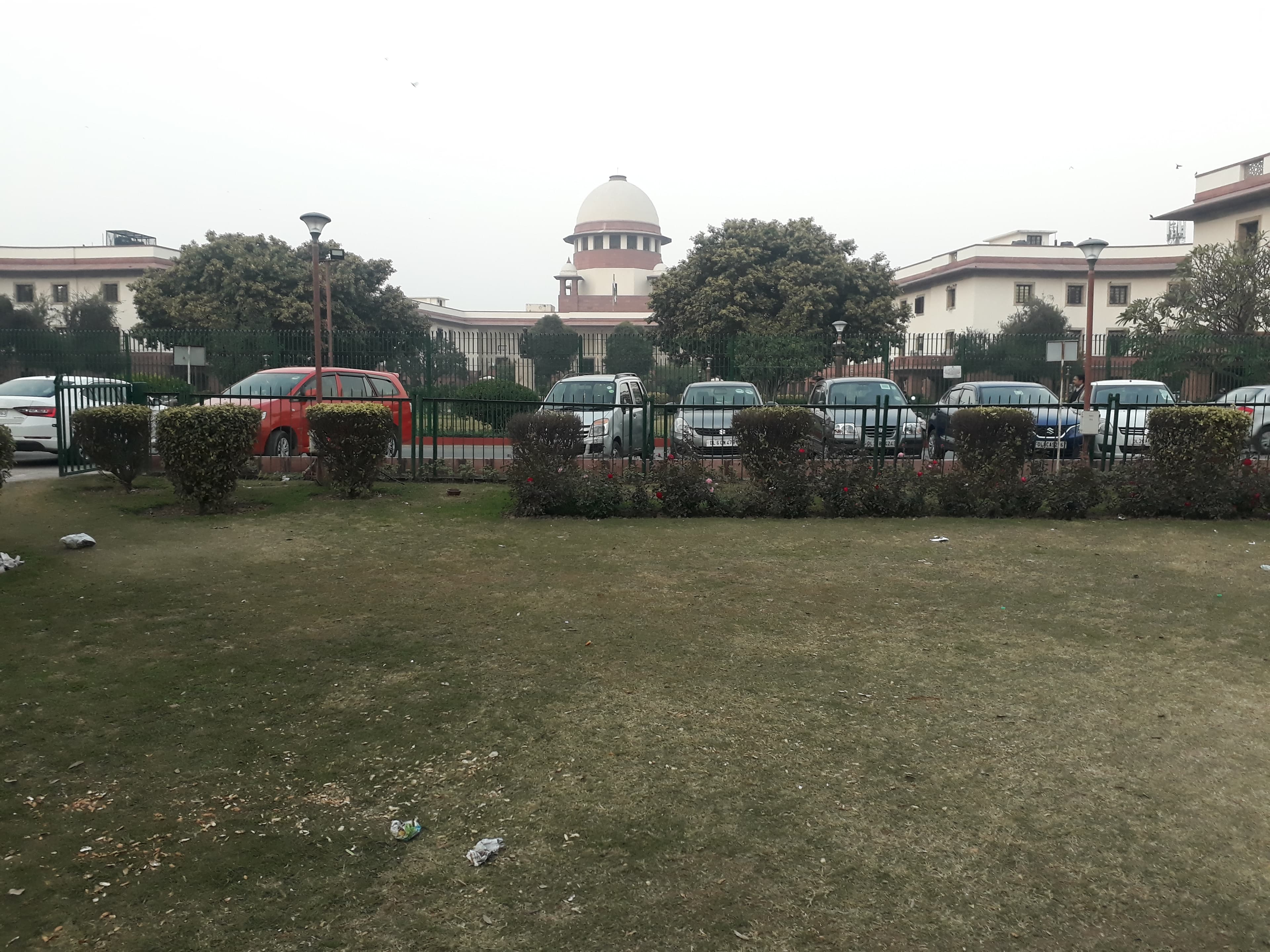
The Supreme Court of India has firmly established that anticipatory bail cannot be arbitrarily restricted by procedural milestones like the filing of a chargesheet or issuance of summons. This principle, often called the “No Forced Surrender” doctrine, protects an accused from being coerced into custody merely because the investigation has progressed.
For residents of Lucknow and across Uttar Pradesh, this ruling has profound implications. The Allahabad High Court (Lucknow Bench) has consistently applied this principle, reinforcing that the power to grant pre-arrest bail under Section 482 BNSS (formerly Section 438 CrPC) is a shield against unnecessary incarceration.
This article examines the landmark judgments, practical steps for seeking anticipatory bail in Lucknow courts, and the critical balance between individual liberty and investigative needs.
In my experience, the forced-surrender problem this judgment addresses is one I have encountered directly while moving anticipatory bail before the Lucknow Bench. Once a chargesheet is filed or summons issued, prosecutors routinely argue that the applicant must now surrender and seek regular bail, and before this clarity many clients were pushed into custody purely on that technical objection. I now cite this principle to resist that reflex, and I tell clients plainly that a pending anticipatory bail plea does not evaporate the moment the investigation paperwork advances. My honest assessment is that this ruling protects ordinary litigants far more than hardened accused, because it stops procedural milestones from being used as a backdoor route to detention.
Table of Contents
Need Immediate Legal Help?
If you're facing a legal emergency in Lucknow, don't wait. Contact experienced criminal lawyer Advocate Onkar Pandey for immediate assistance.
Understanding the “No Forced Surrender” Principle
The phrase “No Forced Surrender” means that an accused person should not be compelled to present themselves for arrest simply because the police have filed a chargesheet or taken some procedural step. The Supreme Court has clarified that the apprehension of arrest can persist even after the chargesheet is filed, especially if the accused has not been arrested during investigation.
Key aspects of this principle include:
- Continuation of Protection: An anticipatory bail order remains in force until the end of trial, unless there are special or peculiar circumstances justifying a time limit. (Bhagat Singh v. State of UP, 2022)
- Post-Chargesheet Maintainability: Anticipatory bail can be granted even after the chargesheet is filed. The court must assess the apprehension of arrest on a case-by-case basis. (Sumit v. State of U.P., 2026)
- No Automatic Vacation: The filing of a chargesheet does not automatically end the protection of anticipatory bail. The prosecution must seek cancellation if there are grounds.
This principle is codified under Section 482 BNSS (Bharatiya Nagarik Suraksha Sanhita, 2023), which replaced Section 438 CrPC. The Allahabad High Court has been at the forefront of applying this progressive interpretation.
Key Supreme Court & Allahabad High Court Rulings
The following table summarises the landmark judgments that have shaped the “No Forced Surrender” principle. These cases are frequently cited in criminal proceedings at the Lucknow Bench and Sessions Courts.
| Case | Court | Year | Key Holding |
|---|---|---|---|
| Sumit v. State of U.P. | Supreme Court | 2026 | Anticipatory bail can be granted even after chargesheet is filed; no forced surrender due to procedural milestones. |
| Bhagat Singh v. State of UP | Allahabad HC (Lucknow Bench) | 2022 | Anticipatory bail order continues until trial ends unless special circumstances exist; time limits are not automatic. |
| Saurabh Agrawal v. State of U.P. | Supreme Court | 2026 | Bail cannot be granted if the court treats a serious economic offence as a civil dispute; principle has limits. |
| Asheesh Kumar v. State of U.P. | Allahabad HC (Single Judge) | 2025 | Anticipatory bail held not maintainable after the accused has been summoned; the issue is pending before a larger bench. |
These rulings collectively establish that while the power under Section 482 BNSS is broad, it is not absolute. Courts must balance the right to liberty with the gravity of the offence and the need for a fair investigation.
How This Affects Your Bail Application in Lucknow
If you are facing the prospect of arrest in Lucknow, whether from a local police station or a city level court, the “No Forced Surrender” principle gives you a powerful tool. You can approach the Sessions Court or the Allahabad High Court (Lucknow Bench) for anticipatory bail even after the FIR has been registered or the chargesheet has been filed.
Important procedural points for Lucknow litigants:
- Timing: File your anticipatory bail application as soon as you apprehend arrest. Delay can be fatal.
- Jurisdiction: For offences registered in Lucknow district, the application can be filed before the Court of Sessions, Lucknow under Section 482 BNSS. If rejected, you can move the High Court under Section 484 BNSS.
- Grounds: Emphasise that the arrest is not necessary for investigation, and that you have cooperated with the police. Cite Sumit v. State of U.P. to argue that filing of chargesheet does not defeat your right to pre-arrest bail.
- No Condition of Surrender: The court cannot impose a condition that you must surrender to custody before the order is made effective. That would defeat the purpose of anticipatory bail.
For a detailed bail and anticipatory bail strategy, consult an experienced criminal lawyer in Lucknow who regularly appears before the High Court.
Legal Consultation
Talk directly to Advocate Onkar Pandey
Explain your matter over a call or WhatsApp. If you take the case forward, the consultation fee adjusts into your overall fee, so there is no separate charge to begin.
Practical Steps to Apply for Anticipatory Bail Under Section 482 BNSS
To benefit from the “No Forced Surrender” principle, you must follow the correct procedure. Below is a step-by-step guide applicable to the Lucknow courts.
| Step | Action | Details |
|---|---|---|
| 1 | Consult a lawyer | Engage a criminal lawyer who practices at the Lucknow Bench or Sessions Court. |
| 2 | Collect documents | FIR copy, case diary, summon notice, personal details, and any evidence of innocence. |
| 3 | File application | Draft a bail application under Section 482 BNSS before the Sessions Court or High Court. |
| 4 | Argue against forced surrender | Emphasise that no arrest is needed, and that the chargesheet or summons does not end your right to pre-arrest protection. |
| 5 | Obtain interim protection | Seek an interim order that you shall not be arrested until the final hearing. |
| 6 | Comply with conditions | If granted, strictly comply with any conditions (e.g., joining investigation, surrendering passport). |
Remember: The court can impose conditions, but it cannot force you to surrender to custody. If the prosecution tries to cancel your bail, they must show special or peculiar circumstances as per Bhagat Singh v. State of UP.
The Role of Section 482 BNSS vs Old Section 438 CrPC
With the enactment of the Bharatiya Nagarik Suraksha Sanhita (BNSS) 2023, the law on anticipatory bail is now governed by Section 482 BNSS instead of the old Section 438 CrPC. However, the substantive principles remain largely the same. The Supreme Court and High Courts continue to apply the precedents under the old code, including the “No Forced Surrender” rulings.
Key differences:
- Section 482 BNSS explicitly allows the court to impose conditions, including that the accused shall not leave India without permission.
- Section 484 BNSS (old Section 439 CrPC) is the remedy for bail after rejection by a lower court. The High Court or Sessions Court can grant bail even if the Magistrate has rejected it.
- Section 528 BNSS (old Section 482 CrPC) provides inherent powers to the High Court for quashing FIRs. This is not directly about bail, but can be used to challenge the very foundation of the case.
For a detailed comparison, see the table below:
| Old CrPC | New BNSS | Purpose |
|---|---|---|
| Section 438 | Section 482 | Anticipatory bail (pre-arrest) |
| Section 439 | Section 484 | Bail after rejection (High Court/Sessions) |
| Section 482 | Section 528 | Inherent powers (quashing) |
| Section 436 | Section 480 | Bail in bailable offence |
| Section 436A | Section 481 | Half max period bail |
| Section 437 | Section 483 | Bail in non-bailable (Magistrate) |
Always ensure your lawyer refers to the correct BNSS section numbers when filing applications in Lucknow courts.
When Courts Can Deny Bail: The Saurabh Agrawal Exception
The “No Forced Surrender” principle is not a blanket license to avoid arrest. The Supreme Court in Saurabh Agrawal v. State of Uttar Pradesh (2026) set aside anticipatory bail in a serious economic fraud case, holding that the High Court cannot treat a serious economic offence as a mere civil dispute. The Court also emphasised that the accused's criminal antecedents and the gravity of the offence must be weighed against the right to pre-arrest bail.
Key takeaways from this ruling:
- Not for serious fraud: If the offence involves large-scale cheating, forgery, or criminal breach of trust, anticipatory bail may be denied.
- Criminal antecedents matter: An accused with a history of similar offences cannot claim the “No Forced Surrender” protection.
- Court must record reasons: The High Court must give cogent reasons why pre-arrest bail is being granted, and cannot simply label the case as a civil dispute.
This exception ensures that the power under Section 482 BNSS is not abused by those who pose a real threat to the investigation or society. For defendants in Lucknow facing serious economic offences, it is crucial to have a strong factual defence and a lawyer who can navigate this fine line.
About the Author
Advocate Onkar Pandey is a practicing lawyer at the Allahabad High Court Lucknow Bench with over 25 years of experience in criminal law, bail matters, FIR quashing, and family law. Enrolled with the Bar Council of Uttar Pradesh (No. UP/4825/1999), he provides expert legal guidance to clients across Uttar Pradesh from his chamber at A-406, High Court, Lucknow. For a consultation on anticipatory bail, contact Advocate Onkar Pandey at +91 98392 71553.
Frequently Asked Questions
Can I apply for anticipatory bail after the chargesheet is filed in Lucknow?+
Yes. The Supreme Court in Sumit v. State of U.P. (2026 INSC 145) clarified that anticipatory bail under Section 482 BNSS can be filed even after the chargesheet is filed, as long as the apprehension of arrest remains. You can approach the Sessions Court, Lucknow or the Allahabad High Court (Lucknow Bench) for such relief.
How long does an anticipatory bail order remain valid in Lucknow?+
As per the Allahabad High Court (Lucknow Bench) in Bhagat Singh v. State of UP (2022 LiveLaw (AB) 513), an anticipatory bail order continues until the end of the trial, unless there are special circumstances justifying a shorter duration. The court cannot impose an arbitrary time limit like 4–6 weeks without reason.
What is the difference between Section 482 BNSS and Section 484 BNSS?+
Section 482 BNSS (old Section 438 CrPC) deals with anticipatory bail (pre-arrest protection). Section 484 BNSS (old Section 439 CrPC) allows the High Court or Sessions Court to grant regular bail after the accused has been arrested or after a lower court has rejected bail. Both are used at the Lucknow Bench.
Can the police force me to surrender even after I have anticipatory bail?+
No. The “No Forced Surrender” principle prohibits the police from demanding that you surrender to custody when you already have an anticipatory bail order. If the order is valid, you are protected from arrest. If the police try to arrest you, you can approach the court for contempt or protection.
What happens if the court imposes a condition that I must surrender to custody?+
Such a condition would be contrary to the very purpose of anticipatory bail. The court cannot force you to surrender as a precondition for granting bail. If you face such a condition, your lawyer can challenge it before the same court or the High Court under Section 484 BNSS.
Is anticipatory bail available for serious economic offences in Lucknow?+
It depends on the facts. The Supreme Court in Saurabh Agrawal v. State of U.P. (2026) held that bail cannot be granted if the court treats a serious economic offence as a civil dispute. However, if the accused has no criminal antecedents and is willing to cooperate, the court may still grant pre-arrest bail. Expert legal advice is essential.
Which court should I approach for anticipatory bail in Lucknow?+
You can first approach the Court of Sessions, Lucknow under Section 482 BNSS. If that is rejected, you can appeal to the Allahabad High Court (Lucknow Bench) under Section 484 BNSS. For urgent cases, you can directly approach the High Court as well.
What should I do if the police still threaten to arrest me even after I have an anticipatory bail order?+
Carry a certified copy of the anticipatory bail order at all times and show it to the investigating officer; on arrest the police are bound to release you on the bail bond amount fixed by the court. If they defy the order, your advocate can immediately move a contempt application before the Allahabad High Court, Lucknow Bench, and inform the Superintendent of Police in writing. Keep a written record of any harassment, as it strengthens the contempt or protection plea.
Does anticipatory bail protect me from being called for custodial interrogation?+
Anticipatory bail protects you from arrest and detention, but it does not exempt you from cooperating with the investigation. Courts routinely impose a condition that you must appear before the investigating officer when required and answer questions, and failing to cooperate can become a ground to cancel the bail. The distinction is that you attend for interrogation as a free person and cannot be taken into custody so long as the order stands and you comply with its conditions.
Related Guides
Related Services
Get Expert Legal Advice in Lucknow
20+ years experience in criminal law at Lucknow High Court. Available 24/7 for emergencies.
Disclaimer: This article is for general information purposes only and does not constitute legal advice. Every case is unique and requires specific legal analysis. For advice specific to your situation, please consult Advocate Onkar Pandey or another qualified attorney in Lucknow.