Hit and Run and Rash Driving Defence in Lucknow: BNS Section 106 and 281
If you are named in a road-accident FIR in Lucknow, the charge is now framed under the Bharatiya Nyaya Sanhita, 2023 (BNS), not the old Indian Penal Code. Causing death by rash or negligent driving is punishable under Section 106(1) BNS with imprisonment up to five years and fine; plain rash driving without death falls under Section 281 BNS (up to six months or a fine of Rs 1,000, or both); and where the accident causes hurt or grievous hurt, Section 125 BNS applies.
The widely reported ten-year hit-and-run clause, Section 106(2) BNS, was deliberately left out of the notification that brought the new codes into force on 1 July 2024, and it is still not enforced in Uttar Pradesh. Understanding which section actually applies to your case, and its bail position, is the difference between a bailable magistrate-triable matter and a session case. As a practising criminal lawyer in Lucknow, I have set out below how these charges are run at local police stations and courts.
Table of Contents
Need Immediate Legal Help?
If you're facing a legal emergency in Lucknow, don't wait. Contact experienced criminal lawyer Advocate Onkar Pandey for immediate assistance.
Which law now governs hit-and-run and rash driving
The three new criminal codes, BNS, the Bharatiya Nagarik Suraksha Sanhita (BNSS) and the Bharatiya Sakshya Adhiniyam, replaced the IPC, CrPC and Evidence Act from 1 July 2024. Any road-accident FIR registered on or after that date at a Lucknow police station carries BNS section numbers.
For a driving offence, the investigating officer usually invokes one or more of these provisions depending on the outcome:
- Section 281 BNS (formerly Section 279 IPC): driving or riding on a public way so rashly or negligently as to endanger human life or safety of others. No death or injury need be proved.
- Section 125 BNS (formerly Section 337 and 338 IPC): a rash or negligent act that causes hurt (clause a) or grievous hurt (clause b) to a person.
- Section 106(1) BNS (formerly Section 304A IPC): causing death of any person by a rash or negligent act not amounting to culpable homicide.
- Section 106(2) BNS: the new hit-and-run provision for a driver who causes death and escapes without reporting to a police officer or Magistrate. This sub-section is not yet in force.
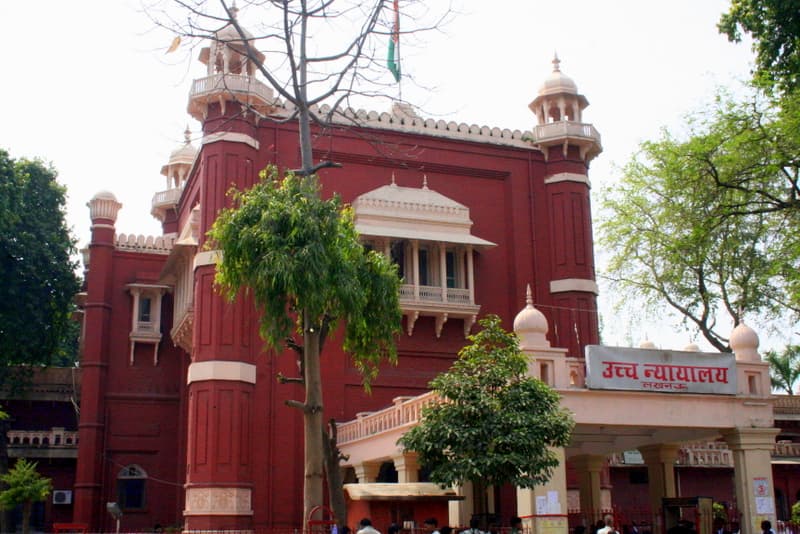
Because more than one section is typically stacked in the same FIR, an early reading of the charge sheet matters. If the FIR discloses no offence or is an abuse of process, a petition for quashing of the FIR before the Allahabad High Court, Lucknow Bench, is worth examining.
Section 106 vs 281 vs 125: punishment and bail at a glance
The single most useful document in a driving case is the First Schedule to the BNSS, which classifies each offence as cognizable or non-cognizable and bailable or non-bailable. The table below summarises the driving-offence sections you are most likely to face in Lucknow.
| Section (BNS) | Offence | Maximum punishment | Cognizable | Bailable |
|---|---|---|---|---|
| 281 | Rash or negligent driving on a public way | 6 months, or fine up to Rs 1,000, or both | Yes | Yes |
| 125(a) | Rash or negligent act causing hurt | 6 months, or fine up to Rs 5,000, or both | Yes | Yes |
| 125(b) | Rash or negligent act causing grievous hurt | 3 years, or fine up to Rs 10,000, or both | Yes | Yes |
| 106(1) | Causing death by rash or negligent act (driving) | 5 years and fine | Yes | Yes |
| 106(2) | Death by driving and fleeing without reporting | 10 years and fine (not yet in force) | Yes | No |
The practical takeaway is that Section 106(1), even though it carries a five-year ceiling, remains a bailable offence triable by a Magistrate of the first class. That is why securing timely bail and, where the accused apprehends arrest, anticipatory bail is usually achievable in a straightforward accidental-death case.
When negligence crosses into culpable homicide
The line between Section 106(1) BNS and the far graver charge of culpable homicide not amounting to murder (Section 105 BNS, formerly Section 304 IPC) is the true battleground in serious cases. Section 106 covers death caused without the knowledge that the act was likely to cause death; the moment the prosecution can show that the driver drove with knowledge that death was a likely result, the case can be lifted into Section 105, which is a Sessions-triable, non-bailable offence.
The leading authority is Alister Anthony Pareira v. State of Maharashtra, (2012) 2 SCC 648, where the Supreme Court upheld conviction under Section 304 Part II IPC for a drunk driver whose car mounted a Mumbai pavement and killed seven people. The Court held that where a driver, knowing that people are on the road, drives in a state of intoxication or gross recklessness, the offence can amount to culpable homicide rather than mere rash driving.
- Ordinary momentary negligence, such as a lapse at a turn, stays within Section 106(1).
- Aggravating features, such as heavy intoxication, extreme over-speeding in a crowded area, or driving against traffic, invite the Section 105 charge.
Because the charging section decides bail and forum, the defence must engage with the classification from day one, ideally with the help of an advocate who appears before the Allahabad High Court, Lucknow Bench.
Legal Consultation
Talk directly to Advocate Onkar Pandey
Explain your matter over a call or WhatsApp. If you take the case forward, the consultation fee adjusts into your overall fee, so there is no separate charge to begin.
Bail practice for accidental-death FIRs in Lucknow
In a pure Section 106(1) or Section 281 or Section 125 matter, the offence is bailable, so the accused is entitled to bail as a matter of right, usually at the police station itself or on first production before the Magistrate. Documentary readiness speeds this up.
- Keep the vehicle registration, insurance and a valid driving licence available: their absence often prompts additional Motor Vehicles Act charges.
- Where a Section 105 BNS charge is added, bail moves to the Sessions Court and, if refused, to the High Court, and is decided on the gravity, evidence and antecedents.
- Report the accident to the police early: cooperating with the investigation blunts any attempt to invoke the fleeing element.
A compromise with the victim or the family is often possible in injury cases, since Section 125 offences are compoundable; a genuine settlement recorded on affidavit strengthens the bail and eventual disposal. For the exact bail route in your matter, it is best to consult a Lucknow criminal advocate before the first hearing.
How Section 106 is actually invoked in Lucknow, and my view on the 106(2) clause
In the driving-offence FIRs I have handled since the BNS came into force, the local investigating officers at Lucknow police stations almost always register the case under Section 281 read with Section 125, and add Section 106(1) only where a death has occurred. I have not yet seen a Lucknow charge sheet successfully invoke Section 106(2), and that is no accident: the sub-section was never notified.
My candid view on the disputed ten-year hit-and-run clause is that, until the Ministry of Home Affairs issues a fresh notification bringing Section 106(2) into force, no accused in Uttar Pradesh can be tried or denied bail under it. The clause was kept in abeyance after the nationwide transporters' protest of January 2024, and the assurance given was that it would not be enforced without consultation with road-transport bodies. When the police threaten a 106(2) charge, I read them the notification: the provision simply is not operative today.
Two first-hand cautions I give every driver-client. First, the safest legal step after any serious accident is to stop, report to the nearest police officer or Magistrate and, where a crowd is hostile, drive to the nearest station and report from there; the law itself recognises reporting as the protective act. Second, never sign a self-incriminating statement at the scene: the classification between Section 106(1) and Section 105 will later turn on exactly those words. These are the same fault-lines I watch in other cognizable-offence defences where the charging section decides everything.
About the Author
Advocate Onkar Pandey is an advocate practising before the Allahabad High Court, Lucknow Bench, and the district and magistrate courts at Lucknow, with a criminal, property and family practice. He is enrolled with the Bar Council of Uttar Pradesh under enrolment number UP 4825-1999.
He regularly appears in bail, FIR-quashing and criminal-trial matters, including road-accident and rash-driving prosecutions under the BNS. For a consultation on a hit-and-run or rash-driving case, call +91 98392 71553 or use the contact page. This article is general legal information and not a substitute for advice on your specific facts.
Frequently Asked Questions
Is hit-and-run in India punishable with 10 years in jail?+
Not at present. Section 106(2) BNS, which prescribes up to ten years for a driver who causes death and flees without reporting, was deliberately left out of the notification that brought the BNS into force on 1 July 2024. It remains in abeyance across India, including Uttar Pradesh, following the January 2024 transporters' protest. Until a fresh notification is issued, an accused cannot be tried or denied bail under Section 106(2).
What section applies if someone dies in a road accident in Lucknow?+
The usual charge is Section 106(1) BNS, causing death by a rash or negligent act not amounting to culpable homicide, punishable with up to five years and fine. It is a cognizable but bailable offence tried by a Magistrate of the first class. If the driving was so reckless or intoxicated that death was a likely result, the police may instead invoke Section 105 BNS (culpable homicide), which is non-bailable and Sessions-triable.
Is Section 106 BNS a bailable offence?+
Yes. Section 106(1) BNS is bailable, so the accused is entitled to bail even though the maximum sentence is five years. Section 106(2), the fleeing clause, is classified as non-bailable in the schedule, but since it is not yet in force it cannot presently be applied. Where the police add a Section 105 BNS culpable-homicide charge, the matter becomes non-bailable and bail must be sought from the Sessions Court or High Court.
What is the difference between Section 106 and Section 281 BNS?+
Section 281 BNS punishes rash or negligent driving on a public way as such, with up to six months or a fine of Rs 1,000, and does not require any death or injury. Section 106(1) applies only where the rash or negligent act actually causes death, and carries up to five years and fine. In practice both are often stacked in the same FIR, along with Section 125 where a person is hurt.
Can a rash driving case be settled or compromised?+
Injury-based offences under Section 125 BNS are compoundable, so a genuine settlement with the injured victim, recorded on affidavit, can lead to the case being closed and also strengthens a bail application. A charge under Section 106(1) involving death is not freely compoundable, but a settlement with the family and cooperation with the investigation remain relevant to sentencing and bail. Each route depends on the exact sections charged.
Should I report the accident even if a crowd has gathered?+
Yes. Reporting to the nearest police officer or Magistrate is the protective step the law itself recognises, and it removes any basis for a fleeing allegation. Where the scene is hostile, the safest course is to drive to the nearest police station and report from there without delay. Do not sign a self-incriminating statement at the scene, since the classification between Section 106(1) and Section 105 can turn on those exact words.
Related Services
Get Expert Legal Advice in Lucknow
20+ years experience in criminal law at Lucknow High Court. Available 24/7 for emergencies.
Disclaimer: This article is for general information purposes only and does not constitute legal advice. Every case is unique and requires specific legal analysis. For advice specific to your situation, please consult Advocate Onkar Pandey or another qualified attorney in Lucknow.