Police officers can lodge FIR under the UP Prohibition of Unlawful Conversion of Religion Act: Allahabad High Court
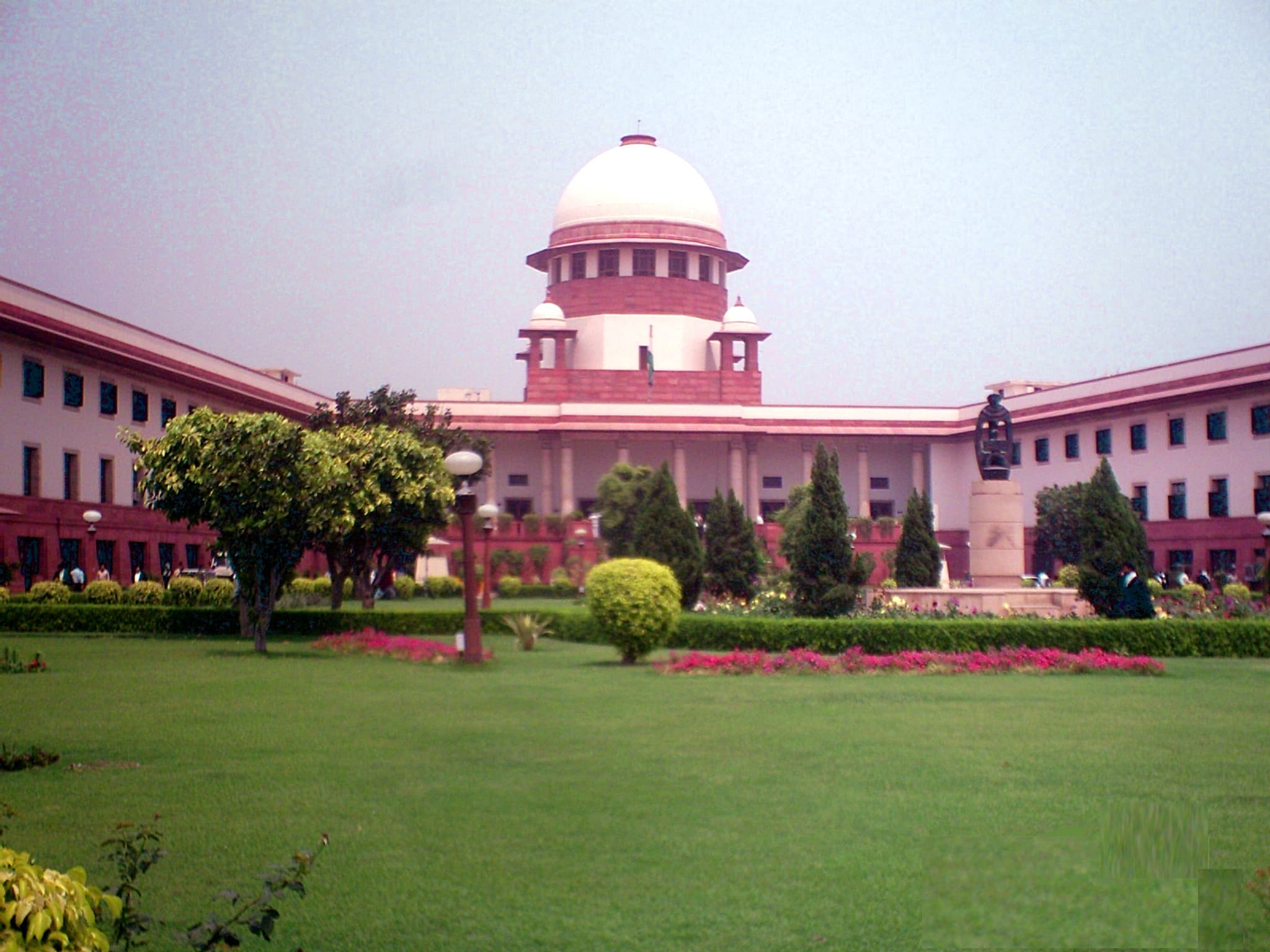
UP Conversion Act FIR Lucknow matters usually begin with a police call, a complaint from a relative or local resident, or an allegation that conversion was obtained through force, fraud, undue influence, allurement or a marriage-related arrangement. The person named in the प्राथमिकी often wants to know whether the police can register the case when the informant is not the alleged victim.
The practical answer depends on the wording of the Uttar Pradesh Prohibition of Unlawful Conversion of Religion Act, 2021, its 2024 amendment, and the criminal procedure applicable on the date of the alleged offence. The Allahabad High Court decision in Durga Yadav v. State of U.P., 2025:AHC:78127 is relevant because it reportedly accepted police authority to register such an FIR even where the complainant was not a direct victim or relative.
This guide explains the complaint route, investigation, arrest safeguards, bail, and a possible challenge under Section 528 BNSS. For related procedure, see this UP Conversion Act FIR bail and quashing guide and the service page for a criminal lawyer in Lucknow.
Table of Contents
Need Immediate Legal Help?
If you're facing a legal emergency in Lucknow, don't wait. Contact experienced criminal lawyer Advocate Onkar Pandey for immediate assistance.
What the Act prohibits and why an FIR may be registered
Section 3 of the Uttar Pradesh Prohibition of Unlawful Conversion of Religion Act prohibits conversion from one religion to another by misrepresentation, force, undue influence, coercion, allurement or fraudulent means. The prosecution must connect the alleged conversion with a prohibited method; a voluntary change of faith, by itself, is not the same allegation.
The Act also contains reporting and procedural requirements. After the 2024 amendment, the reporting language has been treated as permitting a report by any person. In Durga Yadav v. State of U.P., 2025:AHC:78127, the Allahabad High Court reportedly treated this change as clarificatory and upheld police authority to register an FIR even when the informant was not the direct victim or a relative.
- A police officer may record information disclosing a cognizable offence under Section 173 BNSS.
- The special Act remains the substantive law; BNS sections may be added only if separate alleged conduct fits a BNS offence.
- The FIR is the beginning of investigation, not proof that unlawful conversion occurred.
- Section 5 and other applicable provisions determine punishment and may affect the bail strategy.
The police must still examine the actual facts. A complaint based only on suspicion, a family disagreement, or an adult person’s lawful relationship may be challenged if the statutory ingredients are absent.
Can the police register the FIR without the victim’s complaint?
In practical terms, the answer may be yes after the amendment and the reasoning reported in Durga Yadav v. State of U.P., 2025:AHC:78127. The informant need not always be the person allegedly converted or that person’s relative. The police can receive information, make a preliminary assessment where legally permitted, and register the FIR if the information discloses a cognizable offence.
This does not remove the accused person’s right to test the complaint. The investigation must still identify the person allegedly converted, the alleged method of conversion, the dates and places, the role of each accused, and the material supporting force, fraud, allurement or undue influence.
| Situation | Likely procedural response |
|---|---|
| Direct allegation by the person allegedly converted | FIR and investigation may follow if statutory ingredients are disclosed. |
| Complaint by a relative or another person | Police may register the FIR under the amended reporting framework, subject to legal scrutiny. |
| Adult denies coercion and states the decision was voluntary | Statement, age proof, communications and surrounding facts become important. |
| Complaint contains no prohibited method | Representation for closure, quashing or other relief may be considered. |
FIR quashing is not automatic merely because the complainant is a third party. The court examines the FIR and supporting material, while also considering whether investigation should be allowed to continue.
Lucknow procedure after registration of the FIR
A person named under the Act should first obtain the FIR, understand the exact sections, and preserve all material before contacting the investigating officer. Do not delete messages, change devices, pressure the complainant, or ask witnesses to coordinate their statements.
- Obtain a certified or downloaded copy of the FIR and note the police station, crime number, date, sections and investigating officer.
- Prepare age, identity, address and relationship documents for every relevant person. Adult consent issues often require careful presentation of statements and chronology.
- Collect messages, call records lawfully available to you, photographs, travel records, religious ceremony documents, notices and prior complaints.
- Ask counsel to assess whether immediate protection is needed before the CJM Court Lucknow, Sessions Court Lucknow or the Allahabad High Court Lucknow Bench.
- Apply for regular bail under the correct BNSS provision if arrested, or anticipatory bail under Section 482 BNSS if arrest is apprehended.
- Attend investigation as advised and comply with every notice or bail condition.
For a cognizable FIR, the investigation may include statements, document collection, search, seizure and a final report. An arrest is not mandatory in every FIR; the police must follow the arrest safeguards under Section 35 BNSS and communicate the grounds and procedural rights required by law.
Our criminal defence service page explains preparation for police questioning and court appearances. A separate issue may arise if another FIR is relied upon; police cannot simply withdraw an FIR without following the legally required court process, as explained in this UP FIR procedure article.
Legal Consultation
Talk directly to Advocate Onkar Pandey
Explain your matter over a call or WhatsApp. If you take the case forward, the consultation fee adjusts into your overall fee, so there is no separate charge to begin.
Bail, arrest protection and quashing options
The exact bail route depends on whether the accused has been arrested, whether the offence is bailable, and which court has jurisdiction. If arrest is anticipated, an application under Section 482 BNSS may be filed before the Sessions Court or the High Court. This is the correct BNSS provision for anticipatory bail; Section 482 BNSS should not be used.
After arrest, the Magistrate may consider bail under Section 483 BNSS where applicable. The Sessions Court or High Court has wider bail powers under Section 484 BNSS, including after rejection or when the case requires higher-court consideration.
| Stage | Possible remedy | Forum in Lucknow |
|---|---|---|
| Arrest is feared | Anticipatory bail under Section 482 BNSS | Sessions Court Lucknow or Allahabad High Court Lucknow Bench |
| Accused is arrested | Regular bail under Section 483 BNSS | CJM Court Lucknow or competent Magistrate |
| Magistrate bail is refused or higher relief is required | Bail under Section 484 BNSS | Sessions Court or Allahabad High Court Lucknow Bench |
| FIR is legally baseless or abusive | Petition under Section 528 BNSS | Allahabad High Court Lucknow Bench |
In Deepanshi and Another v. State of U.P. and 2 Others, 2024:AHC:45370-DB, the High Court quashed an FIR containing Sections 3/5(1) of the Act along with other allegations after examining the factual foundation. By contrast, Mohd. Asif v. State of U.P. and Another, 2024:AHC:24538 shows that every challenge is not suitable for immediate quashing; procedural stage and available material matter.
For bail preparation, see bail and anticipatory bail services. A bail order can be cancelled by a competent court for breach of conditions or misuse; police action after bail is governed by law and is not an informal power, as discussed in this bail cancellation article.
Documents, timeline and likely legal cost
Judges usually want the FIR, the accused’s identity and address proof, the application or notice received from police, and a clear chronology. In an anticipatory bail matter, counsel should explain why custodial interrogation is unnecessary, how the accused will cooperate, and whether there is any prior criminal history.
- FIR and case diary material if supplied by the prosecution.
- Age and identity proof of the alleged converted person where relevant.
- Marriage, residence, employment, travel and communication records.
- Medical records or proof relating to allegations of force or threat.
- Details of earlier complaints, pending cases and compliance with notices.
| Work stage | Practical time estimate | Indicative professional fee in Lucknow |
|---|---|---|
| FIR review and consultation | Same day to 2 working days | ₹2,000–₹7,500 |
| Anticipatory bail preparation and filing | 2–7 working days, subject to listing | ₹25,000–₹75,000 |
| Regular bail before Magistrate | 1–5 court dates commonly required | ₹15,000–₹50,000 |
| High Court bail under Section 484 BNSS | 2–6 weeks, depending on listing and objections | ₹40,000–₹1,25,000 |
| Section 528 BNSS quashing petition | Several weeks for initial listing | ₹50,000–₹1,50,000 |
These are working estimates, not a fixed quotation. Court fees, typing, affidavits, certified copies, travel, clerkage and senior counsel appearance, if required, may be additional. The consultation fee adjusts into your case fee if you proceed, so there is no separate charge to begin.
Practitioner's Note from the Lucknow Bench
In our practice before the Lucknow Bench, such applications are typically listed within several days to a few weeks, depending on urgency, defects, service of notice and the court roster. Anticipatory bail is filed before the Sessions Court or the Allahabad High Court Lucknow Bench; a quashing petition under Section 528 BNSS belongs before the High Court.
Judges commonly ask for the FIR, the applicant’s identity and address proof, the alleged converted person’s age-related documents where relevant, prior criminal history, police notices, and material showing voluntary conduct or absence of the statutory ingredients. We also keep a precise chronology ready because inconsistencies in dates, marriage claims, religious ceremonies and alleged inducements are examined closely.
- Urgent arrest-protection work may require filing within 1–3 working days.
- Regular bail is first considered by the competent Magistrate after arrest.
- High Court bail or quashing may take several weeks before effective hearing.
- Indicative Lucknow fees are ₹15,000–₹50,000 for Magistrate bail, ₹25,000–₹75,000 for anticipatory bail, and ₹50,000–₹1,50,000 for a Section 528 BNSS petition.
Listing dates and fees change with the record, urgency, number of accused, paper-book size and objections. No lawyer can guarantee a particular listing date or result.
About the Author
Advocate Onkar Pandey is a practicing lawyer at the Allahabad High Court Lucknow Bench with over 25 years of experience in criminal law, bail matters, FIR quashing, and family law. Enrolled with the Bar Council of Uttar Pradesh (No. UP/4825/1999), he provides expert legal guidance to clients across Uttar Pradesh from his chamber at A-406, High Court, Lucknow. For a consultation on UP Prohibition of Unlawful Conversion of Religion Act FIR, bail and quashing, contact Advocate Onkar Pandey at +91 98392 71553.
Frequently Asked Questions
Can a police officer register an FIR under the UP Conversion Act when the informant is not the victim?+
The Allahabad High Court decision in Durga Yadav v. State of U.P., 2025:AHC:78127, reportedly accepted police authority to register an FIR where the complainant was not a direct victim or relative. The 2024 amendment permitting any person to report was treated as clarificatory. The FIR must still disclose conduct prohibited by Section 3 of the Act. If the complaint contains only suspicion and no allegation of force, fraud, undue influence, coercion, allurement or fraudulent means, the accused may consider a representation, bail strategy or a Section 528 BNSS petition.
What should I do after my name appears in an anti-conversion FIR in Lucknow?+
Obtain the FIR immediately, identify every section, and preserve all relevant documents and communications. Do not contact or pressure the complainant and do not ignore a police notice. If arrest is apprehended, consult about anticipatory bail under Section 482 BNSS before the Sessions Court Lucknow or the Allahabad High Court Lucknow Bench. If already arrested, regular bail may be sought under Section 483 BNSS before the competent Magistrate. The FIR can be tested separately under Section 528 BNSS when the allegations are legally insufficient or abusive.
Can an adult’s voluntary marriage or change of faith prevent arrest?+
Voluntary conduct may be important evidence, but it does not automatically prevent arrest or end an investigation. The police may examine age, consent, alleged inducement, communications, witnesses and the circumstances of any religious ceremony. The court will consider the complete record and the statutory ingredients. If the adult is major and consistently denies coercion, those statements and supporting documents should be placed before the investigating officer and, where necessary, the bail court. An arrest must still comply with Section 35 BNSS and other safeguards.
Which provision is used for anticipatory bail in an UP Conversion Act case?+
Anticipatory bail is sought under Section 482 BNSS, not Section 482 BNSS. The application may be filed before the Sessions Court Lucknow or the Allahabad High Court Lucknow Bench, depending on the facts and litigation strategy. The applicant should disclose the FIR or apprehension, criminal history, residence, cooperation offered to investigation, and reasons custodial interrogation is unnecessary. Listing may take several days to a few weeks. After arrest, the usual route is regular bail under Section 483 BNSS, followed by Section 484 BNSS relief before the Sessions Court or High Court if required.
When can the Allahabad High Court quash an FIR under the Act?+
A petition under Section 528 BNSS may be considered where the FIR, even if read as written, does not disclose the offence, or where the proceeding appears legally abusive. In Deepanshi and Another v. State of U.P. and 2 Others, 2024:AHC:45370-DB, the High Court quashed an FIR containing Sections 3/5(1) of the Act after examining the factual foundation. Mohd. Asif v. State of U.P. and Another, 2024:AHC:24538, shows that immediate quashing is not available in every matter. The procedural stage and evidence are decisive.
How much does legal help for an UP Conversion Act FIR cost in Lucknow?+
Indicative professional fees may be ₹2,000–₹7,500 for FIR review, ₹15,000–₹50,000 for Magistrate bail, ₹25,000–₹75,000 for anticipatory bail, ₹40,000–₹1,25,000 for High Court bail under Section 484 BNSS, and ₹50,000–₹1,50,000 for a Section 528 BNSS quashing petition. Court fees, affidavits, certified copies, typing and clerkage may be additional. The consultation fee adjusts into your case fee if you proceed, so there is no separate charge to begin. The exact fee depends on urgency, number of accused and record size.
Related Services
Get Expert Legal Advice in Lucknow
20+ years experience in criminal law at Lucknow High Court. Available 24/7 for emergencies.
Disclaimer: This article is for general information purposes only and does not constitute legal advice. Every case is unique and requires specific legal analysis. For advice specific to your situation, please consult Advocate Onkar Pandey or another qualified attorney in Lucknow.