Section 144 BNSS Maintenance In Lucknow: The 2026 Supreme Court Ruling On Loan EMIs, Voluntary Deductions And A Wife's Right To A Real Share Of Her Husband's Income
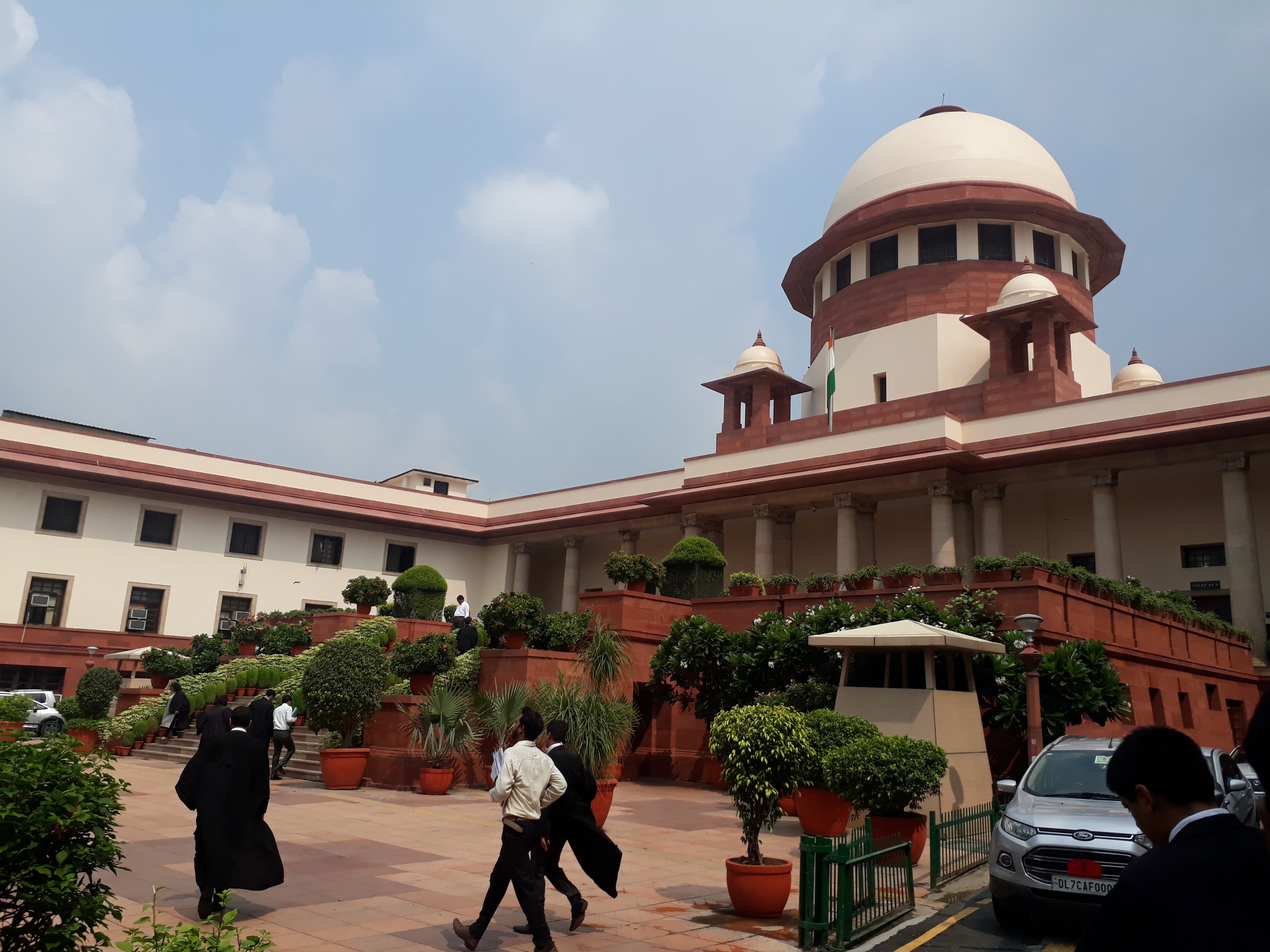
Section 144 BNSS maintenance for a wife in Lucknow has just become harder for husbands to shrink through balance-sheet engineering. On 20 April 2026, in Deepa Joshi v. Gaurav Joshi (2026 INSC 370), the Supreme Court of India held that voluntary loan repayments are not a deduction from the husband's income for the purpose of calculating his maintenance liability. The Court bluntly described loan EMIs as a capital investment — an asset the husband is building — not a household expense that can crowd out a statutorily protected obligation.
For wives in Uttar Pradesh navigating the Lucknow Family Court, this ruling closes one of the most exploited loopholes of the past decade. This guide explains how Section 144 BNSS (the new name for Section 125 CrPC), the Hindu Marriage Act, 1955 and the 2026 Supreme Court ruling now interact in Lucknow proceedings. For any contested matter, early family law consultation with an experienced advocate determines what your award will actually look like.
Table of Contents
Need Immediate Legal Help?
If you're facing a legal emergency in Lucknow, don't wait. Contact experienced criminal lawyer Advocate Onkar Pandey for immediate assistance.
The 2026 Supreme Court Ruling — Deepa Joshi v. Gaurav Joshi Explained
The judgment in Deepa Joshi v. Gaurav Joshi, delivered on 20 April 2026 by a bench of Justice Sanjay Karol and Justice Augustine George Masih, is the most important Section 144 BNSS precedent of the year. The dispute was familiar to every family lawyer in Lucknow: the husband, drawing a gross monthly salary of Rs 1,15,670, argued that after his voluntary loan repayments and a long list of personal expenses, almost nothing was left for his wife.
The Family Court had awarded only Rs 8,000 per month. The High Court raised it modestly to Rs 15,000. The Supreme Court found both figures inadequate and lifted maintenance to Rs 25,000 per month — effective retrospectively from 18 September 2024.
The Court's reasoning rests on three principles that every Lucknow practitioner now cites:
- Loan repayments are capital, not consumption — every EMI builds an asset (a flat, a car, equity) that the husband retains.
- Voluntary financial commitments cannot defeat a statutory obligation under Section 144 BNSS.
- Maintenance must reflect the wife's pre-separation standard of living, not what the husband chooses to declare as "left over" after his discretionary outflows.
The ruling does not change the text of Section 144 BNSS. It changes how every Family Court in India, including the Lucknow Family Court at Vikas Nagar, must read a husband's salary slip from now on.
Section 144 BNSS And Section 125 CrPC — What The Law Actually Says
Section 144 BNSS (Bharatiya Nagarik Suraksha Sanhita, 2023) is the direct successor of Section 125 CrPC. The provisions are nearly identical in substance — a wife unable to maintain herself can apply to a Magistrate for a monthly allowance from her husband, who has sufficient means to provide it. The change in nomenclature does not alter pending applications: a Section 125 CrPC petition filed before July 2024 is decided on the same merits as a Section 144 BNSS application filed today.
The legal architecture a Lucknow wife should understand:
| Provision | Statute | Forum In Lucknow | Type Of Relief |
|---|---|---|---|
| Section 144 BNSS | BNSS 2023 | Judicial Magistrate, Lucknow | Monthly maintenance, summary procedure |
| Section 125 CrPC | CrPC 1973 (legacy cases) | Judicial Magistrate, Lucknow | Monthly maintenance for pre-BNSS petitions |
| Section 24 HMA | Hindu Marriage Act, 1955 | Family Court, Vikas Nagar Lucknow | Interim maintenance + litigation expenses |
| Section 25 HMA | Hindu Marriage Act, 1955 | Family Court, Lucknow | Permanent alimony at divorce stage |
| Section 18 HAMA | Hindu Adoptions and Maintenance Act, 1956 | Civil Court, Lucknow | Maintenance during marriage |
| Section 20 PWDVA | Domestic Violence Act, 2005 | Magistrate, Lucknow | Monetary relief including maintenance |
A Lucknow wife often files parallel applications — Section 144 BNSS before the Magistrate and Section 24 HMA before the Family Court — because each procedure has different timelines and evidentiary standards. The Supreme Court has consistently held that awards under one provision are adjusted against the other to prevent duplication, but the right to file in parallel is preserved. A consultation with an experienced High Court lawyer is the cleanest way to decide which forum to lead with.
What Husbands Can No Longer Deduct From Their Income After Deepa Joshi
The most useful part of the 2026 ruling is its concrete list of impermissible deductions — things husbands have routinely subtracted from gross salary to reduce maintenance, which Lucknow courts can no longer accept at face value. The Supreme Court was emphatic: maintenance is a first charge on income; voluntary creation of assets cannot precede it.
Items that are now suspect when claimed as deductions from a husband's income:
- Home loan EMIs — the property remains the husband's asset; the loan builds equity, not consumption.
- Car loan EMIs — the vehicle is owned by the husband and depreciates as his asset, not a household necessity.
- Personal loans taken after separation — courts treat these with deep suspicion as manufactured liabilities.
- Voluntary PF and NPS contributions above the statutory minimum — also retained as the husband's asset.
- SIPs, mutual fund investments, fixed deposits — pure capital deployment.
- Life insurance premiums for the husband's own benefit — savings dressed up as expense.
- Loans taken to repay other loans — circular liabilities are routinely rejected as a smokescreen.
Husbands frequently file Form 16, salary slips and bank statements showing "net take-home" after these outflows. Under Deepa Joshi, the Lucknow Family Court must compute maintenance on the gross figure and then deduct only genuine, non-discretionary outflows — not asset creation in disguise. The same principle is invoked when a husband faces parallel criminal proceedings and claims that legal fees have wiped out his income; those expenses too are scrutinised.
Legal Consultation
Talk directly to Advocate Onkar Pandey
Explain your matter over a call or WhatsApp. If you take the case forward, the consultation fee adjusts into your overall fee, so there is no separate charge to begin.
What A Husband Can Legitimately Claim As A Deduction
The Supreme Court did not abolish the concept of deductions. A husband still gets credit for genuinely non-discretionary outflows that reflect a true reduction in his disposable income. The line is drawn at statutory or unavoidable obligations — not at choices that build his estate.
Categories Lucknow courts typically accept after Deepa Joshi:
- Income tax actually deducted at source and paid — verified through Form 26AS.
- Statutory PF contributions at the mandatory rate (not voluntary top-ups).
- Professional tax deducted by employer.
- Maintenance already paid to dependents from an earlier marriage under a valid court order.
- Mandatory health insurance premium deducted by employer.
- Medical expenses for a genuinely dependent parent, supported by hospital records.
Even within these categories, the husband bears the burden of proof. He must produce:
- Complete Form 16 for the latest two financial years.
- Latest salary slips for six consecutive months.
- Bank statements for all accounts for twelve months.
- Proof that any claimed dependent (parent, child from earlier marriage) is genuinely receiving the money.
- Documentary evidence — receipts, hospital bills, prescription records — for medical expenses.
Where a husband refuses to disclose, the wife's lawyer can move the Lucknow Family Court for discovery and inspection, and in extreme cases for a direction to the employer to deposit the salary directly. Concealment of income is now treated as a serious factor pushing the award upward, not downward.
How The Lucknow Family Court Applies The Deepa Joshi Principle
The Lucknow Family Court at Vikas Nagar has, in the weeks since Deepa Joshi, begun applying the ruling at the interim stage itself — under Section 24 of the Hindu Marriage Act. Earlier, husbands routinely secured low interim awards by producing salary slips loaded with EMI deductions; that strategy has lost most of its force.
The current practice in Lucknow Family Court proceedings:
- The Court starts with gross monthly income, not net take-home.
- Only statutory deductions (tax, mandatory PF, professional tax) are removed at the threshold.
- Loan EMIs are set aside unless the husband proves the loan predates the marriage, was taken jointly, or directly funded the matrimonial home for the wife's continued use.
- The wife's standard of living during cohabitation is the benchmark — not what the husband proposes today.
- If the husband is self-employed, an income tax return analysis is used; declared low income is cross-checked against lifestyle.
Where a husband is in government service or a PSU based in Lucknow, the Court can also direct the Drawing and Disbursing Officer to deposit the maintenance share directly. This procedure, well established in service-law matters, has been quietly extended to maintenance enforcement and is one of the strongest tools for a Lucknow wife facing wilful default.
For appeals against inadequate awards, the route lies to the Allahabad High Court Lucknow Bench, which has consistently followed Deepa Joshi in revision petitions since April 2026.
Step-By-Step Procedure For A Wife To Claim Maintenance In Lucknow
The procedure to claim maintenance is summary but rule-bound. Wives in Lucknow seeking Section 144 BNSS relief should expect the following sequence, with realistic timelines drawn from current court practice:
- Engage a lawyer and collect documents — marriage certificate, husband's address proof, evidence of his income and lifestyle, your own income documents (or proof of lack of income), photographs and bank statements showing pre-separation standard of living.
- File the application under Section 144 BNSS before the Judicial Magistrate having territorial jurisdiction — usually where the wife resides or where the marriage was solemnised.
- Notice and appearance — the husband is served and asked to file his reply with full salary and asset disclosures.
- Interim maintenance — most Lucknow Magistrates now grant interim maintenance within 60 to 90 days of filing, based on prima facie income.
- Evidence stage — affidavits, salary records, bank statements, tax returns. The wife can move for discovery if the husband withholds disclosure.
- Final order — typically within 12 to 18 months of filing in Lucknow.
- Enforcement — if the husband defaults, recovery is by attachment of property or salary, and in serious cases by imprisonment under Section 144(3) BNSS.
For wives who are simultaneously dealing with cruelty, dowry harassment or a criminal complaint, the Section 144 BNSS application typically runs in parallel with a Domestic Violence Act petition under Section 20 PWDVA. A coordinated strategy ensures no remedy is left on the table.
Common Mistakes That Reduce A Wife's Maintenance Award
Even after Deepa Joshi, wives in Lucknow lose ground in maintenance proceedings through avoidable errors. The pattern is consistent: poor documentation, late filing, parallel concessions and undisclosed income on the wife's side.
The most damaging mistakes to avoid:
- Filing too late — maintenance is generally awarded from the date of application, not the date of separation. Every month of delay is a month of lost award.
- Understating standard of living — wives sometimes downplay the marital lifestyle out of pride; courts use this as the benchmark and reduce awards accordingly.
- Concealing own income — a wife with independent earnings must disclose them; concealment, if proved, destroys credibility on every other issue.
- Accepting a low interim figure as a settlement signal — interim awards anchor the final figure.
- Withdrawing complaints under family pressure mid-proceedings — every withdrawal weakens the next application.
- Not producing evidence of husband's lifestyle — photographs of the marital home, vacation receipts, school fee receipts for the children, all anchor the income narrative.
Where the wife is also facing a criminal cross-complaint from the husband's family — a common counter-strategy in Lucknow — defending the criminal matter and protecting the maintenance claim must be handled by the same legal team to avoid contradictory admissions. The single biggest predictor of a good award is consistency of position across every forum from the very first hearing.
About the Author
Advocate Onkar Pandey is a practising lawyer at the Allahabad High Court Lucknow Bench with extensive experience in family law, maintenance proceedings, divorce litigation and matrimonial disputes across Uttar Pradesh. With first-hand experience representing wives and husbands in Section 144 BNSS, Section 125 CrPC, Section 24 HMA and Domestic Violence Act matters before the Lucknow Family Court at Vikas Nagar and the High Court Lucknow Bench, Advocate Pandey provides practical guidance to clients navigating maintenance claims after the 2026 Deepa Joshi v. Gaurav Joshi ruling. For legal consultation regarding Section 144 BNSS maintenance, loan-deduction defences, interim maintenance under Section 24 HMA, enforcement of maintenance orders or appeals to the High Court Lucknow Bench, contact Advocate Onkar Pandey for advice tailored to your specific situation.
Frequently Asked Questions
Can my husband deduct his home loan EMI to reduce my maintenance under Section 144 BNSS?+
No. After the Deepa Joshi v. Gaurav Joshi ruling of 20 April 2026, the Supreme Court has clearly held that voluntary loan repayments — including home loan EMIs, car loan EMIs and personal loan EMIs — are capital investments that build the husband's assets, not consumption expenses. They cannot be deducted from his income when computing maintenance under Section 144 BNSS or Section 125 CrPC. The only narrow exception is where the husband proves the loan funded the matrimonial home that the wife continues to occupy, or was jointly taken with the wife. The Lucknow Family Court now computes maintenance on gross income minus only statutory deductions like income tax and mandatory PF — EMIs are added back. A family lawyer in Lucknow can argue this point on your behalf at the very first hearing.
What is the difference between Section 144 BNSS and Section 125 CrPC for maintenance?+
Section 144 BNSS (Bharatiya Nagarik Suraksha Sanhita, 2023) is the direct legal successor of Section 125 CrPC. In substance the two provisions are nearly identical — both let a wife unable to maintain herself approach a Magistrate for monthly maintenance from a husband with sufficient means. The shift in nomenclature does not affect pending cases: a Section 125 CrPC petition filed in Lucknow before July 2024 continues under the old section, while fresh applications from July 2024 onward are filed under Section 144 BNSS. The forum (Judicial Magistrate), the procedure (summary), the evidentiary standard and the enforcement mechanism (attachment, imprisonment for default) are unchanged. All Supreme Court precedents on Section 125 CrPC — including Deepa Joshi — apply equally to Section 144 BNSS proceedings. The change is essentially a renumbering, not a re-engineering of the law.
How much maintenance can a wife claim in Lucknow Family Court in 2026?+
There is no fixed figure. The Lucknow Family Court applies a discretionary formula based on the husband's gross income, the wife's standard of living during cohabitation, and the needs of any dependent children. As a working benchmark, Indian courts often award between 20% and 33% of the husband's net taxable income as wife-only maintenance, with higher percentages where children also depend on the wife. After Deepa Joshi, courts compute the husband's income on a gross basis — only statutory deductions (tax, mandatory PF, professional tax) are removed. The wife's own earnings, if any, are factored in. For example, a husband drawing Rs 1,15,670 gross in Deepa Joshi was directed to pay Rs 25,000 per month. The figure rises substantially where the husband has government service, owns property, or has a verifiable upper-middle-class lifestyle in Lucknow.
How long does a Section 144 BNSS maintenance case take in Lucknow?+
Interim maintenance — granted under the same proceedings to support the wife during litigation — is typically ordered within 60 to 90 days of filing in Lucknow, sometimes earlier in clear cases. Final orders take longer: between 12 and 18 months depending on the husband's cooperation, evidence on both sides and the volume of cases before the Judicial Magistrate. Parallel Section 24 Hindu Marriage Act applications before the Family Court at Vikas Nagar follow a similar trajectory. If the husband is in government service or a PSU based in Lucknow, the Court can direct the Drawing and Disbursing Officer to deduct maintenance from salary at source — this dramatically accelerates enforcement. Appeals against inadequate awards lie to the Sessions Court or, by revision, to the Allahabad High Court Lucknow Bench, adding another 6 to 12 months.
What documents should a wife collect before filing for maintenance in Lucknow?+
Strong documentation is the single biggest predictor of a good maintenance award. Before filing under Section 144 BNSS in Lucknow, a wife should collect: (1) marriage certificate or proof of marriage (photographs, invitation card, witnesses); (2) husband's salary slips or income tax returns if accessible — ideally for two years; (3) husband's Form 16 if obtainable; (4) evidence of his lifestyle — photographs of the marital home, vacation receipts, children's school fee receipts, car registration, property documents; (5) her own identity proof, bank statements and any income evidence; (6) photographs and receipts showing the standard of living during cohabitation; (7) records of any cruelty, dowry demand or harassment — police complaints, medical records, WhatsApp messages. A consultation with a family lawyer in Lucknow before filing helps identify gaps; the cleaner the file at filing, the higher the interim award.
Can my husband stop paying maintenance if he takes a personal loan after the case is filed?+
No. Personal loans taken by the husband after separation or after the maintenance application is filed are viewed by courts with deep suspicion and are routinely rejected as manufactured liabilities. The Deepa Joshi ruling specifically warns against allowing voluntary post-separation financial commitments to defeat a statutorily protected maintenance obligation. The Lucknow Family Court applies a simple test: if the loan predates the separation and funded the matrimonial household, it may receive some weight; if it was taken after the case was filed, it is generally ignored. The husband bears the burden of proving the loan's bona fides through complete bank statements, loan sanction letters and end-use evidence. Concealment or manufactured EMIs, once exposed, hurt the husband's credibility on every other issue and typically push the maintenance award higher, not lower.
Does the Deepa Joshi ruling apply to interim maintenance under Section 24 Hindu Marriage Act in Lucknow?+
Yes. Although Deepa Joshi v. Gaurav Joshi arose under Section 125 CrPC / Section 144 BNSS, its reasoning applies equally to interim maintenance under Section 24 of the Hindu Marriage Act, 1955, which the Lucknow Family Court at Vikas Nagar uses to support wives during divorce or judicial separation proceedings. The underlying principle — that a husband cannot defeat a statutory maintenance obligation by routing income into asset creation — is the same. Lucknow Family Court orders since April 2026 have applied Deepa Joshi at the Section 24 stage itself, computing income on a gross basis and excluding loan EMIs from the deduction list. The same logic also informs awards under Section 20 of the Domestic Violence Act, 2005 and permanent alimony under Section 25 HMA. A consultation with an experienced advocate ensures the ruling is cited at every relevant stage from the very first hearing.
Related Services
Get Expert Legal Advice in Lucknow
20+ years experience in criminal law at Lucknow High Court. Available 24/7 for emergencies.
Disclaimer: This article is for general information purposes only and does not constitute legal advice. Every case is unique and requires specific legal analysis. For advice specific to your situation, please consult Advocate Onkar Pandey or another qualified attorney in Lucknow.