Section 24 HMA Interim Maintenance — Allahabad High Court 2026 Guide for Lucknow Wives
Quick Answer
Section 24 of the Hindu Marriage Act, 1955 gives a financially weaker spouse the right to claim interim maintenance (also called maintenance pendente lite) from the other partner during the pendency of any matrimonial proceeding — divorce, judicial separation, or restitution of conjugal rights. I…
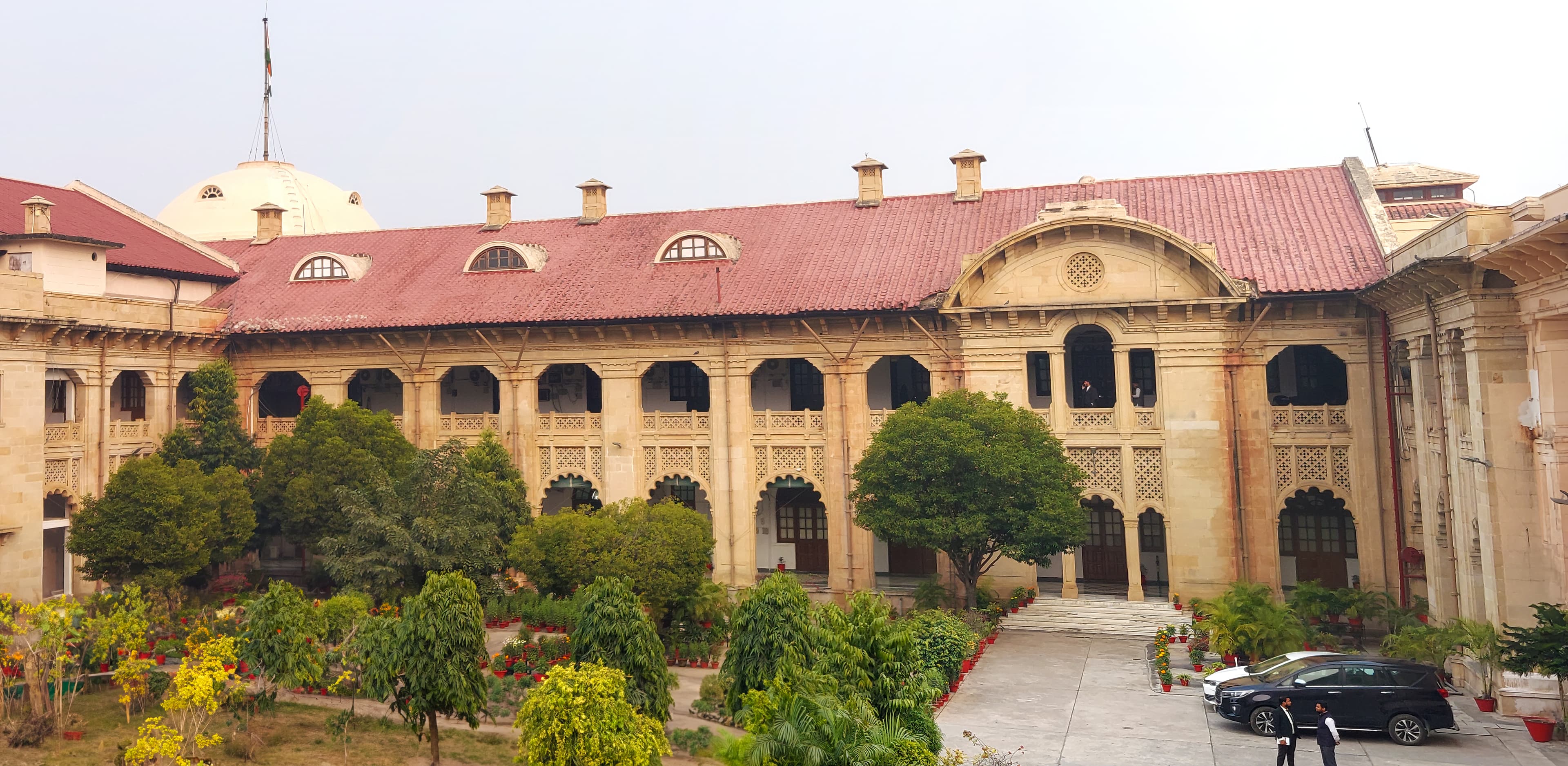
Section 24 of the Hindu Marriage Act, 1955 gives a financially weaker spouse the right to claim interim maintenance (also called maintenance pendente lite) from the other partner during the pendency of any matrimonial proceeding — divorce, judicial separation, or restitution of conjugal rights. In a recent 2026 ruling, the Allahabad High Court firmly rejected a husband's plea challenging an interim maintenance order, observing that "those who feel incapable of supporting a wife should not marry in the first place."
This article explains how Section 24 HMA works in practice before the Lucknow Family Court and Allahabad High Court Lucknow Bench, the documents you need, the formula courts use to fix the monthly amount, and what the latest 2026 judgments mean for wives and husbands across Uttar Pradesh. If you are filing or defending a maintenance application, this is the practical roadmap you need before your first hearing.
Table of Contents
Need Immediate Legal Help?
If you're facing a legal emergency in Lucknow, don't wait. Contact experienced criminal lawyer Advocate Onkar Pandey for immediate assistance.
What Section 24 HMA Actually Provides
Section 24 of the Hindu Marriage Act allows either spouse to apply for interim maintenance and litigation expenses while the main matrimonial case is pending. The relief is meant to keep the weaker spouse financially afloat — not to punish the earning spouse, but to ensure both parties can fight the case on equal terms.
The provision covers three distinct heads of relief:
- Monthly maintenance for daily living expenses, rent, food, and medical needs
- One-time litigation expenses to cover advocate fees, court fees, and document preparation
- Reasonable support for minor children living with the applicant spouse
The Lucknow Family Court hears Section 24 applications as a preliminary issue, usually within the first 60 days of filing. The order remains in force until the main petition is decided. Once the divorce or judicial separation petition is dismissed or decreed, Section 24 ceases — but the wife may then move under Section 25 HMA for permanent alimony or under Section 125 BNSS (CrPC equivalent) for ongoing maintenance. For step-by-step help on the larger family and divorce process, our practice page covers each stage.
The 2026 Allahabad High Court "Don't Marry If You Can't Maintain" Ruling
In early 2026, the Allahabad High Court dismissed a husband's appeal against a Lucknow Family Court order directing him to pay ₹4,000 per month as interim maintenance to his wife under Section 24 HMA. The husband had argued financial hardship, citing low income and existing loan obligations.
The High Court rejected this defence sharply, holding three principles that now bind every Family Court in Uttar Pradesh:
- Once a man marries, he is legally bound to support his wife — financial discomfort is not a defence
- Courts must look at the husband's earning capacity, not just the salary slip he produces
- A wife's right to dignified living during pendency cannot be defeated by manufactured income statements
The ruling sits alongside an earlier 2026 judgment where the same court held that a wife with educational qualifications cannot be denied maintenance simply because she "could" work — the choice of homemaking is a recognised social reality. These judgments make Section 24 applications stronger than ever for Lucknow wives. If your husband is hiding income or contesting maintenance on flimsy grounds, an experienced family law advocate in Lucknow can frame your application to anticipate these defences.
How Courts Calculate the Interim Maintenance Amount
There is no fixed formula in Section 24 HMA, but the Supreme Court in Rajnesh v. Neha (2020) laid down a structured framework that the Lucknow Family Court and Allahabad High Court routinely apply. The court considers:
- Gross income and lifestyle of the husband (and wife, if earning)
- Number of dependants on each side
- Standard of living during cohabitation
- Liabilities like home loan EMIs, education loans, and medical expenses
- Age and health of both spouses
As a practical benchmark, courts in Lucknow commonly award between 20% to 30% of the husband's net income as interim maintenance, depending on the wife's needs and the husband's other obligations. Where minor children live with the wife, this percentage often goes higher.
| Husband's Net Monthly Income | Typical Interim Award (No Kids) | Typical Award (With 1 Child) |
|---|---|---|
| ₹20,000 – ₹40,000 | ₹4,000 – ₹8,000 | ₹7,000 – ₹12,000 |
| ₹40,000 – ₹80,000 | ₹8,000 – ₹18,000 | ₹14,000 – ₹25,000 |
| ₹80,000 – ₹1,50,000 | ₹18,000 – ₹35,000 | ₹25,000 – ₹50,000 |
| Above ₹1,50,000 | 25% – 30% of net income | 30% – 40% of net income |
These figures are practical reference points based on Lucknow Family Court trends, not legal ceilings. The actual award depends on full disclosure through the mandatory Affidavit of Disclosure of Assets and Liabilities introduced after Rajnesh v. Neha.
Legal Consultation
Talk directly to Advocate Onkar Pandey
Explain your matter over a call or WhatsApp. If you take the case forward, the consultation fee adjusts into your overall fee, so there is no separate charge to begin.
Documents You Must File With a Section 24 Application
The Lucknow Family Court has standardised documentation requirements. A weak document set is the single biggest reason interim maintenance applications get delayed. Prepare the following before your first hearing:
- Marriage certificate or temple/wedding photographs proving valid Hindu marriage
- Affidavit of Disclosure of Assets and Liabilities in the Supreme Court's prescribed format (mandatory)
- Aadhaar, PAN, voter ID of the applicant
- Bank statements for the past 12 months showing income and expenses
- Proof of husband's income — salary slips, ITR, Form 16, or business records (if accessible)
- Proof of children's school fees, medical bills, and rent receipts (if claiming for kids)
- Copy of the main matrimonial petition already filed
If your husband is self-employed and refuses to disclose income, the court can — and routinely does — direct him to file his own asset affidavit, summon his bank, and even draw an adverse inference from non-disclosure. The 2020 Rajnesh judgment made this affidavit mandatory in every case across India. The Lucknow Family Court strictly enforces this rule, often dismissing cases where applicants fail to file the affidavit on the first date.
Step-by-Step Procedure Before Lucknow Family Court
The Section 24 HMA application is usually filed along with the main divorce or judicial separation petition, but it can also be filed later as an interlocutory application. The standard timeline before the Lucknow Family Court runs as follows:
- Day 1: File the main petition along with Section 24 application and Affidavit of Disclosure
- Day 7–15: Court issues notice to the respondent spouse
- Day 30–45: Respondent files reply along with their own Affidavit of Disclosure
- Day 45–60: Both sides argue the interim application; court may suggest interim figure on consent
- Day 60–90: Reasoned order on interim maintenance amount and litigation expenses
- Ongoing: Maintenance is paid monthly until final disposal of main petition
If the husband fails to pay, the wife can file an execution application under Section 28A HMA. The Family Court has powers to attach the husband's salary, freeze his bank account, or even order detention in civil prison for wilful default. The Allahabad High Court, in a 2026 directive, has further ordered all UP Family Courts to dispose of pending maintenance cases within six months of filing — a major win for applicants previously stuck in years-long delays.
Defences Available to the Husband
The husband cannot escape Section 24 simply by claiming low income, but there are genuine defences that the Lucknow Family Court does accept. Understanding these is critical whether you are claiming or defending maintenance.
Recognised defences include:
- Wife is voluntarily living in adultery — if proven with admissible evidence, Section 24 itself denies relief in some cases (though courts tread carefully here)
- Wife earns equal or more than the husband — supported by ITR, employer letter, or bank credits
- Wife refuses without sufficient reason to live with husband after a Section 9 RCR decree
- The marriage itself is void (not merely voidable) — though even void marriage parties can claim under some circumstances
Importantly, the Allahabad High Court has held that a wife's capacity to earn (qualifications, past employment) does not by itself disentitle her — the court looks at actual income. Husbands often try to file fabricated income tax returns showing lower income; the Lucknow Family Court routinely calls for original Form 16 from the employer to cross-check. If you suspect concealment, your advocate in Lucknow can file an application for production of records under Order XI CPC.
Modification, Enhancement, and Recovery of Arrears
An interim maintenance order under Section 24 is not cast in stone. Either party can file an application for modification if circumstances change materially after the original order. Common grounds the Lucknow Family Court accepts for enhancement or reduction include:
- Husband's salary has increased or decreased substantially
- Wife has had a child after the order, increasing expenses
- Wife has obtained employment or her job has been lost
- A dependant elderly parent has come on either side
- Medical emergency requiring lump-sum support
For arrears, the wife should not delay. Courts look unfavourably on applicants who allow arrears to accumulate for years and then suddenly demand payment. File an execution petition within 12 months of the first default. If the husband is a government employee, the court can directly order salary attachment under Section 60 CPC read with Order XXI Rule 48.
Where the husband has alternative remedies pending — such as a transfer petition or a quashing case — the wife's interim maintenance continues regardless. The 2026 Allahabad ruling makes it clear that procedural manoeuvres cannot defeat the substantive right under Section 24.
About the Author
Advocate Onkar Pandey is a practicing lawyer at Lucknow High Court with extensive experience in criminal law, family law, and civil litigation. With a deep understanding of the Indian legal system and years of courtroom experience in Lucknow Family Court and Allahabad High Court Lucknow Bench, Advocate Pandey provides practical legal guidance to clients across Uttar Pradesh. For legal consultation regarding Section 24 HMA interim maintenance, divorce, or any family law matter, contact Advocate Onkar Pandey for expert advice tailored to your specific situation.
Frequently Asked Questions
How much interim maintenance can a wife claim under Section 24 HMA in Lucknow?+
There is no fixed amount under Section 24 HMA. The Lucknow Family Court typically awards between 20% to 30% of the husband's net monthly income, going higher when minor children live with the wife. For a husband earning ₹40,000–₹80,000 per month, awards usually fall in the ₹8,000–₹18,000 range without children, and ₹14,000–₹25,000 with one child. The court applies the framework laid down in Rajnesh v. Neha (2020), considering the husband's income, lifestyle, liabilities, the wife's reasonable needs, and the standard of living during cohabitation. The mandatory Affidavit of Disclosure of Assets and Liabilities decides the actual figure.
Can a husband refuse interim maintenance citing financial hardship?+
No, financial hardship is not a valid defence. The Allahabad High Court ruled in 2026 that once a man marries, he is legally bound to support his wife, and those incapable of doing so should not marry in the first place. Courts examine earning capacity, not just declared salary. If the husband is unemployed but able-bodied and qualified, the court will impute notional income. Genuine permanent disability or verifiable medical incapacity may reduce the quantum, but rarely eliminate the obligation. Existing loan EMIs are considered as a factor, but they do not automatically cancel maintenance liability under Section 24 of the Hindu Marriage Act.
How long does Section 24 maintenance take to be granted in Lucknow Family Court?+
After filing, the Lucknow Family Court typically grants interim maintenance within 60 to 90 days. The standard timeline is: notice to the husband within 7–15 days, his reply with asset disclosure within 30–45 days, arguments by both sides at 45–60 days, and a reasoned order at 60–90 days. The Allahabad High Court has directed all UP Family Courts in 2026 to dispose of maintenance cases within six months of filing. Filing the mandatory Affidavit of Disclosure of Assets and Liabilities along with the original application speeds up the process significantly. Delay in filing the affidavit is the single biggest cause of postponed orders.
What happens if my husband does not pay the interim maintenance ordered?+
Non-payment is a serious matter. You can file an execution application under Section 28A of the Hindu Marriage Act read with Order XXI of the CPC before the same Family Court that passed the order. The court has wide powers — it can attach the husband's salary directly with the employer, freeze his bank accounts, attach movable property, and in cases of wilful and persistent default, order detention in civil prison for up to three months. If the husband is a government employee, salary attachment is straightforward under Section 60 CPC. File the execution application within 12 months of the first default to avoid limitation issues.
Can a working wife also claim Section 24 HMA maintenance?+
Yes, a working wife can claim Section 24 HMA maintenance if her income is significantly lower than the husband's. The Allahabad High Court has clarified that mere capacity to earn or educational qualifications do not disentitle a wife — the court looks at actual income, not theoretical earning potential. If the wife earns ₹20,000 but the husband earns ₹1,00,000, the court will balance the difference and award maintenance to maintain the standard of living established during marriage. However, if the wife's income is equal or higher, the court usually denies maintenance. Full disclosure of income through ITR, salary slips, and bank statements is mandatory for both spouses.
Is Section 24 HMA different from Section 125 BNSS maintenance?+
Yes, the two operate separately. Section 24 of the Hindu Marriage Act applies only between Hindu spouses and only while the main matrimonial petition (divorce, judicial separation, restitution) is pending — it ends when the petition is decided. Section 125 of the BNSS (the new CrPC) applies regardless of religion and works independently of any matrimonial proceeding. A wife can file under both simultaneously, but the court adjusts the amounts to avoid double benefit. Section 125 BNSS is filed before the Magistrate's Court while Section 24 HMA is filed before the Family Court. For long-term security after divorce, Section 25 HMA permanent alimony is the appropriate remedy.
Can interim maintenance be modified later if circumstances change?+
Yes, both spouses can seek modification of an interim maintenance order under Section 24 if circumstances change materially. Common grounds the Lucknow Family Court accepts include a substantial salary increase or job loss, the wife having obtained employment, a new child being born, an elderly dependant joining either side, or a major medical emergency. File a modification application before the same court that passed the original order, attaching documentary proof of the changed circumstances. The court reassesses the situation and may enhance, reduce, or cancel the maintenance accordingly. Importantly, modification applies only prospectively — accumulated arrears under the previous order remain payable in full.
Related Guides
Related Services
Get Expert Legal Advice in Lucknow
20+ years experience in criminal law at Lucknow High Court. Available 24/7 for emergencies.
Disclaimer: This article is for general information purposes only and does not constitute legal advice. Every case is unique and requires specific legal analysis. For advice specific to your situation, please consult Advocate Onkar Pandey or another qualified attorney in Lucknow.