Section 125 CrPC Wife Maintenance in Lucknow — Complete Legal Guide 2026
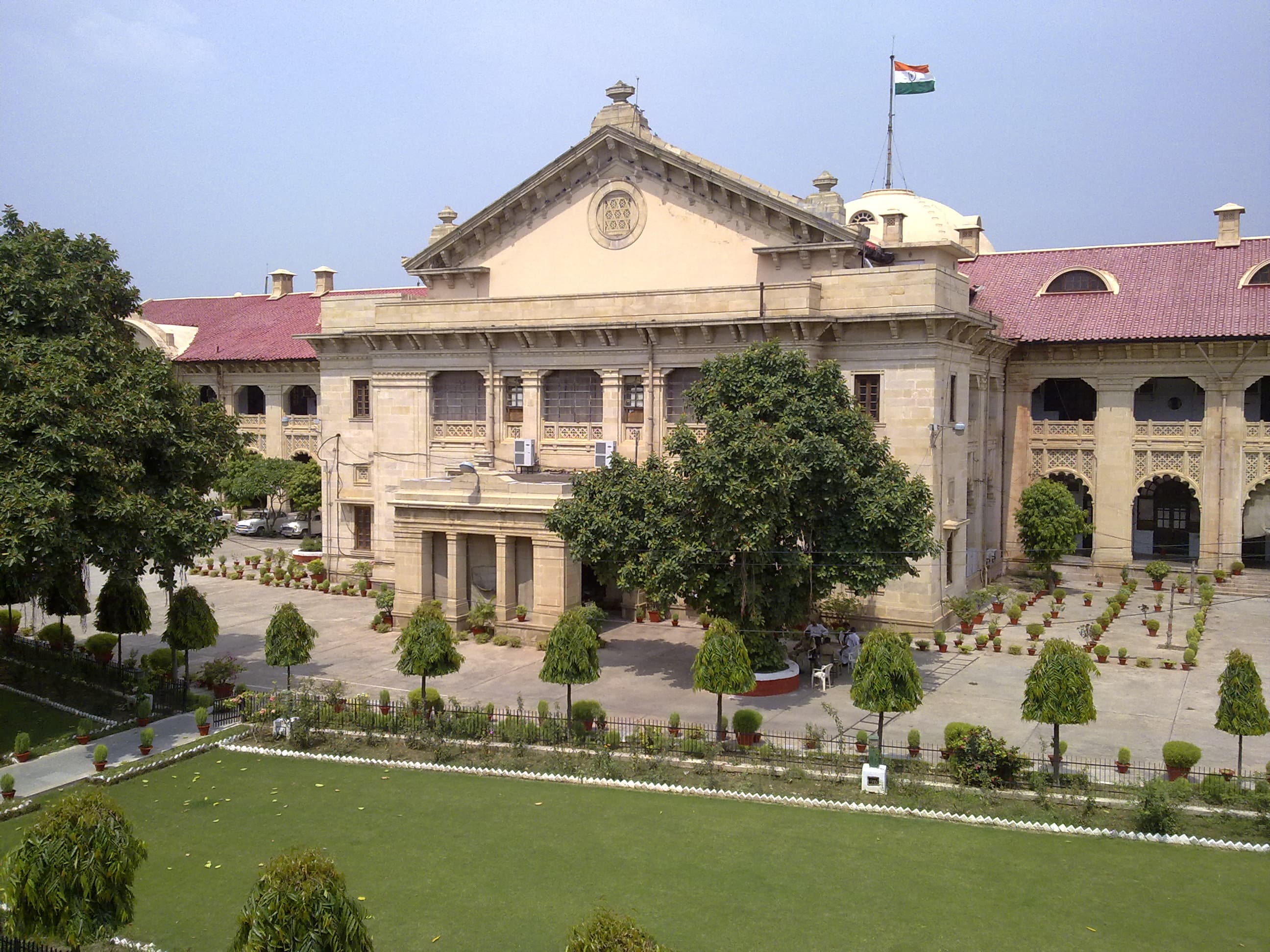
Section 125 CrPC — now re-enacted as Section 144 of the Bharatiya Nagarik Suraksha Sanhita (BNSS) 2023 — is the most widely used legal remedy for a wife seeking financial support from a husband who has neglected or refused to maintain her. In Lucknow, hundreds of maintenance applications are filed before the Lucknow Family Court and the Chief Judicial Magistrate (CJM) Court each year. This provision cuts across religions, applying equally to Hindu, Muslim, and Christian wives. The Allahabad High Court's Lucknow Bench has delivered several significant rulings in 2026 that clarify exactly what a wife can claim, how courts calculate the amount, and what defences husbands can no longer raise. Whether you are a wife considering filing, a husband contesting an application, or a family member trying to understand the process, this guide covers every practical aspect of maintenance law as it stands in Lucknow today.
Table of Contents
Need Immediate Legal Help?
If you're facing a legal emergency in Lucknow, don't wait. Contact experienced criminal lawyer Advocate Onkar Pandey for immediate assistance.
What Is Section 125 CrPC and the New BNSS Equivalent
Section 125 of the Code of Criminal Procedure (CrPC), 1973 provided a summary remedy for maintenance of wives, children, and parents. With the introduction of the Bharatiya Nagarik Suraksha Sanhita (BNSS) 2023, this provision is now covered under Section 144 BNSS, effective from July 1, 2024. The substance of the law remains substantially unchanged — only the section number shifted.
Under Section 144 BNSS, if a person of sufficient means neglects or refuses to maintain his wife who is unable to maintain herself, a Magistrate of the first class can order a monthly allowance for her maintenance. Key features of this remedy include:
- It is a summary civil remedy embedded in a criminal procedure code — faster than a civil suit.
- Applications are filed before the Judicial Magistrate First Class or the designated Family Court in Lucknow.
- The law applies regardless of religion — Hindu, Muslim, Christian, Parsi wives can all invoke it.
- Proceedings are relatively swift compared to a full civil maintenance suit under the Hindu Adoptions and Maintenance Act.
- The court can grant interim maintenance during the pendency of the main application.
For wives who also need protection from domestic violence, this remedy can run alongside proceedings under the Protection of Women from Domestic Violence Act, 2005. Consult an advocate at our family law practice in Lucknow to decide which combination of remedies is most effective for your situation.
Who Can Claim Maintenance Under Section 144 BNSS
Not every woman can automatically invoke Section 144 BNSS. The law defines specific eligibility conditions that must be met before the Magistrate has jurisdiction to grant the order.
Eligible claimants include:
- Wife — a legally married woman whose husband has sufficient means but neglects or refuses to maintain her.
- Divorced wife — a woman who has been divorced, or who has obtained a divorce, and has not remarried.
- Children — legitimate or illegitimate minor children, and major children who are physically or mentally unable to maintain themselves.
- Parents — father or mother unable to maintain themselves.
For a wife specifically, two conditions must be proved:
- The husband has sufficient means to maintain her (income, property, earning capacity).
- The husband has neglected or refused to maintain her — a living separation without financial support is sufficient.
The wife must also show she is unable to maintain herself. However — as the Allahabad High Court has confirmed in 2026 — this does not mean she must be destitute. A wife earning less than her husband, or whose standard of living has sharply declined after separation, qualifies. Reach out to Advocate Onkar Pandey for a personal assessment of whether your facts satisfy these conditions.
2026 Allahabad High Court Rulings — What Has Changed
The Allahabad High Court's Lucknow Bench issued several noteworthy maintenance rulings in early 2026 that significantly clarify the law. These decisions are binding on all Family Courts and Magistrate Courts in Uttar Pradesh.
Key holdings from 2026:
- Employment alone does not bar maintenance: The Court held that a wife's employment or income-earning status is not, by itself, a ground to deny or reduce maintenance. The test is whether there is a substantial disparity in earning capacity between the spouses.
- High qualification is not a disqualification: A wife who holds a degree or vocational skill cannot be denied maintenance simply on the ground that she could earn — courts look at actual income, not theoretical earning potential.
- Maintenance is a recurring entitlement: If a husband breaches a mediation or consent settlement on maintenance, the wife does not need to file a fresh application. She may revive the existing proceedings, because maintenance is an "ambulatory, recurring entitlement" that crystallises afresh upon each breach.
- 25% of husband's income as a benchmark: The Allahabad High Court affirmed that awarding approximately 25% of the husband's net income as maintenance is a well-established and reasonable benchmark, though courts can deviate based on the family's standard of living.
These rulings make it considerably harder for husbands to defeat maintenance claims on technical grounds. If your case is pending before a Lucknow Magistrate or Family Court, these judgments are directly applicable and should be cited through your advocate appearing before the Allahabad High Court Lucknow Bench.
Legal Consultation
Talk directly to Advocate Onkar Pandey
Explain your matter over a call or WhatsApp. If you take the case forward, the consultation fee adjusts into your overall fee, so there is no separate charge to begin.
How Much Maintenance Can a Wife Claim in Lucknow
There is no statutory cap on the maintenance amount under Section 144 BNSS. Courts exercise judicial discretion based on several factors. The Allahabad High Court in 2026 confirmed the 25% of net income benchmark, but this is a floor, not a ceiling.
| Factor | How Courts Assess It | Typical Impact on Amount |
|---|---|---|
| Husband's income | Salary slips, IT returns, business income, property rent | Primary basis — 20–33% of net income is common |
| Wife's own income | Actual earnings — not earning capacity | Reduces award only if substantial |
| Standard of living during marriage | Lifestyle, residence, children's schooling | Courts preserve pre-separation standard |
| Number of dependents | Minor children whose custody the husband also maintains | May reduce wife's share; separate child maintenance also ordered |
| Duration of marriage | Short vs long marriage | Longer marriages tend to yield higher awards |
In Lucknow, Magistrate courts routinely grant interim maintenance within 60–90 days of filing, pending the final order. This interim amount typically equals 50–75% of the expected final award. Once the final order is passed, the amount is payable from the date of application — not the date of the order.
Step-by-Step Process to File in Lucknow Family Court
Filing a maintenance application in Lucknow involves a defined procedural sequence. Here is the practical roadmap:
- Consult a family law advocate — prepare a draft application under Section 144 BNSS detailing the marriage, separation, husband's income, and wife's inability to maintain herself.
- Gather documents before filing:
- Marriage certificate or nikahnama
- Proof of separation (police complaint, court order, or sworn affidavit)
- Husband's income evidence (salary certificate, ITR, Form 16)
- Wife's income details (if any)
- Photographs and address proof of both parties
- Children's birth certificates (if claiming child maintenance together)
- File before the appropriate court — in Lucknow, the Lucknow Family Court (for parties living within its jurisdiction) or the CJM Court handles these applications.
- Apply for interim maintenance on the first date, supported by an affidavit of income and expenses.
- Attend hearings — the court issues summons to the husband, who must appear and file a reply within the time given.
- Evidence stage — both parties file affidavits of evidence, and cross-examination may be scheduled.
- Final order — the Magistrate or Family Court judge passes the order fixing the maintenance amount.
If the husband challenges the order before the Sessions Court or the Allahabad High Court, your advocate must be prepared to defend the award citing the 2026 rulings outlined above.
Enforcement — What If the Husband Refuses to Pay
A maintenance order is only as good as its enforcement. Unfortunately, many husbands in UP ignore orders for months after they are passed. Section 144 BNSS and its predecessor provide robust enforcement tools that courts in Lucknow actively use.
Enforcement mechanisms available to a wife:
- Warrant of arrest: The wife can file an application for breach of the maintenance order. The Magistrate can issue a warrant and have the husband arrested if he has failed to pay without sufficient cause.
- Imprisonment: The defaulting husband can be sentenced to imprisonment for up to one month for each month of default — this is a powerful deterrent.
- Attachment of property: The Magistrate can attach the husband's movable or immovable property in UP to recover the arrears.
- Salary attachment: If the husband is in government service or a salaried private job, the court can direct his employer to deduct maintenance from salary and remit it directly to the wife.
Courts in Lucknow have become progressively firm on enforcement following Supreme Court directions. If your existing order is being ignored, filing an enforcement application immediately — rather than waiting — is strongly advised. You can also approach the family law advocates at our Lucknow office to initiate enforcement proceedings without delay.
Common Defences by Husbands — and Court Responses
Husbands in maintenance proceedings routinely raise a set of standard defences. The 2026 Allahabad High Court rulings have effectively weakened several of these. Here is how courts now respond to the most common arguments:
| Defence Raised by Husband | Court's Position (2026) |
|---|---|
| Wife is employed / earning income | Employment alone is not a bar. Courts look at the disparity in earning capacity. |
| Wife is highly qualified and can earn | Potential earning capacity is irrelevant — actual income is what matters. |
| Parties reached a settlement earlier | If the husband breaches the settlement, the wife can revive the proceedings. |
| Wife left matrimonial home without cause | Valid only if the husband can positively prove the wife deserted without justification. Domestic abuse is a complete answer. |
| Husband has taken a second wife (Muslim personal law) | First wife's maintenance rights remain; the husband's means must support both. |
| Husband is unemployed / low income | Court examines actual earning capacity — not just declared income. Lifestyle evidence is admissible. |
If you are a husband facing a maintenance application and believe the claim is inflated, document your actual financial position carefully with bank statements, ITRs, and expense records. Consulting a criminal and family lawyer in Lucknow early in the proceedings prevents unfavourable interim orders from hardening into final orders.
About the Author
Advocate Onkar Pandey is a practicing lawyer at Lucknow High Court with extensive experience in criminal law, family law, and civil litigation. With a deep understanding of the Indian legal system and years of courtroom experience in Lucknow courts, Advocate Pandey provides practical legal guidance to clients across Uttar Pradesh. For legal consultation regarding wife maintenance and Section 125 CrPC proceedings in Lucknow, contact Advocate Onkar Pandey for expert advice tailored to your specific situation.
Frequently Asked Questions
Can a working wife claim maintenance under Section 125 CrPC in Lucknow?+
Yes. The Allahabad High Court in 2026 expressly held that a wife's employment is not, by itself, a ground to deny maintenance under Section 125 CrPC (now Section 144 BNSS). The court focuses on whether there is a substantial disparity between the husband's income and the wife's income. If the wife earns significantly less than the husband, or if her income is insufficient to maintain the standard of living she enjoyed during the marriage, she remains entitled to maintenance. A wife earning ₹15,000 per month can still receive maintenance from a husband earning ₹80,000 per month. If you are unsure whether your income makes you ineligible, consult a family law advocate in Lucknow for a case-specific assessment.
How much maintenance amount can a wife get from Lucknow Family Court in 2026?+
There is no fixed maximum under Section 144 BNSS, but the Allahabad High Court has confirmed that awarding approximately 25% of the husband's net income is a well-established benchmark. In practice, awards in Lucknow courts range from 20% to 33% of the husband's verified income, depending on the family's standard of living, number of dependent children, and duration of the marriage. Courts also look at the wife's reasonable monthly expenses and compare them to the household income. If the husband is a government employee in UP, salary slips filed through discovery are difficult to dispute. Courts can also estimate income from lifestyle evidence — vehicle ownership, children's school fees, and visible property holdings — when declared income appears artificially low.
How long does a Section 125 CrPC maintenance case take in Lucknow?+
In Lucknow, an application for interim maintenance is typically heard and decided within 60 to 90 days of filing — often on the third or fourth hearing date. The final maintenance order after full evidence takes longer, typically 1 to 2 years in the Family Court or Magistrate Court depending on how contested the proceedings are. The Supreme Court has directed that maintenance cases should ideally be decided within 60 days, though backlogs in Lucknow courts make this aspirational. If the husband does not contest aggressively, proceedings can conclude faster. Your family law advocate can file for expedited hearing if there is urgency — for example, if the wife has minor children and no income source.
Can maintenance be revised or increased after an order is passed?+
Yes. Under Section 144 BNSS, either party can file an application for revision of maintenance if there has been a change in circumstances. Common grounds for a wife to seek an increase include: the husband's promotion or salary hike, the wife's medical expenses, inflationary rise in cost of living, or the birth of an additional child. The wife must show a material change since the last order was passed. In Lucknow Family Court, revision petitions are common and courts generally grant upward revisions where the husband's income has demonstrably risen. The 2026 Allahabad High Court ruling also allows a wife whose mediation settlement was breached to revive the original proceedings without filing a fresh application, effectively treating ongoing defaults as a new cause of action.
What happens if the husband refuses to pay court-ordered maintenance in UP?+
Non-payment of a maintenance order is a serious default. The wife should immediately file an application for breach before the same court that passed the order. The Magistrate or Family Court judge can then issue a warrant of arrest against the husband. If the husband has no sufficient cause for non-payment, the court can sentence him to civil imprisonment for up to one month for each month of default. The court can also order attachment and sale of the husband's property in UP to recover arrears. If the husband is a government or private sector employee, the court can direct his employer to deduct and remit maintenance from his salary. Contact a lawyer in Lucknow immediately if payments have stopped — delays allow arrears to accumulate and husbands to dissipate assets.
Can a divorced wife claim maintenance under Section 125 CrPC?+
Yes, subject to conditions. A divorced wife who has not remarried and who is unable to maintain herself can claim maintenance under Section 144 BNSS. This right was significantly reinforced by the Supreme Court and continues in force. However, in Muslim personal law, a divorced Muslim wife's entitlement under Section 125 CrPC exists but intersects with the Muslim Women (Protection of Rights on Divorce) Act, 1986, which limits maintenance to the iddat period unless the wife demonstrates she cannot maintain herself. The Supreme Court has held that a divorced Muslim wife can still invoke Section 125 CrPC. For Hindu, Christian, and Parsi wives, the right to claim maintenance after divorce continues until remarriage. An experienced family law advocate in Lucknow can advise on which provision gives better relief in your specific situation.
Can the husband get maintenance reduced if he has another family to support?+
Having dependents from a second relationship or second marriage does not automatically entitle the husband to a reduction in the first wife's maintenance. Courts in Lucknow examine the husband's total financial capacity and distribute obligations proportionately. Under Section 144 BNSS, the husband's liability to maintain children from both families is considered, but the first wife's maintenance is not reduced merely because the husband chose to take on additional obligations. The key test remains whether the husband has sufficient means — meaning a surplus beyond his own basic needs. The Allahabad High Court has held that the husband cannot voluntarily reduce his apparent income by taking on further liabilities to defeat a maintenance order. Contact Advocate Onkar Pandey if you are facing such a situation and need tailored legal advice.
Related Services
Get Expert Legal Advice in Lucknow
20+ years experience in criminal law at Lucknow High Court. Available 24/7 for emergencies.
Disclaimer: This article is for general information purposes only and does not constitute legal advice. Every case is unique and requires specific legal analysis. For advice specific to your situation, please consult Advocate Onkar Pandey or another qualified attorney in Lucknow.