Building collapse: Who can be held criminally liable in India?
Quick Answer
Building collapse criminal liability in Lucknow depends on who owned, designed, constructed, certified, altered, maintained, or supervised the structure and what evidence connects that person to the deaths or injuries. An owner, builder, contractor, structural engineer, architect, supervisor, soc…
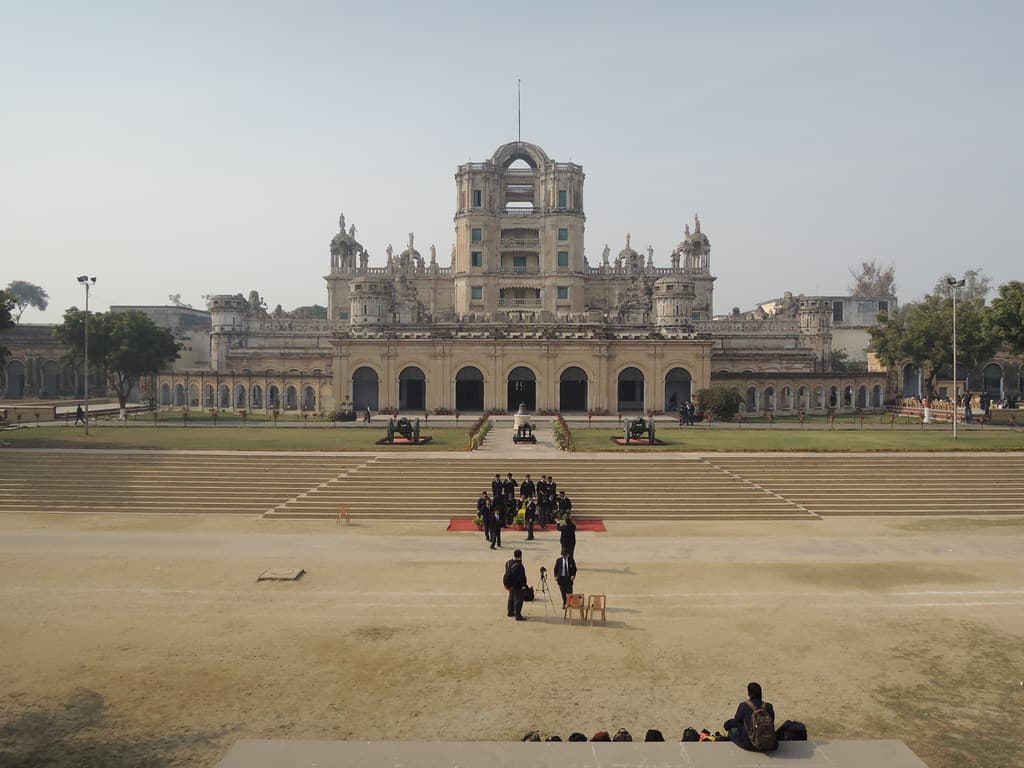
Building collapse criminal liability in Lucknow depends on who owned, designed, constructed, certified, altered, maintained, or supervised the structure and what evidence connects that person to the deaths or injuries. An owner, builder, contractor, structural engineer, architect, supervisor, society office-bearer, or public official may face investigation where a negligent act, illegal construction, suppression of defects, or deliberate omission contributed to the collapse.
The police may register an FIR and investigate offences under the Bharatiya Nyaya Sanhita, 2023 such as Section 106 for causing death by a rash or negligent act, Section 105 where facts suggest culpable homicide, and Sections 318, 336, 337, 338, 61 and 3(5) where cheating, forgery, conspiracy or common intention is alleged. Victims may seek an FIR, medical and death compensation, a magisterial or technical inquiry, protection from further danger, and High Court relief. For related arrest procedure, see this criminal lawyer Lucknow guide and the practical material on illegal detention compensation in UP.
Table of Contents
Need Immediate Legal Help?
If you're facing a legal emergency in Lucknow, don't wait. Contact experienced criminal lawyer Advocate Onkar Pandey for immediate assistance.
Who can be arrested and what remedies are available?
Arrest is not automatic merely because a person is connected with the building. The investigating officer must examine the person’s specific duty, knowledge, conduct, records, and the causal link between that conduct and the collapse. A builder who used substandard material may be treated differently from a tenant who had no control over construction or repairs.
The closest reported authority located for this issue is Rahul s/o Rajendra Jain v. State of Maharashtra through ..., 2024: Supreme(Bom) 33. The Bombay High Court found a prima facie case for trial and recognised that municipal authorities may also have a duty to act against dangerous structures. The decision supports examining acts and omissions together.
| Person or institution | When criminal exposure may arise | Possible remedy or defence |
|---|---|---|
| Owner or builder | Illegal construction, ignored warnings, unsafe alterations or defective materials | FIR response, bail, anticipatory bail under Section 482 BNSS, or quashing under Section 528 BNSS |
| Contractor, engineer or architect | Defective design, false certification, poor supervision or material substitution | Technical records, expert opinion and proof of limited role |
| Municipal officer | Failure to act despite a known dangerous condition or improper approval | Duty records, inspection files and proof of no knowledge |
| Tenant or occupant | Usually only where independent culpable conduct or a legal duty is proved | Petition to quash FIR or discharge application |
- Victims can approach the police under the FIR procedure and preserve photographs, videos, notices, bills and witness details.
- Injured persons may seek treatment records, disability compensation and prosecution-related expenses.
- Families of deceased persons may pursue compensation before the appropriate authority or court without waiting for the criminal trial to conclude.
Which BNS offences may apply after a collapse?
The charge depends on the result and the mental element proved. A collapse causing death through rash or negligent conduct may attract Section 106(1) BNS. Where the prosecution alleges knowledge that the conduct was likely to cause death, Section 105 BNS may be considered. The police cannot select a serious charge only because the incident caused public concern; the FIR and later charge-sheet must be supported by material.
Additional provisions may arise where the building was sold or occupied through false documents. The research materials identify Sections 318, 336, 337 and 338 BNS for cheating and forgery-related conduct, Section 61 for criminal conspiracy, and Section 3(5) for common intention. The exact section can change with the date of occurrence and the evidence.
- Death by negligence: Section 106 BNS, where the evidence shows a rash or negligent act caused death.
- Culpable homicide: Section 105 BNS, where knowledge or a more serious mental element is alleged.
- Attempt: Section 110 BNS may be examined where conduct allegedly attempted culpable homicide but death did not occur.
- Cheating and documents: Section 318 and Sections 336 to 338 BNS may apply to deceptive sale, forged approvals or false certificates.
- Group liability: Sections 61 and 3(5) BNS require proof of conspiracy or common intention; association alone is insufficient.
In Nagasankar and Another v. Inspector of Police, 2021, the reported material indicates that the FIR was quashed against tenants where no legal duty or culpable knowledge was shown. That distinction is useful when preparing a FIR quashing petition before the Allahabad High Court.
How to start the case in Lucknow and Uttar Pradesh
Victims should first secure safety and medical assistance. A written complaint should identify the address, date and time of collapse, deaths and injuries, named persons responsible for construction or maintenance, prior complaints, municipal notices, and the records that should be seized. Attach photographs and preserve the original digital files.
- Submit the complaint to the police station having territorial jurisdiction. Ask for registration and a copy of the FIR.
- If the police do not register it, send the complaint to the senior police officer and retain postal or electronic proof.
- Seek appropriate judicial directions before the competent Magistrate if the grievance is not acted upon.
- Request preservation of CCTV footage, building plans, sanction files, material invoices, inspection reports and call records where legally relevant.
- Obtain the post-mortem, injury, forensic and structural inspection reports. An independent structural engineer’s opinion can help identify the failure mechanism.
- Monitor the investigation and challenge an inadequate closure report before the competent court.
In Lucknow, the investigation may involve the local police, municipal authorities, fire officials and technical agencies. A victim can consult a High Court lawyer in Lucknow if the police fail to investigate, if officials are shielding responsible persons, or if immediate protection is required under Article 21.
| Stage | Practical action | Documents to retain |
|---|---|---|
| First 24 hours | Safety, hospital treatment, complaint and evidence preservation | Photos, videos, hospital papers, witness contacts |
| First week | FIR follow-up and technical inspection request | FIR, complaint receipts, plans, notices and ownership papers |
| Investigation | Supply evidence and track statements and reports | Expert opinion, invoices, certificates and prior complaints |
| After police report | Object to closure or prepare for trial and compensation proceedings | Final report, protest petition and loss records |
Legal Consultation
Talk directly to Advocate Onkar Pandey
Explain your matter over a call or WhatsApp. If you take the case forward, the consultation fee adjusts into your overall fee, so there is no separate charge to begin.
Arrest, anticipatory bail and High Court remedies
A person named in a collapse FIR should obtain the FIR, understand the exact allegations, and avoid contacting witnesses or altering records. Arrest decisions must follow the statutory safeguards and the facts of the investigation. A notice to join investigation may be relevant, but it does not by itself decide guilt.
For a bailable offence, the right to bail is governed by Section 480 BNSS. Where the accused has undergone the prescribed portion of the maximum period, Section 481 BNSS may become relevant. Before arrest, an accused apprehending arrest may apply for anticipatory bail under Section 482 BNSS before the Sessions Court or the Allahabad High Court. After arrest or rejection at the lower level, the High Court or Sessions Court may exercise bail powers under Section 484 BNSS.
- File the FIR, notice, arrest apprehension material, identity documents and relevant ownership or employment records.
- Explain the applicant’s precise role and attach documents showing absence of control, knowledge or technical responsibility.
- Disclose prior cooperation with the investigation and offer conditions such as joining inquiry.
- For a quashing request, examine whether the alleged facts satisfy the offence ingredients under Section 528 BNSS.
The 2023 Lucknow builder-arrest stay material reported an interim Allahabad High Court order in a collapse-related FIR. It shows that the Lucknow Bench examines the alleged role, intent and evidentiary basis before permitting coercive action; it is not a final ruling on guilt. For practical arrest safeguards, readers may also review arrest, bail and FIR rights in Lucknow.
Victim compensation, public authority liability and civil remedies
Criminal prosecution and compensation are separate tracks. The family of a deceased person should preserve age, occupation, income, dependency and treatment records. An injured survivor should preserve disability assessments, future treatment estimates and proof of lost earnings.
A complaint may also be made to the municipal body, development authority, disaster-management authority or other competent department where unsafe construction or official inaction is alleged. The Bombay High Court reasoning in Rahul s/o Rajendra Jain v. State of Maharashtra through ..., 2024: Supreme(Bom) 33, supports investigating whether a public authority knew of a dangerous structure and failed to act.
- Seek emergency relocation or sealing of adjoining unsafe portions through the competent authority.
- Claim available statutory or administrative compensation for death, injury and rehabilitation.
- Consider a civil claim for medical expenses, dependency loss, property loss and other provable damage.
- Where fundamental rights are affected by state inaction, obtain advice on an appropriate writ remedy before the Allahabad High Court.
Tenants and purchasers may have separate consumer or civil claims depending on the contract, possession status and defect. A civil litigation consultation should be based on the agreement, payment record, possession documents and technical report. Do not destroy damaged material before inspection unless safety authorities direct removal.
Lucknow costs and realistic procedural timelines
Fees depend on urgency, document volume, the number of accused, whether arrest is imminent, and whether proceedings are before the CJM Court Lucknow, Sessions Court Lucknow or the Allahabad High Court. The figures below are practical indicative ranges, not a government fee schedule; court fees, certified copies, typing, filing and expert charges may be additional.
| Work | Indicative professional fee | Usual first procedural step |
|---|---|---|
| Complaint and FIR strategy | ₹5,000–₹20,000 | Review papers and submit complaint within 1–3 working days |
| Sessions anticipatory bail | ₹25,000–₹75,000 | Filing commonly within 1–5 working days after FIR or arrest apprehension |
| High Court anticipatory bail or bail | ₹40,000–₹1,25,000 | Listing depends on roster, defects and urgency |
| FIR quashing under Section 528 BNSS | ₹50,000–₹1,50,000 | Preparation after collecting FIR and supporting records |
| Victim representation or writ advice | ₹25,000–₹1,00,000 | Initial legal review within 3–10 working days |
Listing in the Lucknow Bench can vary with urgency, filing defects, court holidays and the roster. In our practice, an urgent arrest matter is prepared immediately after receiving the FIR and supporting papers; the actual listing is controlled by the court registry and judicial directions. The consultation fee adjusts into your case fee if you proceed, so there is no separate charge to begin.
Practitioner's Note from the Lucknow Bench
In our practice before the Lucknow Bench, such applications are typically listed after the registry checks the FIR, annexures, vakalatnama, court fee and paper-book requirements. Urgent anticipatory bail matters are prepared for filing within one to three working days when the FIR and arrest facts are available, but the listing date depends on the roster, urgency order and registry objections.
For a builder or contractor, we ask for the FIR, arrest notice if any, building approval, completion certificate, agreements, invoices, appointment letters, inspection reports, prior complaints and proof of the applicant’s actual role. For a victim, we ask for the complaint, FIR or refusal proof, death or injury records, photographs, ownership or tenancy papers, municipal notices and details of witnesses.
- Anticipatory bail is filed under Section 482 BNSS before the Sessions Court or Allahabad High Court.
- Post-arrest or higher-court bail is considered under Section 484 BNSS.
- FIR quashing is examined under Section 528 BNSS, not as a substitute for a full trial where disputed evidence requires examination.
- Indicative Lucknow professional fees are ₹25,000–₹75,000 for Sessions anticipatory bail, ₹40,000–₹1,25,000 for High Court bail work, and ₹50,000–₹1,50,000 for a contested quashing petition, excluding court and expert expenses.
We do not advise promising a fixed result or a fixed listing date. The correct forum and filing strategy depend on the FIR sections, arrest stage, territorial jurisdiction and the documents available.
About the Author
Advocate Onkar Pandey is a practicing lawyer at the Allahabad High Court Lucknow Bench with over 25 years of experience in criminal law, bail matters, FIR quashing, and family law. Enrolled with the Bar Council of Uttar Pradesh (No. UP/4825/1999), he provides expert legal guidance to clients across Uttar Pradesh from his chamber at A-406, High Court, Lucknow. For a consultation on building collapse criminal liability, contact Advocate Onkar Pandey at +91 98392 71553.
Frequently Asked Questions
Can a builder be arrested after a building collapse in Lucknow?+
Yes, a builder may be arrested if the FIR and investigation disclose a specific negligent, knowing, fraudulent or conspiratorial role. Section 106 BNS may apply to death caused by a rash or negligent act, while Section 105 BNS may be considered where culpable homicide is alleged. Arrest is not automatic. The builder may seek anticipatory bail under Section 482 BNSS before the Sessions Court Lucknow or Allahabad High Court. The court may examine the FIR, technical material, prior warnings, cooperation and risk of tampering. The 2023 Lucknow builder-arrest stay material was an interim order, not a final finding of innocence or guilt.
Can tenants be prosecuted when the building collapses?+
A tenant is not criminally liable merely because the tenant occupied the premises. The prosecution must show a legal duty, culpable knowledge, an act or omission, and a connection with the collapse or resulting death and injury. In Nagasankar and Another v. Inspector of Police, 2021, the reported material indicates that proceedings against tenants were quashed where the required ingredients were not shown. A tenant should collect the rent agreement, notices, repair requests and evidence showing no control over construction. A petition under Section 528 BNSS may be considered where the FIR itself does not disclose an offence.
What should families do if the police do not register the FIR?+
Submit a detailed written complaint to the police station with photographs, medical records, death details, prior notices and names of persons responsible. Retain proof of submission. If there is no action, send the complaint to the senior police officer and seek appropriate directions before the competent Magistrate. The complaint should ask for preservation of building plans, CCTV, municipal files, material invoices and inspection records. A victim may also approach the Allahabad High Court where there is continuing danger, alleged official inaction or a serious investigation failure. Legal advice should be taken quickly because evidence at a collapse site can be removed or altered.
What is the difference between Section 482 and Section 484 BNSS in a collapse case?+
Section 482 BNSS concerns anticipatory bail when a person apprehends arrest in a non-bailable offence. It is filed before the Sessions Court or High Court. Section 484 BNSS concerns the bail powers of the High Court or Sessions Court after arrest or in the appropriate post-arrest stage. An accused should not describe a Section 482 BNSS application as a Section 484 BNSS application. The FIR, arrest status, custody papers, prior bail order and the applicant’s role are normally required to select the correct remedy.
Can municipal officers face criminal charges for a dangerous building?+
They may face investigation where evidence shows a legal duty, knowledge of the dangerous condition, and a culpable failure to act or an improper approval connected with the harm. Mere employment in a municipal office is insufficient. Inspection registers, complaints, notices, approval files and movement records become relevant. In Rahul s/o Rajendra Jain v. State of Maharashtra through ..., 2024: Supreme(Bom) 33, the Bombay High Court recognised that municipal authorities may have a duty to act against dangerous structures and found a prima facie case for trial. The final result still depends on evidence and the specific officer’s role.
What compensation can victims seek after a collapse?+
Victims may pursue available administrative or statutory compensation and separate civil damages for death, injury, treatment, disability, lost income, dependency and property loss. Criminal proceedings do not always provide a complete financial remedy, so families should preserve income proof, age documents, medical bills, disability records and ownership or tenancy papers. A claim may be directed against responsible private parties and, where legally supported, a public authority. If state inaction affects Article 21 rights, advice may be taken regarding an appropriate writ before the Allahabad High Court. Compensation applications should not wait for the criminal trial to finish.
Related Guides
Related Services
Get Expert Legal Advice in Lucknow
20+ years experience in criminal law at Lucknow High Court. Available 24/7 for emergencies.
Disclaimer: This article is for general information purposes only and does not constitute legal advice. Every case is unique and requires specific legal analysis. For advice specific to your situation, please consult Advocate Onkar Pandey or another qualified attorney in Lucknow.