Easement and Right of Way (Rasta) Disputes in Uttar Pradesh
If your neighbour has blocked the lane, gate, or field track you have used for years, the law that decides your case is the Indian Easements Act 1882. An easement is a right to use another person's land for the beneficial enjoyment of your own land, and a right of way (rasta) is the most common easement in Uttar Pradesh. You can acquire that access in one of two main ways: as an easement of necessity under Section 13, where your land is completely landlocked and has no other outlet, or as a prescriptive easement under Section 15, where you have used the way openly, peacefully, and without interruption as of right for 20 continuous years (30 years where the land belongs to the Government).
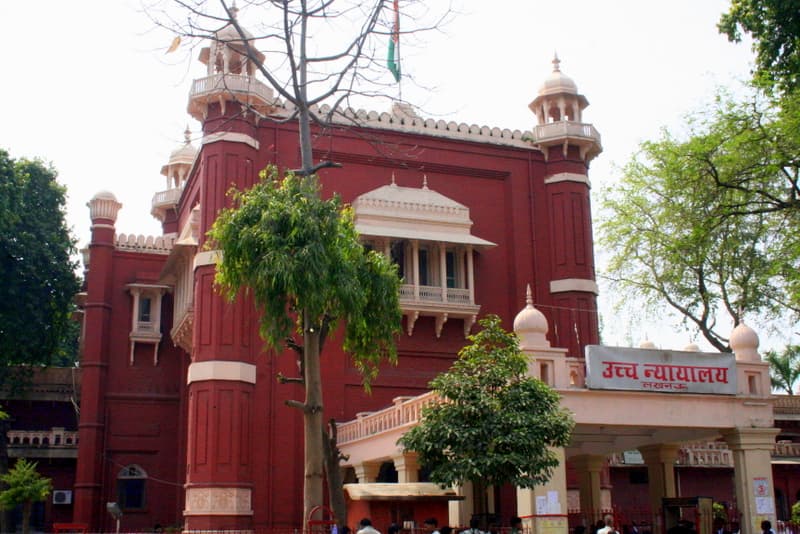
The single most important thing to understand up front: an easement of necessity requires absolute necessity, not mere convenience. If any alternative access exists, however inconvenient, the claim fails. And in village and agricultural land disputes, the forum question matters as much as the right itself, because rasta and boundary entries in the khatauni are decided by the UP Revenue Court under the UP Revenue Code 2006, while a true easement dispute over private land is a civil suit. This page explains how these claims actually run before the courts at the Allahabad High Court, Lucknow Bench, and how to plead access correctly so it is not thrown out at the threshold.
Table of Contents
Need Immediate Legal Help?
If you're facing a legal emergency in Lucknow, don't wait. Contact experienced criminal lawyer Advocate Onkar Pandey for immediate assistance.
What Counts as an Easement of Way Under the 1882 Act
Section 4 of the Indian Easements Act 1882 defines an easement as a right the owner of one piece of land (the dominant heritage) has to do something on another's land (the servient heritage) for the beneficial enjoyment of his own. A right of way is a positive easement: the right to pass and repass over a defined track.
For any easement of way to stand, four features must be present:
- Two separate properties in different ownership, one dominant and one servient. You cannot have an easement over your own land.
- A defined path, not a floating right to cross anywhere the claimant pleases.
- Beneficial enjoyment of the dominant land as the purpose of the right.
- Continuity and certainty of the use claimed.
Easements over private land are civil disputes. If your access is being obstructed, the practical remedy is a civil suit for a permanent injunction restraining obstruction, often with a temporary injunction under Order XXXIX Rules 1 and 2 CPC to keep the way open while the suit runs. These are the same civil-court tools used across the range of property disputes we handle in Lucknow, and the pleadings have to be drafted with care, as explained below.
Easement of Necessity vs Prescriptive Easement vs Village Rasta
Owners often use the word rasta loosely, but the law recognises three distinct routes to a right of way, and each is proved differently. Choosing the wrong one, or pleading the wrong forum, is the most common reason these cases collapse.
| Feature | Easement of Necessity (Sec 13) | Prescriptive Easement (Sec 15) | Customary / Village Rasta |
|---|---|---|---|
| Basis of the right | Land is landlocked, no other access exists | 20 years' continuous open use as of right | Long-standing community use of a village track |
| Test the court applies | Absolute necessity, not mere convenience | Peaceful, open, uninterrupted, without permission | Ancient, certain, reasonable local custom |
| Time period required | None; arises at the moment of severance | 20 years (30 if servient land is Government) | Immemorial usage |
| Usual forum in UP | Civil court | Civil court | Often UP Revenue Court (khatauni rasta entry) |
| Key proof | Sale deed showing severance left plot enclosed | Dated evidence of when use began and continued | Revenue records, map, and long local usage |
An easement of necessity most often arises when one large plot is divided and sold, leaving one part with no outlet to the public road except across the other. If, on the other hand, you have simply used a lane for decades, your claim is prescriptive and you must be able to show the start date of that use, not just that it feels old. Where the dispute is really about a recorded village track or chakroad, it usually belongs before the Revenue Court, discussed in the next section. Disputes over access frequently overlap with broader civil litigation over land and boundaries, so the correct classification early on saves years.
Civil Court or UP Revenue Court: The Forum Question
This is the practical pain point in almost every UP rasta case. The answer turns on what is actually being fought over.
- Revenue Court (under the UP Revenue Code 2006): where the dispute concerns entries in the khatauni, the demarcation of boundaries, a recorded rasta or chakroad running through agricultural land, or possession of bhumidhari land. Boundary demarcation and correction of revenue entries are the Revenue Court's domain, and the civil court's jurisdiction is barred for those matters.
- Civil Court: where the dispute is about a private easement right, a declaration of title, or an injunction restraining a private owner from obstructing an established way over his own land. Questions of easement of necessity and prescriptive easement over private property are civil-court questions.
The overlap causes real trouble. A defendant will frequently argue that the suit is barred because it is really a boundary or rasta-entry dispute for the Revenue Court, while the plaintiff insists it is a pure easement claim. How the plaint is framed, and what relief is sought, decides which side of the line the case falls on. Getting this wrong means the suit is returned or dismissed after years of litigation. This is exactly the kind of jurisdictional trap where early advice from an advocate practising before the Allahabad High Court, Lucknow Bench changes the outcome, because the fix has to be built into the very first pleading.
Legal Consultation
Talk directly to Advocate Onkar Pandey
Explain your matter over a call or WhatsApp. If you take the case forward, the consultation fee adjusts into your overall fee, so there is no separate charge to begin.
What the Supreme Court Requires You to Prove
Two Supreme Court rulings govern how these claims are decided, and both are about discipline in pleading and proof.
In Justiniano Antao v. Bernadette B. Pereira, (2005) 1 SCC 471, the Court held that an easement of necessity means an absolute necessity. If there is any other way to reach the property, however inconvenient, the claim of necessity fails. On the prescriptive side, the Court insisted that the claimant plead and prove the specific dates: from when to when the way was used, showing 20 years of open, peaceful, uninterrupted use as of right. A vague assertion that the path is old will not do.
In Bachhaj Nahar v. Nilima Mandal, (2008) 17 SCC 491, the Court set aside a right of way granted by the High Court because it had never been specifically pleaded, no issue was framed on it, and the servient owner was not confronted with the case. The rule is blunt: a court cannot grant a right of way that was not pleaded and proved, and relief cannot be built out of evidence for a case the other side never had to meet.
The practical takeaway for a UP claimant:
- Plead the exact path, its width, and where it runs, with reference to the map or site plan.
- For necessity, plead that no alternative access exists and produce the deeds showing how the land came to be enclosed.
- For prescription, plead the start date of your use and lead dated documentary or oral evidence of 20 continuous years.
- Implead the correct servient owner, not just anyone obstructing the way.
If your neighbour has instead put up a wall or fence across your access, that may also be an encroachment with its own civil and criminal remedies, and the two claims are often pleaded together in a single suit.
A Practitioner's Note on How These Cases Actually Move
In access matters before the Lucknow Bench and the district civil courts of Awadh, I see the same pattern repeat. A family sells off part of an ancestral plot, the buyer later fences the strip that the rear plot always used to reach the road, and suddenly a plot that was fine for two generations is landlocked. My first question is never about emotion, it is documentary: show me the deed of severance and the current khasra map. Whether the rear plot was left with an outlet at the time of sale usually decides an easement-of-necessity claim before a single witness is examined.
The second pattern is the prescriptive claimant who is certain the lane is theirs because everyone has always used it. That certainty is worthless in court without a start date. I press clients hard for the earliest dated proof: an old electricity or irrigation connection reached only by that path, a decades-old photograph, a revenue inspection note. The claimant who can anchor the year the use began is in a far stronger position than the one who simply says it is ancient.
The third, and most avoidable, failure is forum. Many village rasta fights are dragged into the civil court when the real quarrel is a khatauni entry that belongs before the Revenue Court, or vice versa. I decide the forum before drafting a single line, because a wrong choice is the surest way to lose years. If you are unsure which court your access dispute belongs in, that is precisely the point at which to speak to a property lawyer in Lucknow before filing, not after.
Steps to Protect a Right of Way Before It Is Lost
An easement can be lost or weakened if you sit on your rights. Practical steps to protect access:
- Act quickly on obstruction. The moment a gate, wall, or heap blocks the way, send a written notice and consider an urgent suit for injunction. Continued interrupted use for a full year can defeat a prescriptive claim.
- Preserve evidence. Photograph the path with dates, keep bills and documents that show the path was your only access, and note witnesses who have seen you use it.
- Check the revenue record. Pull the current khatauni and village map to see whether the rasta is recorded, which affects both forum and proof.
- Do not accept the way as a favour. Use that is by the servient owner's permission is not use as of right and cannot ripen into a prescriptive easement.
- Get the pleading right the first time. As the Supreme Court has made clear, an unpleaded right of way cannot be granted, so the plaint must describe the path and the basis of the right with precision.
Whether your access runs over private land or a recorded village track, the earlier the right is asserted and documented, the stronger the case. These access issues sit alongside the wider set of land and title disputes we regularly argue, and they reward early, precise action far more than delay.
Frequently Asked Questions
Can my neighbour block a road I have used for 20 years?+
If you have used a defined path openly, peacefully, and without interruption as of right for 20 continuous years, you may have acquired a prescriptive easement under Section 15 of the Indian Easements Act 1882, and the neighbour cannot lawfully block it. But you must be able to prove the start date and the continuity of that use. Use that was merely by the owner's permission does not count.
What is an easement of necessity?+
An easement of necessity under Section 13 arises when a piece of land is completely landlocked and has no access to a public road except across neighbouring land, usually after a larger plot is divided and sold. The Supreme Court in Justiniano Antao v. Bernadette B. Pereira held that it requires absolute necessity: if any alternative access exists, however inconvenient, the claim fails.
Should a village rasta dispute go to the civil court or the Revenue Court in UP?+
It depends on what is being disputed. If the fight is about a recorded rasta or chakroad, boundary demarcation, or khatauni entries over agricultural land, it generally belongs before the UP Revenue Court under the UP Revenue Code 2006. If it is about a private easement right, a declaration of title, or an injunction restraining a private owner, it is a civil suit. Choosing the wrong forum can get the case dismissed after years.
How much continuous use is needed for a prescriptive right of way?+
Twenty years of continuous, open, peaceful, and uninterrupted use as of right, ending within two years before filing the suit. Where the servient land belongs to the Government, the period is 30 years. A single full year of interrupted use, after the servient owner objects, can defeat the claim.
Do I have to name a specific path in my case?+
Yes. In Bachhaj Nahar v. Nilima Mandal, the Supreme Court held that a right of way must be specifically pleaded and proved, and cannot be granted on a vague claim. Your plaint should describe the exact path, its width and location, reference the map, and state the legal basis, whether necessity or prescription. You must also implead the correct servient owner.
Can I get an urgent order to keep an access open while my case runs?+
Yes. Along with the main suit, you can seek a temporary injunction under Order XXXIX Rules 1 and 2 CPC restraining the obstruction until the suit is decided. Prompt action matters, because letting the obstruction continue can weaken both a prescriptive claim and the equity in your favour.
Is a right of way the same as encroachment?+
No, but they often overlap. A right of way is a positive right to pass over another's land. Encroachment is an unlawful occupation of land that is not yours. When a neighbour builds across your access, you may face both issues at once, and the claims can be pleaded together in one civil suit for injunction and, where needed, removal of the structure.
Related Services
Get Expert Legal Advice in Lucknow
20+ years experience in criminal law at Lucknow High Court. Available 24/7 for emergencies.
Disclaimer: This article is for general information purposes only and does not constitute legal advice. Every case is unique and requires specific legal analysis. For advice specific to your situation, please consult Advocate Onkar Pandey or another qualified attorney in Lucknow.