How to Recover Encroached Land in Uttar Pradesh: Civil Suit, Criminal Trespass FIR Under BNS Section 329 and Practical Strategy Before Lucknow Courts in 2026
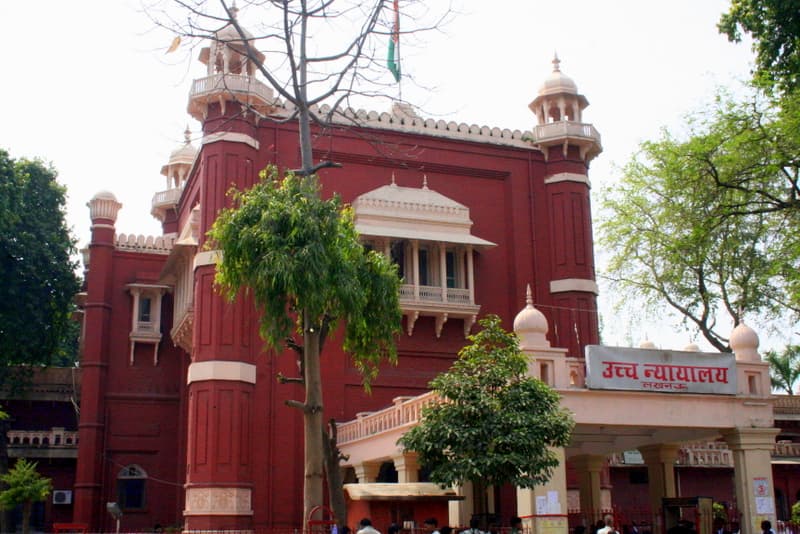
Land and boundary encroachment is one of the most common property disputes the Lucknow Bench of the Allahabad High Court and the district civil courts of Uttar Pradesh see every working day. A neighbour quietly shifts a wall by two feet during the monsoon; a tenant refuses to vacate after the lease ends; a relative occupies ancestral land while the owner is posted out of the State. In each case the owner’s instinct is to call the police, but the police often say it is a “civil matter” and refuse to register an FIR. That single response causes most owners to lose months and, occasionally, the plot itself.
The correct approach in 2026 is to run civil and criminal remedies in parallel. A permanent injunction or possession suit under the Code of Civil Procedure protects title and possession, while an FIR under Section 329 of the Bharatiya Nyaya Sanhita 2023 (which replaced Section 441 IPC from 1 July 2024) puts criminal pressure on the encroacher and unlocks police assistance. This guide, written for plot owners and bhumidhars in Lucknow, Kanpur, Sitapur, Hardoi, Lakhimpur Kheri, Barabanki, Rae Bareli, Unnao and surrounding districts, sets out the exact statutory remedies, the documents that win, court fee structure, realistic timelines and the order in which steps should be taken. The objective is straightforward: get the encroacher out without losing years to procedural traps. If you would like a case-specific opinion, you can contact us directly.
Table of Contents
Need Immediate Legal Help?
If you're facing a legal emergency in Lucknow, don't wait. Contact experienced criminal lawyer Advocate Onkar Pandey for immediate assistance.
What the Law Calls Encroachment — and Why the Police Often Refuse an FIR
Encroachment, in Indian law, is the unauthorised entry upon or occupation of land belonging to another person. It can take many forms: a boundary wall shifted into the neighbour’s plot, an extra storey overhanging a setback, a shop extended onto a public lane, or a tenant or relative refusing to vacate after the right to remain has ended. The same act can attract both civil and criminal consequences, and the owner is entitled to pursue both together.
The reason many police stations in UP refuse to register an FIR is that simple disputed possession without force or intimidation is treated as a civil matter. The criminal law gets triggered only where the encroacher has acted with intent to intimidate, insult, annoy or commit an offence. That is the line drawn by Section 329 of the BNS (formerly Section 441 IPC) and it is important to plead this intent specifically in the complaint.
| Type of Encroachment | Civil Remedy | Criminal Remedy |
|---|---|---|
| Boundary wall shifted, no force used | Suit for permanent injunction & mandatory injunction | FIR under BNS 329 only if entry was with intent to annoy or intimidate |
| Forcible occupation in owner’s absence | Suit for possession under Section 6 Specific Relief Act | FIR under BNS 329 / 331 (house-trespass) and 351 (criminal intimidation) |
| Tenant overstaying after lease expiry | Eviction suit / SCC suit; mesne profits | Rarely criminal unless lock-broken or threats issued |
| Relative occupying ancestral land | Suit for partition and separate possession | FIR under BNS 329 if entry into exclusive portion was unauthorised |
If a station house officer refuses to register an FIR despite a clear case of criminal trespass, the next step is a complaint to the Superintendent of Police under BNSS Section 173(4), failing which an application before the Magistrate under BNSS Section 175(3). Our note on FIR procedure and quashing explains this route in detail.
The First 72 Hours — What an Owner in Lucknow Should Do Before Going to Court
The first three days after the owner notices an encroachment decide whether the eventual litigation will take six months or six years. In our practice at the Lucknow Bench and the city civil courts, the actions that consistently produce the strongest pleadings are the following:
- Photographic and video record: Take GPS-stamped photographs of the encroachment, the shifted wall or fence, the neighbour’s construction material, and a wide shot showing both plots. Date-stamped video shot from a fixed point is even better.
- Engage a private surveyor: A licensed amin or lekhpal can prepare a site map showing the original boundary, the encroached portion in red, and the area in square metres. This becomes Annexure A to every pleading.
- Send a legal notice: A formal notice through a practising lawyer calling upon the encroacher to remove the construction and restore boundaries within 15 days. The notice is legally significant: it proves knowledge and refusal, which defeats the encroacher’s later defence of innocent mistake.
- File a written police complaint: Even if an FIR is unlikely, ensure the complaint is entered in the General Diary at the local thana with a stamped acknowledgement. This timestamp is invaluable in court.
- Update revenue records: Obtain the latest khatauni, khasra and naksha from the tehsil. If mutation in the owner’s name is pending, apply at once — the encroacher will otherwise use the gap to claim adverse possession.
- Preserve and gather title: Original sale deed, mutation extract, electricity bill, house-tax receipt, will or partition deed. Photocopies should be made in triplicate and kept at separate addresses.
Do not attempt to break the wall yourself. Self-help in encroachment matters routinely converts the owner from victim into accused under BNS Sections 329, 331 and 117 (voluntarily causing hurt). The remedy must come from the court, not from a hammer.
Civil Remedies — Injunction, Possession and Declaration Suits Under CPC
The Code of Civil Procedure 1908, read with the Specific Relief Act 1963, gives the owner three principal weapons. The right suit must be chosen at the very first stage because once a wrong suit is filed it is hard to amend without losing limitation.
- Suit for permanent injunction (Section 38, Specific Relief Act): Filed where the owner is still in possession and wants to stop further encroachment or construction. Coupled with an application for temporary injunction under Order XXXIX Rules 1 & 2 CPC, the court can grant a stay on construction on the very first date.
- Suit for possession (Section 6, Specific Relief Act): A short, summary remedy where the owner has been dispossessed within the last six months without consent. No question of title is examined; the court only sees whether the plaintiff was in settled possession and was unlawfully dispossessed. Limitation is strict and unforgiving.
- Title suit / Declaration suit (Section 34, Specific Relief Act, read with Order VII CPC): Used where title itself is contested or the dispossession is older than six months. Slower, but conclusive. Often combined with a prayer for mandatory injunction to demolish the encroaching structure and for mesne profits for the period of unlawful occupation.
Court fee on a possession or title suit is ad valorem on the market value of the encroached portion, calculated under the Court Fees Act as adapted in UP. In an injunction-only suit, the court fee is fixed and modest, which is one reason injunction suits are filed first while title is being established. The Allahabad High Court has consistently held in second appeals that an injunction will not be granted to a person not in possession, so the choice between Sections 38 and 6 matters.
| Suit Type | When Appropriate | Typical Timeline (Lucknow Civil Court) |
|---|---|---|
| Permanent injunction | Owner still in possession; encroachment ongoing | Interim order in 1–4 weeks; final decree 2–4 years |
| Possession under Section 6 SRA | Dispossessed within last 6 months | Decree in 6–18 months |
| Title declaration + possession | Title disputed or dispossession over 6 months old | 3–7 years (faster if encroacher has no documents) |
Legal Consultation
Talk directly to Advocate Onkar Pandey
Explain your matter over a call or WhatsApp. If you take the case forward, the consultation fee adjusts into your overall fee, so there is no separate charge to begin.
Criminal Trespass Under BNS Section 329 — Filing the FIR Correctly
From 1 July 2024, criminal trespass is governed by Section 329 of the Bharatiya Nyaya Sanhita 2023. The provision is substantially identical to the old Section 441 IPC. Whoever enters into or upon property in possession of another, with intent to commit an offence or to intimidate, insult or annoy the person in possession, is said to commit criminal trespass. Punishment is simple imprisonment up to three months, or fine up to ₹5,500, or both. Where the property is a building used as a human dwelling, the offence becomes house-trespass under Section 331, attracting up to one year’s imprisonment.
The FIR or complaint must specifically plead the following ingredients, because the police and the magistrate look for them:
- Possession of the complainant on the date of trespass — supported by title documents, electricity bill and khatauni.
- Entry by the accused without consent — date, time and manner of entry.
- Intent to annoy, insult, intimidate or commit an offence — words used, threats issued, or the act of breaking a lock or fence, which itself implies intent.
- Continued occupation or destruction — every day of continued trespass is a fresh offence under BNS 332, which is relevant for limitation.
Run the FIR parallel to the civil suit, never instead of it. The civil court alone can order restoration of possession; the criminal court can imprison the encroacher but cannot remove the construction. Together they create the pressure that produces a settlement. If the encroacher is arrested or the matter spirals into cross-FIRs, anticipatory bail or regular bail strategy should be planned in advance.
Encroachment by Government, Panchayat or Municipal Bodies in UP
A distinct category of cases involves encroachment by a State authority — a Gram Panchayat extending a chakroad through a private plot, a municipal body widening a drain into private land, or a development authority claiming part of the plot for “green belt” without acquisition. The remedy here is not a civil suit; it is a writ petition under Article 226 of the Constitution before the Allahabad High Court Lucknow Bench.
The petition relies on Article 300A, which provides that no person shall be deprived of property save by authority of law. Authority of law means a statutory acquisition process under the Right to Fair Compensation and Transparency in Land Acquisition Act 2013, with notice, hearing and compensation. A “requisition” by an executive officer is not authority of law. The Lucknow Bench in 2025 and 2026 has repeatedly directed restoration and compensation in such matters, in some cases imposing exemplary costs on the officers personally.
- Reliefs to seek: Quashing of the impugned action, mandamus for restoration, declaration that the entry in revenue records is non est, and damages.
- Time limit: Writ jurisdiction has no fixed limitation, but the Court frowns on delay. File within weeks of the encroachment.
- Documents that decide the case: Show-cause notice (or its absence under RTI), site map, master plan, the original khatauni and the post-encroachment khatauni.
Adverse Possession — Why Delay Can Convert the Encroacher into Owner
The single largest reason owners lose encroached land permanently is adverse possession. Article 65 of the Limitation Act 1963 provides that a suit for possession based on title must be filed within 12 years from the date the defendant’s possession became adverse. After 12 years of open, continuous and hostile possession, the encroacher can not only resist the suit, but in many cases plead title in himself. The Supreme Court in Ravinder Kaur Grewal v. Manjit Kaur (2019) confirmed that adverse possession can be used as a sword and not merely as a shield.
The practical lessons for owners in UP are uncomplicated:
- Send a written legal notice the moment you notice encroachment. The notice interrupts hostility and re-establishes permissive possession in your favour.
- Do not accept token rent or maintenance from the encroacher without a written acknowledgement of your title. Verbal arrangements are routinely twisted into evidence of ownership transfer.
- Visit the plot at least once every six months, take date-stamped photographs, and keep an electricity connection and house-tax receipt active. These small acts defeat the “hostile possession” element.
- If the encroachment is more than seven years old, do not wait further. File the title suit immediately to interrupt limitation.
Where the property is governed by the UP Revenue Code 2006 (agricultural land), separate revenue court remedies under Sections 144 and 209 are available for ejectment of unauthorised occupants, with shorter limitation periods. A revenue suit can run alongside a civil suit if the encroachment straddles both abadi and agricultural land.
Costs, Court Fees and a Realistic Roadmap to Recovery
Owners often abandon meritorious cases because they fear runaway costs. In reality, an encroachment matter is one of the more predictable categories of litigation. The typical fee structure at the Lucknow civil courts and the High Court is as follows:
- Legal notice and pre-litigation strategy: ₹5,000 to ₹15,000.
- Permanent injunction suit (drafting, filing, arguing interim application): ₹25,000 to ₹75,000 in the first year, with court fee separate.
- Title and possession suit: Professional fee depends on valuation of the plot; typically ₹50,000 to ₹2,00,000 in the first year.
- Writ petition against State encroachment: ₹50,000 to ₹2,00,000, often higher where multiple respondents are involved.
- Criminal complaint / FIR follow-up and Section 156(3) (now BNSS 175(3)) application: ₹10,000 to ₹40,000.
A realistic roadmap looks like this. Week 1: documentation, surveyor, legal notice, police GD entry. Week 2 to 4: injunction suit filed with interim application; FIR or BNSS 175(3) application moved in parallel; mutation pursued in tehsil. Month 2 to 6: interim injunction and police investigation create settlement pressure; many matters compromise here on payment of damages and removal of encroachment. Month 6 onwards: if no settlement, evidence stage begins; final decree typically in 18 to 36 months for an injunction suit and 3 to 7 years for a contested title suit. The longer route is uncomfortable, but it is far better than losing the land by inaction.
About the Author
Advocate Onkar Pandey is a practising lawyer at the Allahabad High Court Lucknow Bench with over 25 years of experience in property and land disputes, civil litigation, writ jurisdiction and criminal defence. Enrolled with the Bar Council of Uttar Pradesh (No. UP/4825/1999), he regularly handles encroachment, partition, possession and mutation matters from Lucknow, Sitapur, Hardoi, Lakhimpur Kheri, Barabanki, Rae Bareli, Unnao, Kanpur and other districts of Uttar Pradesh. His chamber is at Chamber A-406, High Court, Lucknow, Awadh Bar, Uttar Pradesh 226001. For a case-specific opinion on land encroachment or a related property dispute, contact Advocate Onkar Pandey at +91 98392 71553 or via the contact page.
Frequently Asked Questions
My neighbour has shifted his boundary wall two feet into my plot in Lucknow. The police say it is a civil matter. What should I do first?+
The police are partially correct — a mere boundary shift without force or threats is primarily a civil matter, but it is also a criminal trespass under BNS Section 329 if the entry was with intent to annoy or to commit any offence such as mischief by damaging the existing wall. Do three things in parallel within the first week. One, get a licensed surveyor to prepare a site map showing the original boundary in the khasra and the encroachment in red. Two, send a written legal notice through a lawyer demanding restoration within 15 days. Three, file a suit for permanent injunction with an application for temporary injunction under Order XXXIX CPC to stop any further construction. Once the injunction is granted, file a fresh FIR or a BNSS Section 175(3) application before the Magistrate pleading the intent element. The combined pressure usually settles the matter within a few months.
What is the difference between Section 441 IPC and Section 329 BNS for criminal trespass after July 2024?+
The two provisions are substantively identical. From 1 July 2024, the Indian Penal Code 1860 was repealed and replaced by the Bharatiya Nyaya Sanhita 2023, in which criminal trespass is found in Section 329. The ingredients — entry into or upon another person’s property with intent to commit an offence, intimidate, insult or annoy the person in possession — remain unchanged. The punishment is also broadly the same: simple imprisonment up to three months, fine up to ₹5,500, or both. For incidents that occurred before 1 July 2024, Section 441 IPC continues to govern; for incidents after that date, the FIR and complaint must cite Section 329 BNS. House-trespass migrates from Section 442 IPC to Section 331 BNS.
Is a permanent injunction enough to remove an existing encroachment, or do I need a mandatory injunction?+
A simple permanent injunction restrains the encroacher from doing something further — it stops fresh construction but does not, by itself, require removal of what has already been built. To compel the encroacher to actually take down the wall, fence or storey, you must add a prayer for a mandatory injunction under Section 39 of the Specific Relief Act, supported by clear pleadings on title and the exact area encroached. Many owners lose precious time by filing a bare injunction suit, getting a stay, and then realising they cannot have the structure demolished without amending the plaint. It is far better to combine the prayers at the outset — permanent injunction against further encroachment, mandatory injunction for removal, declaration of title where required, and mesne profits for the period of unlawful occupation.
How long does the encroacher need to occupy my plot before he can claim adverse possession in UP?+
Twelve years of open, continuous, peaceful and hostile possession against the true owner’s knowledge is the threshold under Article 65 of the Limitation Act 1963. The clock starts not from the date of entry but from the date the possession became adverse — meaning hostile to the true owner’s title and known to him. The Supreme Court in Ravinder Kaur Grewal v. Manjit Kaur (2019) held that adverse possession can be used not only as a defence but also to claim title affirmatively. To defeat this risk, send a written legal notice the moment you notice encroachment, visit the plot every six months with date-stamped photographs, maintain an electricity connection and house-tax receipt in your name, and refuse to accept any payment from the encroacher without a written acknowledgement of your title.
Can I file both a civil suit and a criminal FIR for the same encroachment? Will the criminal court wait for the civil suit?+
Yes, civil and criminal remedies for the same act of encroachment can and should run in parallel. The Supreme Court has settled in a long line of cases — most notably Iqbal Singh Marwah v. Meenakshi Marwah and Pratibha Rani v. Suraj Kumar — that a criminal prosecution is not barred merely because a civil suit on the same facts is pending. The two proceedings serve different purposes: the civil court restores possession and grants damages, while the criminal court determines guilt and punishes the offender. The criminal court will not stay its proceedings only because a civil suit is pending unless the issue is purely civil in character. Practically, the threat of criminal prosecution often produces a settlement faster than the civil suit alone.
What if the encroacher is a government department, panchayat or municipal corporation in Uttar Pradesh?+
Where the encroachment is by a State authority — for example a panchayat extending a chakroad through private land, a municipal corporation widening a drain, or a development authority claiming part of the plot — the correct remedy is a writ petition under Article 226 of the Constitution before the Allahabad High Court Lucknow Bench, not a civil suit. The petition relies on Article 300A, which prohibits deprivation of property save by authority of law. Authority of law in this context means a statutory acquisition under the Right to Fair Compensation and Transparency in Land Acquisition Act 2013, with prior notice, personal hearing and compensation. A mere executive direction is not authority of law. The Lucknow Bench has in 2025 and 2026 directed restoration and exemplary costs in several such matters, sometimes recoverable personally from the erring officer’s salary.
How much will a land encroachment case cost me at the Lucknow civil court?+
The principal heads of cost are court fee, professional fee and incidental expenses. Court fee on a permanent injunction suit is fixed and modest under the UP-adapted Court Fees Act. On a suit for possession or declaration of title, court fee is ad valorem on the market value of the encroached portion, which can be substantial for prime city plots. Professional fee for the first year of a permanent injunction suit at the Lucknow civil court ranges from ₹25,000 to ₹75,000, and for a contested title-cum-possession suit from ₹50,000 to ₹2,00,000 in the first year. A writ petition against State encroachment at the High Court typically costs ₹50,000 to ₹2,00,000. A first consultation is usually offered to assess the strength of the case and the most efficient combination of civil and criminal remedies before any fee commitment.
Can I file both a civil suit and a criminal FIR for the same encroachment in UP?+
Yes, the two remedies run on parallel tracks and are not mutually exclusive. The civil suit for possession, declaration, and permanent injunction before the competent civil court decides who legally owns the land, while a criminal FIR under BNS Section 329 (criminal trespass and house-trespass) addresses the wrongful and unlawful entry. Courts in UP treat title as a civil question, so a criminal complaint alone rarely restores possession; the civil decree is what ultimately gets the encroacher evicted through court process.
What is the punishment for criminal trespass under BNS Section 329, and is it enough to remove an encroacher?+
Simple criminal trespass under BNS Section 329 carries imprisonment up to three months, or a fine up to five thousand rupees, or both, and house-trespass attracts higher punishment. However, a criminal conviction only penalises the trespasser; it does not by itself transfer possession back to you. To actually recover the land you generally need a civil decree for possession, which the court executes, so the FIR is best used as pressure alongside the civil suit rather than as a standalone solution.
Related Services
Get Expert Legal Advice in Lucknow
20+ years experience in criminal law at Lucknow High Court. Available 24/7 for emergencies.
Disclaimer: This article is for general information purposes only and does not constitute legal advice. Every case is unique and requires specific legal analysis. For advice specific to your situation, please consult Advocate Onkar Pandey or another qualified attorney in Lucknow.