FIR Quashing Lawyer in Lucknow | False Case? We Stop It at Allahabad High Court
We file Section 528 BNSS petitions at the Allahabad High Court Lucknow Bench to quash false and fabricated FIRs - obtaining interim protection from arrest while the petition is pending.
Lucknow Police stations register thousands of FIRs annually - many in matrimonial, property, and business disputes where the real motive is harassment, not justice.
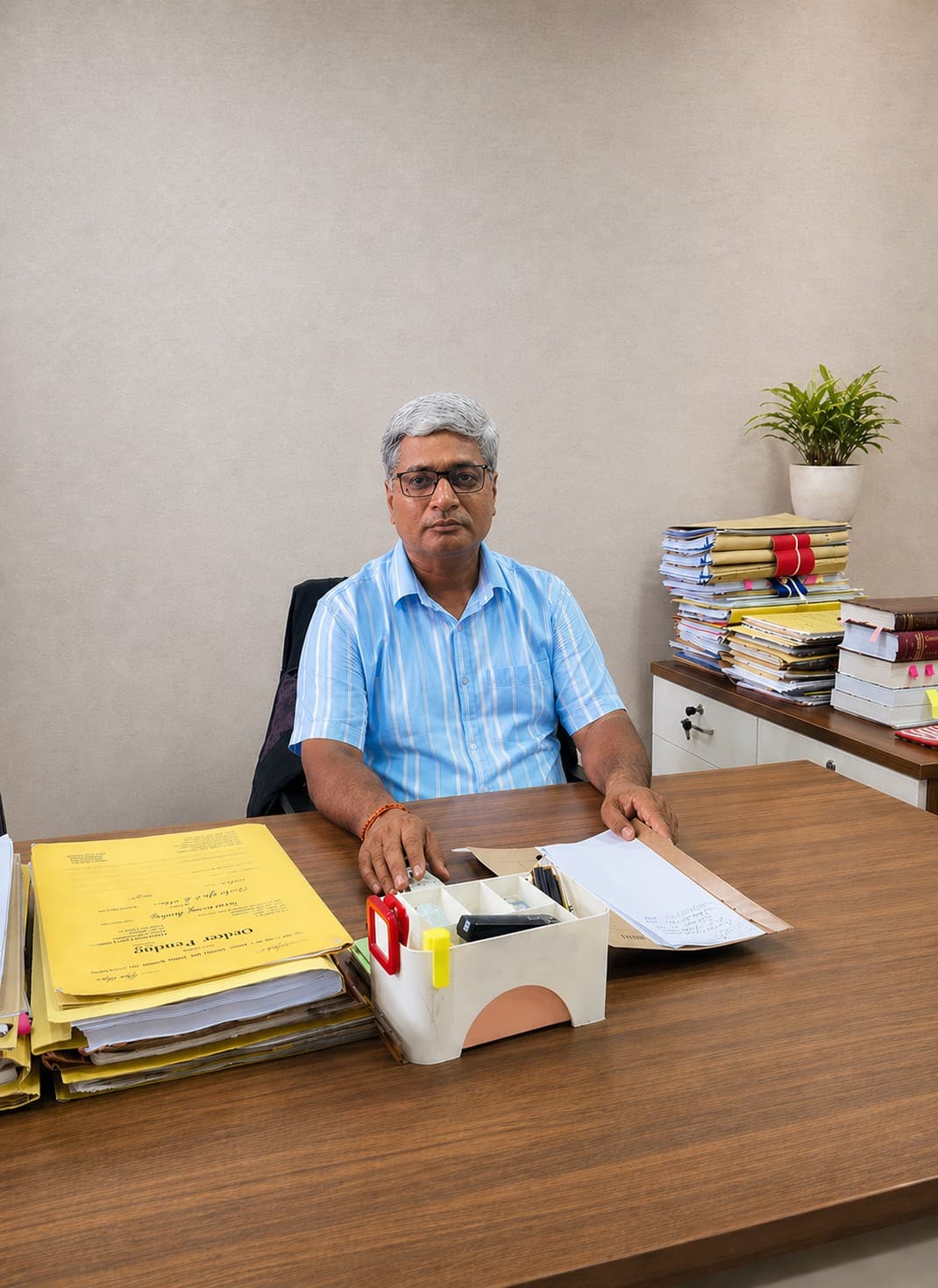
Adv. Onkar Pandey
Allahabad High Court, Lucknow Bench
Legal Landscape in Lucknow
Lucknow Police stations register thousands of FIRs annually - many in matrimonial, property, and business disputes where the real motive is harassment, not justice.
- Section 528 BNSS Petition Expertise
- Interim Stay on Arrest During Proceedings
- Settlement-Based Quashing for Compoundable Offences
The Allahabad High Court Lucknow Bench is one of the most active forums in India for FIR quashing petitions. Under the new Bharatiya Nagarik Suraksha Sanhita 2023, the inherent power to quash criminal proceedings has been codified under Section 528 BNSS, replacing the old Section 482 CrPC. The law has not substantially changed the grounds for quashing, but practitioners must cite the new provision correctly to be heard.
Lucknow generates a particularly high volume of FIR quashing petitions for three categories of cases. First, matrimonial FIRs - particularly Section 498A BNS (cruelty by husband and in-laws, formerly IPC 498A), Section 85 BNS (cruelty), and Sections 80-82 BNS relating to dowry demands. Many such FIRs are filed during matrimonial breakdowns as a pressure tactic, and Lucknow courts see a steady flow of quashing petitions from accused husbands and family members. The Supreme Court has repeatedly held that settlement between spouses is a valid ground to quash matrimonial FIRs even in non-compoundable offences.
Second, property and commercial dispute FIRs - criminal cases of cheating under Section 318 BNS, criminal breach of trust, forgery, and fraudulent document registration are frequently weaponised in Lucknow's real estate ecosystem, which is among the most active in UP. The High Court regularly scrutinises whether such FIRs disclose a genuinely criminal case or are merely a civil dispute dressed in criminal clothing.
Third, SC/ST Act FIRs in Lucknow present a unique quashing challenge. Under the Supreme Court's Constitution Bench ruling in Dr. Subhash Kashinath Mahajan v. State of Maharashtra (later reviewed), SC/ST cases carry special restrictions on bail and quashing. However, quashing is possible where the FIR is patently false or the complainant has settled. An experienced Lucknow HC advocate knows the specific judicial approach of different benches to SC/ST quashing petitions.
Interim protection from arrest - a stay on coercive action during the pendency of the quashing petition - is perhaps the most critical relief sought alongside the quashing petition itself. Lucknow HC grants such interim stays regularly where there is prima facie merit in the quashing petition. Without this stay, an accused faces the risk of arrest during the 3-12 months the petition takes to reach a final hearing.

Supreme Court of India - Section 528 BNSS FIR quashing jurisdiction
Why Lucknow Needs FIR Quashing
Three distinct legal challenges facing Lucknow residents in this practice area
Section 528 BNSS Petition Expertise
We draft comprehensive FIR quashing petitions citing the most relevant Supreme Court precedents on each ground - false matrimonial FIR, civil dispute masquerading as criminal, technical defects, and compounding settlements. Correct citation of the new BNSS provisions is essential after July 2024.
Interim Stay on Arrest During Proceedings
Quashing petitions typically take months to resolve. We apply simultaneously for interim protection from arrest, argued urgently before the Lucknow Bench. Without this stay, an accused faces the risk of arrest during the entire pendency of the quashing petition - defeating the purpose of filing it.
Settlement-Based Quashing for Compoundable Offences
Many Lucknow FIRs - especially in matrimonial disputes, cheque bounce, and property matters - can be quashed on the basis of a settlement between the parties. We facilitate this process: drafting the settlement agreement, presenting the settlement before the High Court, and securing a consent quashing order that brings permanent legal closure.
Why Choose Adv. Onkar Pandey for Your Lucknow Case?
20+ Years Active Practice
At the Allahabad HC Lucknow Bench and district courts across UP, handling criminal, civil, and writ matters since 2003.
Minimal Court Appearances Required
POA workflow + Section 205 BNSS appearance exemption means most clients travel to UP only once or twice during the entire case.
24-48 Hour Emergency Filing
Anticipatory bail, property mutation stays, and demolition writs filed within 24-48 hours of receiving your documents.
Legal Services for Lucknow Clients
Full-spectrum representation at Allahabad High Court and UP District Courts - accessible remotely from Lucknow
Bail & Anticipatory Bail
Simultaneous bail and anticipatory bail protection while your FIR quashing petition is pending at the High Court.
Learn MoreCriminal Defense
If quashing is not viable, full trial defence at Sessions Court and High Court with aggressive case preparation.
Learn MoreProperty Disputes
Property-related criminal FIRs quashed alongside civil remedies for the underlying land or mutation dispute.
Learn MoreService & Job Disputes
FIRs against government employees arising from departmental disputes - quashing and service law writ petitions.
Learn MoreCourt Information for Lucknow
Jurisdiction details and forum for your Lucknow legal matter
District Court
Additional Sessions Judge / CJM Court, Lucknow
Sessions Court Lucknow
Address
Civil Court Compound, Lucknow, UP 226001
High Court Bench
Allahabad HC Lucknow Bench
All HC-level matters from Lucknow are filed here
Our Office
Chamber A-406, High Court Lucknow, Awadh Bar, Lucknow
We appear at Allahabad HC Lucknow Bench for all Lucknow HC matters
Frequently Asked Questions
Common questions about fir quashing matters in Lucknow
Q:What is Section 528 BNSS and how is it different from the old Section 482 CrPC?
Section 528 of the Bharatiya Nagarik Suraksha Sanhita 2023 (BNSS) replicates the inherent power of the High Court that was previously contained in Section 482 of the Code of Criminal Procedure 1973. The BNSS came into force on July 1, 2024, replacing the CrPC. The substantive law on FIR quashing - the grounds, the legal tests, and the precedents - remains largely the same. However, all petitions filed after July 1, 2024 must cite Section 528 BNSS as the source of the Court's power. Citing the old Section 482 CrPC in a new petition is technically incorrect, though most courts have been treating this as a curable defect. An experienced advocate ensures the correct provision is cited from the outset.
Q:On what grounds can an FIR be quashed at the Allahabad High Court Lucknow Bench?
The Supreme Court in R.P. Kapur v. State of Punjab and the landmark State of Haryana v. Bhajan Lal have laid down the key grounds: (1) the allegations, even if taken at face value, do not disclose a cognisable offence; (2) the FIR is inherently improbable or manifestly attended with mala fide; (3) the case is purely a civil dispute - cheating or breach of trust allegations arising from simple money disputes are frequently quashed on this ground; (4) the FIR is filed only to harass or pressurise; (5) the parties to a compoundable offence have settled; (6) there is lack of territorial jurisdiction. For matrimonial cases, settlement is the most common ground used at the Lucknow Bench.
Q:How long does FIR quashing take at the Allahabad HC Lucknow Bench?
From filing to final disposal, FIR quashing petitions at the Lucknow Bench typically take 6 months to 18 months depending on whether the matter is contested by the opposite party or the State. Uncontested settlement-based quashings can conclude faster - sometimes in 3-4 months if both parties file a joint application. The key intermediate milestone is obtaining interim protection from arrest, which is typically argued at the first or second hearing. Once interim stay is in place, the pressure on the accused reduces significantly even while the case proceeds to final disposal.
Q:Can I get interim protection from arrest while my FIR quashing petition is pending?
Yes, this is one of the most important reliefs available in FIR quashing petitions. When we file the quashing petition at the Allahabad HC Lucknow Bench, we simultaneously file an application for interim relief - essentially a stay on coercive action (arrest) against the petitioner during the pendency of the main petition. Courts grant this interim stay when there is prima facie merit in the quashing petition and the balance of convenience favours the petitioner. During this period, the police cannot arrest the petitioner in connection with the FIR in question. The interim order is renewable until the final disposal of the quashing petition.
Q:Can a false 498A (dowry harassment) FIR be quashed in Lucknow?
Yes, and this is one of the most common FIR quashing matters at the Lucknow Bench. Section 498A IPC (now Section 85 BNS) is non-compoundable, meaning the complainant and accused cannot simply agree to drop the case without court permission. However, the Supreme Court in Parbatbhai Aahir v. State of Gujarat and B.S. Joshi v. State of Haryana has held that in matrimonial cases where the parties have arrived at a settlement - typically through divorce proceedings, mutual consent divorce, or a mediated settlement - the High Court can exercise its inherent power under Section 528 BNSS to quash the FIR in the interests of justice. We handle both the matrimonial settlement negotiation and the High Court quashing simultaneously.
Related Legal Services
Professional Credentials
Education & Enrollment
- LL.B. (Bachelor of Laws)
- Enrolled with Bar Council of Uttar Pradesh
- Member, Allahabad High Court Bar Association (Lucknow)
Practice Areas & Experience
- 20+ years active practice at Allahabad High Court
- Practices at both Lucknow Bench and Prayagraj principal seat
- Criminal, civil, property, service law and writ matters
- Extensive experience with remote client representation via POA
Get Expert FIR Quashing Help in Lucknow Today
We file Section 528 BNSS petitions at the Allahabad High Court Lucknow Bench to quash false and fabricated FIRs - obtaining interim protection from arrest while the petition is pending.
Chamber A-406, High Court Lucknow, Awadh Bar
+91 9839271553
contact@advonpandey.com