Criminal Lawyer for Ayodhya Cases at Allahabad HC Lucknow Bench
We represent accused persons and complainants in Ayodhya criminal matters at the Sessions Court Ayodhya and the Allahabad High Court Lucknow Bench - including the unique land dispute and religious trust FIRs that emerged after the Ram Mandir verdict.
The Ram Mandir verdict and the post-2020 Ayodhya land boom have generated an unprecedented wave of criminal FIRs around land acquisition, religious trust disputes, and construction contract frauds.
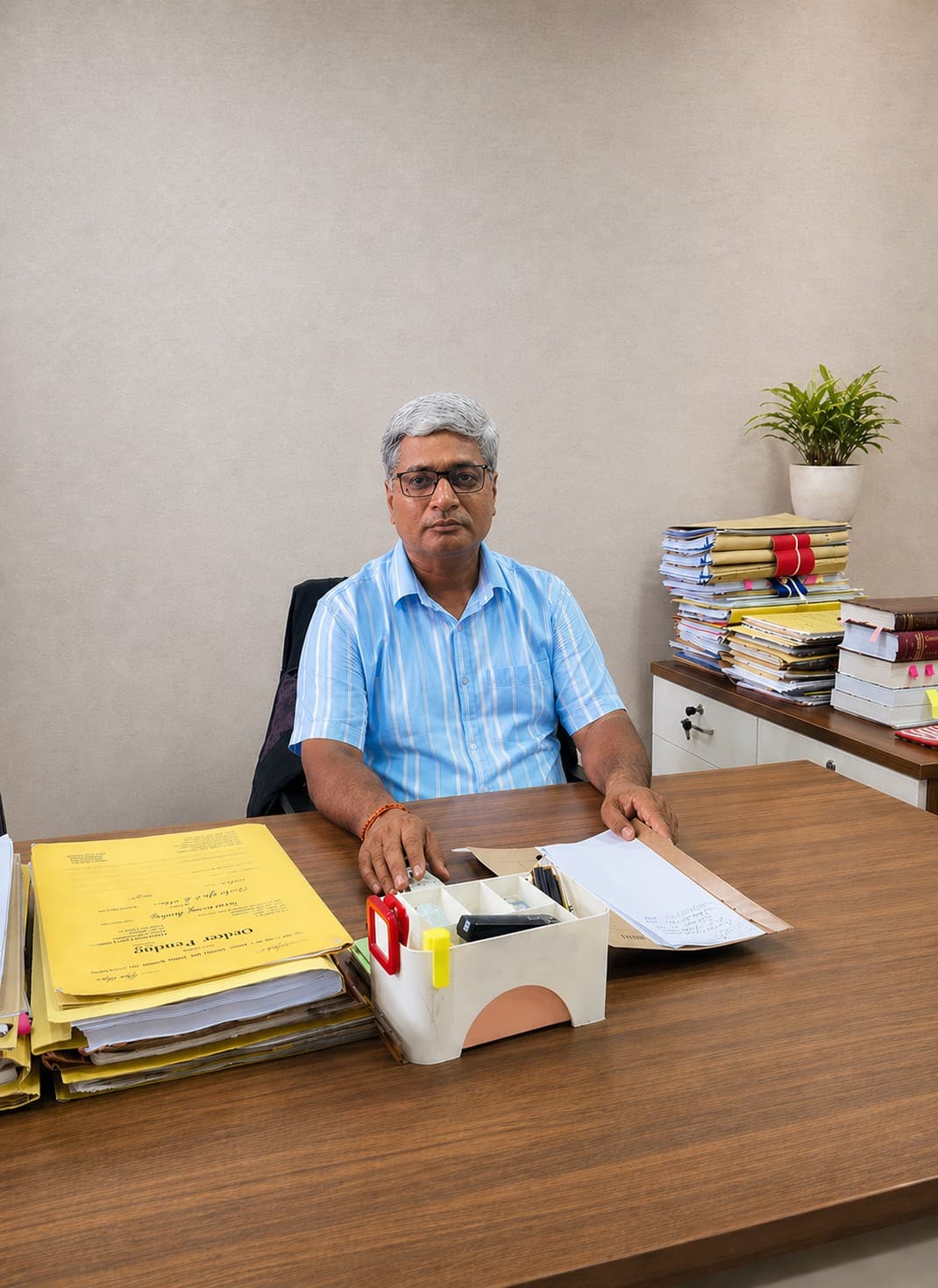
Adv. Onkar Pandey
Allahabad High Court, Lucknow Bench
Legal Landscape in Ayodhya
The Ram Mandir verdict and the post-2020 Ayodhya land boom have generated an unprecedented wave of criminal FIRs around land acquisition, religious trust disputes, and construction contract frauds.
- Post-Ram Mandir Land Dispute FIRs
- Religious Trust and Institution Criminal Matters
- SC/ST Act Cases in Ayodhya District
Ayodhya (formerly Faizabad district) underwent a dramatic legal and administrative transformation following the Supreme Court's landmark judgment in M. Siddiq v. Mahant Suresh Das in November 2019 and the subsequent Ram Mandir construction from 2020 onwards. The district was formally renamed from Faizabad to Ayodhya, and its criminal court landscape shifted as a result of both administrative changes and the surge in land-related disputes.
The District & Sessions Court at Ayodhya (Civil Lines) handles all criminal sessions trials for the district. It falls under the Allahabad High Court Lucknow Bench jurisdiction - not Prayagraj. This means all bail applications at the High Court level, FIR quashing petitions, and criminal writs must be filed at the Lucknow Bench.
Post-Mandir verdict, Ayodhya saw a sharp spike in specific categories of criminal matters. Land acquisition disputes - where government acquisition for the Ayodhya development authority (ADA) projects, road widening, and tourism infrastructure clashed with private ownership claims - generated hundreds of FIRs alleging fraudulent government records, impersonation, and forgery. Religious trust criminal complaints also multiplied: Shri Ram Janmabhoomi Teerth Kshetra Trust and numerous smaller temples and akhadas are parties or related to FIRs around property management, funds misappropriation, and management disputes.
The SC/ST Act remains disproportionately active in Ayodhya's rural tehsils - Bikapur, Sohawal, Milkipur, and Tanda - where land disputes between dominant and scheduled caste communities frequently escalate into criminal complaints under the Prevention of Atrocities Act. These cases carry bail restrictions and cannot be quashed on the same grounds as ordinary criminal cases.
The UP Gangsters and Anti-Social Activities (Prevention) Act is frequently invoked in Ayodhya for individuals with multiple criminal cases, particularly in land-grab matters. Gangster Act proceedings require a separate application before the Sessions Court as well as the High Court, and conviction can lead to attachment of property. Defence in Gangster Act cases requires specialist knowledge of the procedural requirements for invoking the Act.
For accused persons from outside Ayodhya - many of whom are Lucknow-based government officers, Delhi-based real estate investors, or NRIs with ancestral property in the Ayodhya region - appearing at every hearing in Ayodhya is impractical. We handle Ayodhya criminal matters through our Lucknow HC practice, minimising the need for clients to travel to Ayodhya for routine hearings.

Ram Mandir Ayodhya - Supreme Court verdict generated landmark criminal FIRs in Ayodhya
Why Ayodhya Needs a Criminal Lawyer
Three distinct legal challenges facing Ayodhya residents in this practice area
Post-Ram Mandir Land Dispute FIRs
Ayodhya's post-verdict land boom generated FIRs around fraudulent government acquisition records, construction contract disputes, and impersonation in ADA schemes. We defend and prosecute these unique Ayodhya-specific criminal matters through the Sessions Court and the Allahabad HC Lucknow Bench.
Religious Trust and Institution Criminal Matters
FIRs involving Ayodhya temple trusts, akhadas, and religious institutions require navigating both criminal law and trust law simultaneously. We advise on whether temple trust disputes should be pursued as criminal matters or through the civil trust administration route - and represent clients in both forums.
SC/ST Act Cases in Ayodhya District
SC/ST Act cases from Ayodhya's rural tehsils require specialist knowledge of the bail restrictions, quashing limitations, and the investigation procedure under the Prevention of Atrocities Act. We build defences grounded in the specific judicial standards applied by the Lucknow Bench to these cases.
Why Choose Adv. Onkar Pandey for Your Ayodhya Case?
20+ Years Active Practice
At the Allahabad HC Lucknow Bench and district courts across UP, handling criminal, civil, and writ matters since 2003.
Minimal Court Appearances Required
POA workflow + Section 205 BNSS appearance exemption means most clients travel to UP only once or twice during the entire case.
24-48 Hour Emergency Filing
Anticipatory bail, property mutation stays, and demolition writs filed within 24-48 hours of receiving your documents.
Legal Services for Ayodhya Clients
Full-spectrum representation at Allahabad High Court and UP District Courts - accessible remotely from Ayodhya
Bail & Anticipatory Bail
Urgent bail from Lucknow HC and Sessions Courts. Anticipatory bail under BNSS 2024 before arrest is made.
Learn MoreFIR Quashing
Section 528 BNSS petitions at Allahabad HC to quash false FIRs with interim arrest protection.
Learn MoreProperty Disputes
Land dispute, mutation fraud, and revenue court matters across UP district courts and the High Court.
Learn MoreService & Job Disputes
Writ petitions challenging wrongful termination, promotion disputes, and pension matters for UP government employees.
Learn MoreCourt Information for Ayodhya
Jurisdiction details and forum for your Ayodhya legal matter
District Court
District & Sessions Court, Ayodhya
Sessions Court Ayodhya
Address
Civil Lines, Ayodhya (Faizabad), UP 224001
High Court Bench
Allahabad HC Lucknow Bench
All HC-level matters from Ayodhya are filed here
Our Office
Chamber A-406, High Court Lucknow, Awadh Bar, Lucknow
We appear at Allahabad HC Lucknow Bench for all Ayodhya HC matters
Frequently Asked Questions
Common questions about a criminal lawyer matters in Ayodhya
Q:Which High Court bench handles criminal cases from Ayodhya?
All criminal matters from Ayodhya district - including bail applications at the High Court level, FIR quashing petitions under Section 528 BNSS, criminal revisions, and criminal writs - are handled by the Allahabad High Court Lucknow Bench, not the Prayagraj principal seat. This is because Ayodhya (formerly Faizabad) falls within the territorial jurisdiction of the Lucknow Bench, which covers the eastern UP and Avadh-region districts. Our office is based at the Lucknow Bench, which means we can handle your Ayodhya criminal matter without the added distance of traveling to Prayagraj.
Q:Can I get bail for an FIR related to the Ayodhya Ram Mandir land acquisition?
Yes. Most FIRs arising from Ayodhya land acquisition disputes are under provisions of the BNS (formerly IPC) - cheating, forgery, criminal breach of trust, and sometimes criminal conspiracy. These are bailable at Sessions Court level in most cases. The bail application at Sessions Court Ayodhya is the first step. If Sessions Court rejects bail, we immediately file at the Allahabad HC Lucknow Bench. Land acquisition disputes involving government officers sometimes also carry Prevention of Corruption Act charges, which have different bail considerations. We assess the specific FIR and advise on the most appropriate bail strategy.
Q:What is the UP Gangsters Act and how can I defend against it in Ayodhya?
The UP Gangsters and Anti-Social Activities (Prevention) Act 1986 is invoked by the police when they classify a person as a "gangster" based on alleged involvement in multiple criminal cases. The Act allows property attachment before conviction. A Gangster Act case in Ayodhya is tried before a Special Court designated under the Act. The defence requires challenging the factual basis of the "gangster" classification - arguing that the underlying FIRs are false, that the person does not fit the statutory definition of gangster, and that the Act cannot be used as a tool to settle personal or political scores. We have experience defending Gangster Act cases at both the Special Court and the Allahabad HC Lucknow Bench.
Q:How do I handle a criminal case in Ayodhya if I live in Lucknow or Delhi?
Routine appearances in Sessions Court Ayodhya can be handled by your advocate under a power of attorney, with your personal appearance required only at critical stages - such as framing of charges, recording of your statement, and final arguments. Under Section 205 BNSS, courts can explicitly exempt accused persons from routine appearances. For all High Court matters (bail at HC, FIR quashing, criminal revision), we handle the proceedings entirely from our Lucknow Bench office. Documents can be sent via WhatsApp or email. The combination of POA workflow and Section 205 BNSS exemptions means most out-of-Ayodhya clients need to physically attend only 2-3 hearings during the entire case.
Q:Can an FIR related to a religious trust dispute in Ayodhya be quashed?
It depends on the nature of the FIR. FIRs involving fund misappropriation from religious trusts - allegations of criminal breach of trust or cheating - can potentially be quashed at the Allahabad HC Lucknow Bench if the underlying dispute is predominantly civil in nature (a management dispute within a trust) and the FIR is being used as a pressure tactic. However, if there is prima facie evidence of actual financial fraud or if the FIR is under special statutes, quashing is harder. We conduct a detailed analysis of the FIR and the evidence before advising on whether a quashing petition has merit, and simultaneously advise on anticipatory bail or regular bail as interim protection while the quashing petition proceeds.
Professional Credentials
Education & Enrollment
- LL.B. (Bachelor of Laws)
- Enrolled with Bar Council of Uttar Pradesh
- Member, Allahabad High Court Bar Association (Lucknow)
Practice Areas & Experience
- 20+ years active practice at Allahabad High Court
- Practices at both Lucknow Bench and Prayagraj principal seat
- Criminal, civil, property, service law and writ matters
- Extensive experience with remote client representation via POA
Get Expert a Criminal Lawyer Help in Ayodhya Today
We represent accused persons and complainants in Ayodhya criminal matters at the Sessions Court Ayodhya and the Allahabad High Court Lucknow Bench - including the unique land dispute and religious trust FIRs that emerged after the Ram Mandir verdict.
Chamber A-406, High Court Lucknow, Awadh Bar
+91 9839271553
contact@advonpandey.com