Challenging a Transfer Order in Uttar Pradesh: Maintainability, Grounds, Stay and Writ Strategy Before the Allahabad High Court Lucknow Bench in 2026
Quick Answer
A sudden transfer order is one of the most disruptive events in the working life of a Uttar Pradesh government employee. A primary school teacher in Hardoi is moved to a remote block 200 km away in the middle of the session; a Sub-Divisional Magistrate is shifted within eight months of joining; a…
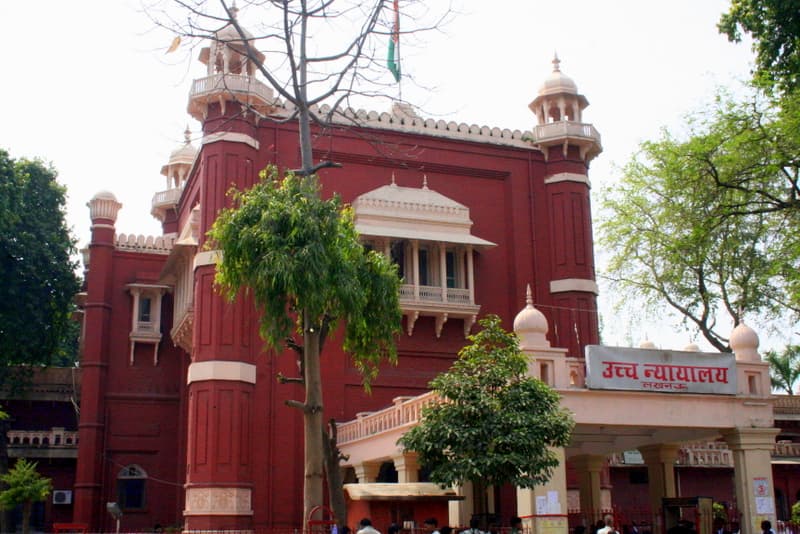
A sudden transfer order is one of the most disruptive events in the working life of a Uttar Pradesh government employee. A primary school teacher in Hardoi is moved to a remote block 200 km away in the middle of the session; a Sub-Divisional Magistrate is shifted within eight months of joining; a Lekhpal posted to a single tehsil for years is rotated overnight on a complaint that was never put to him. In every such case the immediate question is the same: can the order be stayed by the High Court, and if so, on what grounds?
The answer in 2026 is more nuanced than most employees realise. The Supreme Court has repeatedly held that transfer is an incident of government service and that courts will not interfere with administrative postings as a matter of routine. At the same time, the Allahabad High Court at Lucknow regularly intervenes where a transfer is mala fide, violates the State’s own transfer policy, is issued during a protected period, or is used as a disguised punishment to avoid a regular departmental enquiry. This guide explains, with reference to the latest UP Government transfer policy and recent rulings of the Lucknow Bench, when a writ challenge is maintainable, what grounds work, what documents you must collect before filing, and how the stay strategy is structured. If you would like a case-specific opinion before filing, you can contact us directly.
Table of Contents
Need Immediate Legal Help?
If you're facing a legal emergency in Lucknow, don't wait. Contact experienced criminal lawyer Advocate Onkar Pandey for immediate assistance.
The Settled Rule — Transfer Is an Incident of Service, but Not an Untouchable Power
Indian service jurisprudence begins with a simple proposition laid down by the Supreme Court in State of UP v. Gobardhan Lal (2004) and reaffirmed in dozens of later judgments: a government servant has no vested right to remain at one station, and transfer is an ordinary incident of service in a transferable post. Writ courts therefore decline to interfere with transfer orders as if they were sitting in appeal over administrative wisdom.
However, this rule has clear and well-recognised exceptions. The Allahabad High Court Lucknow Bench has, in 2025 and 2026, set aside transfer orders in the following situations:
- Mala fide transfer — issued to punish, harass or favour, traceable to a specific person or complaint.
- Violation of the statutory transfer policy notified by the State Government for that cadre and that year.
- Transfer of a protected employee — handicapped, terminally ill, single parent of a disabled child, woman within two years of superannuation, etc., contrary to the protection in the policy.
- Disguised punishment — where the real purpose is to discipline the employee but the proper route under the UP Government Servants (Discipline and Appeal) Rules 1999 has been bypassed.
- Order passed by an authority without jurisdiction over that cadre.
- Mid-session transfer of teachers in violation of the academic-year protection in the Basic Education Department policy.
Identifying which exception applies to your matter is the most important early decision. A petition that pleads “hardship” without anchoring it in one of these recognised grounds is dismissed at the admission stage in almost every case.
Maintainability — Writ, CAT or Service Tribunal? Picking the Right Forum
Before drafting any ground of challenge, the forum question must be settled. UP government employees fall into different jurisdictional buckets and filing in the wrong forum costs precious weeks while the transfer takes effect on the ground.
| Employee Category | Correct Forum | Statutory Basis |
|---|---|---|
| UP State Government servants (teachers, lekhpal, clerks, gazetted officers, etc.) | Writ petition under Article 226 before the Allahabad HC / Lucknow Bench | Constitution of India, Article 226 |
| UP State Public Service Tribunal matters (specific cadres notified) | UP Public Services Tribunal at Lucknow first; then writ to High Court | UP Public Services Tribunal Act 1976 |
| Central Government employees posted in UP | Central Administrative Tribunal (CAT), Allahabad Bench (Lucknow circuit sittings) | Administrative Tribunals Act 1985 |
| Local body / nagar nigam / development authority employees | Writ under Article 226 before the Allahabad HC / Lucknow Bench | Constitution of India, Article 226 |
| Public sector undertakings (PSU) employees | Writ only if the PSU is “State” under Article 12; otherwise civil suit | Article 12 read with service rules |
Most school teachers, lekhpals, revenue inspectors, doctors in State health services and police constables come within Article 226 of the Constitution and approach the Lucknow Bench directly. Cadres covered by the UP Public Services Tribunal must exhaust the Tribunal first, though the Tribunal too can grant interim stay against a transfer order.
Grounds That Actually Work in 2026 — Mala Fide, Policy Violation, Protected Status
Pleadings make or break a transfer writ. Vague averments of “hardship” or “injustice” are routinely rejected. The grounds that the Lucknow Bench has accepted in recent matters fall into four reasonably clear categories.
- Mala fide in fact (personal animosity): Plead the specific officer behind the transfer, the cause of friction (a complaint, refusal to oblige, a previous order against that officer), and the immediate trigger. Attach the complaint, RTI replies, and any electronic record showing the link. The Supreme Court in S. Pratap Singh v. State of Punjab (1964) still governs the standard of proof — the burden is on the petitioner and pleadings must be specific.
- Mala fide in law (colourable exercise): Use this where there is no enmity but the power has been exercised for an unauthorised purpose — for instance, to bypass a departmental enquiry, to favour a particular contractor, or to vacate a post for a chosen candidate. Show the policy framework, the deviation, and the absence of recorded reasons.
- Violation of the UP Transfer Policy: Every year the State Government notifies a transfer policy for major cadres — Basic Education, Secondary Education, Health, Revenue, Police, etc. Common protections include: transfer only within the “transfer window” (usually April–June for teachers), maximum tenure ceilings, restrictions on mid-session transfer, mandatory online process, district-quota and cadre-quota ceilings, and special protection for women, disabled, and employees within two years of retirement. Attach the relevant policy as Annexure and pinpoint the clause violated.
- Disguised punishment: A transfer order which is, in substance, a punishment must follow the procedure prescribed by the UP Government Servants (Discipline and Appeal) Rules 1999. If the order recites adverse remarks, complaints or misconduct as the reason, it is liable to be set aside for want of enquiry. The Lucknow Bench in 2025 quashed several such orders in the police and health departments where the “administrative exigency” recital was contradicted by an internal note disclosing punitive intent.
If the transfer is linked to a pending FIR or disciplinary chargesheet, the larger strategy may also need to cover FIR quashing or representation against the chargesheet — both pursued in coordination so that one proceeding does not weaken the other.
Legal Consultation
Talk directly to Advocate Onkar Pandey
Explain your matter over a call or WhatsApp. If you take the case forward, the consultation fee adjusts into your overall fee, so there is no separate charge to begin.
Stay Strategy — What to File, When, and How the Court Decides Interim Relief
The interim stay is, in most cases, the real prize. Once an employee has been relieved and has joined the new station, courts are reluctant to disturb the position. The petition must therefore be filed before relieving, ideally within 7–10 days of the order, and supported by a comprehensive affidavit.
- Step 1 — Representation: Submit a written representation to the transferring authority and the next higher authority within 48 hours of receiving the order. The High Court routinely asks whether internal remedies were attempted. A representation does not stay the order but it preserves the bona fides of the petitioner.
- Step 2 — Collect documents: Transfer order, appointment letter, last posting order, service book extract, transfer policy of the year, any medical or disability certificate of the employee or dependent, child’s school certificate where the academic-year ground is taken, RTI replies showing tenure of similarly placed officers, and the original complaint or noting (if obtainable).
- Step 3 — Draft and file the writ petition under Article 226 before the Lucknow Bench, with a separate stay application. The prayer should be (a) quash the transfer order, (b) restrain relieving pending decision, and (c) such other reliefs.
- Step 4 — Mentioning and listing: Where the relieving date is imminent, oral mentioning before the roster Bench for urgent listing is necessary. Bring the relieving order or the date stipulated in the transfer order to demonstrate urgency.
- Step 5 — Interim stay: The Court typically grants either (i) a short stay on relieving for 2–4 weeks while counter affidavit is called, or (ii) protection that the petitioner may continue at the existing posting subject to the final outcome. In rare cases of clear mala fide, the order is set aside at the admission stage.
If relieving has already happened, the petition is not infructuous but the standard becomes much higher. Show continuing prejudice — child’s board exam, ongoing medical treatment of a dependent, or the fact that the post at the new station does not in fact exist or is already filled.
Mid-Session Transfer of Teachers — A Recurring Lucknow Bench Issue
Mid-session transfer of primary, upper-primary and secondary teachers is the single largest category of transfer litigation before the Lucknow Bench. The Basic Education and Secondary Education transfer policies of UP repeatedly prohibit transfer after the “transfer window” closes (usually 30 June), except in narrowly defined situations — administrative exigency formally recorded, mutual transfer, or compassionate ground.
The Court has, in 2025 and 2026, quashed numerous orders where:
- The transfer was effected in October–December, well after the window, without any recorded exigency.
- The online portal procedure was bypassed and a manual order was issued.
- A woman teacher with a child under five was transferred outside her preferred district, in breach of the protection clause.
- The recipient school’s sanctioned strength was already full, demonstrating that the order had no administrative basis.
The pleading template that consistently succeeds is: (a) extract the precise policy clause, (b) attach the GO and the portal screenshot, (c) annex the school’s sanctioned strength from the U-DISE database, and (d) plead the academic disruption to students as a public-interest factor. Where multiple teachers are affected by the same illegal exercise, a joint petition with up to 5–6 similarly placed petitioners is cost-effective and tactically stronger.
Practical Cost, Timeline and What to Expect from the Lucknow Bench
Employees often delay filing because they overestimate the cost and time involved. The realistic figures for a transfer writ at the Lucknow Bench in 2026 are as follows.
| Stage | Typical Timeline | What Happens |
|---|---|---|
| Drafting & filing | 3–5 working days from instructions | Pleadings, annexures, vakalat, court fee, e-filing |
| First listing | 3–10 days after filing | Notice issued; interim stay considered |
| Counter affidavit by State | 4–6 weeks | State explains administrative reason |
| Rejoinder by petitioner | 2–3 weeks | Reply to State’s factual averments |
| Final hearing & judgment | 3–9 months from filing | Order quashed, modified, or petition dismissed |
Court fee on a transfer writ is modest. Professional fees vary by complexity, the seniority of counsel and whether a stay has to be argued the same day. As a working benchmark, a straightforward mid-session teacher transfer matter is significantly less expensive than a contested mala fide writ involving senior officers, voluminous records and oral arguments spread across multiple dates.
One realistic caveat: even where the writ succeeds, the State retains the power to issue a fresh transfer order after curing the defects pointed out by the Court. The win therefore typically buys time — sometimes a full academic year or until the next transfer window — rather than a permanent freeze on transfer. That said, in our experience, a quashed order combined with a strong representation is often enough to dissuade a second attempt for the rest of the calendar year.
Frequently Asked Questions
Can a UP government employee directly file a writ in the Allahabad High Court Lucknow Bench against a transfer order, or must I first approach the Tribunal?+
For most UP State Government cadres — teachers, lekhpals, clerks, doctors, police constables, and gazetted officers not covered by a specific Tribunal — a writ petition under Article 226 of the Constitution is directly maintainable before the Allahabad High Court Lucknow Bench. The Court has territorial jurisdiction over the 12 districts of the Awadh region, so an employee posted in or transferred from Lucknow, Sitapur, Hardoi, Lakhimpur Kheri, Barabanki, Rae Bareli, Unnao, Sultanpur, Faizabad, Ambedkar Nagar, Pratapgarh or Gonda can file directly at Lucknow. Cadres specifically notified under the UP Public Services Tribunal Act 1976 must first approach the Tribunal at Lucknow. Central Government employees posted in UP go to the Central Administrative Tribunal (CAT). A short verification of your cadre before drafting saves weeks of wasted procedural time.
What are the strongest grounds to challenge a transfer order in 2026?+
Four grounds consistently succeed. First, mala fide — naming the officer who engineered the transfer and producing a complaint, RTI reply or noting that proves the link. Second, violation of the UP transfer policy of the year for that cadre — typical breaches include transfer outside the notified window, exceeding district quotas, bypassing the online portal, and transferring protected employees (handicapped, single mother of disabled child, women within two years of superannuation). Third, disguised punishment — where the order is, in substance, disciplinary action without following the UP Government Servants (Discipline and Appeal) Rules 1999. Fourth, jurisdictional error — the authority issuing the order had no power over the cadre. Generic pleadings of “hardship” without anchoring in one of these grounds rarely succeed.
How quickly should I file the writ petition after receiving the transfer order?+
Within 7 to 10 days, and certainly before the relieving date. Courts are far more willing to stay relieving than to undo a completed joining. Use the first 48 hours to file a written representation to the transferring authority and the next higher officer — this is now treated by the Lucknow Bench as a near-mandatory pre-litigation step. Use the next 3 to 5 days to collect documents (transfer order, service book extract, transfer policy of the year, medical or dependent-care evidence, RTI replies on tenure of similarly placed officers) and instruct counsel. File the writ with a stay application, and if the relieving date is imminent, mention the matter before the roster Bench for urgent listing the same day. Delay beyond the relieving date does not make the writ infructuous, but the standard for interim relief becomes considerably higher.
Will the High Court stay my transfer order on the first date?+
Sometimes, but not always. The typical interim order on the first date is either (a) a short stay on relieving for 2–4 weeks while the State files its counter affidavit, or (b) protection that the petitioner may continue at the existing post subject to the final outcome. In matters of clear mala fide, gross policy violation, or transfer issued without jurisdiction, the Lucknow Bench has set aside orders at the admission stage itself. In ordinary administrative transfers without recorded reasons, the Court calls for a counter affidavit and decides the stay application on the next date after hearing the State. The presence of credible documentary material on the first date — policy notification, RTI reply, complaint, medical certificate — significantly improves the chances of immediate interim relief.
I am a primary school teacher in UP and have been transferred in October, after the policy window closed. Is the order automatically illegal?+
Mid-session transfer of basic education teachers after the notified transfer window is impermissible unless the order specifically records administrative exigency, mutual transfer, or compassionate ground recognised in the policy. A generic recital of “administrative reasons” without specific facts has been repeatedly struck down by the Lucknow Bench in 2025 and 2026. To succeed, extract the precise clause of the Basic Education transfer policy of the current year, attach the relevant GO and your online portal screenshot, annex the U-DISE sanctioned strength of the recipient school to show the post is already filled, and plead the academic disruption to students. Where multiple teachers in the district are affected by the same illegal exercise, a joint petition with 5–6 similarly placed petitioners is both cost-effective and tactically stronger.
What documents must I preserve before approaching a service law lawyer?+
The following document set should be assembled before the first consultation, ideally in soft copies on a single pen-drive or cloud folder: the impugned transfer order, all previous posting orders since appointment, the appointment letter, the last three years’ service book extracts, the UP transfer policy notification of the current year for your cadre, your medical certificates and any dependent’s disability or treatment papers, child’s school certificate where the academic-year ground is taken, any RTI replies obtained on the tenure of similarly placed officers, the original complaint or noting (if accessible), your written representation submitted to the higher authority, and identity proof. A clean document set enables counsel to draft within 24 to 48 hours and file before the relieving date. You can contact the office in advance for a checklist tailored to your cadre.
If the High Court quashes my transfer order, can the State simply issue a fresh order?+
Yes, in principle. A quashing order removes the defect identified by the Court but does not strip the State of its underlying power to transfer in a transferable post. The State can issue a fresh order after curing the defect — by recording reasons, following the policy, or observing the protected-employee restrictions. In practice, however, a quashed order combined with a robust representation is often enough to dissuade a second attempt for the rest of the calendar year, especially where the Court’s observations indicate mala fide or policy violation. Where the State does issue a fresh order in defiance of the High Court’s observations, a contempt petition along with a fresh writ is the appropriate response, and the Lucknow Bench has not hesitated to act in proven cases of deliberate disobedience.
My transfer order violates the UP Transfer Policy for this year. Is that a strong enough ground to get it quashed?+
A breach of the annual UP Transfer Policy (for example, transfer before the minimum tenure, or exceeding the sanctioned percentage of transfers in a district) is a recognised ground, but courts treat the policy as guidance rather than an absolute statutory right. The transfer is more likely to be set aside where the policy breach is combined with clear mala fide, victimisation, or a transfer ordered by an authority not competent to pass it. A bare deviation from the policy, without more, is often met with the observation that transfer is an incident of service.
Should I first approach the department or the State Public Services Tribunal before filing a writ in the Allahabad High Court?+
For most UP government service matters the U.P. Public Services Tribunal at Lucknow is the designated forum, and the High Court frequently relegates employees to it when an efficacious alternative remedy exists. However, in a transfer matter where you need an urgent interim stay before the joining date, a writ under Article 226 before the Lucknow Bench is often filed directly, especially where mala fide or lack of jurisdiction is alleged. Your advocate will weigh the urgency of the joining date against the risk of being sent back to the Tribunal.
Related Guides
Related Services
Get Expert Legal Advice in Lucknow
20+ years experience in criminal law at Lucknow High Court. Available 24/7 for emergencies.
Disclaimer: This article is for general information purposes only and does not constitute legal advice. Every case is unique and requires specific legal analysis. For advice specific to your situation, please consult Advocate Onkar Pandey or another qualified attorney in Lucknow.