“Disclose Your Crimes Before Seeking Freedom”: Supreme Court Tells High Courts to Tighten Bail Rules
Quick Answer
In a landmark directive that has sent ripples through the Allahabad High Court Lucknow Bench , the Supreme Court has unequivocally told High Courts across India to tighten bail rules by mandating full disclosure of an applicant’s criminal antecedents. If you are seeking bail in Lucknow or a…
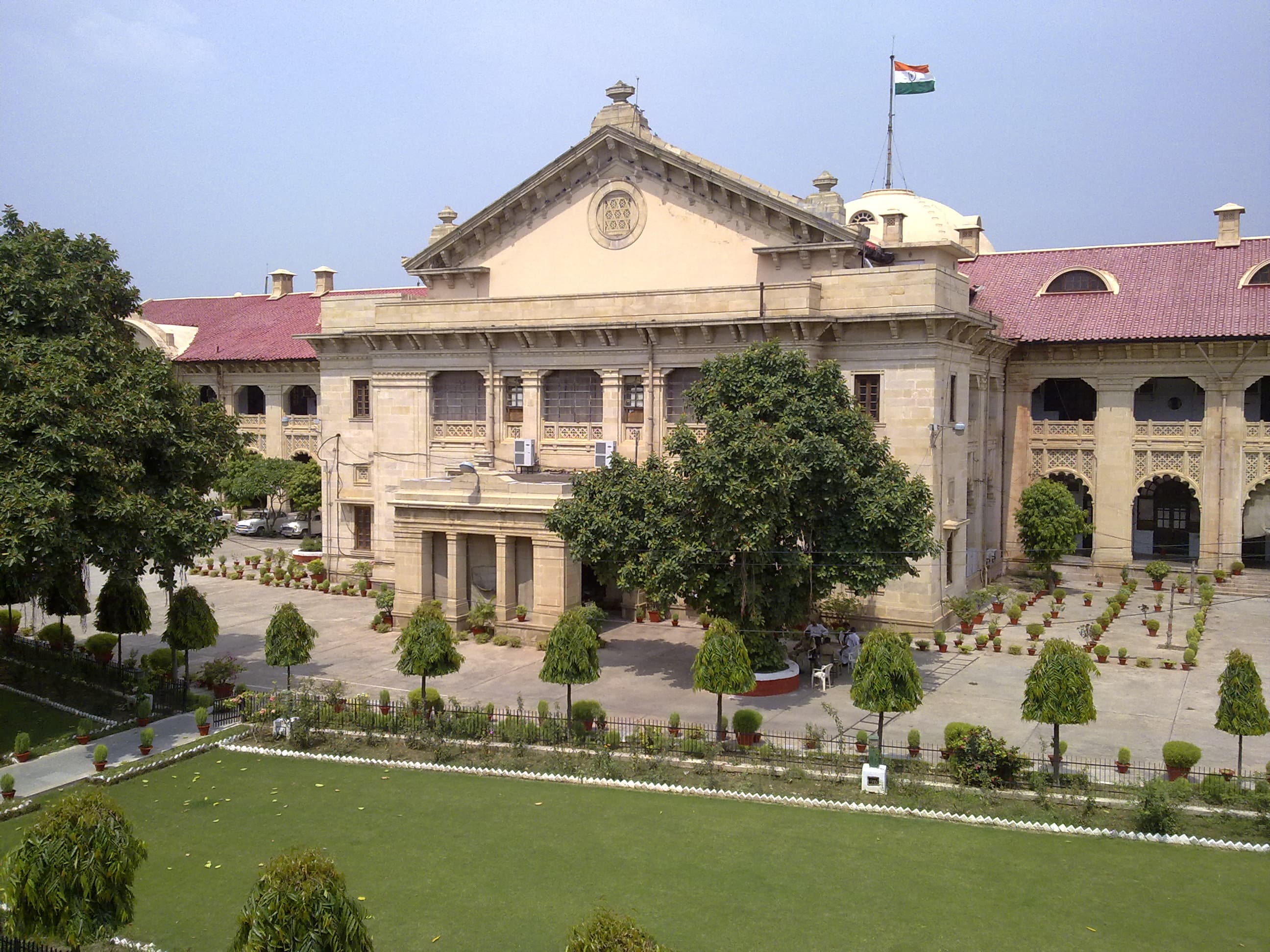
In a landmark directive that has sent ripples through the Allahabad High Court Lucknow Bench, the Supreme Court has unequivocally told High Courts across India to tighten bail rules by mandating full disclosure of an applicant’s criminal antecedents. If you are seeking bail in Lucknow or anywhere in Uttar Pradesh, you must now disclose every past FIR, charge sheet, and conviction before the court entertains your plea for freedom. This article, guided by the expert opinion of Advocate Onkar Pandey, a seasoned criminal lawyer in Lucknow, answers the critical question: “What must a bail applicant in Lucknow disclose about their criminal history after the Supreme Court’s new tightening rules?” Read on to understand the practical implications for your bail application under the BNSS at the Allahabad High Court.
Table of Contents
Need Immediate Legal Help?
If you're facing a legal emergency in Lucknow, don't wait. Contact experienced criminal lawyer Advocate Onkar Pandey for immediate assistance.
What the Supreme Court Actually Said: The Anurudh Mandate
The Supreme Court in State of U.P. v. Anurudh (2026) made it clear that bail jurisdiction is limited to deciding whether the accused should be released pending trial. However, the Court also noted that High Courts must not mechanically grant bail without first verifying the accused’s criminal history. The judgment directs that no bail order should be passed without a specific recital that the applicant has disclosed all past criminal cases.
This mandate directly affects every bail application filed under Section 483 BNSS (bail in non-bailable offences) and Section 484 BNSS (High Court bail after rejection). The bail lawyers in Lucknow must now prepare a detailed affidavit of disclosure along with the bail application. Failure to disclose can lead to rejection, cancellation of bail, or even contempt proceedings.
| Key Requirement | What to Disclose |
|---|---|
| Past FIRs | Every FIR registered against the applicant anywhere in India, including closed cases. |
| Charge sheets | All charge sheets filed, even if trial is pending or the case has been quashed. |
| Convictions | Any prior conviction, regardless of sentence served or appeal pending. |
| Other proceedings | Complaints under Section 125 BNSS (maintenance), DV Act, or any quasi-criminal proceedings. |
The Satender Kumar Antil Principle: Bail is the Rule, But Not Without Truth
The Supreme Court in Satender Kumar Antil v. CBI (2022) 10 SCC 51 established that bail is the rule and jail is the exception. Yet the same judgment also laid down that courts must examine the criminal antecedents of the accused before granting bail. The Anurudh judgment goes a step further by requiring the applicant to initiate this disclosure voluntarily.
For practitioners at the Allahabad High Court Lucknow Bench, this means that a standard bail application under Section 483 BNSS must now include a sworn affidavit listing:
- Total number of FIRs registered against the applicant across all states.
- Details of bail granted in any other case (with case numbers and court names).
- Whether the applicant has ever been declared a proclaimed offender.
- Any pending applications for anticipatory bail or quashing under Section 528 BNSS.
The Lucknow criminal defense team advises that withholding even one FIR can be fatal. The court may reject the bail or cancel it later under Section 484 BNSS.
Prabhakar Tewari: Antecedents Matter, But Are Not Mechanically Disqualifying
In Prabhakar Tewari v. State of U.P. (2020) 11 SCC 648, the Supreme Court held that mere pendency of several criminal cases against an accused cannot by itself be the sole basis to refuse bail. This judgment protects the applicant from being denied bail simply because they have many cases. However, the key is that the applicant must explain those cases.
So what does this mean for a bail hearing at the CJM Court Lucknow or the Sessions Court Lucknow? The judge will:
- Look at the number of cases disclosed.
- Examine if the cases are frivolous (e.g., matrimonial disputes, minor traffic violations).
- Assess the period of custody already suffered.
- Decide if the applicant is a flight risk or likely to tamper with evidence.
If you have a genuine explanation — such as political vendetta, false dowry case, or property disputes — your Lucknow bail lawyer must present that explanation alongside the disclosure. The criminal defense strategy is to show that despite multiple cases, your detention is not necessary for a fair trial.
Legal Consultation
Talk directly to Advocate Onkar Pandey
Explain your matter over a call or WhatsApp. If you take the case forward, the consultation fee adjusts into your overall fee, so there is no separate charge to begin.
Practical Steps for Filing a Bail Application After Anurudh in Lucknow
If you are in judicial custody in Lucknow or want to apply for anticipatory bail at the Allahabad High Court, follow these steps:
| Step | Action Required | Timeline |
|---|---|---|
| 1. Gather history | Collect all FIR numbers from all police stations (use online UP Police portal). | 1 day |
| 2. Prepare affidavit | Draft a sworn affidavit listing all FIRs, charge sheets, and convictions. | 1 day |
| 3. File bail application | File under Section 483 BNSS (Magistrate), Section 482 BNSS (Sessions), or Section 484 BNSS (High Court). | 1 day |
| 4. Argue at hearing | Present disclosure and rely on Antil/Tewari for liberal bail. | Same day to 2 weeks |
The bail application fee for a standard district court matter in Lucknow ranges from ₹10,000 to ₹50,000. For the High Court, advocate fees typically range from ₹25,000 to ₹1,00,000+. Urgent matters can be listed within 1 to 10 days.
What Happens If You Fail to Disclose? Consequences Under BNSS
The Supreme Court in Anurudh has not left any ambiguity on consequences. If a bail applicant suppresses any criminal case, the court can:
- Reject the bail application outright.
- Cancel the bail even after release, under Section 484 BNSS.
- Initiate proceedings for perjury or contempt of court.
At the Allahabad High Court Lucknow Bench, we have already seen bail orders being set aside on the ground of non-disclosure. The FIR quashing lawyers in Lucknow now include a disclosure checklist for every client. If you have a pending application for quashing under Section 528 BNSS, you must still disclose those FIRs in the bail application. The court may decide to stay the quashing and deal with the bail first.
How a Lucknow Criminal Lawyer Can Help You Navigate the New Rules
Navigating the new Supreme Court mandate requires expert legal assistance. A skilled criminal lawyer in Lucknow like Advocate Onkar Pandey will:
- Conduct a thorough background check of your criminal history using online databases.
- Draft a comprehensive affidavit of disclosure that leaves no gaps.
- File the appropriate bail application under the correct BNSS section (480, 481, 482, 483, or 484).
- Argue that your antecedents do not justify continued detention, relying on Prabhakar Tewari.
The cost of hiring a senior lawyer for High Court bail is significantly lower than the cost of being wrongfully detained for weeks or months. A typical जमानत (bail) application in Lucknow can be turned around in 2 to 8 weeks if documents are in order. For urgent custody matters, a lawyer can get a hearing within 24 to 48 hours.
Contact Advocate Onkar Pandey at +91 98392 71553 for a consultation on your bail matter at the Allahabad High Court Lucknow Bench.
About the Author
Advocate Onkar Pandey is a practicing lawyer at the Allahabad High Court Lucknow Bench with over 25 years of experience in criminal law, bail matters, FIR quashing, and family law. Enrolled with the Bar Council of Uttar Pradesh (No. UP/4825/1999), he provides expert legal guidance to clients across Uttar Pradesh from his chamber at A-406, High Court, Lucknow. For a consultation on bail and criminal defense, contact Advocate Onkar Pandey at +91 98392 71553.
Frequently Asked Questions
Do I need to disclose FIRs that were quashed by the High Court?+
Yes. The Supreme Court mandate requires disclosure of every FIR registered against you, even if it was subsequently quashed. The court needs to see the full picture of your criminal history. You can explain in the affidavit that the case was quashed, but you must not omit it. Failure to disclose a quashed FIR can still be treated as suppression and may lead to cancellation of bail under Section 484 BNSS.
What if I have a case pending from another state like Delhi or Mumbai?+
You must disclose all FIRs registered anywhere in India — not just in Uttar Pradesh. The Supreme Court has made it clear that the disclosure requirement is pan-India. Your Lucknow bail lawyer must search central databases and ask you about any cases outside UP. Non-disclosure of an inter-state case is treated as seriously as suppression of a local case.
Can the court still grant me bail if I have 10 prior FIRs?+
Yes, the court can still grant bail. The Supreme Court in Prabhakar Tewari v. State of U.P. (2020) 11 SCC 648 held that mere multiple FIRs are not an automatic ground to refuse bail. However, you must provide a credible explanation for each case — such as matrimonial dispute, land dispute, or political vendetta. The judge will assess the severity and nature of each case before exercising discretion under Section 483 BNSS or Section 484 BNSS.
What is the new BNSS section number for bail in non-bailable offences at the High Court?+
The new BNSS section for High Court bail (after rejection by a lower court) is Section 484 BNSS. Do not confuse it with the old Section 439 CrPC. For anticipatory bail, the correct section is Section 482 BNSS. For regular bail before a Magistrate, use Section 483 BNSS. The Supreme Court in Anurudh specifically relied on Section 483 BNSS as the bail-jurisdiction provision. Always use the new BNSS section numbers in your application.
How much time does a typical bail application take at the CJM Court Lucknow?+
A simple bail application at the CJM Court Lucknow can be heard within 1 to 10 days if filed urgently. If the matter is routine, expect 2 to 6 weeks. For High Court bail under Section 484 BNSS, the hearing may take 2 to 8 weeks depending on the bench roster. Advocate fees for district court bail range from ₹10,000 to ₹50,000, and for High Court bail from ₹25,000 to ₹1,00,000+. Always carry a complete set of FIR, case diary, and disclosure affidavit to avoid adjournments.
Can I apply for anticipatory bail under Section 482 BNSS after the Anurudh judgment?+
Yes, you can still apply for anticipatory bail under Section 482 BNSS. However, the disclosure requirement applies with equal force. The Sessions Court or High Court will require you to disclose all past FIRs and pending cases before granting interim protection. The Supreme Court has not abolished anticipatory bail — it has only tightened the disclosure norms. A skilled Lucknow criminal lawyer can still obtain pre-arrest bail if your case has merits.
What should I do if I forgot to disclose a minor FIR at the time of filing bail?+
You must immediately file a supplementary affidavit correcting the omission. Do not wait for the court to discover it. The judge may consider the correction as a good-faith error if you act promptly. However, if the court finds the omission deliberate, it can cancel your bail or even initiate contempt proceedings. It is safer to over-disclose than to under-disclose. Always ask your lawyer to verify your history from the UP Police online portal before signing the affidavit.
Related Guides
Related Services
Get Expert Legal Advice in Lucknow
20+ years experience in criminal law at Lucknow High Court. Available 24/7 for emergencies.
Disclaimer: This article is for general information purposes only and does not constitute legal advice. Every case is unique and requires specific legal analysis. For advice specific to your situation, please consult Advocate Onkar Pandey or another qualified attorney in Lucknow.