Supreme Court: Anticipatory Bail by High Court Can Be Cancelled If Serious Error in Law
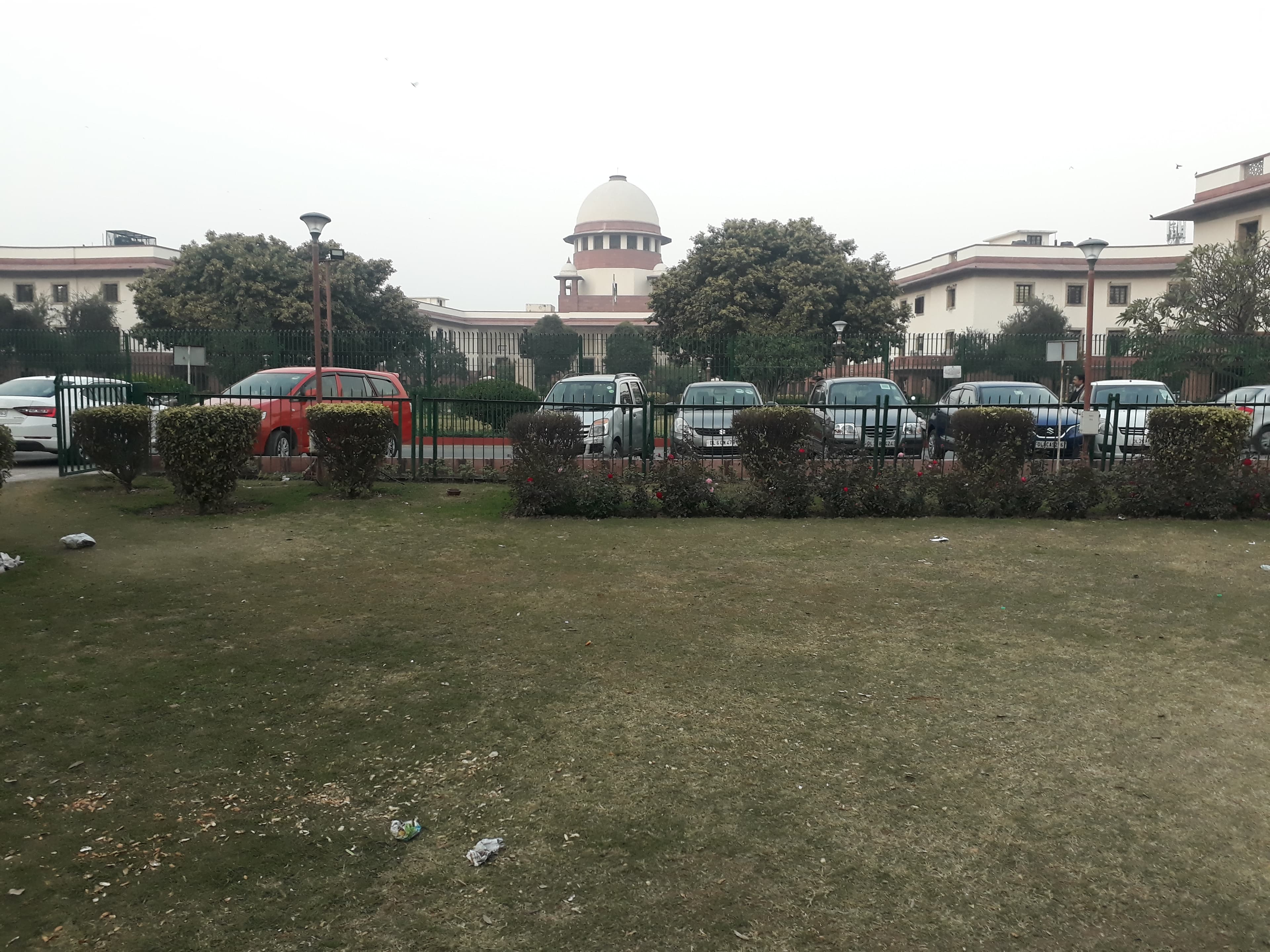
The Supreme Court of India has repeatedly held that anticipatory bail, once granted by a High Court, is not immune to cancellation. In a series of landmark rulings, the Apex Court has clarified that if the High Court commits a serious error in law while granting pre-arrest bail, the Supreme Court can step in and set aside that order. This principle binds all High Courts, including the Allahabad High Court (Lucknow Bench), and directly impacts litigants across Uttar Pradesh.
For those facing arrest in Lucknow, understanding these grounds is critical. The Bharatiya Nagarik Suraksha Sanhita (BNSS), 2023 has introduced new sections—Section 482 BNSS (anticipatory bail) and Section 484 BNSS (High Court bail after rejection)—which replace the old CrPC provisions. This article analyzes the Supreme Court's stance, the legal tests for cancellation, and what it means for your bail application in Lucknow or Allahabad High Court.
Table of Contents
Need Immediate Legal Help?
If you're facing a legal emergency in Lucknow, don't wait. Contact experienced criminal lawyer Advocate Onkar Pandey for immediate assistance.
The Legal Framework: BNSS 2023 and Anticipatory Bail
Under the Bharatiya Nagarik Suraksha Sanhita (BNSS), 2023, the power to grant anticipatory bail is now codified under Section 482 BNSS. This section corresponds to the old Section 438 CrPC. However, the procedure for cancellation remains distinct.
Section 483(2) BNSS empowers the High Court or Sessions Court to cancel bail if the accused misuses liberty or if new facts emerge. But what happens when the High Court itself makes a legal error? The Supreme Court has stepped in to fill this gap.
| Provision (Old CrPC) | Provision (New BNSS 2023) | Purpose |
|---|---|---|
| Section 438 CrPC | Section 482 BNSS | Grant of anticipatory bail |
| Section 439(2) CrPC | Section 483(2) BNSS | Cancellation of bail by High Court/Sessions Court |
| Section 482 CrPC | Section 528 BNSS | Inherent powers of High Court (FIR quashing) |
Understanding these sections is vital for any anticipatory bail application filed in Allahabad High Court or Sessions Court Lucknow.
Landmark Supreme Court Rulings on Cancellation of Anticipatory Bail
The Supreme Court has delivered several judgments that define when a High Court's order granting anticipatory bail can be cancelled. The most prominent are discussed below.
1. Sushila Aggarwal v. State (NCT of Delhi) (2020) 1 SCC 1
This is the landmark judgment that settled the law on duration and cancellation of anticipatory bail. The Court held that anticipatory bail continues until the conclusion of trial unless cancelled on specific grounds. Cancellation is permissible if the accused tampers with evidence, intimidates witnesses, or if the High Court's order suffers from perversity or ignores relevant material.
- Key Principle: Bail can be cancelled if the High Court commits a serious error in law while granting it.
- Impact on Allahabad High Court: This ruling is binding on the Lucknow Bench. Any bail order that ignores the gravity of the offence or the role of the accused can be challenged before the Supreme Court.
2. Sumit v. State of U.P. (2026) 2 SCC 45
This 2026 judgment reaffirmed the principles of Sushila Aggarwal. The Court held that anticipatory bail is an exceptional relief, not a routine right. If the High Court grants bail in a grave offence like dowry death (Section 304B BNS) without recording strong reasons, it constitutes a serious error in law, warranting cancellation.
- Key Principle: Artificial time limits on anticipatory bail are impermissible; they amount to judicial legislation.
- Relevance for Lucknow: Many orders from Allahabad High Court imposing time limits (e.g., “valid for 3 months”) are now vulnerable under this ruling.
3. Balmukund Singh Gautam v. State of U.P. (2026) 1 SCC 112
This case dealt with an absconding accused. The Supreme Court held that an absconding accused is not entitled to anticipatory bail except in exceptional cases. If the High Court grants bail without verifying the accused's presence or cooperation, it is a serious error in law.
- Key Principle: The court must apply the correct legal test—absence of cooperation is a valid ground for refusal.
- Practical Tip: If you have been accused of evading investigation in Lucknow, consult a criminal lawyer in Lucknow immediately to avoid being labelled an absconder.
Grounds for Cancellation: What Constitutes a Serious Error in Law?
The Supreme Court has identified several scenarios where the High Court's order can be deemed a serious error in law. These include:
- Ignoring the gravity of the offence: If the High Court grants bail in a heinous crime like murder or dowry death without considering the nature of the accusation, the order is perverse.
- Failure to record reasons: A bald order without any reasoning is vulnerable. The court must apply its mind to the facts.
- Granting bail to an absconding accused: As held in Balmukund Singh Gautam, this is a clear error.
- Imposing artificial time limits: As per Sumit, such limits are illegal.
- Ignoring relevant material: If the police file shows strong evidence of tampering or flight risk, ignoring that is an error.
For litigants in Lucknow, this means that even if you secure anticipatory bail from the Allahabad High Court, the prosecution can move the Supreme Court to cancel it if any of these errors exist. Therefore, it is crucial to have a well-drafted application with proper legal reasoning.
| Ground for Cancellation | Relevant Supreme Court Case | Practical Implication for Lucknow Litigants |
|---|---|---|
| Ignoring gravity of offence | Sushila Aggarwal (2020) | Bail in murder/dowry death cases must be strongly reasoned |
| Artificial time limits | Sumit v. State of U.P. (2026) | Challenge any order with time limits before Supreme Court |
| Absconding accused | Balmukund Singh Gautam (2026) | Ensure full cooperation with investigation |
Legal Consultation
Talk directly to Advocate Onkar Pandey
Explain your matter over a call or WhatsApp. If you take the case forward, the consultation fee adjusts into your overall fee, so there is no separate charge to begin.
Procedure for Challenging a High Court Bail Order Before the Supreme Court
If you are the complainant or the State and the High Court has granted anticipatory bail in a manner that suffers from a serious error in law, you can approach the Supreme Court under Article 136 of the Constitution (Special Leave Petition). The Supreme Court does not act as a regular appellate court but intervenes when there is a grave miscarriage of justice.
The process involves:
- Filing an SLP: Within 90 days of the High Court order.
- Showing a serious error: The petition must clearly demonstrate that the High Court ignored settled legal principles.
- Urgent hearing: If the accused is likely to tamper with evidence, the Court may grant an early hearing.
For those in Lucknow, it is advisable to engage a lawyer who is familiar with both the Allahabad High Court and the Supreme Court procedures. Advocate Onkar Pandey regularly handles such matters from his chamber at A-406, High Court, Lucknow.
Practical Tips for Accused Persons in Lucknow
If you are seeking anticipatory bail in Lucknow or have already obtained it, here are some actionable tips:
- Do not become an absconder: Cooperate fully with the investigating officer. Non-cooperation can lead to cancellation.
- Ensure your bail order is well-reasoned: Your lawyer must ensure the court records reasons based on the facts and law.
- Avoid artificial conditions: If the court imposes a time limit, challenge it immediately before the same court or the Supreme Court.
- Maintain clean conduct: Do not tamper with evidence or intimidate witnesses.
For a detailed consultation, contact a criminal lawyer in Lucknow who specializes in bail matters under BNSS 2023.
About the Author
Frequently Asked Questions
Can the Supreme Court cancel anticipatory bail granted by the Allahabad High Court?+
Yes, the Supreme Court can cancel anticipatory bail granted by the Allahabad High Court if the order suffers from a serious error in law. This includes ignoring the gravity of the offence, failing to record reasons, granting bail to an absconding accused, or imposing artificial time limits. The landmark rulings in Sushila Aggarwal (2020), Sumit v. State of U.P. (2026), and Balmukund Singh Gautam (2026) establish this principle. The Court exercises its power under Article 136 of the Constitution.
What is Section 482 BNSS and how does it apply to anticipatory bail in Lucknow?+
Section 482 BNSS (corresponding to old Section 438 CrPC) empowers the Sessions Court or High Court to grant anticipatory bail. In Lucknow, applications under Section 482 BNSS are filed before the Sessions Court or the Allahabad High Court (Lucknow Bench). The court considers factors like the nature of the offence, the role of the accused, and the likelihood of flight risk. If the order is passed without proper reasoning, it can be challenged before the Supreme Court.
What are the grounds for cancellation of anticipatory bail under BNSS 2023?+
Under Section 483(2) BNSS, anticipatory bail can be cancelled if the accused misuses the liberty, tampers with evidence, intimidates witnesses, or fails to cooperate with the investigation. Additionally, the Supreme Court can cancel bail if the High Court's order suffers from a serious error in law, such as ignoring relevant material or granting bail to an absconding accused. The rulings in Sushila Aggarwal (2020) and Balmukund Singh Gautam (2026) elaborate on these grounds.
Can the prosecution challenge a bail order from Allahabad High Court in the Supreme Court?+
Yes, the prosecution can file a Special Leave Petition (SLP) under Article 136 of the Constitution before the Supreme Court to challenge a bail order from the Allahabad High Court. The SLP must be filed within 90 days of the High Court order and must demonstrate a serious error in law, such as perversity or failure to consider material evidence. The Supreme Court may grant an urgent hearing if there is a risk of evidence tampering.
What should I do if I am an absconding accused and want anticipatory bail in Lucknow?+
If you are an absconding accused, you are generally not entitled to anticipatory bail except in exceptional cases where no prima facie case is made out. As per Balmukund Singh Gautam (2026), you must first surrender and cooperate with the investigation. It is advisable to consult a criminal lawyer in Lucknow immediately to assess your options. Advocate Onkar Pandey can guide you through the process of regular bail or anticipatory bail if the circumstances permit.
How long does anticipatory bail last under BNSS 2023?+
Under BNSS 2023, anticipatory bail granted under Section 482 BNSS continues until the conclusion of the trial, unless specifically cancelled by the court. The Supreme Court in Sushila Aggarwal (2020) and Sumit v. State of U.P. (2026) has held that artificial time limits (e.g., 'valid for 3 months') are impermissible and amount to judicial legislation. If your bail order contains such a condition, you should challenge it immediately.
Can I file an anticipatory bail application directly in the Allahabad High Court Lucknow Bench?+
Yes, under Section 482 BNSS, you can file an anticipatory bail application directly before the Allahabad High Court (Lucknow Bench) without first approaching the Sessions Court. However, it is generally advisable to approach the Sessions Court first, as the High Court may require special reasons for entertaining a direct application. For serious offences, many lawyers prefer to file directly in the High Court. Advocate Onkar Pandey can advise on the best strategy for your case.
Related Services
Get Expert Legal Advice in Lucknow
20+ years experience in criminal law at Lucknow High Court. Available 24/7 for emergencies.
Disclaimer: This article is for general information purposes only and does not constitute legal advice. Every case is unique and requires specific legal analysis. For advice specific to your situation, please consult Advocate Onkar Pandey or another qualified attorney in Lucknow.