Subsistence Allowance for Suspended Government Employees in Uttar Pradesh: FR 53 Rights, Calculation and Allahabad HC Remedies
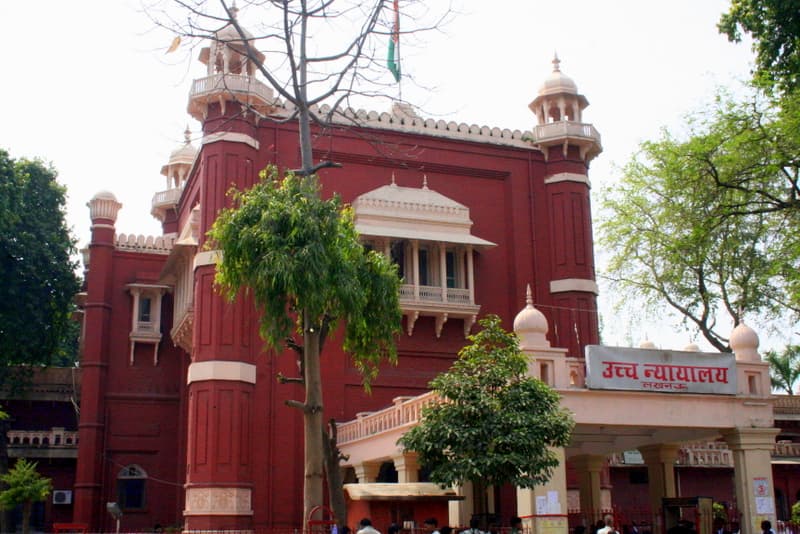
When a government employee in Uttar Pradesh is placed under suspension, the law does not leave them without income. Fundamental Rule 53 (FR 53), adopted and adapted in the UP Government Servants Conduct Rules, guarantees a subsistence allowance — a partial salary paid every month until the suspension is revoked or the departmental enquiry concludes. Yet, in chamber after chamber at the Lucknow Bench, we meet suspended officers whose subsistence allowance was either delayed for months, paid at the wrong rate, or quietly stopped after the third month. This guide explains exactly what you are entitled to, how it is calculated, when a department can lawfully reduce it, and what relief the Allahabad High Court grants when these rules are breached. If you are an employee facing such a situation, you should also speak to a service law advocate before filing any departmental representation.
Table of Contents
Need Immediate Legal Help?
If you're facing a legal emergency in Lucknow, don't wait. Contact experienced criminal lawyer Advocate Onkar Pandey for immediate assistance.
What Is Subsistence Allowance and Why It Exists
Subsistence allowance is not a bonus, a discretionary grant, or a welfare measure. It is a statutory right the moment a suspension order is issued, flowing from Fundamental Rule 53 of the UP Fundamental Rules (mirroring the Central FR 53). The Supreme Court has repeatedly held that a suspended employee remains in service — they are merely kept away from active duty — and therefore cannot be reduced to destitution while the enquiry runs its course.
The purpose is twofold:
- Preserve the presumption of innocence: Until the charge is proved in a departmental enquiry, the employee is presumed innocent. Cutting off all pay would amount to a punishment without a finding.
- Prevent forced confession: Without minimum income, a suspended officer would be coerced into resignation or a hasty admission of guilt simply to escape financial ruin.
This is why courts treat any deliberate withholding of subsistence allowance as a violation of service law and, in many cases, as a violation of Article 21 (right to livelihood). The Allahabad High Court has the power to direct payment with interest and even contempt action in egregious cases.
FR 53: The Calculation You Are Entitled To
The rate at which subsistence allowance is paid depends on two things — the duration of suspension, and whether the delay is attributable to the employee. The structure under FR 53 is as follows:
| Period of Suspension | Subsistence Allowance Rate | Dearness Allowance |
|---|---|---|
| First 3 months | Equal to half-pay leave salary (~50% of basic pay) | Admissible on subsistence amount |
| After 3 months — delay NOT attributable to employee | May be enhanced by up to 50% (i.e., up to ~75% of basic pay) | Recalculated on enhanced amount |
| After 3 months — delay attributable to employee | May be reduced by up to 50% (i.e., down to ~25% of basic pay) | Recalculated on reduced amount |
| House Rent Allowance (HRA) | Paid at the normal rate the employee would otherwise have drawn | — |
Two crucial points are routinely missed by departments:
- HRA is NOT to be reduced — it continues at full duty rate throughout suspension, regardless of duration.
- Any enhancement or reduction after 3 months requires a written, reasoned order — it cannot be done silently or by oral instruction. The order must record the reason for delay and assign attribution.
For officers facing this in a criminal context (where suspension follows an FIR), pairing the service representation with a parallel FIR quashing strategy often produces the fastest result.
When Departments Wrongly Withhold or Delay Payment
From practice before the Lucknow Bench, the most common departmental violations are:
- Conditional certificate demand: Some departments insist the employee submit a "non-employment certificate" every month, refusing to release payment without it. This is permissible, but the form must be made available and acceptance cannot be unreasonably delayed.
- Pending DDO clearance: Departments cite that the Drawing and Disbursing Officer has not cleared the bill. Internal accounting delays cannot extinguish the employee's right — courts have held the suspending authority personally responsible.
- Withholding for "investigation pending": A police investigation or pending FIR does NOT justify stopping subsistence allowance. Only the departmental enquiry outcome can affect final pay; the monthly subsistence allowance continues.
- Silent reduction after 3 months: Departments sometimes drop the rate to 25% without a reasoned order, claiming the delay is the employee's fault. Courts have repeatedly quashed such reductions for lack of recorded reasons.
- Non-payment of arrears upon revocation: Even after suspension is revoked, departments delay paying the difference between subsistence allowance and full pay for the suspension period. This must be resolved either by reinstatement order or a formal "full pay during suspension" order under FR 54-B.
Each of these is a writ-worthy violation, and the remedy is usually swifter than employees expect — the Allahabad HC has, in several matters, directed payment within 30 days of the writ admission.
Legal Consultation
Talk directly to Advocate Onkar Pandey
Explain your matter over a call or WhatsApp. If you take the case forward, the consultation fee adjusts into your overall fee, so there is no separate charge to begin.
Step-by-Step: How to Recover Withheld Subsistence Allowance
Before approaching the High Court, the employee must build a paper trail. The recommended sequence is:
- Written representation to the suspending authority — quote FR 53, attach the suspension order, list months for which allowance was not paid, attach the non-employment declaration. Send via registered post with acknowledgment due.
- Reminder representation — if no response in 30 days, send a reminder citing the date of the first letter. This second letter becomes the trigger for "deemed refusal."
- Departmental appeal — file under the relevant UP service appeal rules (typically to the next higher authority).
- Writ petition under Article 226 — file before the Lucknow Bench of the Allahabad High Court. Annex the suspension order, both representations, and a calculation chart showing the shortfall.
- Interim mandamus — in genuine hardship cases (medical emergency, dependent education), seek interim direction for release of withheld amount during the pendency of the writ.
An experienced criminal lawyer should also be consulted in parallel if the suspension is connected to an FIR — the two strategies must align so that an admission in the service forum does not damage the criminal defence.
What the Allahabad High Court Has Held
Across multiple judgments, the Lucknow Bench has consistently held the following principles:
- Suspension cannot be indefinite. If the enquiry is not progressing, prolonged suspension itself becomes punishment, and reinstatement (with full pay restoration) is the proper relief.
- Reduction after 3 months requires recorded reasons. A silent reduction order is set aside, with arrears directed to be paid.
- Non-employment certificate cannot be made impossibly cumbersome. Demanding fresh affidavits each month, sworn before a magistrate, has been struck down.
- HRA continues at full rate. Departments cannot pro-rate HRA during suspension.
- Interest on delayed payment. Where payment is unreasonably delayed, courts have directed interest at rates ranging from 6% to 9% per annum.
For a deeper look at related departmental remedies, see the procedure for replying to a chargesheet and the standards for departmental enquiry oral hearings.
Common Mistakes Suspended Employees Make
Even when the law is on the employee's side, certain self-inflicted errors weaken the case at the writ stage:
- Taking up parallel employment: Subsistence allowance is strictly conditional on the employee not engaging in any other employment, business, or profession. A single contradictory entry — a small consulting gig, a partnership in a shop — voids the entitlement.
- Not filing the non-employment certificate on time: The certificate is the trigger for monthly release. Delaying it gives the department a clean defence.
- Ignoring departmental appeal stage: Filing a writ directly without exhausting the appellate remedy is often dismissed on the alternate-remedy doctrine. The departmental representation chain must be honoured.
- Mixing personal grievance with subsistence claim: Subsistence allowance writs succeed when narrowly framed — "X months not paid, FR 53 violated, direct payment." Adding allegations about the merits of suspension dilutes the relief.
- Resigning under pressure: Resignation during suspension extinguishes all back wage claims. Never resign without first taking legal advice.
Author Note
Advocate Onkar Pandey practises service law and criminal defence before the Lucknow Bench of the Allahabad High Court. Bar Council enrolment number UP 4825-1999, with chambers at A-406, High Court, Lucknow (Awadh Bar). His practice regularly involves FR 53 subsistence allowance writs, suspension revocation petitions, departmental chargesheet replies, and CAT/Tribunal matters for UP government employees. For confidential consultation on your suspension or subsistence allowance matter, see contact details or call directly.
Frequently Asked Questions
How much subsistence allowance will I get in the first three months of suspension?+
For the first three months of suspension, FR 53 entitles you to subsistence allowance equal to the half-pay leave salary — broadly equivalent to 50% of your basic pay — plus dearness allowance calculated on that subsistence amount. House Rent Allowance continues at the full rate you were drawing on the date of suspension. The department is not entitled to delay or reduce this first-three-month payment for any reason. If the suspension order is dated, say, 1 January, the first instalment becomes due at the end of January, and so on, against your monthly non-employment certificate. Many departments wrongly delay even the first month citing pending paperwork — this delay is actionable and the Allahabad High Court frequently directs immediate disbursal in such matters.
Can the department reduce my subsistence allowance after three months?+
Yes, but only with a written reasoned order, and only if the delay in completing the enquiry is attributable to the employee — for example, repeated requests for adjournment, non-cooperation in producing documents, or refusal to attend hearings. Even then, the maximum permissible reduction is 50% of the first-three-month rate, taking it down to approximately 25% of basic pay. Conversely, if the delay is the department's fault, the rate can be enhanced by up to 50%, taking it up to about 75% of basic pay. A silent reduction without a reasoned order is illegal. If your department has dropped your subsistence allowance without explaining why, the Allahabad High Court routinely restores arrears with interest. Consult a service law lawyer immediately if this happens.
Do I need to file any certificate to receive subsistence allowance every month?+
Yes. Every month, the suspended employee must file a non-employment certificate declaring that during the previous month they were not engaged in any other employment, business, profession, or vocation. This is the trigger for monthly disbursement. The certificate format is usually prescribed by the department. Failure to file it on time gives the department a legitimate defence for delay. Some departments demand cumbersome formats — fresh affidavits before a magistrate every month — which the Allahabad High Court has struck down as unreasonable. A simple written declaration, signed by the employee, is generally sufficient. If your department is insisting on impossible documentation, that itself is grounds for a writ petition challenging the practice.
What if my suspension is connected to a criminal FIR?+
Even if your suspension follows the registration of an FIR, your right to subsistence allowance under FR 53 is independent of the criminal case. The department cannot withhold subsistence allowance pending police investigation, pending chargesheet filing, or pending criminal trial. The two proceedings — criminal and departmental — run on parallel tracks. However, you must coordinate your defence strategy carefully: an admission in a service forum can be used against you in the criminal case, and vice versa. This is why officers facing both should engage a lawyer who handles FIR quashing alongside service law work. The criminal case may also entitle you to anticipatory bail planning, which a Lucknow advocate can help coordinate.
Can I take up other work while drawing subsistence allowance?+
Absolutely not. Subsistence allowance is strictly conditional on the employee not engaging in any other gainful employment, profession, business, or vocation during the suspension period. Even a small private consultation, a freelance assignment, partnership in a shop, or tuition work voids your entitlement. If discovered, the department can recover the entire subsistence allowance already paid. Worse, this may be used as additional misconduct in the departmental enquiry, multiplying the consequences. The non-employment certificate you sign every month is precisely meant to capture this. If financial hardship is forcing you to consider side work, the correct route is to apply for enhancement of subsistence allowance under FR 53 — not to take up undisclosed work.
What is the time limit to approach Allahabad HC for non-payment?+
There is no rigid statutory limitation for a service writ under Article 226, but courts insist on reasonable promptness. As a working rule, once a written representation has been sent and 30–45 days have passed without payment or reply, the cause of action for writ accrues. Filing within 3–6 months of that deemed refusal is considered prompt. Sitting on the matter for years and then approaching the High Court weakens your case under the doctrine of laches (unreasonable delay), and the court may decline interim relief. Document every representation, send by registered post with acknowledgment due, and keep a calculation sheet of the shortfall. With a clean paper trail, the Lucknow Bench typically takes prompt cognisance of non-payment matters.
What happens to arrears if my suspension is revoked or I'm acquitted?+
On revocation of suspension, the competent authority must pass an order under FR 54-B determining whether the suspension was wholly unjustified or otherwise. If wholly unjustified — for instance, where you are reinstated without any penalty or the criminal case ends in acquittal on merits — you become entitled to the difference between full pay and the subsistence allowance already drawn, along with all consequential benefits like increments, leave accrual, and pension contributions. If the order is silent on this point, you must file a representation specifically asking for an FR 54-B order. Departments sometimes attempt to treat the suspension period as "non-duty" without paying arrears; this is impermissible and is regularly set aside by the Allahabad High Court at the writ stage.
Related Services
Get Expert Legal Advice in Lucknow
20+ years experience in criminal law at Lucknow High Court. Available 24/7 for emergencies.
Disclaimer: This article is for general information purposes only and does not constitute legal advice. Every case is unique and requires specific legal analysis. For advice specific to your situation, please consult Advocate Onkar Pandey or another qualified attorney in Lucknow.