Stridhan Recovery After Divorce: How a Wife Can Reclaim Jewellery and Gifts in Lucknow
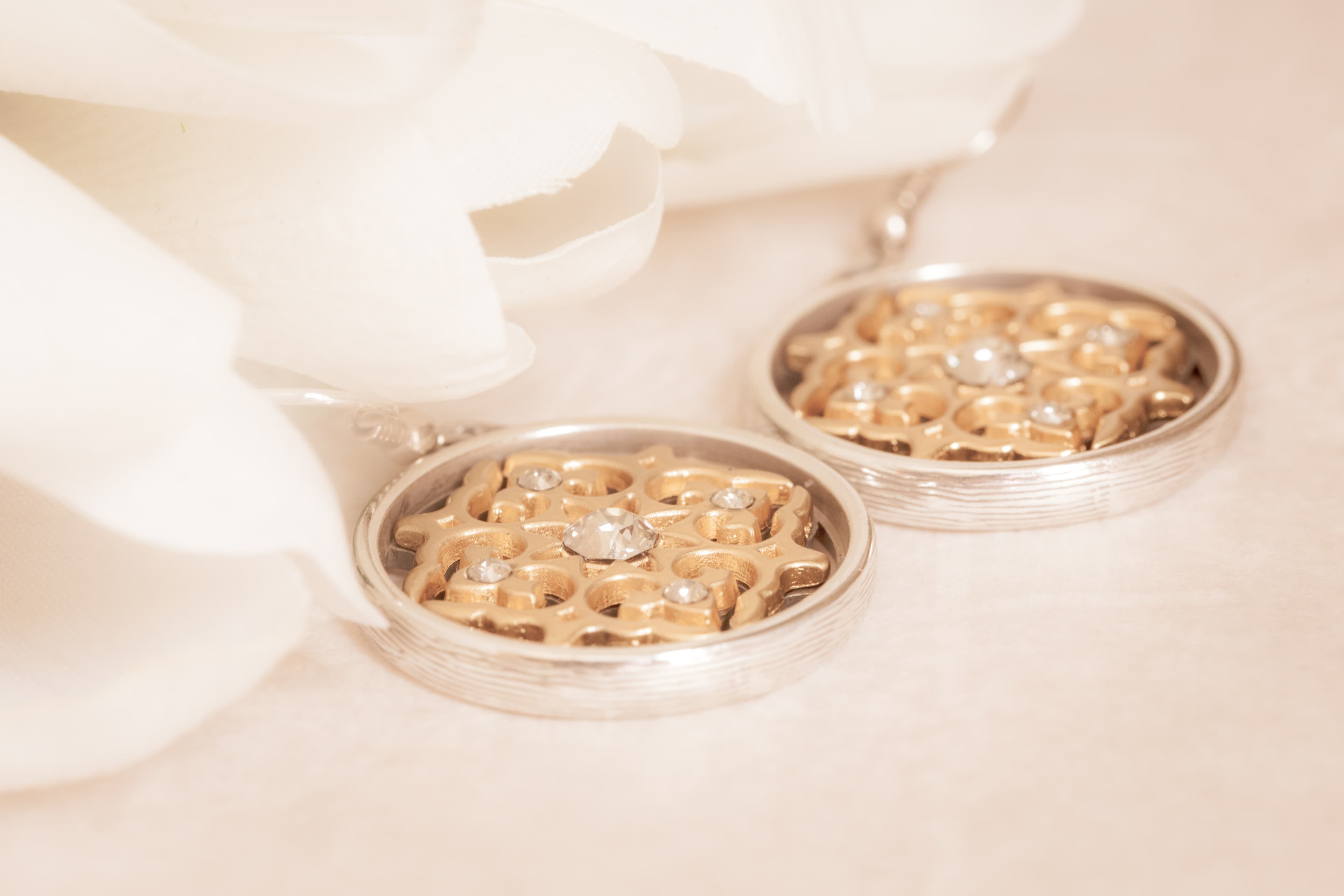
Stridhan recovery after divorce is one of the most misunderstood rights in Indian matrimonial law. Many women in Lucknow walk out of failed marriages believing that their jewellery, wedding gifts, and savings are lost forever in the in-laws' almirah. The law is clear in the opposite direction. Stridhan is the wife's absolute property — neither the husband nor his family acquires any ownership over it by virtue of the marriage.
The Supreme Court in Pratibha Rani v. Suraj Kumar (1985) settled this almost forty years ago, and successive judgments have only strengthened the rule. Refusal to return stridhan attracts Section 406 of the Bharatiya Nyaya Sanhita, 2023 (earlier Section 406 IPC) for criminal breach of trust. This article explains what counts as stridhan, how to recover it in Lucknow through both civil and criminal routes, the limitation period that quietly destroys most claims, and the 2026 trend in Allahabad High Court rulings. If you are considering or are already in a divorce or maintenance matter, read this before negotiating any settlement.
Table of Contents
Need Immediate Legal Help?
If you're facing a legal emergency in Lucknow, don't wait. Contact experienced criminal lawyer Advocate Onkar Pandey for immediate assistance.
What Exactly Is Stridhan Under Indian Law
Stridhan, literally translated, means "woman's wealth". It is a concept rooted in classical Hindu law and now firmly absorbed into modern statutory and case law. The wife is the sole owner of her stridhan, regardless of whether she stays in the matrimonial home or returns to her parents.
The scope of stridhan is wider than most clients in Lucknow assume. It covers:
- Gifts of jewellery, cash and articles received before, during, and after the marriage from parents, in-laws, relatives, and friends
- Wedding gifts presented in saptapadi or reception, irrespective of which side gave them
- Property purchased by the wife from her own earnings or from stridhan funds
- Gifts received during pregnancy, godh bharai, or on birth of a child
- Inheritance, savings, fixed deposits, and shares acquired by the wife
Crucially, stridhan does not lose its character merely because the wife voluntarily handed it to the husband or mother-in-law for safekeeping. The classical Hindu law treats such handover as a trust — the holder is obliged to return it on demand. A bare denial of return triggers criminal liability under Section 406 BNS for breach of that trust.
Section 406 BNS and the Pratibha Rani Foundation
The legal backbone of stridhan recovery is two-fold — a civil right of ownership and a criminal remedy when that ownership is denied. The criminal route is governed by Section 406 of the Bharatiya Nyaya Sanhita, 2023, which prescribes imprisonment up to five years, fine, or both for criminal breach of trust.
The Supreme Court in Pratibha Rani v. Suraj Kumar (1985) held that:
- Stridhan remains the absolute property of the wife and the husband has no title over it
- Joint possession by the husband for safekeeping is mere entrustment, not ownership
- Refusal to return stridhan on demand constitutes criminal breach of trust under Section 406
- The fact of cohabitation does not convert the wife's property into joint matrimonial property
This judgment has never been overruled. The Court returned to the principle in Rashmi Kumar v. Mahesh Kumar Bhada (1997) and again in subsequent rulings, treating Section 406 as the appropriate offence even where the parties are still legally married. A wife in Lucknow seeking divorce or judicial separation can file a Section 406 complaint independent of the matrimonial proceedings.
Stridhan vs Dowry — The Difference That Decides the Case
One of the most common defences raised by the husband's family is that the wife is dressing up a dowry claim as a stridhan claim. The two concepts are legally distinct, and the difference matters at every stage of trial.
| Aspect | Stridhan | Dowry |
|---|---|---|
| Nature | Voluntary gifts to the bride, owned by her | Demand made by the groom or his family as a condition of marriage |
| Governing law | Section 406 BNS, classical Hindu law, civil suit | Dowry Prohibition Act, 1961, Section 80 BNS (cruelty) |
| Legality | Fully legal — owned by the wife | Illegal — giving or receiving both punishable |
| Burden on the wife | Prove entrustment and refusal to return | Prove demand connected to the marriage |
| Limitation | Three years from refusal (criminal) / three years (civil suit) | One year of incident for cruelty (varies by offence) |
In practice, the best stridhan claims in Lucknow are supported by a list of articles prepared at the time of the wedding, photographs from the ceremony showing the bride wearing the jewellery, gift receipts, and witnesses from both families. A well-prepared list with values converts a stridhan complaint from a vague allegation into a chargeable case at the FIR stage itself.
Legal Consultation
Talk directly to Advocate Onkar Pandey
Explain your matter over a call or WhatsApp. If you take the case forward, the consultation fee adjusts into your overall fee, so there is no separate charge to begin.
Step-by-Step Procedure to Recover Stridhan in Lucknow
The recovery process runs on two parallel tracks — a criminal complaint to pressurise return, and a civil suit to obtain a decree for delivery or its money value. A good family lawyer in Lucknow will usually start with the criminal route because the leverage often forces a negotiated return.
Follow this sequence:
- Prepare an itemised list of stridhan articles with descriptions, weights of jewellery, approximate market values, and any photographs or receipts
- Send a legal notice through a lawyer demanding return of the listed items within 15 to 30 days
- Wait for refusal — either an explicit denial or expiry of the notice period without delivery constitutes refusal
- File a Section 406 BNS complaint at the police station in whose jurisdiction the stridhan is being held or where the marriage took place
- If the police refuse to register the FIR, move an application under Section 175(3) BNSS (earlier Section 156(3) CrPC) before the Magistrate
- Simultaneously file a civil suit for recovery under Sections 7 and 8 of the Family Courts Act, 1984, before the Lucknow Family Court
- Apply for a temporary injunction restraining the husband and in-laws from selling, pledging, or disposing of the articles
- If the wife is also seeking maintenance, the stridhan demand is a separate prayer that does not affect maintenance entitlement
A common procedural tactic is to file the Section 406 complaint a few weeks before initiating mediation in the divorce. The willingness to negotiate often improves dramatically once a criminal case is on the table.
Limitation Period — The Silent Killer of Stridhan Claims
The single most common reason stridhan claims fail in Lucknow is not lack of evidence but missed limitation. Both the criminal and civil routes have time limits, and the clock starts ticking from the date of refusal, not from the date of separation or divorce.
The applicable limitations are:
- Criminal complaint under Section 406 BNS — three years from the date of refusal to return, under Section 514 BNSS (earlier Section 468 CrPC)
- Civil suit for recovery — three years from when the wife became entitled to immediate possession, under Article 113 of the Limitation Act, 1963
- Decree for delivery of specific movable property — three years from the date of refusal, under Articles 70 and 71 of the Limitation Act
The Supreme Court has clarified that stridhan is a continuing trust. Limitation does not begin merely from separation or from filing of the divorce petition. It begins from the moment the wife unequivocally demands return and the husband or his family unequivocally refuses.
This is why a written legal notice is non-negotiable. Verbal demands during family fights do not start the limitation clock cleanly, and they also do not start it for the defence's benefit. A registered notice with a clear demand and a 15-day deadline creates a clean date of refusal that anchors the entire case.
Allahabad HC and Supreme Court Trends in 2026
The Allahabad High Court and Supreme Court have, over the last two years, consistently strengthened the wife's stridhan rights in three key directions.
- Recognition of digital records — courts now routinely accept WhatsApp wedding photographs, bank statements showing transfers, and Insta posts as proof of stridhan
- Stridhan claim sustained even after settlement — a full and final settlement on maintenance does not automatically extinguish a separate claim for stridhan unless specifically mentioned
- In-laws cannot escape on the ground of non-custody — if the wife alleges entrustment to a specific in-law, the burden of explaining non-return shifts to that person
In a 2026 ruling, the Allahabad High Court refused to quash a Section 406 FIR filed by a wife eight years after the marriage broke down. The Court held that the cause of action arose only on the date the husband refused her demand by registered notice in 2024, and the FIR within three years of that refusal was within limitation. This is a significant ruling for women who tried for years to negotiate informally before approaching the law.
The Supreme Court has, in parallel, cautioned against indiscriminate quashing of stridhan FIRs at the Section 528 BNSS (earlier 482 CrPC) stage. A bare claim that the wife exaggerated the list is not a ground to quash a stridhan FIR — the figures must be tested at trial.
Common Mistakes Women Make in Stridhan Recovery
Years of practice in Lucknow's family courts show that the same handful of errors destroy otherwise winnable stridhan cases. Avoiding them is half the battle.
The most damaging mistakes are:
- Filing the complaint years after refusal without sending a fresh notice, allowing limitation to expire
- Mixing stridhan with dowry allegations in the same complaint, which dilutes the focus and invites quashing on technical grounds
- Failing to itemise articles — a generic claim of "jewellery worth twenty lakh" without item-wise weight and description is hard to prove and easy to attack
- Signing a settlement deed in mediation without a specific clause preserving the stridhan claim, after which the husband argues full and final settlement
- Returning to the matrimonial home temporarily to collect a few articles and treating that as full delivery, when the bulk of stridhan is still withheld
- Naming every distant relative in the FIR as accused, which weakens the case against the actual custodians and invites Supreme Court guidelines on false implication
If you are anticipating a separation, prepare your stridhan list now. Photograph the items, store digital copies in cloud storage independent of the matrimonial residence, and keep your wedding photographer's invoice safe. These small steps make later criminal proceedings dramatically stronger.
About the Author
Advocate Onkar Pandey is a practicing lawyer at Lucknow High Court with extensive experience in criminal law, family law, and civil litigation. With a deep understanding of the Indian legal system and years of courtroom experience in Lucknow courts, Advocate Pandey provides practical legal guidance to clients across Uttar Pradesh. For legal consultation regarding stridhan recovery, Section 406 BNS complaints, or any matrimonial property dispute, contact Advocate Onkar Pandey for expert advice tailored to your specific situation.
Frequently Asked Questions
Can a wife in Lucknow file a Section 406 BNS case against her husband for stridhan even if they are still legally married?+
Yes. The Supreme Court in Pratibha Rani v. Suraj Kumar settled that the marital relationship does not bar a Section 406 BNS prosecution for criminal breach of trust over stridhan. The wife does not need to wait for a divorce decree or even a judicial separation. The cause of action is the entrustment of stridhan to the husband or in-laws and the subsequent refusal to return it on demand. In Lucknow, the FIR can be lodged at the police station where the stridhan is being held or where the marriage took place. A legal notice setting a clear 15 to 30 day deadline is the recommended trigger before filing.
What is the difference between stridhan and dowry under Indian law?+
Stridhan is the wife's absolute property — voluntary gifts of jewellery, cash, and articles given to her before, during, or after marriage by her family, in-laws, or friends. It is fully legal and owned by her alone. Dowry is a demand made by the groom or his family as a condition of marriage, and it is illegal under the Dowry Prohibition Act, 1961. A stridhan recovery case is brought under Section 406 BNS, while dowry-related cruelty falls under Section 80 BNS and the Dowry Prohibition Act. The two claims can co-exist in the same matrimonial dispute, but the legal evidence and procedure for each are different.
What is the time limit to file a stridhan recovery case in Lucknow?+
For a criminal complaint under Section 406 BNS, the limitation is three years from the date of refusal to return stridhan, calculated under Section 514 BNSS (earlier Section 468 CrPC). For a civil suit, the same three-year period applies under Articles 70, 71, or 113 of the Limitation Act, 1963. Critically, the clock starts from the date of refusal — not from the date of separation, divorce, or filing of the matrimonial petition. This is why a written legal notice with a clear deadline is the standard recommended first step. A registered notice creates an unambiguous date of refusal that anchors the limitation calculation cleanly.
Can in-laws also be made accused in a stridhan recovery FIR in Lucknow?+
Yes, but only the specific in-laws who actually retained custody of the stridhan can be properly named. The Supreme Court has repeatedly cautioned against indiscriminate implication of every member of the husband's extended family in matrimonial FIRs. Name only those persons to whom you specifically entrusted articles, or who you can show were in possession of the stridhan items. Father-in-law, mother-in-law, and sometimes a sister-in-law who held the locker keys are commonly named. Distant relatives in other cities should generally not be added unless there is clear evidence of custody. Over-naming weakens the case against the genuine custodians and invites quashing applications.
Will a full and final divorce settlement in mediation extinguish my stridhan claim?+
Not automatically. The Allahabad High Court and other High Courts have held that a maintenance or alimony settlement does not extinguish a separate stridhan claim unless the settlement deed expressly covers stridhan and includes specific items or a lump sum towards stridhan return. To protect your right, ensure that the mediation settlement either (i) lists the stridhan articles being returned, or (ii) records a separate monetary figure towards stridhan, or (iii) expressly preserves your right to pursue stridhan separately. A vague clause stating "all claims settled" can be exploited later. A family lawyer in Lucknow should draft or vet the settlement before you sign.
What documents and evidence strengthen a stridhan recovery case?+
The strongest evidence is an itemised list of articles with weights, descriptions, and approximate values, ideally prepared at the time of the wedding. Add to this wedding photographs and videos showing the bride wearing the jewellery, gift receipts from jewellers, bank statements showing cash gifts or transfers, and a copy of the registered legal notice with the postal receipt. Statements of independent witnesses from both families — for example, family friends or distant relatives who attended the wedding — are valuable. WhatsApp messages or emails in which the husband or in-laws acknowledge holding the articles are powerful. Lucknow courts have accepted digital records consistently in recent rulings.
Related Services
Get Expert Legal Advice in Lucknow
20+ years experience in criminal law at Lucknow High Court. Available 24/7 for emergencies.
Disclaimer: This article is for general information purposes only and does not constitute legal advice. Every case is unique and requires specific legal analysis. For advice specific to your situation, please consult Advocate Onkar Pandey or another qualified attorney in Lucknow.