Specific Performance of Agreement to Sell Property in UP: Allahabad HC 2026 Ruling
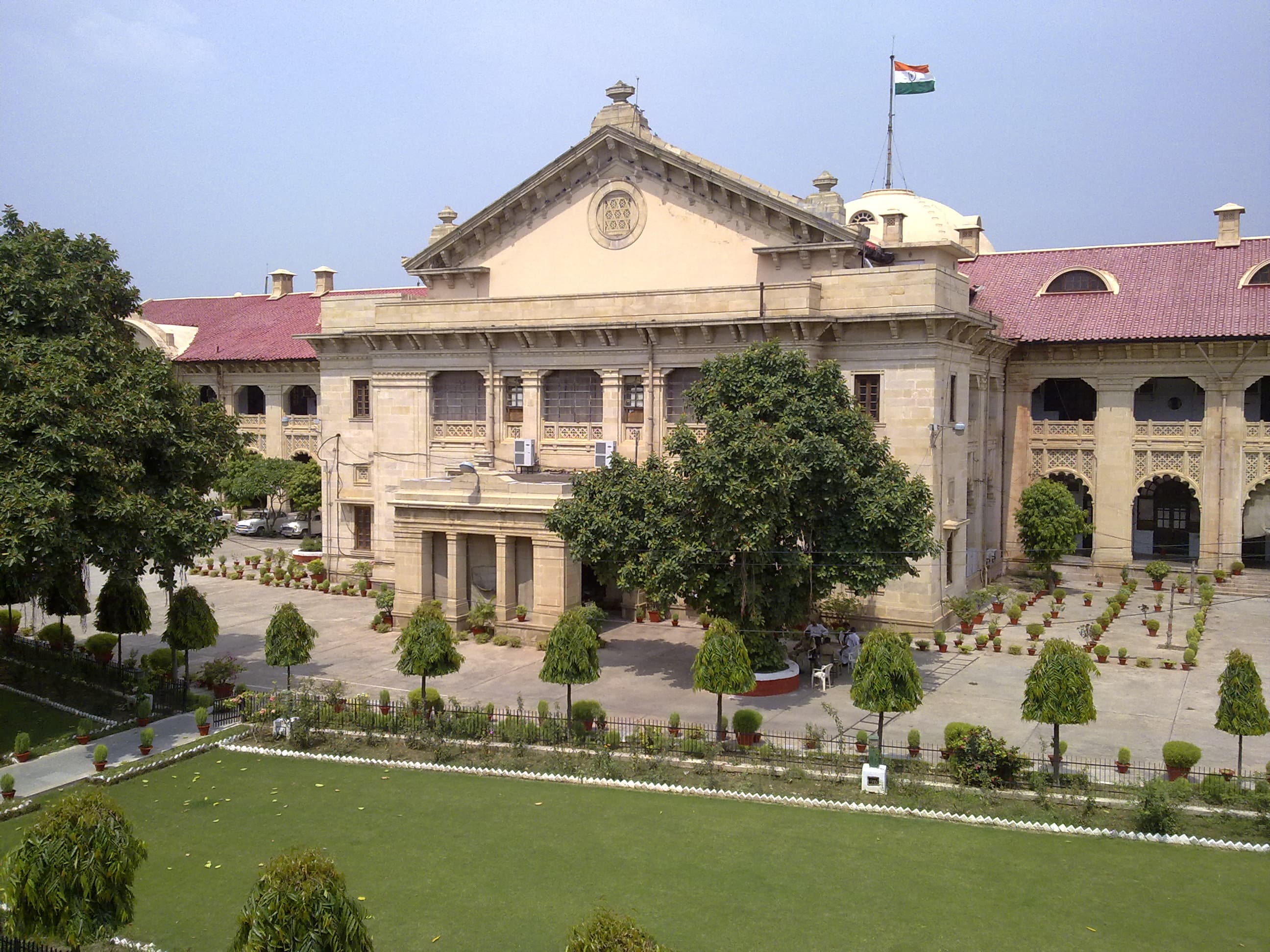
The remedy of specific performance of an agreement to sell property in UP remains the single strongest legal weapon for a buyer when a seller refuses to execute the sale deed after taking earnest money. The Specific Relief Act, 1963, as amended in 2018, makes specific performance the default remedy — courts no longer treat it as discretionary. The Allahabad High Court has, in a 2026 ruling, gone further and held that escalation in property prices during the pendency of the suit cannot be a ground to refuse specific performance. The decision affirms the trial court's decree directing the legal heirs of a deceased Kanpur property owner to execute the sale deed for a residential plot under an agreement dating back to October 2012.
This guide explains when a buyer can sue for specific performance in Lucknow and other UP districts, what "continuous readiness and willingness" really means, what evidence carries weight before the civil court, and how the post-2018 amendments have reshaped this remedy. If your seller is dragging feet or has died after signing, an early consultation with a property dispute lawyer in Lucknow can save the deal.
Table of Contents
Need Immediate Legal Help?
If you're facing a legal emergency in Lucknow, don't wait. Contact experienced criminal lawyer Advocate Onkar Pandey for immediate assistance.
What Specific Performance Means Under the Specific Relief Act
Specific performance is a decree by which the court compels the defaulting party to perform the contract — in property cases, to execute the sale deed and transfer title — instead of merely awarding damages. The remedy is governed by the Specific Relief Act, 1963, with significant amendments in 2018 that fundamentally changed the law.
Three propositions now control the landscape:
- Specific performance is mandatory, not discretionary — Section 10 (as amended) directs that the court "shall" enforce specific performance, except in the limited categories of Section 11 (trust contracts) and Section 14 (contracts that cannot be enforced)
- "Continuous readiness and willingness" remains the gateway test under Section 16(c) — the buyer must plead and prove that he was ready and willing to perform his part from the date of the agreement till the date of the decree
- Substituted performance under Section 20 allows the buyer to get the contract executed through a third party at the seller's cost, if specific performance is impossible
For UP property buyers, the choice between filing a suit for specific performance and one for recovery of earnest money plus damages must be made carefully. A civil litigation lawyer in Lucknow typically advises specific performance where the property has appreciated substantially or holds unique value — exactly the situation in which the Allahabad High Court's 2026 ruling becomes decisive.
Allahabad High Court 2026 Ruling on Price Hike and Specific Performance
The most consequential recent development comes from the Allahabad High Court's 2026 first appeal decision dismissing the legal heirs' challenge to a trial court decree of specific performance. The agreement to sell was dated 22 October 2012 for a residential plot in Sarvodaya Nagar, Kanpur, with a sale consideration of Rs 5.25 crores. By the time the appeal was decided in 2026, property values in Sarvodaya Nagar had multiplied — yet the High Court refused to disturb the decree.
The reasoning matters because it closes a loophole that defaulting sellers had exploited for years:
- Price escalation during litigation is the seller's own creation — the buyer should not be penalised for the seller's breach simply because real estate prices rise during the pendency of the suit
- Section 20 of the Specific Relief Act (pre-2018) discretion no longer applies the same way — after the 2018 amendment, the court must order specific performance unless one of the statutory exceptions is squarely attracted
- Hardship to the seller caused by his own conduct, including delay, refusal to execute the sale deed, or attempts to resell to a third party, will not be treated as inequitable
The court also relied on Section 32A of the Registration Act, 1908 as applicable in Uttar Pradesh to hold that the vendee's physical presence at the Sub-Registrar's office is not mandatory — the seller could not avoid execution by claiming the buyer was absent on a particular date. Litigants approaching the Lucknow Bench of the Allahabad High Court in first appeals against trial court decrees should expect the same reasoning to apply across UP.
The Continuous Readiness and Willingness Test Under Section 16(c)
The biggest reason specific performance suits are dismissed in UP is the buyer's failure to prove "continuous readiness and willingness" under Section 16(c) of the Specific Relief Act. This is not a one-time test — the buyer must demonstrate financial capacity and willingness throughout the period from agreement to decree.
Courts examine the following indicators:
| Test Factor | What Court Looks For | Evidence That Helps |
|---|---|---|
| Source of funds | Bank balance, FD, loan sanction | Bank statements for 6-12 months, loan pre-approval letter |
| Notice to perform | Buyer called upon seller to execute | Legal notice, postal receipt, AD card |
| Tender of balance amount | Buyer offered remaining consideration | Demand draft, banker's cheque, deposit in court |
| Pleading in plaint | Para stating ready and willing throughout | Specific averment in plaint, not generic |
| Witness on oath | Buyer must depose on readiness | Examination-in-chief and cross-examination |
| Absence of repudiation | Buyer did not call off the deal | No correspondence demanding refund |
The Allahabad High Court has, in 2026, repeatedly held that a bald assertion of readiness in the plaint is not enough. The plaint must contain a specific paragraph stating that the plaintiff was ready and willing on each material date — the date of agreement, the dates fixed for performance, the date of legal notice, and the date of the suit. Where the plaint is silent or generic, the trial court has dismissed suits even on otherwise strong facts. This is where a properly drafted civil suit in Lucknow by an experienced property lawyer protects the buyer.
Legal Consultation
Talk directly to Advocate Onkar Pandey
Explain your matter over a call or WhatsApp. If you take the case forward, the consultation fee adjusts into your overall fee, so there is no separate charge to begin.
Step-by-Step Procedure to File a Specific Performance Suit in UP
The procedure for filing a specific performance suit in UP follows the Code of Civil Procedure, 1908 with adaptations for property cases. The suit is filed before the Civil Court of competent pecuniary jurisdiction, which in Lucknow is typically the Civil Judge (Senior Division) or the District Judge, depending on the consideration amount.
- Issue legal notice to the seller calling upon him to execute the sale deed within a reasonable time (usually 15-30 days), and tender the balance consideration
- Wait for the notice period to expire and preserve postal receipts, acknowledgment cards, and proof of service
- Draft the plaint with specific paragraphs on readiness, willingness, source of funds, tender, and refusal by seller
- File the suit before the Civil Court at the place where the property is situated (Section 16 CPC) with ad valorem court fee on the sale consideration
- Apply for temporary injunction under Order 39 CPC to restrain the seller from alienating the property pending suit
- Register a lis pendens under Section 52 of the Transfer of Property Act, 1882 to bind subsequent purchasers
- Deposit balance consideration in court or be ready to deposit when directed by the court
- Lead evidence — buyer in chief, financial witnesses, the agreement, the legal notice, refusal letters
- Obtain decree directing the seller to execute the sale deed within a stipulated period
- Execute the decree through the executing court if the seller refuses to comply
The typical timeline before the Lucknow Civil Court is 3 to 5 years for a trial court decree, plus 2 to 3 years if the seller files a first appeal. Lis pendens registration and the temporary injunction are the two most important protective steps — without them, sellers routinely sell the property to a third party during the suit.
When the Court Will Refuse Specific Performance
Even with the 2018 amendments tilting the law in favour of specific performance, certain defences continue to work for sellers. Knowing where the remedy can fail helps the buyer fortify the plaint and the seller plan a legitimate defence.
The principal grounds on which courts refuse specific performance:
- Buyer's failure to plead and prove readiness and willingness under Section 16(c) — the most common ground for dismissal in UP courts
- Time was of the essence and buyer defaulted — if the agreement made time essential and the buyer did not perform within that time
- Contract is voidable on grounds of fraud, misrepresentation, coercion, or undue influence proved by the seller
- Subject property has been validly transferred to a bona fide purchaser without notice and without lis pendens registration
- Contract involves performance of a continuous duty which the court cannot supervise (Section 14)
- Specific performance has become impossible — for instance, the property has been validly acquired by the government or destroyed
- Suit is barred by limitation — three years from the date fixed for performance, or from the date of refusal where no date is fixed (Article 54 of the Limitation Act, 1963)
The Allahabad High Court has, in 2026, drawn a firm line on limitation — where the seller has clearly refused, the three-year clock starts ticking immediately. Buyers who continue waiting for "informal settlement" beyond three years lose the remedy completely. If the agreement is genuinely silent on the time for performance, the plaintiff should establish refusal in writing through a legal notice and file within three years thereafter. For complex limitation questions involving partial performance or part payments, a consultation with a property litigation advocate before filing is essential.
Death of Seller and Suit Against Legal Heirs
A frequent complication in long-pending agreements is the death of the seller during the litigation. The Allahabad High Court 2026 case itself involved exactly this scenario — the original seller, Dharam Prakash Nangia, died during the pendency of the suit, and the trial court decree was passed against his legal heirs. The High Court affirmed that decree.
The legal principles that apply:
- An agreement to sell creates a contractual obligation that binds the legal heirs of the deceased seller to the extent of the property they inherit
- Order 22 of the CPC governs substitution of legal representatives — the buyer must move an application within 90 days of death
- Failure to substitute within the prescribed time results in abatement of the suit, which is fatal
- Legal heirs cannot raise fresh defences not available to the original seller, but may rely on his existing pleas
- Stamp duty and registration fees at the time of decree execution are borne by the buyer unless the agreement says otherwise
- Mutation in revenue records after the decree must be applied for in the name of the buyer along with certified copy of the decree
Where the seller dies, the buyer should also examine whether any of the legal heirs were minors at the time of the agreement — minors' shares require permission of the District Judge under the Guardians and Wards Act, 1890 before being included in the sale deed. Where the property is undivided ancestral property, the suit must implead all coparceners. The Lucknow Bench has, in 2026, set aside multiple decrees where coparceners were not impleaded — making a careful examination of the title flow essential before the suit is even drafted.
Substituted Performance Under Section 20 — A Powerful New Remedy
The 2018 amendment introduced Section 20 in its current form, giving the buyer the option of substituted performance — getting the contract executed through a third party at the seller's cost and recovering the cost from the defaulting seller. This is a remedy of last resort but is increasingly invoked in UP property disputes.
The conditions for substituted performance:
- Notice in writing of not less than 30 days must be given to the defaulting party
- Opportunity to perform within that notice period must be offered
- Failure to perform within the notice period entitles the buyer to engage a third party
- Cost incurred in getting the contract executed through the third party is recoverable from the defaulting seller
- Once substituted performance is opted for, the buyer cannot subsequently sue for specific performance of the same contract
In property cases, substituted performance is harder to apply than in goods contracts — you cannot generally get a third party to "execute" the same sale deed. But where the seller has died, refused to obtain mutation, or refused to clear encumbrances, the court can appoint a Commissioner to execute documents on behalf of the seller and recover costs. The Allahabad High Court has appointed Commissioners in 2026 cases where sellers wilfully refused to comply with decrees for execution of sale deeds. For property disputes involving wilful non-compliance, this remedy combined with execution proceedings under property litigation in Lucknow can finally end the deadlock.
Practical Tips for Buyers and Sellers in UP
Drawing from our practice in property litigation before the Lucknow Civil Court, the Family Court, and the Allahabad High Court's Lucknow Bench, these practical pointers consistently improve outcomes in specific performance matters:
- Pay earnest money by bank transfer, never in cash — the bank trail is your strongest evidence of readiness and source of funds
- Insist on a registered agreement to sell wherever the consideration exceeds Rs 100 — Section 17 of the Registration Act read with UP amendments makes registration prudent even where not strictly mandatory
- Add a specific clause on time — if you want time to be essential, say so explicitly; if you want flexibility, record reasonable extensions in writing
- Get the entire chain of title verified for 30 years before signing the agreement — undisclosed coparceners and unregistered partitions are the leading cause of failed specific performance suits
- Register the agreement and pay stamp duty at the time of execution — an unregistered agreement creates documentary proof but cannot be used to sue for possession beyond the limited circumstances in Section 53A of the Transfer of Property Act
- Send a legal notice before three years lapse — even an informal email demanding performance, followed by a formal notice, can preserve the limitation period
- File the suit with full court fee and lis pendens registration on the same day — a paid-up suit with lis pendens deters fraudulent resale
- For sellers, document refusals genuinely — if you have a legitimate ground to refuse (fraud, undisclosed encumbrance), record it in writing immediately and stop accepting any further payment
In our practice, the difference between a successful and an unsuccessful specific performance suit is almost always pre-litigation — the quality of the agreement, the trail of payments, and the timing of the legal notice. Once these foundations are laid correctly, the 2026 Allahabad High Court precedent on price escalation makes the buyer's path significantly easier.
About the Author
Advocate Onkar Pandey is a practicing advocate at the Allahabad High Court's Lucknow Bench with extensive experience in property disputes, specific performance suits, sale deed cancellation, partition matters, and civil litigation under the Specific Relief Act, 1963. He regularly handles first appeals before the Lucknow Bench involving trial court decrees for specific performance, suits for permanent injunction over property, and execution proceedings against defaulting sellers across Lucknow, Kanpur, Allahabad, Sitapur, Hardoi, and other UP districts. Advocate Pandey provides practical, outcome-focused guidance on specific performance of agreement to sell property in UP. For legal consultation regarding agreements to sell, buyer remedies, lis pendens registration, or first appeals from civil court decrees, contact Advocate Onkar Pandey for expert advice tailored to your specific situation.
Frequently Asked Questions
Can a court refuse specific performance of an agreement to sell because property prices have risen during the suit?+
No. The Allahabad High Court has, in a 2026 first appeal decision, held that escalation in property prices during the pendency of the litigation cannot be a ground to refuse specific performance. The reasoning is that the seller is the party in breach — having refused to execute the sale deed — and cannot benefit from the very delay he caused. After the 2018 amendment to the Specific Relief Act, 1963, specific performance is the default remedy and courts must enforce it unless one of the statutory exceptions in Section 14 applies. Earlier rulings that allowed sellers to plead 'hardship due to escalation' under the discretionary regime of pre-2018 Section 20 no longer carry the same weight in UP property cases.
What does 'continuous readiness and willingness' mean under Section 16(c) of the Specific Relief Act?+
Continuous readiness and willingness means the buyer must prove — both by pleading and by evidence — that he had the financial capacity and the willingness to perform his part of the contract from the date of the agreement until the date of the decree. It is not enough to plead readiness only on the date of the suit. The plaint must contain specific paragraphs stating that the buyer was ready on each material date: the date of agreement, dates fixed for performance, the date of legal notice, and the date of filing. Evidence typically includes bank statements showing the balance consideration, loan sanction letters, demand drafts, deposit of balance in court, and the buyer's own deposition on oath. Allahabad High Court rulings in 2026 have dismissed suits where the plaint contained only generic averments without these specific facts.
What is the limitation period to file a specific performance suit in UP?+
Under Article 54 of the Limitation Act, 1963, the limitation period for a specific performance suit is three years from the date fixed for performance in the agreement. If no such date is fixed, the limitation runs from the date the plaintiff has notice that performance has been refused. A common error in UP is to wait for 'informal settlement' beyond three years — once the limitation expires, the suit is liable to be dismissed even on otherwise strong facts. The Allahabad High Court has, in 2026, held firmly that the three-year clock starts running on clear refusal by the seller. Always send a legal notice promptly on first refusal, preserve postal receipts, and file the suit within three years of the date on which the notice period expired.
What happens if the seller dies during the pendency of a specific performance suit?+
The legal heirs of the deceased seller must be brought on record by way of substitution under Order 22 of the Code of Civil Procedure, 1908. The buyer must move an application for substitution within 90 days of the death — failure to do so results in abatement of the suit, which is fatal. The Allahabad High Court 2026 first appeal decision involved exactly this scenario: the original seller, Dharam Prakash Nangia, died during the suit, and the trial court decree was passed against his legal heirs. The High Court affirmed the decree. Legal heirs cannot raise fresh defences not available to the deceased seller, but they inherit his existing pleas. Where minors are involved among legal heirs, additional protections under the Guardians and Wards Act, 1890 apply.
Should I register an agreement to sell property in UP, or is an unregistered agreement enough?+
Registering the agreement to sell is strongly recommended in UP, even though Section 17 of the Registration Act, 1908 does not mandate registration of all agreements to sell. A registered agreement carries far greater evidentiary weight, defeats subsequent purchasers without notice, and provides a robust foundation for both specific performance and protection under Section 53A of the Transfer of Property Act, 1882 (part performance). An unregistered agreement is admissible to prove the contract but cannot be relied upon for possession in many circumstances. Stamp duty under the Uttar Pradesh Stamp Act applies at the time of registration. The small additional cost of registration is invariably justified by the litigation protection it provides if the seller later refuses to execute the sale deed.
What is lis pendens registration and why is it essential in a specific performance suit?+
Lis pendens, under Section 52 of the Transfer of Property Act, 1882, is a doctrine that any transfer of the disputed property during the pendency of a suit affecting that property does not affect the rights of the plaintiff. Registration of a notice of lis pendens before the Sub-Registrar puts the world on notice that a suit is pending — subsequent purchasers cannot claim to be bona fide buyers without notice. Without lis pendens registration, the seller can sell the property to a third party during the suit, and the new buyer may successfully claim to be a bona fide purchaser. The Allahabad High Court has, in 2026, set aside specific performance decrees where the plaintiff failed to register lis pendens and the property was sold to a buyer without actual knowledge of the suit. Always register lis pendens on the same day the suit is filed.
Can I sue for both specific performance and damages in the same suit?+
Yes. Section 21 of the Specific Relief Act, 1963 expressly permits a buyer to claim damages in addition to or in substitution of specific performance. The plaint should make a clear alternative prayer — that the court direct execution of the sale deed, and in the alternative, decree refund of earnest money plus damages and interest. This dual prayer protects the buyer if specific performance becomes impossible during the suit (for example, the property is validly acquired by the government). Section 22 also permits the buyer to claim possession of the property and a partition decree where required, all in the same suit. Drafting these alternative prayers correctly at the outset avoids the need for a second suit and saves years of litigation in UP civil courts.
Related Services
Get Expert Legal Advice in Lucknow
20+ years experience in criminal law at Lucknow High Court. Available 24/7 for emergencies.
Disclaimer: This article is for general information purposes only and does not constitute legal advice. Every case is unique and requires specific legal analysis. For advice specific to your situation, please consult Advocate Onkar Pandey or another qualified attorney in Lucknow.