Section 482 CrPC / Section 528 BNSS: FIR Quashing at Allahabad High Court — A Complete Guide
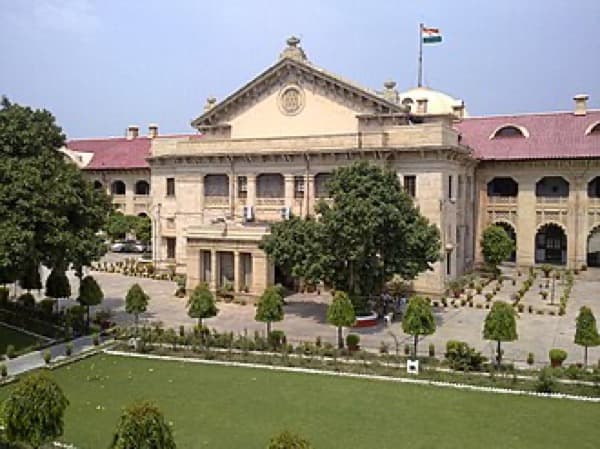
Section 482 CrPC — and its direct successor Section 528 BNSS — gives the Allahabad High Court the power to quash a false or malicious FIR before your trial even begins. If you have been falsely implicated in a criminal case in Uttar Pradesh, this provision is often your strongest legal tool.
From 1 July 2024, the Bharatiya Nagarik Suraksha Sanhita (BNSS) 2023 replaced the Code of Criminal Procedure. Section 528 BNSS carries forward the same inherent powers that Section 482 CrPC gave High Courts for decades. The law changed its number; the power did not shrink.
Not every petition succeeds. The Lucknow Bench of the Allahabad High Court applies strict tests before quashing any FIR. Understanding those tests — and avoiding the mistakes that sink most petitions — is what this guide covers. Our FIR quashing practice at Lucknow Bench has taught us exactly what the court looks for and what it does not.
Table of Contents
Need Immediate Legal Help?
If you're facing a legal emergency in Lucknow, don't wait. Contact experienced criminal lawyer Advocate Onkar Pandey for immediate assistance.
What Is Section 482 CrPC and What Replaced It
Section 482 of the Code of Criminal Procedure, 1973 preserved the inherent powers of the High Court to make any order necessary to prevent abuse of the process of any court or to secure the ends of justice. It was a safety valve in the criminal justice system — a remedy for situations where the ordinary statutory provisions left gaps.
With the BNSS coming into force on 1 July 2024, every new FIR registered from that date onwards is governed by the new law. Section 528 BNSS is the word-for-word successor to Section 482 CrPC. The text is almost identical; the inherited jurisprudence — including all Supreme Court precedents — applies fully.
| Aspect | Section 482 CrPC | Section 528 BNSS |
|---|---|---|
| Governing law | Code of Criminal Procedure, 1973 | Bharatiya Nagarik Suraksha Sanhita, 2023 |
| Effective from | 1974 — 30 June 2024 | 1 July 2024 onwards |
| Which FIRs it applies to | FIRs registered before 1 July 2024 | FIRs registered on or after 1 July 2024 |
| Scope of power | Inherent — prevent abuse of process | Same — no reduction in scope |
| Precedents applicable | All pre-2024 Supreme Court rulings | All prior rulings + new BNSS-era rulings |
One important nuance: if your FIR was registered before July 2024, your petition is still filed under Section 482 CrPC even today — because the old code governs the proceedings it initiated. If you are unsure which provision applies to your case, consult Advocate Onkar Pandey before filing.
The 7 Bhajan Lal Categories — When Allahabad HC Can Quash an FIR
The foundation of every quashing petition in India is the Supreme Court's landmark ruling in State of Haryana v. Bhajan Lal, 1992 Supp (1) SCC 335. The Court laid down seven illustrative categories where the High Court may exercise its inherent power to quash an FIR or criminal proceedings. These categories are not exhaustive — but every successful petition fits into at least one of them.
- No cognizable offence disclosed: The allegations in the FIR, taken at face value and accepted as entirely true, do not make out any cognizable offence against the accused person.
- No evidence to support the allegation: The FIR names a cognizable offence, but there is no credible material on record that could sustain it — not even at the prima facie stage.
- Allegations are absurd or inherently improbable: No prudent person could accept the version of events described in the FIR as plausible. The complaint is facially absurd.
- Legal bar to proceeding: A statutory provision — such as a limitation period, a requirement of sanction, or a jurisdictional bar — expressly prevents the case from continuing.
- Non-cognizable offence without permission: The FIR registers a non-cognizable offence, but the police investigated without first obtaining the mandatory Magistrate's order under Section 155 CrPC.
- Mala fide prosecution: The criminal proceedings are clearly driven by personal vendetta, political motivation, or an improper purpose — not a genuine grievance.
- Abuse of the legal process: Allowing the trial to continue would itself be an injustice — for example, where a private dispute has been artificially dressed up as a criminal case to pressurize the other party.
In 2025, the Supreme Court added a further layer of precision. In Pradeep Kumar Kesarwani v. State of Uttar Pradesh (2 September 2025), a bench of Justices J.B. Pardiwala and Sandeep Mehta laid down a four-step test: the accused's material must be (1) sterling quality, (2) sufficient to overrule the FIR's allegations, (3) unrefuted by the prosecution, and (4) such that a trial would inevitably be an abuse of process. Only when all four steps are answered "yes" should the High Court quash. An experienced criminal lawyer in Lucknow will frame your petition squarely within these tests.
How a Section 528 BNSS Petition Is Filed at Lucknow Bench
Filing a quashing petition is not simply handing in a complaint to the court. There is a defined procedural sequence, and a technical error at any stage can lead to dismissal on procedural grounds — before the court even reads your merits. Here is how the process works at the Allahabad High Court, Lucknow Bench.
| Stage | Action Required | Typical Timeline |
|---|---|---|
| 1. Case evaluation | Lawyer reviews FIR, chargesheet (if filed), and supporting material to assess quashability | 1–3 days |
| 2. Drafting the petition | Petition prepared with grounds, supporting affidavit, and annexures (FIR copy, chargesheet, cognizance order) | 3–7 days |
| 3. Filing at High Court registry | Petition filed with required court fee; case number assigned | 1 day |
| 4. First listing — stay/protection | Court may grant interim protection from arrest on first hearing; State is given notice | 1–4 weeks after filing |
| 5. Notice to complainant | Complainant/opposite party must be heard before FIR is quashed | 4–8 weeks |
| 6. Arguments on merits | Both sides argue; court may call for records from trial court | 2–6 months total |
| 7. Judgment | Court quashes FIR, dismisses petition, or refers to larger bench | Order pronounced on hearing date |
A critical procedural point confirmed by the Allahabad High Court in 2024–25: if a chargesheet has been filed and the Magistrate has taken cognizance, you must place both the chargesheet and the cognizance order on record as annexures. A petition filed without these documents is liable to be dismissed as not maintainable under Section 528 BNSS. This is not a formality — courts have dismissed petitions solely on this ground.
If you are still at the investigation stage and no chargesheet has been filed, the appropriate remedy may be an Article 226 writ petition rather than a Section 528 BNSS application. This distinction matters enormously for the strategy of your quashing case.
Legal Consultation
Talk directly to Advocate Onkar Pandey
Explain your matter over a call or WhatsApp. If you take the case forward, the consultation fee adjusts into your overall fee, so there is no separate charge to begin.
What the Lucknow Bench Actually Looks For — First-Hand Observations
I have appeared before the Lucknow Bench of the Allahabad High Court in numerous Section 482 CrPC and Section 528 BNSS matters. What the court examines in practice is not always what textbook summaries suggest. Let me share what I have observed directly.
In Application U/S 482 No. 8849/2022, filed before the Lucknow Bench, we sought quashing of an FIR on grounds that touched on several Bhajan Lal categories. The petition was ultimately dismissed on merits — the court found sufficient material in the FIR to warrant investigation continuing. What the applicant retained, however, was the existing bail protection, which the court explicitly preserved in its order.
That outcome taught me something worth sharing honestly: courts do not always quash, and a dismissed petition is not the end of the road. In that case, retaining bail was a meaningful protection even without full quashing. The experience also showed me exactly what the Lucknow Bench scrutinises:
- The FIR's internal consistency: Does the narrative hang together? Contradictions within the FIR itself are a strong quashing ground.
- The relationship between parties: Is this a civil dispute dressed as criminal? Courts look hard at the background — property disputes, matrimonial conflicts, and business disagreements frequently generate false FIRs.
- Delay in filing the FIR: An FIR filed months or years after the alleged incident invites scrutiny about motive. The bench asks why the complainant waited.
- Whether investigation has concluded: If a chargesheet is already filed, the bar is higher. The court wants to see why a full trial is not the right remedy.
- The severity of the offence: In serious offences — particularly those involving violence, rape, or offences against the state — the court is far more reluctant to quash at the FIR stage.
If you are considering a quashing petition, speak to a lawyer who has actually argued before this bench — not one who has only read the judgments. The courtroom temperament at Lucknow Bench matters as much as the legal text. Contact our office to discuss your specific FIR before deciding on strategy.
Grounds That Work vs Grounds That Fail at Allahabad High Court
Quashing petitions are won or lost on the strength of the ground pleaded. Filing on a weak ground does not just lose the petition — it can prejudice your position in subsequent proceedings. Based on outcomes before the Allahabad High Court, here is an honest assessment.
| Grounds That Typically Succeed | Grounds That Are Typically Rejected |
|---|---|
| FIR allegations, taken as true, disclose no offence under the IPC/BNS section invoked | "The FIR is false" — without documentary evidence to back it |
| Settlement between parties in compoundable matrimonial or cheque-bounce cases | Disputes where the offence is non-compoundable (murder, rape, dacoity) |
| FIR filed by a complainant with a clear prior grudge, documented through earlier civil litigation | Vague allegations of political motivation without concrete evidence |
| Delay of years between incident and FIR, with no explanation by complainant | Delay alone, without showing how it demonstrates mala fides |
| FIR registered for a non-cognizable offence without Magistrate's prior order | Procedural defects that did not affect the merits of the investigation |
| Sterling documentary evidence — bank records, CCTV, medical reports — that conclusively contradicts the FIR | Evidence that merely raises a defence — this is properly raised at trial, not quashing |
| Criminal complaint disguising what is purely a contractual or property dispute | Cases where the criminal and civil aspects genuinely overlap |
A particularly important distinction: courts regularly refuse to quash even where the accused has strong evidence in their favour, if that evidence merely creates a dispute of fact. The Supreme Court's 2025 four-step test is explicit — the accused's material must not just be good, it must be so strong that no rational trier of fact could convict. Anything less is a trial issue, not a quashing issue.
If you are unsure whether your facts meet this threshold, an honest consultation is better than a petition that wastes time and money. Our FIR quashing practice gives you a direct assessment, not false hope. If quashing is not the right route, we will tell you — and discuss whether anticipatory bail or regular bail is a better immediate step.
Frequently Made Mistakes in Section 528 BNSS Petitions
After years of practice at the Allahabad High Court, Lucknow Bench, I have seen petitions fail for entirely avoidable reasons. These are the most common mistakes — and why each one is fatal.
- Filing without the chargesheet and cognizance order on record. The Allahabad High Court has made this a threshold requirement. If a chargesheet has been filed and the Magistrate has taken cognizance, you must annex both documents. Petitions without them are dismissed as not maintainable — not on merits, before arguments even begin.
- Raising factual defences instead of legal grounds. "I was not present at the scene" or "the complainant is lying" are defences for trial — not grounds for quashing. A quashing petition must show why the proceedings themselves are an abuse of process, not just that your version of events is different.
- Filing too early in the investigation. When the police are still investigating and no chargesheet is filed, the Section 528 BNSS petition may be premature. Courts frequently ask why the petitioner did not wait to see what the chargesheet says. In some cases, the appropriate remedy at the pre-chargesheet stage is a writ petition under Article 226.
- Ignoring the complainant as a respondent. The complainant must be made a party and given proper notice. Petitions where the complainant is not served are adjourned repeatedly — wasting months — or dismissed for non-compliance with procedure.
- Relying on settlement in non-compoundable offences. Parties sometimes reach a private settlement and expect the High Court to quash on that basis. But in non-compoundable offences — particularly violent crimes — settlement between the victim and the accused is not a ground for quashing. The Supreme Court has repeatedly clarified this. Courts will consider settlement as a factor, but it is not decisive in serious matters.
- Poorly drafted petitions that do not map grounds to Bhajan Lal categories. A petition that narrates facts without specifically identifying which of the seven categories applies gives the court nothing to work with. Judges expect petitions to be legally anchored, not just fact-heavy narratives.
If you are planning to file, get the petition reviewed by a lawyer with direct Lucknow Bench experience before it is filed. A consultation with our office takes far less time than re-filing a dismissed petition.
Frequently Asked Questions
See the FAQ section below for answers to the most common questions about Section 482 CrPC and Section 528 BNSS quashing petitions.
About the Author
Advocate Onkar Pandey is a criminal and property lawyer practising at the Allahabad High Court, Lucknow Bench, and the courts of Lucknow district. He has been enrolled with the Bar Council of Uttar Pradesh since 1999 (Bar Council No. UP 4825-1999) and has over two decades of experience in criminal defence, FIR quashing, bail matters, and property disputes.
Advocate Pandey's practice includes appearing in Section 482 CrPC and Section 528 BNSS petitions before the Lucknow Bench, anticipatory bail and regular bail applications, FIR quashing matters across offence categories, and criminal trial defence at sessions courts in Lucknow.
- Chamber: Chamber A-406, High Court, Lucknow, Awadh Bar, UP 226001
- Phone: +91 98392 71553
- Email: advonpandey@gmail.com
- Enrolment: Bar Council of Uttar Pradesh No. UP 4825-1999
For a direct case assessment on your FIR quashing matter, contact Advocate Onkar Pandey or visit the chamber at the High Court, Lucknow.
Frequently Asked Questions
What is the difference between Section 482 CrPC and Section 528 BNSS for FIR quashing?+
The law is the same; the statute number changed. Section 482 of the Code of Criminal Procedure applied to FIRs registered before 1 July 2024. Section 528 of the Bharatiya Nagarik Suraksha Sanhita (BNSS) 2023 applies to FIRs registered on or after 1 July 2024.
Both provisions preserve the inherent powers of the High Court to prevent abuse of the process of any court and to secure the ends of justice. All Supreme Court precedents — including the Bhajan Lal categories — continue to apply under Section 528 BNSS. If your FIR was registered before July 2024, your petition will still be titled "Application U/S 482 CrPC" even today.
Can an FIR be quashed even after a chargesheet has been filed?+
Yes, but the standard is higher. Once a chargesheet is filed and the Magistrate takes cognizance, the court is not just looking at the FIR — it is examining whether continuing the trial itself is an abuse of process.
At this stage, you must annex both the chargesheet and the cognizance order to your petition. The Allahabad High Court has confirmed that petitions without these documents are not maintainable. The quashing grounds must now address why, even accepting the chargesheet's contents, no offence is disclosed or why the proceedings are mala fide. Courts are more cautious at this stage, but it remains a viable remedy with the right grounds.
How long does a Section 528 BNSS quashing petition take at the Allahabad High Court?+
Timelines vary depending on complexity, whether the opposite party contests, and the court's docket. A rough realistic estimate for the Lucknow Bench is:
- First hearing (for interim protection / stay): 2–6 weeks after filing
- Notice stage and service on complainant: 4–10 weeks
- Final arguments and judgment: 3–9 months from filing, in most routine matters
Contested petitions — where the complainant actively appears and opposes — take longer. Matters involving serious offences or where the State strongly resists may take over a year. It is realistic to expect the process to take 6–12 months on average.
Will my petition be quashed if the complainant and I have settled?+
It depends on the nature of the offence. In compoundable offences — such as matrimonial disputes under Section 498A IPC, dishonour of cheque under Section 138 NI Act, and certain minor offences — the High Court regularly quashes proceedings when parties genuinely settle.
In non-compoundable offences — murder, rape, dacoity, robbery, and offences against the state — settlement between the parties is not a ground for quashing. The Supreme Court has repeatedly held that the state's interest in prosecuting serious crimes cannot be waived by private compromise. Courts may take the settlement into account as a factor, but it will not by itself result in quashing in serious matters.
What happens if my Section 528 BNSS petition is dismissed? Do I have other options?+
A dismissed quashing petition is not the end of your options. As our experience in App U/S 482 No. 8849/2022 demonstrated, even a dismissed petition can result in the court preserving existing bail protections for the applicant — which is a meaningful outcome.
If your petition is dismissed, your remaining options include: (1) challenging the dismissal before a larger bench of the High Court if there is a legal question involved; (2) applying for regular bail or anticipatory bail before the appropriate court — see our bail practice page; (3) contesting the matter at trial, which is frequently the most appropriate forum for a defence that is factual rather than legal. Dismissal of a quashing petition does not mean conviction — it means the trial continues.
Can I file a quashing petition while the police investigation is still ongoing and no chargesheet has been filed?+
This is a developing area of law. The Allahabad High Court referred this precise question to a nine-judge bench in 2025: whether an FIR can be quashed under Section 528 BNSS at the pure investigation stage, before any chargesheet is filed.
The earlier position — confirmed by a seven-judge bench in 1989 — was that a Section 482 CrPC application to quash an FIR (without a chargesheet) was not maintainable, and the correct remedy was a petition under Article 226 of the Constitution of India before the High Court. The nine-judge bench referral suggests this position is being re-examined. Until a final ruling, it is prudent to treat Article 226 as the primary route at the pre-chargesheet stage. Consult us to assess which route fits your case.
Related Services
Get Expert Legal Advice in Lucknow
20+ years experience in criminal law at Lucknow High Court. Available 24/7 for emergencies.
Disclaimer: This article is for general information purposes only and does not constitute legal advice. Every case is unique and requires specific legal analysis. For advice specific to your situation, please consult Advocate Onkar Pandey or another qualified attorney in Lucknow.