Police Notice on WhatsApp Is Not a Valid Section 35 BNSS Notice: What the Supreme Court Ruled in January 2026 and What It Means for Accused Persons in Lucknow
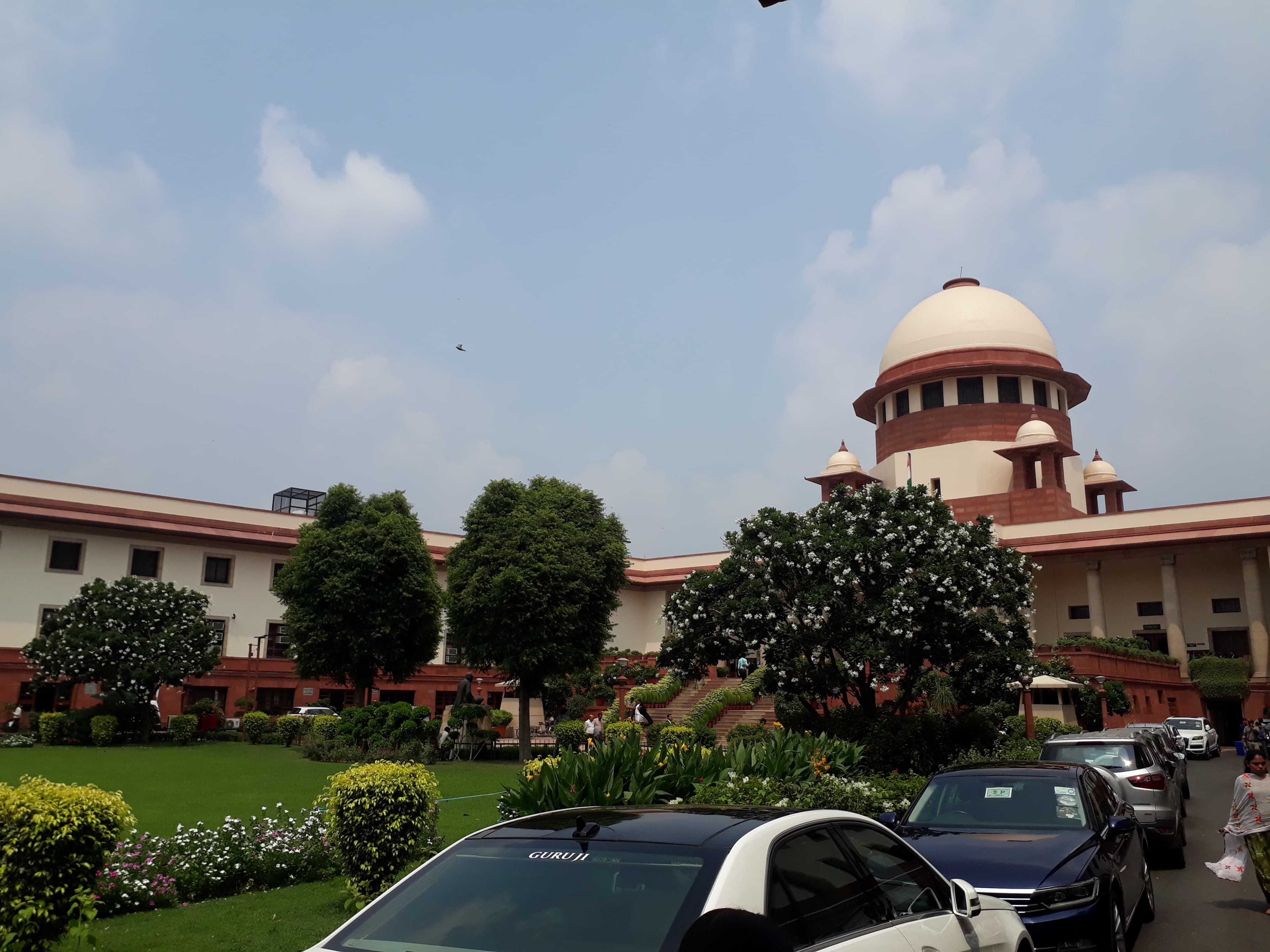
Across Lucknow, accused persons and witnesses are increasingly receiving police "notices" through WhatsApp, SMS, and email — directing them to appear at a station within a few hours, sometimes with the threat of arrest. In January 2026, the Supreme Court drew a clear line: a notice served under Section 41A of the old CrPC or Section 35(3) of the new BNSS is not validly served if it has been delivered through WhatsApp or any other electronic channel. The Court directed all States and Union Territories — Uttar Pradesh included — to issue standing orders restricting notice service to the recognised physical modes prescribed by statute. This article explains the ruling, what a valid notice actually looks like, and what an accused person in Lucknow should do if they receive a WhatsApp "police summons" before consulting a criminal lawyer in Lucknow or planning anticipatory bail.
Table of Contents
Need Immediate Legal Help?
If you're facing a legal emergency in Lucknow, don't wait. Contact experienced criminal lawyer Advocate Onkar Pandey for immediate assistance.
What the Supreme Court Ruled in January 2026
On 15 January 2026, in proceedings flowing from the long-running Satender Kumar Antil v. Central Bureau of Investigation matter, the Supreme Court reiterated and tightened earlier directions on how a notice under Section 41A CrPC (now Section 35(3) BNSS) must be served. The bench made three points unambiguous:
- WhatsApp, SMS or email service is not a substitute for the modes of service recognised under the CrPC, 1973 and the BNSS, 2023.
- Every State and Union Territory must issue a Standing Order directing police forces to serve notices only through prescribed physical modes.
- If an officer wishes to make an arrest in an offence punishable up to seven years, a valid notice of appearance must be issued first; arrest is the exception, not the rule.
This ruling is binding on every police station in Uttar Pradesh, including all stations under the Lucknow Commissionerate. It means that if you have only received a WhatsApp message asking you to appear, you have not been validly noticed in law. That distinction matters at the stage of a bail application, an FIR quashing petition, or a writ for illegal arrest before the Lucknow Bench of the Allahabad High Court.
Section 35 BNSS Replaces Section 41A CrPC: The Rules That Apply Now
The Bharatiya Nagarik Suraksha Sanhita, 2023 came into force on 1 July 2024 and largely re-enacts the older CrPC architecture on arrest. Section 35 BNSS is the modern equivalent of Section 41 and Section 41A CrPC combined, with one important shift — it codifies that arrest is the exception in offences carrying punishment of up to seven years.
The structure is as follows:
- Section 35(1) BNSS — lists the situations in which a police officer may arrest without warrant.
- Section 35(3) BNSS — mandates that in cases where arrest is not required, the police officer shall issue a notice directing the person to appear at a specified place and time.
- Section 35(7) BNSS — bars arrest in any offence punishable with less than three years' imprisonment if the person is infirm or above 60 years, without written approval of a DSP-rank officer.
For most middle-class FIRs that walk into our Lucknow criminal practice — cheating, criminal breach of trust, dowry harassment, simple hurt, NI Act offences — the maximum punishment is below seven years. That means a Section 35(3) notice is the lawful first step, not an arrest, and that notice cannot be served by WhatsApp.
Why WhatsApp Notice Cannot Replace Physical Service
The Supreme Court's reasoning is procedural, but the practical consequences are serious. Recognised modes of service under the BNSS — like the older CrPC — exist precisely to create a verifiable, tamper-resistant record that the notice reached the right person. WhatsApp fails on every count:
- Identity is unverified — a phone number is not equivalent to a sworn delivery to a named person.
- Numbers change frequently — a notice sent to a discarded SIM is no notice at all.
- Blue ticks are not proof of receipt by the accused; they only prove the device opened the message.
- Messages can be deleted, edited or forwarded — destroying the evidentiary trail.
- There is no signed acknowledgment — which is the cornerstone of valid summons service.
By contrast, a properly served notice under the prescribed mode generates a signed acknowledgment, a delivery report, or — where service is refused — a written endorsement by the serving officer. These records can be tested in court at the time of an anticipatory bail hearing or at trial. WhatsApp records cannot.
Legal Consultation
Talk directly to Advocate Onkar Pandey
Explain your matter over a call or WhatsApp. If you take the case forward, the consultation fee adjusts into your overall fee, so there is no separate charge to begin.
What a Valid Section 35(3) BNSS Notice Looks Like
If you are unsure whether the message in your inbox is a legal notice or a coercive shortcut, compare it against the prescribed standards:
| Feature | Valid Notice (Section 35(3) BNSS) | Invalid WhatsApp/SMS "Notice" |
|---|---|---|
| Mode of service | Physical service through serving officer, registered post, or other mode recognised by the BNSS | WhatsApp, SMS, email, Telegram |
| Form | Written notice on police letterhead with FIR number, sections, station, IO name and signature | Plain text message or screenshot |
| Acknowledgment | Signed receipt by the person noticed or recorded refusal | "Seen" / blue tick — not legal proof |
| Time given | Reasonable time to appear and consult counsel | Often "report in 1 hour" — coercive and unlawful |
| Consequence if ignored | Police may seek arrest only after recording reasons in writing | No legal consequence — notice is void |
If the notice you received fails the first two rows, it is almost certainly not a valid Section 35(3) notice. Before responding, speak to a criminal defence lawyer in Lucknow — your reply, or your appearance, can change the colour of the case.
What to Do If You Receive a WhatsApp Notice in Lucknow
Reacting impulsively to a WhatsApp message from a police number is the single most common mistake we see in chamber. The correct, calm sequence is:
- Do not delete the message. Take a clear screenshot capturing the sender's number, timestamp, and full text. This becomes evidence later.
- Do not rush to the police station alone. A Section 35(3) notice gives you the right to appear at a stated time — usually with reasonable notice — not within the next hour.
- Verify the FIR. Use the UP Police Citizen Portal or visit the station to obtain a certified copy of the FIR. Without an FIR number, the "notice" has no legal foundation.
- Consult a lawyer before any appearance. An advocate can attend with you, record protests if procedure is violated, and immediately prepare an anticipatory bail application if arrest is threatened.
- Send a written reply — by registered post — stating that you have received an electronic communication, that the same is not a valid notice under Section 35(3) BNSS, and that you are willing to appear on receipt of a properly served notice.
- Preserve all communication. Save call recordings, save the WhatsApp chat, note witnesses present when the message arrived.
If the police escalate to actual coercion, the next step is often a petition before the High Court seeking quashing, or a writ for protection from illegal arrest.
What Happens If Police Arrest You Without a Valid Notice
An arrest made in an under-seven-years offence without first issuing a Section 35(3) notice — and recording reasons for dispensing with that notice — is presumptively illegal. The Allahabad High Court at its Lucknow Bench has, in several recent matters, granted relief in such situations. Practical consequences include:
- Immediate bail almost as a matter of right — the Magistrate's discretion narrows sharply once procedural illegality is shown on the case diary.
- Writ petition under Article 226 seeking declaration of illegal arrest, compensation, and direction to departmental action against the arresting officer.
- Direct relief before the High Court if the arrest is part of a malicious or false FIR — the case can be combined with an FIR quashing petition under Section 528 BNSS.
- Disciplinary action against the officer for violation of the Supreme Court's binding directions.
The Court has made clear that financial compensation, in cases of demonstrably illegal arrest, is not a remote remedy — it is increasingly being awarded. For situations where you suspect malafide police conduct, early legal consultation is essential; the first 48 hours determine whether the procedural defect can be effectively pleaded.
Common Mistakes Made by Accused Persons in Lucknow
Even with the Supreme Court's clear ruling on your side, the case can be damaged by avoidable missteps:
- Replying on WhatsApp — any reply to an invalid electronic notice can later be argued as your acceptance of service. Always reply in writing through registered post.
- Appearing without counsel — once inside the station, statements you make can be used against you under the framework of Sections 161 and 180 BNSS. Take an advocate with you.
- Signing blank papers or "general statements" — anything signed inside a police station should be read and, ideally, prepared by your lawyer.
- Travelling out of Lucknow after receiving the message — even if the notice is invalid, leaving the jurisdiction can be portrayed as flight, weakening a future anticipatory bail plea.
- Posting on social media about the police contact — public posts can be cited as obstructing investigation or, in matrimonial matters, as harassment of the complainant.
The pattern is consistent: clients who consult a lawyer in the first 24 hours after the WhatsApp message arrives close their files faster, and at lower cost, than those who try to handle the call themselves.
About the Author
Advocate Onkar Pandey is a practising criminal lawyer at the Lucknow Bench of the Allahabad High Court, with Bar Council enrolment number UP 4825-1999 and chambers at A-406, High Court, Lucknow (Awadh Bar). His practice covers Section 35 BNSS notice defence, arrest rights, anticipatory bail, FIR quashing, and writ petitions for illegal arrest across Uttar Pradesh. For legal consultation regarding police WhatsApp notices, Section 35 BNSS proceedings, or anticipatory bail strategy, contact Advocate Onkar Pandey for expert advice tailored to your specific situation. See contact details or call directly.
Frequently Asked Questions
Is a WhatsApp message from Lucknow police a valid Section 35 BNSS notice?+
No. Following the Supreme Court's directions reiterated on 15 January 2026, a WhatsApp message — or an SMS, email, or any other electronic communication — is not a validly served notice under Section 35(3) of the BNSS or the older Section 41A of the CrPC. Such notices must be served through the physical modes prescribed by statute, which include personal service by a serving officer and registered post with an acknowledgment trail. A "blue tick" is not proof of legal service. If your only communication from the police has been on WhatsApp, you have not been formally noticed. You should, however, still preserve the message, consult a Lucknow criminal lawyer, and respond through registered post — silence can give the IO ammunition to argue evasion.
What modes of service are legally valid for a Section 35(3) BNSS notice?+
A valid Section 35(3) notice must be served through one of the modes recognised by the BNSS — typically personal service by a designated serving officer, service through the head of household at the noticee's residence, affixation at the last known address if service is evaded, or registered post with acknowledgment due. Each of these modes produces a verifiable, tamper-resistant record: a signed receipt, a postal acknowledgment, or a witnessed endorsement. The Supreme Court has expressly held that all States — including Uttar Pradesh — must issue standing orders restricting their police forces to these prescribed modes. Any deviation, including service through WhatsApp, SMS or email, is procedurally void and cannot be relied on by the prosecution at the bail or quashing stage.
What should I do if I receive a WhatsApp notice from a police station in Lucknow?+
Stay calm and act in order. First, screenshot the message capturing the sender's number, the timestamp, and the full content — do not delete the chat. Second, verify whether an FIR exists by checking the UP Police Citizen Portal or visiting the station with a lawyer; if there is no FIR number, the "notice" has no legal basis at all. Third, do not appear alone — book a consultation with a criminal lawyer in Lucknow so that anticipatory bail and a written response can be prepared simultaneously. Fourth, send a registered post reply stating that the electronic communication is not a valid notice under Section 35(3) BNSS but you are willing to attend on receipt of a properly served notice. This preserves your good faith on record.
Can the police arrest me directly without first serving a Section 35(3) notice?+
In offences punishable with imprisonment up to seven years, the Supreme Court has held that arrest is the exception, not the rule. The investigating officer must first issue a Section 35(3) BNSS notice, and arrest only if the noticee fails to comply or if specific conditions in Section 35(1) — such as risk of tampering with evidence, or preventing further offences — are recorded in writing. An arrest made in such cases without prior notice, and without recorded reasons, is presumptively illegal. The Allahabad High Court, Lucknow Bench, has regularly directed release in such cases, and in some matters awarded compensation. If you suspect such an arrest, your family should approach a lawyer immediately for a habeas corpus or illegal-arrest writ.
Can I file an FIR or complaint against police who arrest me without proper notice?+
Yes, you have legal remedies. The first and most effective remedy is a writ petition under Article 226 before the Lucknow Bench of the Allahabad High Court, seeking a declaration that the arrest was illegal, asking for compensation, and praying for departmental action against the arresting officer. Parallel remedies include a complaint to the Superintendent of Police or the Police Complaints Authority, and in extreme cases a private complaint under the relevant BNS provisions for wrongful confinement (Sections 127 and 128 BNS, replacing the older IPC 339 and 340). The Supreme Court's January 2026 ruling significantly strengthens such complaints — non-compliance with the notice rule is now a recorded constitutional infraction, not a mere procedural slip.
For complex cases, pair the writ with an FIR quashing petition so that the underlying false case is also closed.
Does the Section 35 BNSS notice rule apply to witnesses as well as accused persons?+
The BNSS distinguishes between witnesses and accused. Section 179 BNSS (replacing Section 160 CrPC) governs notice to witnesses, while Section 35(3) governs notice to a suspect/accused where arrest is not required. The Supreme Court's January 2026 directions on physical-mode service apply to both categories — neither a witness nor an accused can be summoned solely through WhatsApp or SMS. Importantly, women, children below 15, persons above 65, and persons with disabilities have additional protections: under Section 179 BNSS they cannot be required to attend at any place other than their residence. So if you have received a WhatsApp "notice" calling a senior parent or a woman family member to the station, that direction is doubly invalid and a strong ground for writ relief.
Should I attend the police station if I do receive a properly served Section 35 BNSS notice?+
Yes — and you should attend on time, in the proper way. A valid notice creates a statutory obligation; failing to comply gives the IO grounds to argue for your arrest. The right approach is: confirm the notice is genuine (FIR number, signed officer, station seal), engage a Lucknow criminal lawyer to attend with you, prepare in advance the answers to anticipated questions, and carry an identity document plus copies of any documents the notice asks for. Do not sign blank statements or "general declarations" — every statement should be read carefully or, where possible, prepared by your advocate. If the IO threatens arrest after appearance despite a non-arrest offence, an anticipatory bail filing the same evening is the standard precaution.
Related Services
Get Expert Legal Advice in Lucknow
20+ years experience in criminal law at Lucknow High Court. Available 24/7 for emergencies.
Disclaimer: This article is for general information purposes only and does not constitute legal advice. Every case is unique and requires specific legal analysis. For advice specific to your situation, please consult Advocate Onkar Pandey or another qualified attorney in Lucknow.