Police Refusing to Register Your FIR in Lucknow or UP? Here Are Your Step-by-Step Legal Remedies Under BNSS 2023
Quick Answer
If the police are refusing to register your FIR in Lucknow or anywhere in Uttar Pradesh, the law is firmly on your side. Registration of a First Information Report is not a favour the Station House Officer (SHO) grants at his discretion — for a cognizable offence, it is a mandatory legal duty .
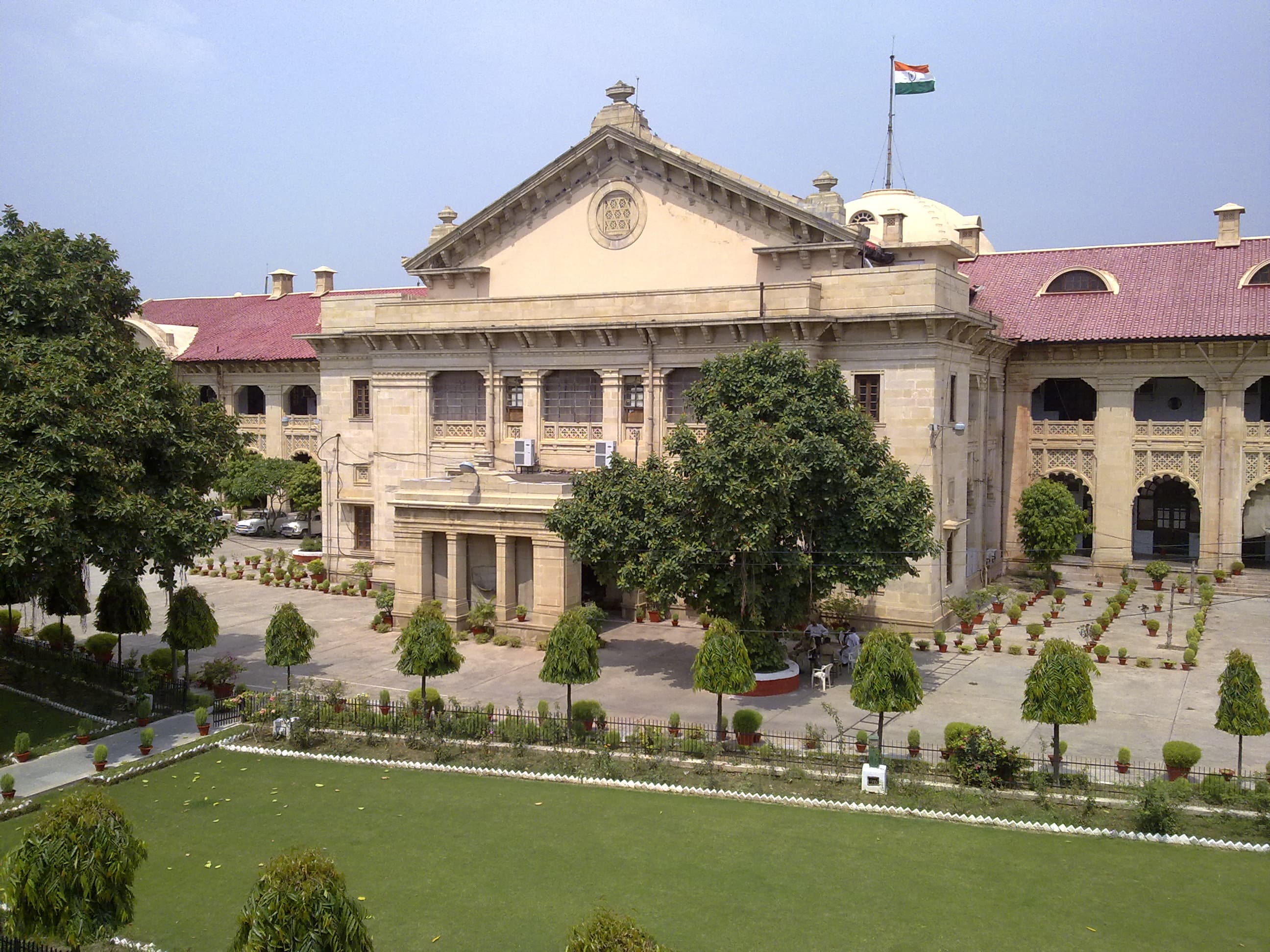
If the police are refusing to register your FIR in Lucknow or anywhere in Uttar Pradesh, the law is firmly on your side. Registration of a First Information Report is not a favour the Station House Officer (SHO) grants at his discretion — for a cognizable offence, it is a mandatory legal duty. The Supreme Court settled this in Lalita Kumari v. Government of Uttar Pradesh (2014), and the duty is now codified in Section 173(1) of the Bharatiya Nagarik Suraksha Sanhita, 2023 (BNSS), which uses the word "shall." Yet every week, complainants are turned away from police stations with excuses about jurisdiction, "lack of evidence," or advice to "settle the matter." This guide explains exactly what to do when your FIR is not registered — from sending a written complaint to the Superintendent of Police, to invoking Section 175(3) BNSS before the Magistrate, to approaching the Allahabad High Court Lucknow Bench. Advocate Onkar Pandey, a criminal lawyer in Lucknow with over 25 years at the High Court, sets out each remedy in the correct legal sequence.
Table of Contents
Need Immediate Legal Help?
If you're facing a legal emergency in Lucknow, don't wait. Contact experienced criminal lawyer Advocate Onkar Pandey for immediate assistance.
Is FIR Registration Mandatory? What Lalita Kumari and Section 173 BNSS Say
The starting point is the most important: when information discloses a cognizable offence, the police have no discretion to refuse registration. A cognizable offence is one in which a police officer can arrest without a warrant and begin investigation without a Magistrate's order — for example, theft, assault, dowry harassment, cheating, rape, or grievous hurt.
In Lalita Kumari v. Government of U.P. (2014), a Constitution Bench of the Supreme Court held that registration of an FIR is compulsory under what was then Section 154 CrPC, and that genuine cases of non-registration could attract action against the erring officer. This principle now lives in Section 173(1) BNSS, 2023, which says the officer "shall" record the information.
The word "shall" is the legal lever you must remember when an officer at a Lucknow police station tells you "abhi FIR nahi ho sakti."
- Cognizable offence — FIR registration is mandatory; no preliminary enquiry can delay it where the offence is clear.
- Non-cognizable offence — the police record the information in a station diary and direct you to the Magistrate under Section 174 BNSS.
- Preliminary enquiry — permitted only in limited categories (matrimonial, commercial, medical negligence, corruption) and must be completed within 14 days under Section 173(3) BNSS.
Common Reasons Police Refuse an FIR — and Why Most Are Illegal
Understanding why an SHO refuses helps you counter the excuse on the spot. Most reasons given at the police station are not valid grounds in law for a cognizable offence. Often the refusal is driven by a desire to keep crime statistics low, local influence of the accused, or a request to "compromise" first.
| Excuse Given by Police | Legal Position |
|---|---|
| "This is not our jurisdiction" | Illegal — a Zero FIR must be registered and transferred to the correct station (Section 173 BNSS) |
| "There is no evidence yet" | Invalid — evidence is collected during investigation, not before FIR |
| "Go and settle it with the other party" | Invalid — police cannot force a compromise in a cognizable matter |
| "Come back tomorrow / officer is not here" | Invalid — any officer on duty must record the information |
| "We will only file an NCR" | Valid only if the offence is genuinely non-cognizable |
If you face any of the first four excuses, you should immediately preserve proof — note the date, time, officer's name, and keep a written copy of your complaint. This record becomes vital when you escalate to the SP or the Magistrate. A criminal lawyer in Lucknow can also send a legal notice that often prompts immediate registration.
Step-by-Step Remedies When Police Refuse Your FIR in Uttar Pradesh
The law provides a clear, escalating ladder of remedies. You should follow them in sequence, keeping documentary proof at every stage. Jumping straight to the High Court without exhausting the lower remedies often results in the petition being returned with directions to first approach the Magistrate.
- Approach the SHO in writing — submit your complaint and insist on a stamped acknowledgement or the FIR copy, which is your free right under Section 173 BNSS.
- Send a written complaint to the Superintendent of Police (SP) — under Section 173(4) BNSS (equivalent to the old Section 154(3) CrPC), the SP can register the FIR or direct an investigation if satisfied a cognizable offence exists.
- File an application before the Magistrate under Section 175(3) BNSS — the strongest and most-used remedy in Lucknow courts; the Magistrate can direct the police to register and investigate.
- Approach the Allahabad High Court — by writ petition under Article 226 or under Section 528 BNSS if the lower remedies fail or there is gross illegality.
| Remedy | Legal Provision | Authority |
|---|---|---|
| Written complaint to SHO | Section 173(1) BNSS | Station House Officer |
| Complaint to SP by post | Section 173(4) BNSS | Superintendent of Police |
| Application to direct FIR | Section 175(3) BNSS | Judicial Magistrate |
| Writ / quashing remedy | Article 226 / Section 528 BNSS | Allahabad High Court |
Legal Consultation
Talk directly to Advocate Onkar Pandey
Explain your matter over a call or WhatsApp. If you take the case forward, the consultation fee adjusts into your overall fee, so there is no separate charge to begin.
Section 175(3) BNSS: Approaching the Magistrate — The Most Effective Remedy
For most complainants in Lucknow, the decisive remedy is an application before the Judicial Magistrate under Section 175(3) BNSS (the successor to Section 156(3) CrPC). This provision empowers the Magistrate to direct the police to register an FIR and conduct an investigation into a cognizable offence.
A significant change under the BNSS is that before passing such a direction, the Magistrate must consider your application to the SP under Section 173(4) and may require an affidavit. This is why the SP-stage complaint is no longer optional — it is a procedural pre-condition. Skipping it can get your Section 175(3) application dismissed.
How to File a Section 175(3) BNSS Application in Lucknow
- Draft the application before the jurisdictional Chief Judicial Magistrate (CJM) Court, Lucknow or the concerned Magistrate.
- Attach copies of your written complaint to the SHO and the SP, with postal/acknowledgement proof.
- File a supporting affidavit setting out the cognizable offence and the police inaction.
- The Magistrate may call a police report before passing a registration order.
If the dispute also involves false counter-allegations, you may simultaneously need advice on FIR quashing to protect yourself. An experienced advocate ensures the application is drafted to withstand the police's standard objections.
Zero FIR and e-FIR: Your Rights Regardless of Jurisdiction
One of the most common — and most clearly illegal — refusals is the "wrong jurisdiction" excuse. The concept of a Zero FIR exists precisely to defeat this. A Zero FIR can be registered at any police station irrespective of where the offence took place; it is later transferred to the police station that has territorial jurisdiction.
This matters enormously in time-sensitive offences such as sexual assault, kidnapping, or serious accidents, where every hour counts. The BNSS has strengthened citizen access to FIR registration in two ways:
- Zero FIR — registration at any station; the FIR is numbered "0" and forwarded to the correct station for investigation.
- e-FIR / electronic registration — information may be given electronically, and must be signed within three days for the FIR to be taken on record under Section 173 BNSS.
If an officer in Lucknow refuses on jurisdiction grounds, you can firmly cite the Zero FIR rule. For accident, assault, or property-related cognizable offences, do not let the station boundary become an excuse. Where the matter overlaps with a land or title dispute, our property disputes team can coordinate the criminal and civil strategy together.
When to Approach the Allahabad High Court Lucknow Bench
If the SHO, the SP, and the Magistrate all fail to act, or if there is a clear abuse of power, your remedy lies before the Allahabad High Court. The High Court can be approached in two principal ways.
Writ Petition Under Article 226
A writ of mandamus can be sought directing the police to perform their statutory duty of registering an FIR. The Court will usually first check whether you exhausted the Section 175(3) BNSS remedy, so come prepared with that record.
Petition Under Section 528 BNSS
The inherent powers of the High Court (successor to Section 482 CrPC) can be invoked to prevent abuse of process — for example, where police are shielding an influential accused or where a false counter-FIR has been registered against you. The same jurisdiction is used in matters of quashing a false FIR.
Litigation before the Lucknow Bench of the Allahabad High Court requires precise drafting and proof of the lower-court trail. Before rushing to the High Court, it is almost always wise to consult a criminal lawyer who can tell you whether your facts justify writ jurisdiction or whether the Magistrate route will be faster and cheaper.
Practical Checklist: Documents and Proof You Must Keep
Success in compelling FIR registration depends heavily on documentation. Police inaction is hard to prove unless you have created a paper trail. Keep the following safe from the very first visit to the station.
- A typed copy of your complaint with full facts, dates, and names of the accused.
- Proof of submission — a stamped acknowledgement, dispatch number, or speed-post receipt to the SHO and SP.
- Any photographs, medical reports, call records, or messages relevant to the offence.
- Names and posting of the officers who refused, with date and time.
| Stage | Document to Retain | Why It Matters |
|---|---|---|
| At police station | Acknowledged complaint copy | Proves you reported the offence |
| SP complaint | Speed-post receipt + complaint copy | Mandatory before Section 175(3) |
| Magistrate stage | Affidavit + earlier complaints | Forms the basis of the FIR direction |
Sending these complaints by registered post or speed post — rather than handing them over informally — creates the dated proof courts rely on. If you anticipate arrest in a connected matter, also explore anticipatory bail in parallel so you are not caught off guard by a counter-case.
About the Author
Frequently Asked Questions
Can the police legally refuse to register my FIR in Uttar Pradesh?+
No. For a cognizable offence, registration is mandatory under Section 173(1) BNSS, 2023, which uses the word "shall." The Supreme Court in Lalita Kumari v. Government of U.P. (2014) held that the police have no discretion to refuse an FIR where the information discloses a cognizable offence. Refusal can attract departmental and even criminal action against the officer. Police may only conduct a limited preliminary enquiry (completed within 14 days) in specific categories like matrimonial, commercial, or corruption matters. If your FIR concerns theft, assault, dowry harassment, cheating, or similar offences, the police in Lucknow cannot lawfully turn you away or ask you to "settle" the matter first.
What should I do first if the SHO in Lucknow refuses my FIR?+
First, submit your complaint in writing and insist on a stamped acknowledgement. If the SHO still refuses, send a written complaint by registered or speed post to the Superintendent of Police (SP) under Section 173(4) BNSS, retaining the postal receipt. The SP can register the FIR or order an investigation if satisfied a cognizable offence is disclosed. This SP-stage complaint is now a procedural pre-condition before you approach the Magistrate. Keep copies of everything, note the date, time, and name of the refusing officer. A documented paper trail is the single most important factor in compelling registration, so never rely on verbal complaints alone.
What is Section 175(3) BNSS and how does it help?+
Section 175(3) BNSS (the successor to Section 156(3) CrPC) empowers a Judicial Magistrate to direct the police to register an FIR and investigate a cognizable offence. It is the most effective remedy when the police refuse to act. To file, you submit an application before the jurisdictional Magistrate or CJM Court in Lucknow, attaching your earlier complaints to the SHO and SP along with proof of submission and a supporting affidavit. Under the BNSS, the Magistrate considers whether you first approached the SP under Section 173(4), so do not skip that step. The Magistrate may seek a police report before ordering registration.
What is a Zero FIR and can I use it if police claim wrong jurisdiction?+
Yes. A Zero FIR can be registered at any police station regardless of where the offence took place, and is then transferred to the station with proper territorial jurisdiction. The "this is not our area" excuse is illegal for a cognizable offence. Zero FIR is especially important in urgent crimes such as sexual assault, kidnapping, or serious accidents, where delay can destroy evidence. The FIR is numbered "0" and forwarded to the competent station for investigation. If a Lucknow police officer refuses on jurisdiction grounds, firmly cite the Zero FIR rule and your right under Section 173 BNSS, and escalate to the SP or Magistrate if the refusal continues.
Can I get an FIR registered online (e-FIR) in Uttar Pradesh?+
The BNSS, 2023 introduced electronic registration of information. You may give information about an offence electronically, but under Section 173 BNSS it must be signed by the informant within three days for the FIR to be formally taken on record. This is useful where you face hostility at the police station or need a dated record. However, an electronic complaint does not replace the formal remedies if the police still fail to act — you would then escalate to the SP under Section 173(4) and the Magistrate under Section 175(3). For serious offences, it is advisable to follow up the electronic complaint with a physical, acknowledged copy and consult a lawyer.
When should I approach the Allahabad High Court for FIR registration?+
Approach the Allahabad High Court Lucknow Bench when the SHO, SP, and Magistrate all fail to act, or when there is a clear abuse of power — for example, police shielding an influential accused or a false counter-FIR lodged against you. You can file a writ petition under Article 226 seeking a mandamus directing the police to perform their statutory duty, or invoke the inherent powers under Section 528 BNSS (successor to Section 482 CrPC). The Court usually checks whether you exhausted the Section 175(3) BNSS remedy first, so bring that record. Because High Court litigation requires precise drafting and proof of the lower-court trail, consult an experienced criminal lawyer before filing.
Related Guides
Related Services
Get Expert Legal Advice in Lucknow
20+ years experience in criminal law at Lucknow High Court. Available 24/7 for emergencies.
Disclaimer: This article is for general information purposes only and does not constitute legal advice. Every case is unique and requires specific legal analysis. For advice specific to your situation, please consult Advocate Onkar Pandey or another qualified attorney in Lucknow.