Pension & Gratuity Recovery After Retirement — Allahabad HC 2026 Ruling for UP Government Employees
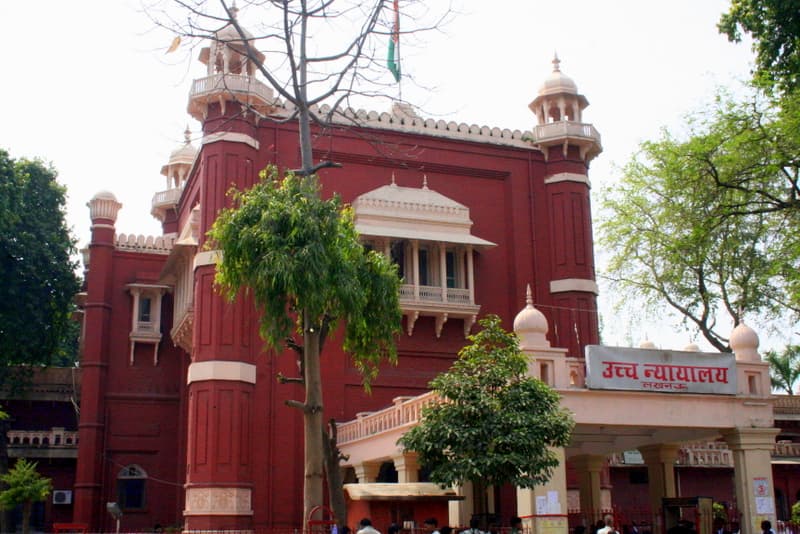
Table of Contents
Need Immediate Legal Help?
If you're facing a legal emergency in Lucknow, don't wait. Contact experienced criminal lawyer Advocate Onkar Pandey for immediate assistance.
The Allahabad HC May 2026 Ruling — Devendra Singh's Case
Devendra Singh joined the UP Police as a constable in 1984 and retired in May 2025. Soon after retirement, the department issued a recovery order claiming he had been overpaid during service and proceeded to deduct approximately Rs. 5.5 lakh from his pension and gratuity.
On May 5, 2026, the Lucknow Bench of the High Court intervened on a writ petition under Article 226. Key takeaways from Justice Prakash Padya's order:
- Stay on the deduction: The recovery was halted immediately as prima facie illegal.
- Personal affidavit ordered: The Chief Secretary (Home) was directed to file a personal affidavit explaining what protection the State offers to retired employees.
- Accountability sought: The Agra Police Commissioner and DCP were asked to show cause on disciplinary action against the officers who passed the deduction order.
- Quotable principle: "Pension and gratuity are the employee's right, not a gift" — a one-line summary of Supreme Court jurisprudence reaffirmed for UP.
The ruling is binding guidance for every service law dispute involving post-retirement recovery in Uttar Pradesh.
Rafiq Masih Rules — When Recovery From a Retired Employee Is Barred
The Allahabad HC's May 2026 order rests on the binding Supreme Court judgment in State of Punjab v. Rafiq Masih (White Washer), (2015) 4 SCC 334. The Apex Court laid down a clear list of categories where recovery of so-called overpayment is impermissible, even if the excess was genuinely paid.
| Category | Position of the Employee | Recovery Permissible? |
|---|---|---|
| Class III & Class IV (Group C & D) employees | Junior cadre, limited bargaining power | No |
| Retired employees | Recovery sought after retirement | No |
| Employees due to retire within 1 year | Close to retirement | No |
| Overpayment more than 5 years before the recovery order | Stale claim by department | No |
| Wrong fixation by employer, no misrepresentation by employee | Innocent recipient | No |
| Any case where recovery causes hardship grossly disproportionate to the benefit | Residual category | No |
If even one of these categories applies, the department's recovery order is liable to be struck down on writ. The Lucknow Bench has consistently followed Rafiq Masih, and the Devendra Singh order is the latest UP-specific reinforcement of that line. For service disputes that overlap with criminal trap or vigilance cases, coordinate strategy with a criminal defence counsel at the outset.
Pension Is a Property Right Under Article 300A
Pension is no longer treated as a bounty paid at the State's pleasure. The Supreme Court in D.S. Nakara v. Union of India (1983) and a long line of subsequent rulings has classified it as deferred wages earned through years of service.
The constitutional anchor is Article 300A — no person shall be deprived of property save by authority of law. Pension and gratuity are property within this article. The practical implications for a UP retiree are direct:
- No deprivation without authority of law: A unilateral departmental letter is not "authority of law"; a notified rule, due process and reasoned order are essential.
- Audit objection is not authority: Recoveries triggered only by an audit para — without independent enquiry, notice and hearing — fail Article 300A scrutiny.
- Writ jurisdiction available: Violation of Article 300A directly opens the door to a petition under Article 226 before the Lucknow Bench of the Allahabad High Court.
- Interest on delayed payment: Courts routinely award interest where pensionary dues are wrongly withheld.
The Rafiq Masih categories operate as a procedural-substantive shield; Article 300A operates as the constitutional shield. Together they make post-retirement recovery extremely difficult to sustain.
Legal Consultation
Talk directly to Advocate Onkar Pandey
Explain your matter over a call or WhatsApp. If you take the case forward, the consultation fee adjusts into your overall fee, so there is no separate charge to begin.
Common Wrong Deductions UP Pensioners Face
In day-to-day practice at the Lucknow Bench, a few recurring patterns trigger the same Rafiq Masih and Article 300A objections.
- Excess pay fixation: Recovery of "overdrawn" salary years after a stepping-up or revision the department itself approved.
- Wrong grade pay: Pay Commission anomaly recoveries attempted long after the benefit was enjoyed.
- Audit objection recovery: Lump-sum deduction from gratuity on the basis of an internal audit note, without any chargesheet or enquiry.
- Provisional pension withholding: Pension stopped during a pending departmental enquiry without protecting provisional pension under the rules.
- Family pension delay: Widow or dependants made to wait months for sanction despite settled rules and clear nomination.
- Recovery linked to FIR or criminal case: Mechanical recovery merely because of a pending criminal case, ignoring the principle that criminal proceedings and pension are not interchangeable.
Each of these scenarios is challengeable. The relief is usually a writ quashing the recovery, refund with interest and, in fit cases, exemplary costs.
Step-by-Step — How to Challenge Recovery at the Lucknow Bench
If you have already retired and the department is deducting from your pension, gratuity, leave encashment or commutation, the response should be both technical and quick.
- Stage 1 — Representation: Within 15 days of the recovery order, submit a written representation to the disciplinary or sanctioning authority. Quote Rafiq Masih and your service date proving you are retired.
- Stage 2 — RTI for paper trail: File an RTI for the audit note, the sanction order and the rule under which recovery is being made. This pins the department to its own record.
- Stage 3 — Notice under Article 300A: A formal legal notice citing Article 300A and demanding refund within a defined period sets up the writ.
- Stage 4 — Writ petition under Article 226: File before the Lucknow Bench seeking quashing of the recovery order, refund of deducted amounts and interest. Apply for an interim stay on further deductions on the first date.
- Stage 5 — Compliance and contempt: Once the writ is allowed, monitor compliance. Persistent non-payment can be enforced by contempt proceedings.
Across these stages, also keep in view any parallel chargesheet, suspension or criminal defence issue — pension recoveries often piggyback on a disciplinary or FIR story.
For an overview of leading service-law rulings, refer to the official Allahabad High Court portal.
How Advocate Onkar Pandey Helps Retired UP Employees
From chambers at the Lucknow Bench, Advocate Onkar Pandey assists pensioners and serving employees on the verge of retirement with:
- Drafting representations and Article 300A notices against recovery orders.
- Filing writ petitions under Article 226 to quash recovery and secure interim stay.
- Recovering withheld gratuity, leave encashment and family pension.
- Defending parallel chargesheets and departmental enquiries that often accompany pension recovery.
- Co-ordinating with criminal defence where FIR or vigilance proceedings are entangled with the service issue.
For a confidential review of your retirement papers and recovery order, request a case evaluation.
About the Author
Advocate Onkar Pandey (Bar Council UP, Enrolment No. UP 4825-1999) practises at the Lucknow Bench of the Allahabad High Court with a focus on service law, pension and gratuity disputes, FIR quashing, bail and criminal defence. He regularly appears in writ matters for retired UP government employees challenging post-retirement recoveries, withheld gratuity and delayed family pension. Chamber: A-406, High Court, Lucknow, Awadh Bar, UP 226001. Phone: +91 98392 71553.
Frequently Asked Questions
Can the UP government deduct from my pension or gratuity after retirement?+
Only in narrow situations. Under State of Punjab v. Rafiq Masih (2015), recovery from a retired Group C or Group D employee, or any retiree where the overpayment was caused by departmental error and not misrepresentation, is impermissible. The Allahabad High Court's May 2026 order in the Devendra Singh case reinforces this for UP. If a recovery order has been issued, file a representation immediately and, if not redressed, move a writ petition under Article 226 before the Lucknow Bench. An interim stay on further deductions is routinely granted in clear Rafiq Masih cases.
Is pension a fundamental or constitutional right?+
Pension is not a fundamental right under Part III, but it is a constitutional right protected under Article 300A — the right to property. The Supreme Court in D.S. Nakara v. Union of India (1983) classified pension as deferred wages earned through service, not a gift from the State. Practically, this means the government cannot deprive a retired employee of pension or gratuity except by clear authority of law, with due notice and a reasoned order. Arbitrary deductions, audit-based recoveries and unilateral orders without hearing are routinely set aside by the Allahabad High Court as violations of Article 300A.
What is the time limit to challenge a pension recovery order?+
There is no rigid statutory limitation for filing a writ petition, but courts expect the retiree to approach the High Court within a reasonable period — typically within 3 to 6 months of the recovery order or the first deduction. The cause of action is continuing as long as the department keeps deducting, which gives some flexibility. The safer course is to send a representation within 15 days, an Article 300A notice within 30 days, and file the writ petition within 90 days. Delays beyond that should be explained on affidavit, citing illness, pursuit of departmental remedies or family pension issues.
Can I claim interest on wrongly withheld pension or gratuity?+
Yes. The Lucknow Bench routinely grants interest where pensionary dues are wrongly delayed or wrongly recovered. The rate awarded usually falls between 6 percent and 9 percent simple interest, depending on the period of delay and the conduct of the department. In aggravated cases — where the recovery was patently illegal under Rafiq Masih or family pension was withheld from a widow for months — the court has awarded exemplary costs in addition to interest. Quantify the deducted amount and the delay carefully in the writ petition and pray specifically for interest and costs.
I am still in service but due to retire in 6 months — can the department recover excess pay now?+
Under Rafiq Masih, recovery is also impermissible against employees who are due to retire within one year, because the financial impact at the threshold of retirement causes hardship grossly disproportionate to the benefit. Many UP departments still attempt last-minute recoveries to clear audit objections before the retirement date. Such orders are routinely stayed by the Lucknow Bench. Send a written objection citing Rafiq Masih, demand a personal hearing and, if recovery is still ordered, move a writ petition seeking quashing and interim stay until the recovery is judicially scrutinised.
What if the recovery is linked to a pending criminal case or FIR?+
Recovery cannot be sustained merely because an FIR or criminal case is pending against the retired employee. Departmental and criminal proceedings stand on their own footing, and conviction alone — not the FIR — can trigger forfeiture under most UP service rules. Where recovery is being mechanically tied to a criminal complaint, the writ challenge can include a parallel prayer for stay of the recovery pending the criminal proceedings, and a coordinated FIR quashing petition may also be considered. Strategy should combine service law and criminal defence under a single counsel where possible.
Related Services
Get Expert Legal Advice in Lucknow
20+ years experience in criminal law at Lucknow High Court. Available 24/7 for emergencies.
Disclaimer: This article is for general information purposes only and does not constitute legal advice. Every case is unique and requires specific legal analysis. For advice specific to your situation, please consult Advocate Onkar Pandey or another qualified attorney in Lucknow.