Notice Instead of Arrest Under Section 35(3) BNSS: The Supreme Court's January 2026 Ruling and What It Means in Uttar Pradesh
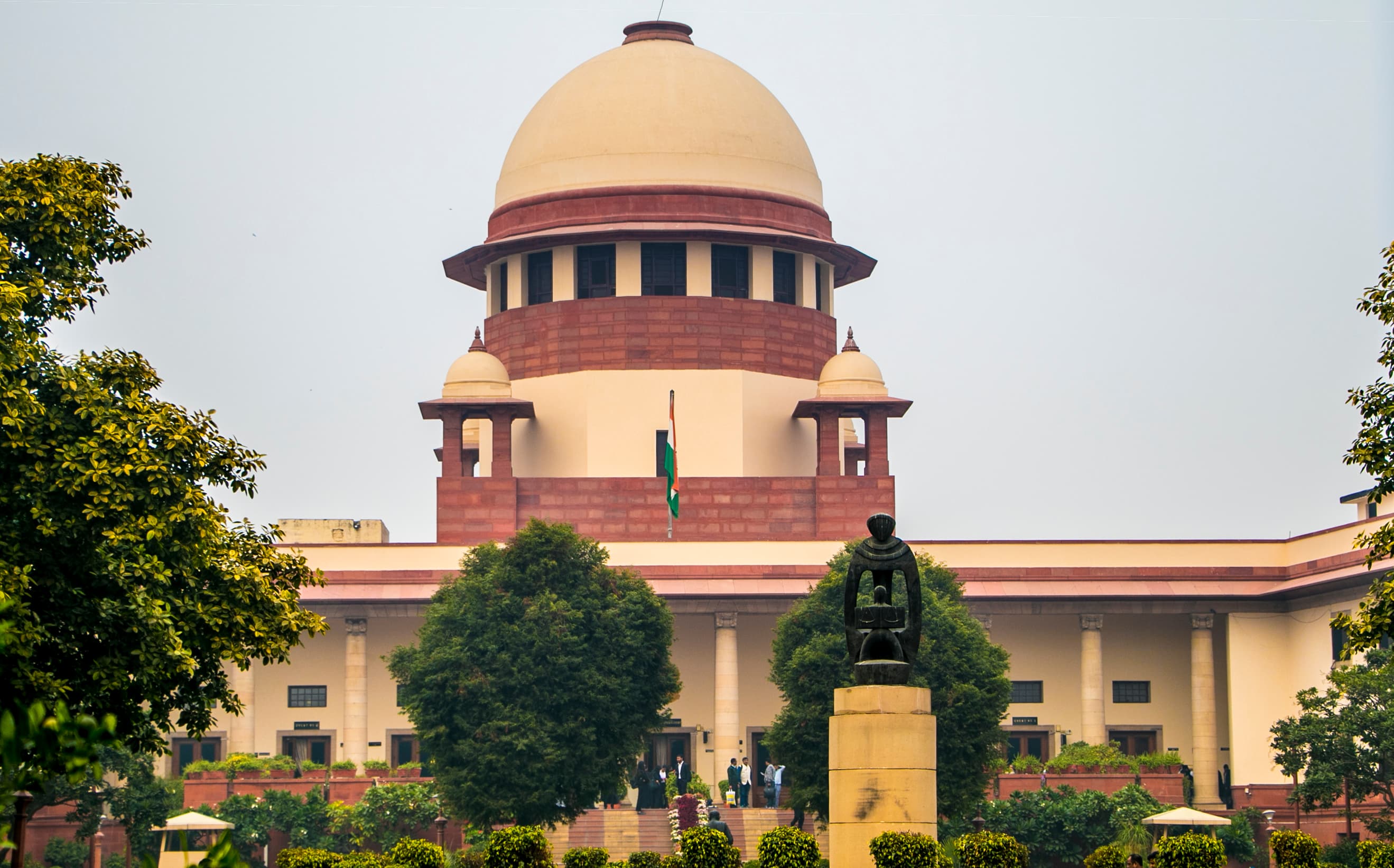
The Section 35(3) BNSS notice has quietly become the most important protection against unnecessary arrest available to ordinary citizens in Uttar Pradesh today. In a 22-page judgment delivered on January 15, 2026, the Supreme Court has held that for any offence punishable with imprisonment of up to seven years, the police are bound to first issue a written notice asking the suspect to appear — and an arrest without that notice will normally be illegal.
This single ruling rewrites how thousands of FIRs in Lucknow, Kanpur, Varanasi, and across UP must now be handled by station house officers. The court has, in effect, restored the maxim that "bail is the rule, jail is the exception" and given it concrete, enforceable meaning under the new Bharatiya Nagarik Suraksha Sanhita, 2023.
If you, a family member, or an employee have received a police notice or are facing the threat of arrest in a non-heinous case, this guide explains what Section 35(3) BNSS requires, the categories of offences it covers, the magistrate's new duty before remanding you, and the remedies available before the Allahabad High Court Lucknow Bench. For tailored advice, speak with an experienced criminal lawyer in Lucknow before responding to any police communication.
Table of Contents
Need Immediate Legal Help?
If you're facing a legal emergency in Lucknow, don't wait. Contact experienced criminal lawyer Advocate Onkar Pandey for immediate assistance.
What Section 35(3) BNSS Actually Says — And Why It Was Enacted
Section 35 of the Bharatiya Nagarik Suraksha Sanhita, 2023 replaced Section 41 of the old Code of Criminal Procedure with effect from July 1, 2024. Sub-section (3) carries forward and strengthens what used to be Section 41A CrPC — the requirement that, for less serious offences, the police should first issue a notice rather than walk in with handcuffs.
The provision applies to any cognizable offence where the maximum punishment does not exceed seven years of imprisonment, with or without fine. In such a case, the investigating officer is required to:
- Issue a written notice directing the person to appear before him or at a stated place.
- State the purpose of the notice and the case number.
- Permit the person to comply by attending the investigation, instead of being taken into custody.
The Parliament inserted this safeguard because India's prison data showed that an overwhelming majority of undertrials in UP and elsewhere were behind bars for offences for which the law had never required arrest in the first place. The Supreme Court in Arnesh Kumar v. State of Bihar (2014) had already issued binding directions to the same effect under the old CrPC, but compliance on the ground remained patchy.
The 2026 judgment now ties Section 35(3) BNSS, Article 21 of the Constitution, and the Arnesh Kumar guidelines into a single enforceable framework that Lucknow magistrates and the Allahabad High Court Lucknow Bench are bound to apply.
The January 2026 Supreme Court Ruling: Liberty Becomes the Default
The Supreme Court bench of Justice M.M. Sundresh and Justice N. Kotiswar Singh delivered the ruling on January 15, 2026, in a matter arising from the Satender Kumar Antil line of cases. The bench framed two questions:
- Is the notice under Section 35(3) BNSS mandatory in every case involving offences punishable with up to seven years of imprisonment?
- In the absence of the specific necessity conditions in Section 35(1)(b)(i) and (ii) — such as preventing further offence, tampering with evidence, or threatening witnesses — is an arrest in such cases legally justified?
The court answered the first question with an emphatic yes and the second with a clear no. The bench held that:
- For offences up to seven years, arrest is the exception, not the rule.
- The investigating officer must record reasons in writing if she chooses to arrest despite the notice route being open.
- An arrest made without forming, and recording, that opinion will be liable to be set aside.
- The protection extends to all offences under the BNS, the IPC where still applicable, and special statutes carrying similar punishments.
The court stressed that the proper question for every investigating officer in Lucknow is not "can I arrest?" but "is custody truly necessary?" The practical effect — if faithfully implemented by UP Police — should be a sharp drop in needless arrests in matters such as false FIRs, neighbourhood disputes, business-related complaints, and many family quarrels that today end with someone spending nights in a lock-up.
Which Offences Are Covered: A Quick Reference Table
To know whether the notice route under Section 35(3) BNSS applies to your case, look at the maximum punishment prescribed for the offence in the FIR — not the minimum, and not what the complainant claims you will get. The table below summarises the most commonly registered offences in Lucknow and how they are now treated.
| Offence (BNS / Special Act) | Maximum Punishment | Notice Under Section 35(3) BNSS? |
|---|---|---|
| Cheating (BNS Section 318) | Up to 7 years | Mandatory |
| Criminal breach of trust (BNS Section 316) | Up to 7 years (most clauses) | Mandatory |
| Voluntarily causing hurt (BNS Section 115) | Up to 1 year | Mandatory |
| Forgery (BNS Sections 336–340) | Up to 7 years | Mandatory in most cases |
| Cheque bounce (NI Act Section 138) | Up to 2 years | Bailable, notice route applies |
| Defamation (BNS Section 356) | Up to 2 years | Mandatory |
| Cruelty by husband or in-laws (BNS Section 85) | Up to 3 years | Mandatory (Arnesh Kumar reaffirmed) |
| Murder, rape, dacoity, NDPS commercial quantity | Above 7 years | Notice route does not apply |
This table is illustrative; the exact provision and the facts of each FIR govern. If a single FIR includes both a sub-7-year offence and a heavier section, the police often try to use the heavier section to justify arrest. A trained criminal defence lawyer in Lucknow can challenge a mala fide addition of sections through an appropriate writ before the High Court.
Legal Consultation
Talk directly to Advocate Onkar Pandey
Explain your matter over a call or WhatsApp. If you take the case forward, the consultation fee adjusts into your overall fee, so there is no separate charge to begin.
What the Investigating Officer Must Do Before Arresting You
Under the post-January 2026 framework, an investigating officer in any Lucknow police station who wishes to act on a fresh FIR for an offence punishable up to seven years must follow a defined sequence. The Arnesh Kumar checklist read with Section 35(1)(b) BNSS now imposes the following discipline:
- Form an opinion in writing on whether arrest is necessary at all.
- Record specific reasons referable to one of the statutory grounds — preventing further offence, ensuring proper investigation, preventing tampering with evidence, preventing threats to witnesses, or securing presence in court.
- If those grounds are not made out, issue a Section 35(3) BNSS notice to the suspect.
- Forward the reasons and the checklist to the magistrate at the time of seeking police custody.
If the officer skips this exercise and arrests anyway, the arrest is vulnerable on at least three grounds:
- Violation of Section 35 BNSS itself.
- Breach of Article 21 of the Constitution — life and personal liberty.
- Departmental liability for the officer under the Supreme Court's standing directions.
For citizens approached by the police for questioning in Lucknow, the safest first step is to consult a lawyer, accept service of the written notice, and attend the investigation on the appointed date. Cooperation in response to a Section 35(3) notice is itself the strongest factual answer to any later attempt to arrest. Anyone facing pressure should also consider preventive remedies such as anticipatory bail.
The Magistrate's New Duty: No Routine Police Custody
The 2026 ruling does not stop at the police station. The Supreme Court has placed an independent duty on every magistrate in UP — including the Chief Judicial Magistrate Court at Lucknow — to apply her own mind before remanding a person to police or judicial custody.
The court held that custody cannot be the default. The magistrate must ask, on the first production:
- Was the arrest justified on the recorded reasons?
- Could the investigation continue with the accused on bail under Section 35(3) BNSS notice?
- Are the statutory grounds in Section 35(1)(b) actually present, or are they reproduced in routine, mechanical language?
If the magistrate is not satisfied, the proper order is to release the accused on bond rather than authorise custody. This is a major shift from the older practice in many UP magistrate courts where a remand application was treated as a formality. Defence lawyers in Lucknow are now actively raising this point on the very first production date — and getting clients released the same day.
Where a magistrate nonetheless remands an accused without applying her mind, the remedy lies in a bail application before the Sessions Court or, in deserving cases, a writ petition before the Allahabad High Court Lucknow Bench challenging the legality of the arrest itself.
Received a Section 35(3) BNSS Notice in Lucknow? Do This
A notice under Section 35(3) BNSS is a serious legal document, not a casual summons. It typically arrives by hand from a beat constable or, increasingly, through a WhatsApp message followed by a paper copy. The most common mistakes citizens make in Lucknow are either ignoring the notice or rushing to the police station alone.
The correct response, in order, is:
- Note the case number and section mentioned in the notice. Verify the FIR online via the UP Police citizen portal.
- Consult a lawyer immediately. A short consultation can often clarify whether the offence is truly within the seven-year cap and what records you should carry.
- Acknowledge the notice in writing and confirm the date you will appear. Refusing to acknowledge can itself become a ground for arrest.
- Attend the investigation at the appointed time and place. Carry identity proof and any documents that establish your defence.
- Do not sign blank papers and do not give a confessional statement without legal advice. Statements under Section 180 BNSS are not substantive evidence in court but can be misused.
If after appearing you face a threat of formal arrest, your lawyer can file an immediate application for anticipatory bail under Section 482 BNSS before the Sessions Court, Lucknow, or the High Court Bench. In genuine cases, a quick consultation with a lawyer before responding to the notice often prevents escalation.
Illegal Arrest in Violation of Section 35(3): Your Remedies in UP
Despite the Supreme Court's clear directions, illegal arrests still happen in Uttar Pradesh — particularly in matrimonial disputes, business cheating complaints, and politically loaded FIRs. When a person has been arrested without compliance with Section 35(3) BNSS, multiple remedies open up at once.
The first and quickest remedy is a regular bail application before the Magistrate or Sessions Court at Lucknow, citing the illegality of the arrest as a strong supporting ground. Where the matter is serious or the offence is non-bailable, a Sessions Court bail application under Section 483 BNSS is the appropriate route.
The more powerful remedies are:
- Writ petition under Article 226 before the Allahabad High Court Lucknow Bench, seeking quashing of the arrest and the FIR where it is mala fide.
- Application for FIR quashing under Section 528 BNSS — the successor to Section 482 CrPC — particularly where the dispute is essentially civil or commercial. See our detailed guide on FIR quashing in Lucknow.
- Compensation for illegal detention, claimed as part of the writ petition, supported by Supreme Court precedents that have awarded monetary relief in such cases.
- Departmental complaint against the arresting officer with the Senior Superintendent of Police, Lucknow, citing the Arnesh Kumar and 2026 directions.
The right combination of remedies depends on the facts — the nature of the offence, the conduct of the police, and whether the FIR itself is sustainable. A focused legal strategy from the very first day usually produces the best outcome.
About the Author
Advocate Onkar Pandey is a practicing lawyer at the Allahabad High Court Lucknow Bench with extensive experience in criminal law, bail and arrest matters, and writ jurisdiction. With a deep understanding of the Bharatiya Nagarik Suraksha Sanhita, 2023 and years of courtroom experience in Lucknow magistrate, sessions, and High Court matters, Advocate Pandey provides practical legal guidance to clients across Uttar Pradesh. For legal consultation regarding Section 35(3) BNSS notices, illegal arrest, or anticipatory bail in Lucknow, contact Advocate Onkar Pandey for expert advice tailored to your specific situation.
Frequently Asked Questions
Is a notice under Section 35(3) BNSS mandatory in every cheating or cheque bounce case in Lucknow?+
Yes, in almost every case. Cheating under Section 318 BNS carries a maximum punishment of seven years, and cheque bounce under Section 138 of the Negotiable Instruments Act is bailable with a maximum of two years. Both fall squarely within the Section 35(3) BNSS notice requirement reaffirmed by the Supreme Court in January 2026. The investigating officer in Lucknow must first issue a written notice asking you to appear, and may arrest only if she records specific written reasons under Section 35(1)(b) BNSS. An arrest without that exercise is open to challenge before the Sessions Court or the Allahabad High Court Lucknow Bench.
Can I be arrested if I attend the police station after receiving a Section 35(3) BNSS notice?+
As a rule, no. The whole purpose of a Section 35(3) BNSS notice is to allow the suspect to participate in the investigation without being taken into custody. The Supreme Court in January 2026 made it clear that arrest in sub-seven-year offences is the exception. Arrest after compliance is justified only if the officer records that you are not cooperating, are likely to abscond, or are tampering with evidence or threatening witnesses. Take a lawyer along, do not sign blank papers, and answer questions calmly. If the investigating officer threatens arrest despite your cooperation, your lawyer can immediately move for anticipatory bail before the Sessions Court at Lucknow.
What is the difference between Section 35(3) BNSS and Section 41A of the old CrPC?+
Section 35(3) BNSS is the successor to Section 41A CrPC and largely retains the same protection — a written notice to appear before the police instead of arrest in offences punishable up to seven years. The key difference is the strengthened framework around it. The new BNSS, read with the January 2026 Supreme Court ruling, requires the investigating officer to actively record reasons before choosing to arrest, and places an independent duty on magistrates not to grant routine police custody. In practice, the protection is now far harder to ignore. Older Arnesh Kumar guidelines from 2014 continue to apply alongside Section 35(3) BNSS.
What should I do if Lucknow Police arrest me without serving any notice in a cheating case?+
Treat it as an illegal arrest and act fast. Contact a criminal lawyer at Lucknow the same day. Your lawyer can file a regular bail application before the Magistrate or Sessions Court, prominently citing the violation of Section 35(3) BNSS and the January 2026 Supreme Court ruling. In a strong case, a writ petition under Article 226 can be moved before the Allahabad High Court Lucknow Bench seeking quashing of the arrest, release, and even compensation. Preserve every document — the arrest memo, the case diary entries, copies of your earlier communications with the police — as these become crucial evidence of non-compliance with the mandatory notice rule.
Does the Section 35(3) BNSS notice rule apply to dowry harassment cases under Section 85 BNS?+
Yes. Cruelty by husband or in-laws under Section 85 BNS, the successor to Section 498A IPC, carries a maximum punishment of three years. The offence falls clearly within the seven-year cap that triggers the Section 35(3) BNSS notice rule. The Supreme Court's 2014 Arnesh Kumar judgment had specifically named Section 498A and directed that police must not arrest mechanically in such cases. The January 2026 ruling has reinforced and broadened that protection. In Lucknow, any arrest of a husband or in-law under Section 85 BNS without a written notice and recorded reasons is open to immediate challenge through a bail application or a writ petition.
Will the magistrate at Lucknow grant police remand if my arrest is in violation of Section 35(3) BNSS?+
Under the January 2026 Supreme Court ruling, the magistrate is bound to apply her own mind before authorising custody. Police remand is no longer a formality. Your lawyer should orally and in writing point out that the arrest itself was made without complying with Section 35(3) BNSS and that the necessity grounds in Section 35(1)(b) are not satisfied. If the magistrate is not convinced, the correct order is to release you on bond. If she still authorises custody, a Sessions Court bail application can be moved within hours, and the violation of Section 35(3) BNSS becomes a strong ground for grant of bail and possible quashing of the arrest itself.
Can I get anticipatory bail in Lucknow if I have only received a Section 35(3) BNSS notice and not been arrested?+
Yes, in most cases. A reasonable apprehension of arrest is enough to file an application for anticipatory bail under Section 482 BNSS — the successor to Section 438 CrPC — before the Sessions Court at Lucknow or the Allahabad High Court Lucknow Bench. Receipt of a Section 35(3) notice in a cognizable offence shows that an investigation is underway and arrest is a live possibility, even if not yet effected. The court will examine the nature of the allegations, your antecedents, and the genuineness of the FIR. A properly drafted application supported by your willingness to cooperate often results in protection from arrest within a single hearing.
Related Services
Get Expert Legal Advice in Lucknow
20+ years experience in criminal law at Lucknow High Court. Available 24/7 for emergencies.
Disclaimer: This article is for general information purposes only and does not constitute legal advice. Every case is unique and requires specific legal analysis. For advice specific to your situation, please consult Advocate Onkar Pandey or another qualified attorney in Lucknow.