Mutual Divorce Within One Year of Marriage in UP: Allahabad HC 2026 Guide
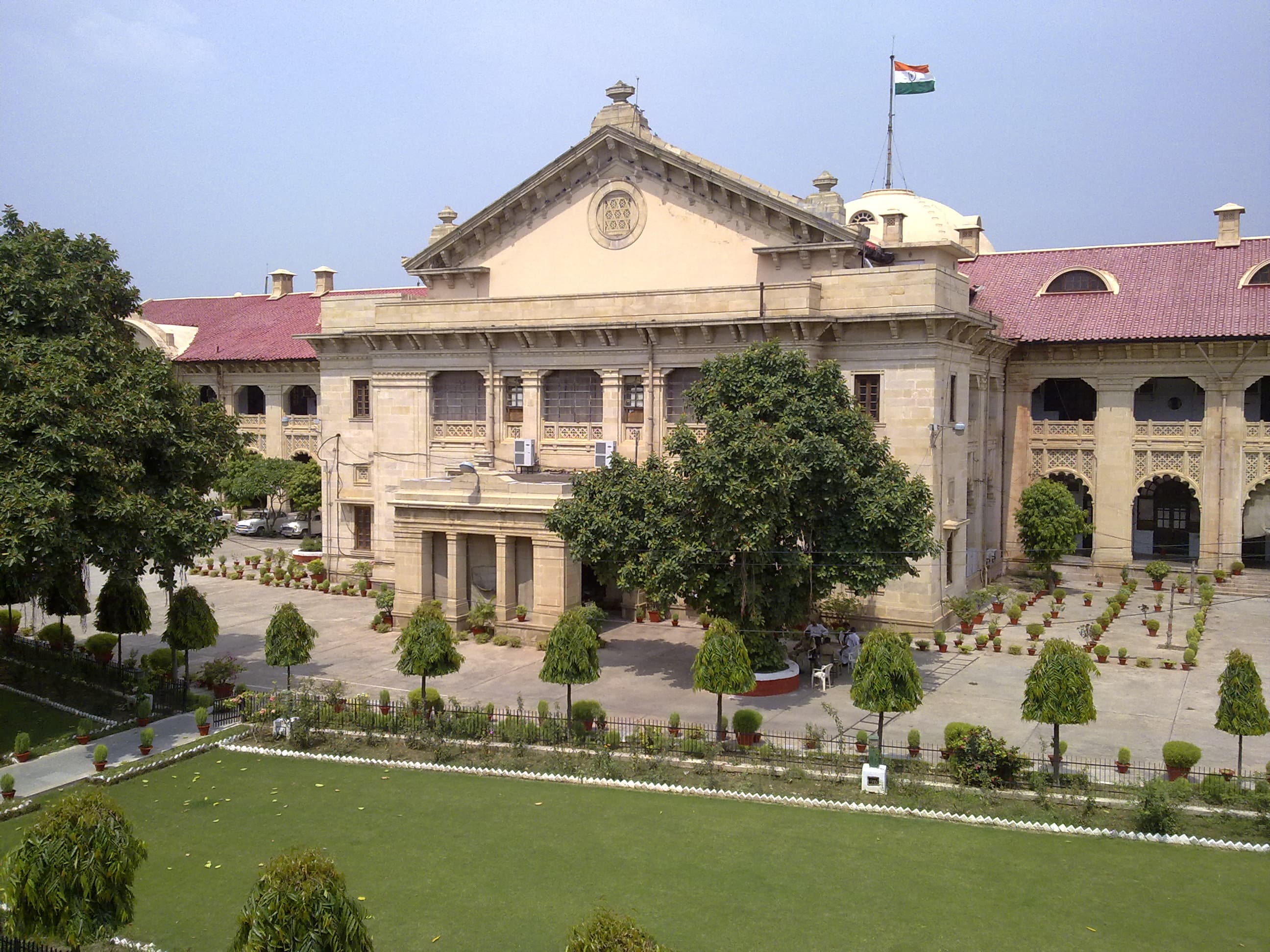
The question of mutual divorce within one year of marriage in UP arises far more often than family courts publicly admit. Under Section 14 of the Hindu Marriage Act, 1955, a couple ordinarily cannot present a divorce petition during the first twelve months from the date of marriage. But the law itself carves out a relief valve — the court may, in cases of exceptional hardship to the petitioner or exceptional depravity by the respondent, waive this one-year bar and entertain the petition straight away. The Allahabad High Court has, through a series of 2025 and 2026 rulings, given this provision real teeth.
This guide explains when the Lucknow Bench will permit early mutual consent divorce in UP, what counts as exceptional hardship or depravity, the documents you must file, and how to coordinate with parallel criminal proceedings. If a criminal case has already been registered, you may also need a criminal defence lawyer in Lucknow to handle both tracks together.
Table of Contents
Need Immediate Legal Help?
If you're facing a legal emergency in Lucknow, don't wait. Contact experienced criminal lawyer Advocate Onkar Pandey for immediate assistance.
What Section 14 of the Hindu Marriage Act Actually Says
Section 14 of the Hindu Marriage Act, 1955 imposes a statutory bar on the presentation of any divorce petition within one year from the date of marriage. The reasoning is simple — Parliament wanted couples to give the marriage a real chance before approaching court. But the same section permits the court to allow an earlier petition where the petitioner shows a special case.
Two distinct grounds are recognised for waiving the one-year bar:
- Exceptional hardship caused to the petitioner — usually pointing to circumstances that make continuing the marriage genuinely intolerable, such as serious cruelty, abandonment, or an irretrievable collapse within the first months
- Exceptional depravity on the part of the respondent — conduct so grave that it shocks the conscience of the court, including dowry demands, registered criminal cases, sexual perversion, or extreme violence
The petitioner must file a separate application under Section 14(1) along with the divorce petition itself. The Allahabad High Court has clarified in 2026 that the application must be supported by an affidavit and contemporaneous documents — bald assertions are not enough. The same section confirms that nothing in it bars petitions filed under Section 13B for mutual consent divorce, but Section 14 still controls when the petition can be filed.
Allahabad High Court 2025-2026 Rulings on Early Divorce
The Allahabad High Court has, in a sequence of recent decisions, materially expanded the relief available to UP couples trapped in failed marriages during the first twelve months. The most significant rulings tilt strongly in favour of permitting early dissolution where the marriage has factually collapsed.
Criminal case within first year = exceptional depravity. The Allahabad High Court has held that where one spouse has lodged a criminal case — typically under BNS Section 85 (cruelty to wife, replacing IPC Section 498A) or related sections — and both parties later seek mutual separation, the case constitutes "exceptional depravity" justifying waiver of the one-year bar. The court reasoned that prosecuting and being prosecuted by one's own spouse within the first months of marriage demonstrates a complete breakdown that does not deserve enforced continuation.
"Let them lead peaceful lives." In a widely reported ruling, a Division Bench of the Allahabad High Court used this exact phrase while waiving the one-year wait — acknowledging that compelling estranged spouses to remain legally bound when both want to part ways serves no purpose. The Bench observed that family courts at the district level had been mechanically rejecting Section 14 applications, ignoring the discretion the section itself grants.
For Lucknow couples seeking this remedy, the Lucknow Bench of the Allahabad High Court is the appellate forum if the Family Court refuses the waiver. A revision or writ petition can be filed against rejection.
Grounds That Qualify as Exceptional Hardship or Depravity
Not every breakdown qualifies. The courts have, over decades, identified specific fact patterns that meet the high threshold of Section 14. Understanding these patterns helps shape the application and supporting affidavit.
| Ground | Category | Typical Evidence Needed |
|---|---|---|
| FIR under BNS Section 85 / IPC 498A | Exceptional depravity | Certified FIR copy, charge sheet if filed |
| Dowry demand and harassment | Exceptional depravity | WhatsApp records, family witnesses, police complaint |
| Bigamy or concealment of prior marriage | Exceptional depravity | Marriage certificate of prior marriage |
| Domestic violence requiring hospitalisation | Exceptional hardship | Medical records, MLC, DIR under DV Act |
| Desertion within first months | Exceptional hardship | Notice replies, affidavit of parents |
| Suppression of impotency or serious illness | Exceptional hardship | Medical reports, expert opinion |
| Abandonment of pregnant spouse | Exceptional hardship | Hospital records, family testimony |
The Allahabad High Court has emphasised that the application is fact-driven — there is no statutory list of qualifying grounds. The same fact may amount to ordinary cruelty in one case (no waiver) and exceptional depravity in another (waiver granted) depending on intensity, evidence, and admissions on record. A carefully drafted application by a family law advocate in Lucknow changes the outcome.
Legal Consultation
Talk directly to Advocate Onkar Pandey
Explain your matter over a call or WhatsApp. If you take the case forward, the consultation fee adjusts into your overall fee, so there is no separate charge to begin.
Step-by-Step Procedure for Mutual Divorce Before One Year
Filing an early mutual divorce in UP follows a sequence different from the ordinary Section 13B procedure. The application for waiver of the one-year bar must precede or accompany the main petition, and the Family Court will examine it before recording the first motion.
- Settle all terms in writing first — maintenance, return of streedhan, child custody (if any), permanent alimony, withdrawal of pending criminal cases
- Draft joint divorce petition under Section 13B read with Section 14(1) HMA, with both spouses as petitioners
- Attach a separate Section 14 application with affidavit explaining exceptional hardship or depravity, supported by documents
- File before the Principal Family Court at Lucknow or the relevant district family court in UP, along with prescribed court fees
- First motion hearing — court examines waiver application; if allowed, records statements of both parties
- Cooling-off period of 6 months under Section 13B(2) — this can be separately waived if irreconcilable
- Second motion within 18 months of the first motion, after which decree of divorce is granted
The total timeline, when both Section 14 waiver and Section 13B(2) waiver are granted, can compress mutual divorce to as little as four to six weeks from filing. Where the cooling-off is not waived, expect six to seven months in total. Compare this with two to four years for a contested divorce in Lucknow Family Court.
Cooling-Off Waiver Under Section 13B(2) — Separate but Related
Even after the one-year bar is lifted under Section 14, mutual divorce ordinarily requires a six-month gap between the first and second motion under Section 13B(2) of the Hindu Marriage Act. The Supreme Court in Amardeep Singh v. Harveen Kaur (2017) held that this six-month period is directory, not mandatory, and family courts may waive it where the marriage is beyond repair.
The Allahabad High Court has, in 2026, repeatedly held that family courts at the district level must not refuse waiver applications mechanically. The factors courts must weigh:
- Whether the parties have been separated for more than 18 months prior to filing
- Whether all efforts at reconciliation have failed
- Whether the settlement on alimony, custody, and property is final and recorded
- Whether continuing the marriage will only prolong agony without prospect of revival
Where Section 14 and Section 13B(2) waivers are both sought together, the application should be drafted as a single composite affidavit. The Lucknow Family Court has, in our recent practice, granted both waivers simultaneously where the facts disclose a parallel criminal case, registered domestic violence complaint, or extended physical separation. For complex cases involving cross-FIRs, coordinating with a FIR quashing lawyer ensures the criminal track does not derail the family court timeline.
Documents and Settlement Terms to Prepare
A well-prepared file with complete documents accelerates the entire process. Family courts in Lucknow refuse to record first motion if even one essential document is missing. We recommend assembling the following before approaching court:
- Marriage certificate issued by Registrar of Hindu Marriages or the temple/community marriage authority
- Aadhaar cards of both spouses, with current address
- Wedding card and photographs to establish the marriage and its date
- Address proof showing jurisdiction of Lucknow Family Court (Section 19 HMA)
- Income and asset disclosure of both parties, to support the alimony settlement
- Memorandum of settlement signed by both spouses on stamp paper
- Pending criminal case papers — FIR copy, charge sheet, bail orders
- Domestic Incident Report if filed under the PWDV Act, 2005
- Withdrawal applications for pending maintenance, DV, and 498A cases
- Affidavits of both parties consenting to divorce and supporting the waiver application
The settlement memorandum is the single most important document. It should record permanent alimony (lump sum or instalments), return of all streedhan and jewellery, child custody and visitation if a child is born, and an unconditional withdrawal undertaking for all parallel proceedings. Vague settlement terms cause second-motion failures — couples come back to court arguing about the same disputes the divorce was supposed to end.
Withdrawing Parallel Criminal and Maintenance Cases
Most early mutual divorce cases in UP arrive with a baggage of parallel proceedings — an FIR under BNS Section 85, a Section 125 BNSS maintenance petition, a Domestic Violence Act application, possibly a habeas corpus petition by parents-in-law. These must be wound up alongside the divorce, otherwise the criminal track continues even after the decree.
The standard sequence:
- Joint application for compounding filed in the criminal case after first motion is recorded
- Section 528 BNSS petition before the Allahabad High Court for FIR quashing on the basis of the settlement
- Withdrawal application in the Section 125 BNSS maintenance case before Family Court
- Joint statement recorded before the Magistrate confirming the settlement
- Certified copies of all withdrawal orders filed in the divorce record
The Allahabad High Court has, in 2026, repeatedly quashed BNS 85 / 498A FIRs at the High Court stage where mutual divorce settlement is on record. The Lucknow Bench typically disposes of these petitions within a few weeks if both sides are present and consent is recorded. Always ensure the settlement memorandum specifically authorises both spouses to seek quashing — without that clause, courts hesitate to quash on the basis of an oral assurance.
When the Family Court Refuses Waiver — Appellate Remedy
If the Family Court refuses to grant waiver under Section 14, the petitioner is not without remedy. The Allahabad High Court at Lucknow exercises appellate and revisional jurisdiction over family courts in Lucknow, Sitapur, Hardoi, Lakhimpur, Rae Bareli, and other districts of the Awadh region. A revision under Article 227 of the Constitution or an appeal under Section 19 of the Family Courts Act, 1984 lies against an order rejecting the waiver application.
| Family Court Order | Appellate Forum | Provision | Limitation |
|---|---|---|---|
| Rejection of Section 14 waiver | Allahabad HC Lucknow | Article 227 / Section 19 FCA | 30 days |
| Rejection of Section 13B(2) waiver | Allahabad HC Lucknow | Article 227 | 30 days |
| Final divorce decree | Allahabad HC Lucknow | Section 19 FCA | 30 days |
| Maintenance order under 125 BNSS | Sessions Court / HC | Section 19 FCA / Article 227 | 30 / 90 days |
The Allahabad High Court has, in 2026, set aside multiple rejection orders where the Family Court had recorded only that the parties should "try reconciliation" without engaging with the specific evidence of exceptional hardship. If the rejection is unreasoned, the chances of success in revision are high. Engage a High Court advocate in Lucknow who routinely handles family law appeals before drafting the revision petition.
Practical Tips From Lucknow Family Law Practice
Drawing from our practice before the Lucknow Family Court and the Allahabad High Court's Lucknow Bench, these practical pointers consistently improve the outcome for couples seeking early mutual divorce:
- Avoid filing in haste — the settlement must be airtight before either side approaches court; rushed settlements unravel at the second motion
- Do not record exaggerated allegations in the affidavit — courts cross-check the Section 14 application against the FIR or DV complaint, and contradictions hurt credibility
- Settle streedhan returns physically before the first motion — never make it a post-decree obligation; recovery proceedings frustrate the divorce intent
- Use a single joint counsel only if both sides genuinely agree — for contested settlements, each party should have separate counsel to avoid future allegations of coercion
- Record the settlement on video at the lawyer's chamber before signing — courts have accepted such recordings to rebut later claims of fraud
- Plan tax and gift implications of permanent alimony — lump sum payments may have tax consequences for both parties
For couples where one spouse is reluctant or where the criminal case has crossed the chargesheet stage, the procedure becomes more complex. In those situations, an in-person consultation with a family law advocate in Lucknow helps map the strategy before any document is filed.
About the Author
Advocate Onkar Pandey is a practicing advocate at the Allahabad High Court's Lucknow Bench with extensive experience in family law, mutual divorce, contested divorce, maintenance, child custody, and matrimonial criminal cases. He has appeared in matters involving Section 14 waiver applications, Section 13B(2) cooling-off waivers, FIR quashing under BNS Section 85 and IPC Section 498A, and writ petitions arising from family court orders across Uttar Pradesh. Advocate Pandey provides practical, outcome-focused guidance to couples seeking mutual divorce within one year of marriage in UP. For legal consultation regarding early divorce, waiver of statutory bars, or settlement-based dissolution, contact Advocate Onkar Pandey for expert advice tailored to your specific situation.
Frequently Asked Questions
Can I file for mutual divorce in UP before completing one year of marriage?+
Yes, but only with permission of the court under Section 14(1) of the Hindu Marriage Act, 1955. The general rule is that a divorce petition cannot be filed within twelve months from the date of marriage. However, the court has discretion to permit an earlier petition where the petitioner shows exceptional hardship or where the respondent's conduct amounts to exceptional depravity. A separate application supported by an affidavit and documentary evidence must accompany the divorce petition. The Allahabad High Court has, in 2025 and 2026, repeatedly held that family courts must not refuse this waiver mechanically — facts like a registered criminal case, dowry harassment, or domestic violence within the first months typically qualify.
What counts as 'exceptional depravity' under Section 14 HMA in Uttar Pradesh?+
Exceptional depravity is conduct by the respondent that shocks the conscience of the court — significantly more serious than ordinary cruelty. The Allahabad High Court has accepted the following as exceptional depravity: registered FIRs under BNS Section 85 (replacing IPC Section 498A), proven dowry demands and harassment, bigamy or concealment of a prior subsisting marriage, sexual perversion or unnatural demands, abandonment of a pregnant spouse, and serious physical violence requiring hospitalisation. The court examines intensity, contemporaneity, and corroborative evidence. Bald allegations without documents are rejected. A criminal case lodged by one spouse against the other within the first year is, in current Allahabad HC practice, treated as strong evidence of exceptional depravity.
Where do I file for mutual divorce with Section 14 waiver in Lucknow?+
The petition must be filed before the Principal Family Court at Lucknow, located on the Lucknow Bench premises of the Allahabad High Court. The court takes jurisdiction under Section 19 of the Hindu Marriage Act if either the marriage was solemnised in Lucknow, the parties last resided together in Lucknow, or the wife currently resides there. Court fees are nominal — under Rs. 500 for the petition itself. Filing requires a joint divorce petition under Section 13B read with Section 14(1), a separate Section 14 application, signed settlement memorandum, marriage certificate, address proofs, and affidavits of both parties. For couples residing elsewhere in UP, the relevant district family court will hear the matter.
How long does mutual divorce take in Lucknow if both Section 14 and Section 13B(2) waivers are granted?+
When both waivers are granted, mutual divorce can be completed in approximately four to six weeks from filing. The sequence is: filing of joint petition with both waiver applications, hearing on waiver applications (usually within two to three weeks), first motion recording, second motion soon thereafter, and pronouncement of decree. Without the Section 13B(2) waiver, the cooling-off period adds six months, bringing the total timeline to around seven to eight months. Where the family court refuses one or both waivers, additional time is required for revision before the Allahabad High Court's Lucknow Bench — usually two to four months. The actual outcome depends on case load and completeness of documentation at filing.
Will pending FIR or 498A case prevent mutual divorce within one year?+
On the contrary — a pending criminal case is often the strongest ground for granting Section 14 waiver, provided both spouses now agree to divorce and withdraw the case. The Allahabad High Court treats a registered FIR under BNS Section 85 within the first year as evidence of exceptional depravity. The procedure: settlement memorandum records the agreement, joint divorce petition filed with Section 14 application, first motion recorded, and a parallel petition under Section 528 BNSS filed before the Allahabad High Court for FIR quashing on the basis of the settlement. The High Court routinely quashes such FIRs at the Lucknow Bench when both parties appear and consent is verified. Coordination between family law and criminal law counsel is essential.
What if my spouse and I both want divorce but the Family Court refuses Section 14 waiver?+
If the Family Court rejects the waiver application, you can file a revision before the Allahabad High Court's Lucknow Bench under Article 227 of the Constitution, or an appeal under Section 19 of the Family Courts Act, 1984. The limitation is thirty days from the order. The High Court has, in 2026, set aside multiple rejection orders where the Family Court ignored specific evidence of exceptional hardship or merely directed the parties to attempt reconciliation without engaging with the facts. Your revision petition should attach the rejected application, the family court order, supporting documents, and a fresh affidavit. The chances of success are particularly high if the rejection order is unreasoned or based on a general direction for reconciliation.
Do I need separate lawyers for myself and my spouse for mutual divorce in UP?+
Legally, a single joint counsel is permissible for genuinely mutual divorces where both parties have already settled all terms in writing. However, in practice, having separate lawyers is strongly recommended whenever the settlement involves significant alimony, child custody, or withdrawal of criminal cases. Separate representation protects against later challenges based on coercion, fraud, or misunderstanding of consequences. The Allahabad High Court has, in some cases, set aside divorce decrees where one party later proved that the joint counsel had not adequately explained the legal implications. The additional cost of separate representation is small compared to the risk of post-decree litigation. Discuss this honestly during the initial consultation in chambers.
Related Services
Get Expert Legal Advice in Lucknow
20+ years experience in criminal law at Lucknow High Court. Available 24/7 for emergencies.
Disclaimer: This article is for general information purposes only and does not constitute legal advice. Every case is unique and requires specific legal analysis. For advice specific to your situation, please consult Advocate Onkar Pandey or another qualified attorney in Lucknow.