Mutation Cannot Be Stalled for Pending Municipal Dues — Allahabad HC, Lucknow Bench (2026)
If you have bought a flat or plot in Lucknow, Kanpur, Noida or anywhere in UP, your name will not appear in municipal records until mutation (dakhil-kharij) is completed. A common — and unlawful — obstacle clients face is the Nagar Nigam or Municipal Council refusing to mutate the property because the previous owner left behind unpaid house tax, water tax or other municipal dues. The buyer is told: "First clear the dues, then we will mutate." That is wrong in law.
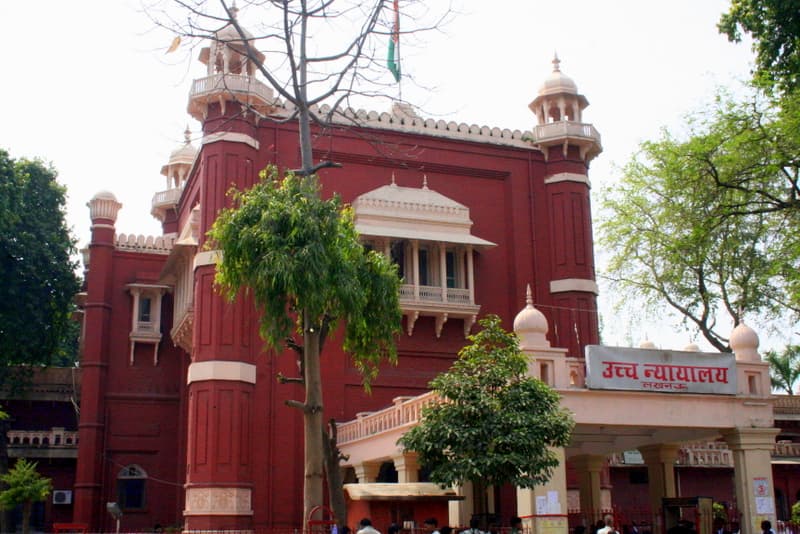
In WRIT-C No. 709 of 2026, a Division Bench of the Allahabad High Court at Lucknow (Justice Rajan Roy and Justice Abdhesh Kumar Chaudhary) has held that municipal authorities cannot stall mutation proceedings on the ground of pending municipal dues unless an explicit statutory provision permits such a condition. Mutation and recovery of dues are two separate processes, and a Municipal Commissioner cannot invent a precondition that the governing statute does not contain.
This article explains the ruling, what it means for property buyers in UP, and the practical steps to enforce mutation when the civic body refuses. For case-specific advice on a stalled mutation, consult our property team.
Table of Contents
Need Immediate Legal Help?
If you're facing a legal emergency in Lucknow, don't wait. Contact experienced criminal lawyer Advocate Onkar Pandey for immediate assistance.
What the Allahabad HC Held in 2026 — The Core Finding
The petitioner had purchased an immovable property within municipal limits in UP. After registration of the sale deed, an application for mutation was filed with the local civic body. The municipal authority refused to mutate the property in the buyer's name on the ground that the previous owner had outstanding municipal dues, and asked the new buyer to clear those dues as a precondition for mutation.
The Lucknow Bench rejected this approach in firm terms. The key holdings are:
- Mutation is a record-keeping function — its purpose is to update the municipal register to reflect the present holder of the property. It is not a tool to recover arrears.
- The Municipal Commissioner cannot impose conditions for mutation that are not contained within the governing statute. Recovery of dues from the prior owner has its own statutory mechanism and must be pursued through that mechanism.
- Refusing mutation to a bona fide buyer because of the seller's default is arbitrary and contrary to law — and triggers Article 14 / Article 300A consequences.
- The civic body is free to recover dues from the actual defaulter (the prior owner) using the procedures laid down under the U.P. Municipal Corporation Act 1959 / U.P. Municipalities Act 1916, but it cannot hold the new owner's mutation hostage to that recovery.
The ruling continues a consistent line of property law jurisprudence — the Court has earlier held in Rajveer Singh v. Board of Revenue, U.P., Lucknow (2026 LiveLaw (AB) 179) that mutation does not decide title; the present ruling now confirms it cannot be weaponised to recover arrears either.
Why Municipal Authorities Wrongly Link Dues to Mutation
The practical problem is that civic body counters in UP routinely tell buyers: "Pichhle malik ka house tax baaki hai, pehle clear karein." There are usually three reasons this happens, none of which survive judicial scrutiny:
- Internal departmental circulars — many Nagar Nigams have informal office orders telling clerks to "verify dues first." These have no statutory force.
- Revenue collection convenience — making mutation conditional on clearance is the easiest way to pressure someone (anyone) to pay arrears, even if that person is not the legal defaulter.
- Lack of buyer awareness — most buyers do not know they can challenge the refusal, so the practice continues unchallenged.
Section 177 of the U.P. Municipal Corporation Act 1959 makes the person primarily liable for property tax the owner or occupier at the time the tax was assessed. A subsequent buyer is not the "person primarily liable" for taxes that fell due before the date of registry. The civic body must recover from the prior owner — through attachment under the recovery provisions, not through hostage-taking of the new buyer's mutation.
Mutation in UP — Where It Happens and Under Which Law
UP runs two parallel mutation systems depending on the location of the property. Confusing them is one of the most common buyer mistakes — and it is also why the same property may need separate applications.
| Property Type / Location | Mutation Authority | Governing Statute | What the Mutation Updates |
|---|---|---|---|
| Agricultural / rural land (outside municipal limits) | Tehsildar / SDM (Revenue Court) | U.P. Revenue Code 2006 | Khatauni / khasra entries |
| Urban property within Nagar Nigam (e.g. LMC Lucknow, KMC Kanpur) | Municipal Corporation | U.P. Municipal Corporation Act 1959 | Property tax register / house number record |
| Urban property within Nagar Palika Parishad / Nagar Panchayat | Executive Officer, Municipality | U.P. Municipalities Act 1916 | Municipal property register |
| Property under Development Authority (LDA, GDA, NOIDA) | Concerned authority's allotment / transfer cell | U.P. Urban Planning & Development Act 1973 | Allotment record / lease record |
| Apartment in registered society / cooperative | Society's secretary + sub-registrar | U.P. Apartment Act 2010 / Cooperative Societies Act | Membership and share records |
The 2026 Allahabad HC ruling applies most directly to the second and third rows — Nagar Nigam and Nagar Palika mutations, where the dues-refusal practice is most common. For revenue land, the mutation-and-title rules work somewhat differently and require a separate strategy.
Legal Consultation
Talk directly to Advocate Onkar Pandey
Explain your matter over a call or WhatsApp. If you take the case forward, the consultation fee adjusts into your overall fee, so there is no separate charge to begin.
How to Enforce Mutation When the Civic Body Refuses — Step-by-Step
If you are stuck because the Nagar Nigam or Nagar Palika is refusing mutation citing the prior owner's dues, follow this sequence rather than paying the arrears under protest:
- File a written mutation application with the registered sale deed, latest property tax receipt (if any), Aadhaar/PAN of the buyer, and the previous owner's details. Get a dated stamp of receipt — not a verbal acknowledgement.
- Wait the statutory period — most UP municipal manuals provide for disposal within 30–45 days. Note any oral refusal in writing the same day.
- Demand a written rejection order. If the clerk refuses to issue one, send a registered letter through advocate referencing the 2026 Allahabad HC ruling and demand a written, reasoned order within 15 days.
- Approach the appellate authority — the Municipal Commissioner (for Nagar Nigam) or District Magistrate (for Nagar Palika appeals). File an appeal annexing the written refusal.
- Writ Petition (Article 226) before the Allahabad High Court Lucknow Bench — this is the remedy used in WRIT-C No. 709 of 2026. Mandamus is the appropriate writ; courts have been issuing it consistently when civic bodies tie mutation to extraneous dues.
The HC route sounds heavy, but in practice a writ of mandamus on this fact pattern is decided in 1–3 hearings, often within 60–90 days, because the legal position is now well-settled. Many municipalities also fold and mutate the property as soon as a notice of writ is served. Always preserve the refusal letter, application receipt, and any noting on the file — these are the evidence base for the writ.
What Buyers Should Still Verify Before Purchase — Practical Caution
The 2026 ruling protects buyers who are already trapped, but it is not an excuse for sloppy due diligence. Property in UP carries several non-obvious liabilities that can survive registration:
- House tax / property tax dues — civic body cannot block mutation, but the property itself is treated as a charged asset under Section 173 U.P. Municipal Corporation Act for arrears. Recovery proceedings can attach the property even in the new owner's hands in certain situations.
- Water and sewer dues — Jal Sansthan can refuse new connection or demand clearance. Verify with a current "no dues" certificate from the relevant Jal Sansthan office.
- Bank or society loan — search the encumbrance certificate at the sub-registrar; an existing mortgage will defeat the buyer's title regardless of mutation status.
- Pending litigation — court receivership, lis pendens entries, or an injunction order can render mutation meaningless. Run a basic litigation check before paying token money.
- LDA / GDA dues — for development authority property, freehold conversion arrears, lease rent and transfer fee are the development authority's own debts and must be cleared in addition to mutation.
A qualified property advocate can run all of these checks in 3–5 working days before you commit to the purchase. The cost of pre-purchase due diligence is a small fraction of what a stalled mutation litigation will cost later.
Mutation, Title and Possession — Three Different Things
The most common confusion among UP buyers is treating mutation as proof of ownership. It is not — and the Allahabad HC has been clear on this since Rajveer Singh v. Board of Revenue, U.P., Lucknow (2026 LiveLaw (AB) 179). Mutation is administrative; title is judicial. The Supreme Court in 2025 also clarified that even registration of a sale deed does not by itself confer ownership — the buyer must additionally show full payment, possession, and the chain of original title documents.
This means three separate exercises are needed for a complete acquisition:
- Title verification — chain of past sale deeds for at least 30 years, encumbrance certificate, pedigree where inheritance is involved.
- Registration — execution and registration of the sale deed under the Registration Act 1908; payment of stamp duty under the U.P. Stamp Act.
- Mutation — updating the municipal / revenue register so the new buyer is recognised for tax and civic purposes.
The 2026 Lucknow Bench ruling fixes one specific bottleneck — the wrongful tying of mutation to the previous owner's dues. It does not replace the need for title and possession verification. For buyers facing both a stalled mutation and a parallel title dispute, the writ + civil suit must be coordinated, and a criminal complaint may also be relevant where the seller acted fraudulently. Refer to our detailed guide on title-based registration in UP for the related procedural shift.
Frequently Asked Questions
Can a Nagar Nigam in UP refuse to mutate my property because the previous owner has unpaid house tax?+
No — and the 2026 Allahabad High Court Lucknow Bench ruling in WRIT-C No. 709 of 2026 directly addresses this. The Court held that the Municipal Commissioner cannot impose conditions for mutation that are not contained within the governing statute. Recovery of dues from the prior owner has its own statutory mechanism under the U.P. Municipal Corporation Act 1959 — typically attachment and sale of property under the recovery provisions. The civic body cannot use the new buyer's mutation as a hostage. If your mutation is being refused on this ground, demand a written rejection order, then escalate to the Municipal Commissioner in appeal, and if necessary file a writ of mandamus before the Allahabad HC. Most such writs succeed because the legal position is now well-settled.
Do I as the new buyer become liable for the previous owner's unpaid municipal taxes after I register the property?+
Generally no — under Section 177 of the U.P. Municipal Corporation Act 1959, the person "primarily liable" for property tax is the owner or occupier at the time the tax was assessed. A subsequent buyer is not the primary debtor for arrears that fell due before the date of registry. However, there is a practical caveat: the property itself can be treated as a charged asset under the recovery provisions of the same Act, meaning civic bodies can in some cases attach the property even in the new owner's hands. This is why pre-purchase due diligence — including a current municipal "no dues" certificate from the seller — is essential. If recovery action is initiated against you for the prior owner's dues, you can challenge it on the basis of Section 177 and the 2026 ruling.
How long does property mutation take in UP after the Allahabad HC's 2026 ruling?+
The ruling does not change the statutory timeline — it only removes one common ground of refusal. Most UP municipal manuals and the U.P. Revenue Code 2006 (for revenue land) provide for mutation disposal in 30–45 days from a complete application. In practice, undisputed mutations within Nagar Nigam limits (Lucknow, Kanpur, Varanasi, etc.) take 4–8 weeks; revenue land mutations at the Tehsildar level take 6–12 weeks; and LDA / GDA / NOIDA transfers can run 2–4 months because they involve separate transfer fee assessment. If your mutation is delayed past 60 days without a written reason, escalate immediately. After the 2026 ruling, dues-related delays should compress significantly because civic bodies can no longer use that excuse.
What is the difference between mutation, title and registration in UP property law?+
These are three separate concepts that buyers often confuse. Registration is the act of stamping and recording a sale deed under the Registration Act 1908 — it gives the document legal recognition but, after the Supreme Court's 2025 clarification, does not by itself confer ownership. Title is the legal right of ownership, established by the chain of past sale deeds, possession, full payment, and absence of encumbrances; title disputes are decided only by civil courts in a regular suit, not by tehsildars or municipal commissioners. Mutation is the administrative updating of municipal or revenue records to reflect the present holder for tax purposes. Mutation does not create or destroy title — the Allahabad HC has been clear on this since Rajveer Singh v. Board of Revenue (2026). A complete purchase needs all three.
Can I file a writ in Allahabad High Court Lucknow Bench if mutation is refused, or do I need to go through revenue/civil courts first?+
For municipal mutation refusals on extraneous grounds — like pending dues, unrelated disputes, or absence of statutory authority — you can directly approach the Allahabad High Court Lucknow Bench under Article 226 because there is no real "alternative remedy" against arbitrary administrative action. The 2026 writ petition (No. 709) is itself an example. However, where the refusal is based on a genuine title dispute or a competing claim to the property, the High Court will typically relegate parties to a civil suit because mutation does not decide title. The right approach depends on the exact reason on the rejection order — which is why obtaining the written refusal is so important. A property litigation advocate can usually advise within one consultation which forum fits your facts.
Does the 2026 ruling apply to LDA, NOIDA and other development authority properties?+
The ruling itself was decided in the context of a Municipal Corporation under the U.P. Municipal Corporation Act 1959. Development authorities like LDA (Lucknow Development Authority), GDA (Ghaziabad), NOIDA, and Greater NOIDA operate under a different statute — the U.P. Urban Planning & Development Act 1973 — and have their own transfer / mutation procedures. However, the principle of the ruling — that an authority cannot impose conditions not found in its governing statute — applies broadly. If LDA refuses mutation citing the previous lessee's lease rent or freehold conversion arrears, you can challenge it on the same constitutional basis (Article 14 + 300A) plus the 1973 Act's specific transfer provisions. The remedy is again a writ before the Lucknow Bench, and the success rate has been favourable in recent matters where the authority's demand was extra-statutory.
What documents should I collect before approaching the Allahabad HC for a mutation writ?+
For a strong mutation writ, you should have at minimum: (a) a certified copy of the registered sale deed; (b) the dated receipt of your mutation application with the civic body; (c) the written refusal order — or, if the body refuses to give one, your registered notice / advocate notice demanding a written reason and the postal proof; (d) any prior representations and replies; (e) the appellate order if you have already been to the Municipal Commissioner / District Magistrate; (f) chain of past sale deeds and the encumbrance certificate; (g) ID proof and PAN. For dues-related cases, also collect any tax demand notice or oral demand documented in writing. The cleaner the paper trail, the faster the writ. Most successful mutation writs in our practice are decided in 1–3 hearings precisely because the documentary record is tight.
The Nagar Nigam is insisting I clear the previous owner's water and sewer dues before mutation. Is that lawful?+
Mutation of ownership records and recovery of utility or tax dues are separate processes, and the municipal body cannot hold your mutation hostage to the prior owner's arrears. The Nagar Nigam retains its own remedies to recover unpaid dues from the person who incurred them, but that recovery cannot be a precondition for updating the ownership entry in your name. If mutation is refused on this ground you can pursue the grievance before the municipal authorities and, if needed, by writ before the Allahabad High Court Lucknow Bench.
What documents does the Lucknow Nagar Nigam typically require for house tax mutation after a purchase?+
You are generally asked for a certified copy of the registered sale deed, the latest house tax receipt, an application on the prescribed form with the mutation fee, and identity and address proof of the buyer. In inheritance cases a death certificate and the will or legal heir or succession document is also sought. Once these are submitted, the mutation should be processed without being tied to the earlier owner's outstanding dues.
What documents do I need to submit for property mutation (namantaran) at the Lucknow Nagar Nigam?+
You typically need the registered sale deed, a copy of the previous owner's house-tax receipt, your identity and address proof (Aadhaar, PAN), an affidavit stating there is no dispute, and the prescribed mutation application form with the fee. Once submitted, the Nagar Nigam issues a public notice inviting objections before recording your name. Keep the acknowledgement receipt, as it is your proof of the filing date if the office delays the order.
If the Nagar Nigam still refuses mutation despite the Allahabad HC ruling, what is my remedy?+
You can first file a written representation to the Municipal Commissioner citing the Lucknow Bench ruling, and if that is ignored, file a writ petition under Article 226 before the Allahabad High Court, Lucknow Bench, seeking a direction (mandamus) to complete the mutation. Remember that mutation only updates the tax and revenue record for billing purposes and is not by itself proof of ownership; your registered sale deed remains your primary title document.
Related Services
Get Expert Legal Advice in Lucknow
20+ years experience in criminal law at Lucknow High Court. Available 24/7 for emergencies.
Disclaimer: This article is for general information purposes only and does not constitute legal advice. Every case is unique and requires specific legal analysis. For advice specific to your situation, please consult Advocate Onkar Pandey or another qualified attorney in Lucknow.