Muslim Personal Law Cannot Override POCSO: Allahabad High Court
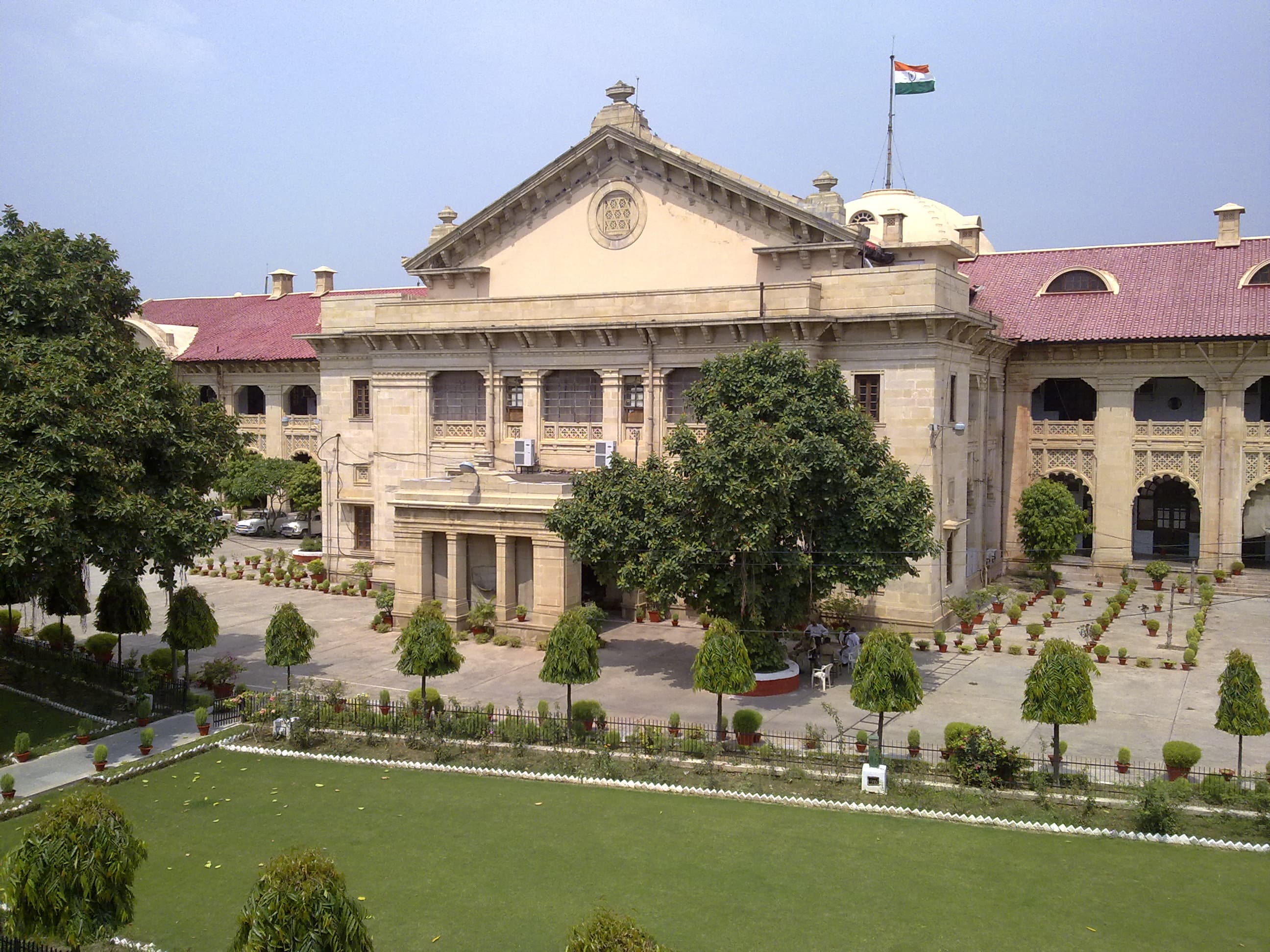
Can a marriage under Muslim personal law protect you from a POCSO case in Uttar Pradesh, especially when the victim is a minor? The Allahabad High Court has given a definitive answer: no. In the landmark judgment of Rubi vs State of UP (2026:AHC-LKO:80471), delivered on July 1, 2026, the Lucknow Bench ruled that no personal law, including Muslim Shariat which permits marriage at puberty, can override the Prohibition of Child Marriage Act (PCMA), 2006 or the Protection of Children from Sexual Offences (POCSO) Act, 2012. This means that even if a nikah is performed, sexual relations with a girl below 18 years remain a criminal offence under POCSO and the new Bharatiya Nyaya Sanhita (BNS), 2023. For clients facing such allegations in Uttar Pradesh, this ruling closes the door on the “marriage defense” and strengthens the statutory protection of minors. If you or a family member is accused under POCSO, consult a criminal lawyer in Lucknow immediately to understand your legal options under the new BNSS framework.
Table of Contents
Need Immediate Legal Help?
If you're facing a legal emergency in Lucknow, don't wait. Contact experienced criminal lawyer Advocate Onkar Pandey for immediate assistance.
The Landmark Ruling: Rubi vs State of UP (2026)
The Allahabad High Court, Lucknow Bench, delivered a historic judgment on July 1, 2026, in the case of Rubi & Others vs State of Uttar Pradesh (Citation: 2026:AHC-LKO:80471). The court was dealing with a petition where the accused sought to quash an FIR under POCSO by claiming that a valid nikah under Muslim personal law had taken place with the minor victim.
The court rejected this argument unequivocally. It held that the POCSO Act, 2012 and the Prohibition of Child Marriage Act, 2006 are secular, special statutes that override any personal law. The age of consent for marriage is uniformly 18 years for all Indian citizens, regardless of religion. Therefore, a marriage with a girl below 18 is void and cannot be used as a defense against charges of sexual assault.
| Key Point | Ruling |
|---|---|
| Personal law vs. Statute | Statutory law (POCSO, PCMA) prevails over Muslim personal law. |
| Age of marriage | 18 years for all; marriage below 18 is illegal. |
| Sexual relations with minor wife | Constitutes an offence under POCSO and BNS Section 63. |
The court also clarified that the Exception 2 to BNS Section 63 (which excludes marital rape for wives above 18) does not apply when the wife is a minor. This aligns with the Supreme Court’s earlier ruling in Independent Thought v. Union of India (2017), which held that the marital rape exception under IPC Section 375 does not protect sexual intercourse with a minor wife.
Why Muslim Personal Law Cannot Be a Defense Against POCSO
Many accused persons in Uttar Pradesh have attempted to use the argument that Muslim personal law permits marriage after puberty (typically around 15 years for girls). The Allahabad High Court has now firmly shut this down. The reasoning is based on the doctrine of repugnancy and the supremacy of special statutes.
- POCSO Act, 2012: Defines a child as any person below 18 years. Any sexual act with a child is an offence, irrespective of consent or marriage.
- Prohibition of Child Marriage Act, 2006: Declares child marriages as voidable and punishable. It applies to all communities.
- BNS Section 74: Specifically criminalizes contracting a child marriage (male above 18 with female below 18).
The court emphasized that Article 13 of the Constitution ensures that any custom or personal law inconsistent with fundamental rights is void. Since POCSO and PCMA protect the fundamental right to life and dignity of children, they override personal laws. This ruling is binding across Uttar Pradesh and will be followed by all subordinate courts, including the CJM Court Lucknow, Sessions Court Lucknow, and Family Court Lucknow.
For a detailed analysis of how this affects bail applications in POCSO cases, consult a criminal defense lawyer familiar with the new BNSS provisions.
Implications for Bail and FIR in POCSO Cases in UP
The Rubi judgment has a direct impact on bail and FIR quashing proceedings in POCSO cases. Under the new Bharatiya Nagarik Suraksha Sanhita (BNSS), 2023, the following sections are relevant:
| BNSS Section | Old CrPC | Application in POCSO |
|---|---|---|
| Section 483 (Bail in non-bailable) | Section 437 CrPC | Magistrate can grant bail if the accused is not likely to commit further offences and if there is no prima facie case. However, the marriage defense is now invalid. |
| Section 484 (High Court/Sessions bail) | Section 439 CrPC | If bail is rejected by the Magistrate, the accused can approach the Sessions Court or High Court under Section 484 BNSS. The court will consider the gravity of the offence and the age of the victim. |
| Section 528 (Inherent powers) | Section 482 CrPC | Used for quashing FIR if the allegations do not constitute an offence. Post-Rubi, quashing based on marriage is extremely difficult. |
In practice, the Lucknow Bench of the Allahabad High Court will now reject any bail application that relies on a “valid marriage” under Muslim personal law. The accused must instead argue on merits, such as lack of evidence, false implication, or the victim’s age being disputed through ossification tests. For FIR quashing in Lucknow, the court will scrutinize whether the marriage was indeed a sham or if the victim was below 18 at the time of the alleged incident.
Legal Consultation
Talk directly to Advocate Onkar Pandey
Explain your matter over a call or WhatsApp. If you take the case forward, the consultation fee adjusts into your overall fee, so there is no separate charge to begin.
The Role of BNS and BNSS in Child Marriage Cases
The new criminal codes, effective from July 1, 2024, have strengthened the legal framework against child marriage. Under the Bharatiya Nyaya Sanhita (BNS), 2023:
- Section 63: Sexual assault. Exception 2 does not apply if the wife is under 18. This directly codifies the Independent Thought principle.
- Section 74: Child marriage. Punishable with imprisonment up to 2 years or fine up to ₹1 lakh, or both.
- Section 106: Abduction of a minor for marriage. This is a separate offence.
Under the Bharatiya Sakshya Adhiniyam (BSA), 2023, the burden of proof regarding age lies on the accused if they claim the victim was above 18. The court will rely on documentary evidence (school records, birth certificates) and medical opinion. The BNSS provides for expedited trials in POCSO cases, with a timeline of two months for completion.
For clients facing charges under BNS Section 74 or POCSO, it is crucial to engage a Lucknow High Court lawyer who understands the interplay between personal law and statutory offences.
What Should You Do If Falsely Accused Under POCSO?
If you or a family member is falsely implicated in a POCSO case involving a marriage under Muslim personal law, immediate legal action is necessary. Here are the steps to follow:
- Do not ignore the summons: Cooperate with the investigation but do not make any statement without a lawyer present.
- File for anticipatory bail: Under Section 482 BNSS (old Section 438 CrPC), you can seek pre-arrest bail from the Sessions Court or High Court. However, post-Rubi, the court will not accept the marriage defense alone.
- Challenge the FIR: Under Section 528 BNSS (inherent powers), you can file a quashing petition if the FIR does not disclose a prima facie offence. For example, if the victim was actually above 18 and the marriage was valid.
- Collect evidence of age: Gather school records, birth certificates, or medical reports to prove the victim’s age if it is disputed.
- Consult a specialist lawyer: Only an experienced criminal lawyer can navigate the complexities of POCSO and BNSS. Contact Advocate Onkar Pandey for a consultation at A-406, High Court, Lucknow.
Remember, the Allahabad High Court has made it clear that personal law cannot shield you from POCSO. Your defense must be based on factual innocence, not on religious customs.
About the Author
Advocate Onkar Pandey is a practicing lawyer at the Allahabad High Court Lucknow Bench with over 25 years of experience in criminal law, bail matters, FIR quashing, and family law. Enrolled with the Bar Council of Uttar Pradesh (No. UP/4825/1999), he provides expert legal guidance to clients across Uttar Pradesh from his chamber at A-406, High Court, Lucknow. For a consultation on POCSO and child marriage cases, contact Advocate Onkar Pandey at +91 98392 71553.
Frequently Asked Questions
Does the Rubi judgment apply to all of Uttar Pradesh?+
Yes, the Allahabad High Court's ruling in Rubi vs State of UP (2026) is binding on all subordinate courts within Uttar Pradesh, including the CJM Court Lucknow, Sessions Court Lucknow, and Family Court Lucknow. It sets a precedent that cannot be ignored by any court in the state.
Can I still get bail if the victim was a minor but I married her under Muslim law?+
After the Rubi judgment, the marriage defense is no longer valid for bail. The court will evaluate other factors such as the strength of the evidence, the age of the victim (if disputed), and whether the accused is a flight risk. Bail under Section 483 BNSS (Magistrate) or Section 484 BNSS (High Court) is possible only if you can show a weak prima facie case or false implication.
What is the difference between Section 482 and Section 484 BNSS?+
Section 482 BNSS (old Section 438 CrPC) deals with anticipatory bail, which can be filed before arrest. Section 484 BNSS (old Section 439 CrPC) is for regular bail after arrest, and can be filed in the Sessions Court or High Court if the Magistrate refuses bail. Both are relevant in POCSO cases.
Can I quash a POCSO FIR if the marriage was consensual and the victim is now an adult?+
Quashing under Section 528 BNSS (inherent powers) is possible only if the FIR does not disclose an offence. If the victim was below 18 at the time of the alleged incident, the marriage is void and the offence stands. However, if the victim has turned 18 and supports the marriage, the court may consider compounding the offence under POCSO (if permissible) or reducing the sentence. You need a skilled lawyer to argue this.
What is the punishment under BNS Section 74 for child marriage?+
BNS Section 74 punishes contracting a child marriage with imprisonment up to 2 years or fine up to ₹1 lakh, or both. This is in addition to POCSO charges, which carry a minimum of 10 years imprisonment for aggravated sexual assault. The Rubi judgment confirms that both offences can be tried together.
How does the Supreme Court's Independent Thought (2017) ruling apply to this case?+
The Supreme Court in Independent Thought v. Union of India (2017) held that Exception 2 to Section 375 IPC (marital rape exception) does not apply if the wife is under 18. The Allahabad High Court in Rubi extended this principle to the new BNS Section 63, making it clear that sexual intercourse with a minor wife is an offence under POCSO and BNS. No personal law can override this.
Should I hire a lawyer from Lucknow or can I use a lawyer from another city?+
Since the case is likely to be heard in the CJM Court Lucknow, Sessions Court Lucknow, or the Allahabad High Court Lucknow Bench, it is advisable to hire a local lawyer who is familiar with the procedures and judges. Advocate Onkar Pandey practices exclusively at the Lucknow Bench and has extensive experience in POCSO and child marriage cases.
Related Services
Get Expert Legal Advice in Lucknow
20+ years experience in criminal law at Lucknow High Court. Available 24/7 for emergencies.
Disclaimer: This article is for general information purposes only and does not constitute legal advice. Every case is unique and requires specific legal analysis. For advice specific to your situation, please consult Advocate Onkar Pandey or another qualified attorney in Lucknow.