Multiple Cheques From One Transaction: Each Dishonour Is A Separate Section 138 NI Act Case (Supreme Court 2026)
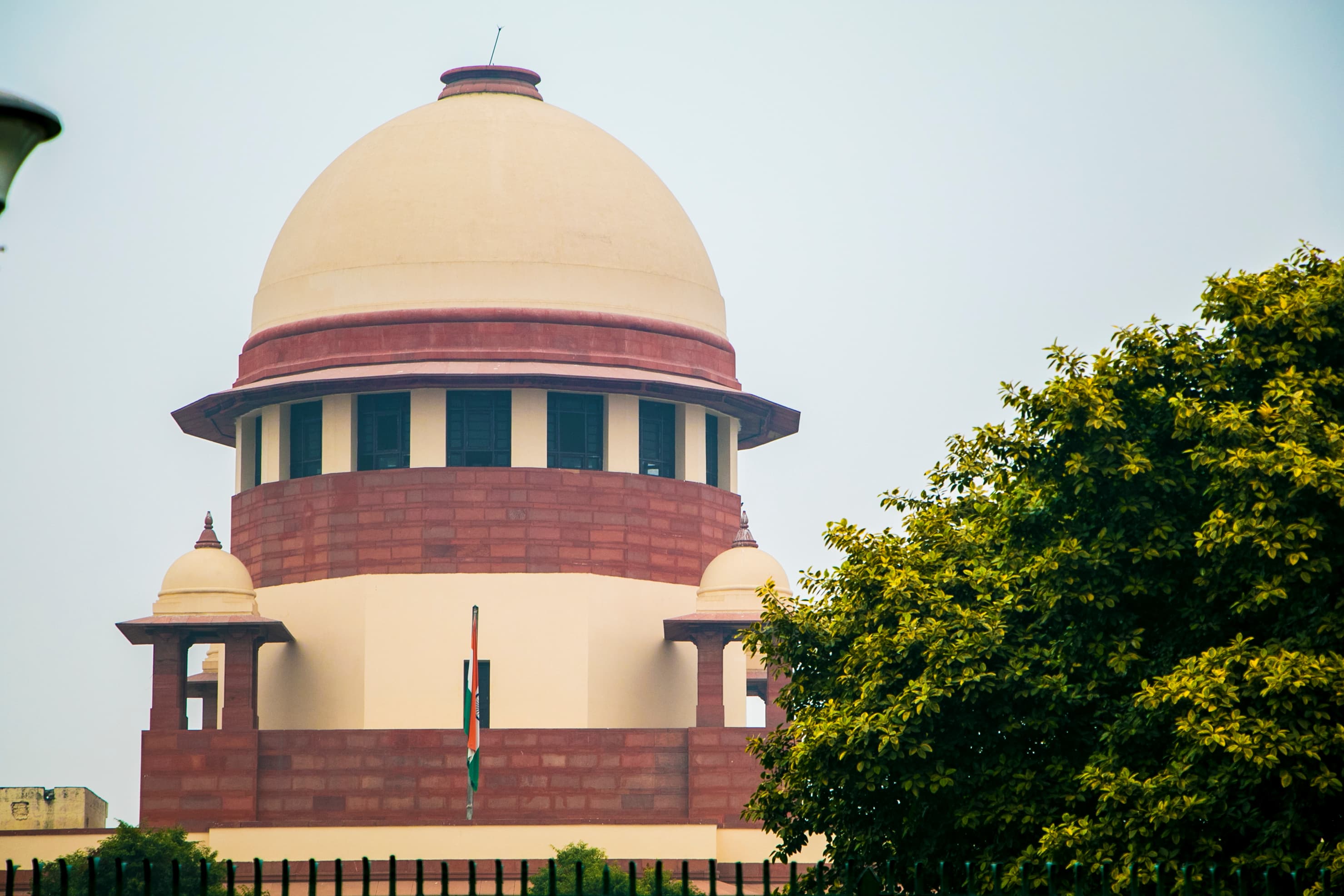
If a business partner, builder or borrower has issued you multiple cheques in the same transaction and all of them have bounced, you are no longer at the mercy of the old confusion about whether you must file one composite complaint or several. In Sumit Bansal v. MGI Developers and Promoters, 2026 INSC 40, decided on 8 January 2026, the Supreme Court has settled the position: each dishonoured cheque gives rise to a separate cause of action under Section 138 of the Negotiable Instruments Act, 1881, even when all the cheques flow from a single underlying agreement.
For complainants in Lucknow, Kanpur, Prayagraj and across Uttar Pradesh, this ruling has practical bite. It protects parallel complaints from being struck down as an "abuse of process" and gives sharper teeth to cheque bounce prosecutions. This guide breaks down the judgment, the procedure to file fresh complaints, and how a criminal lawyer in Lucknow can structure your case strategy.
Table of Contents
Need Immediate Legal Help?
If you're facing a legal emergency in Lucknow, don't wait. Contact experienced criminal lawyer Advocate Onkar Pandey for immediate assistance.
What The Supreme Court Held In Sumit Bansal v. MGI Developers
The dispute traced back to an Agreement to Sell dated 7 November 2016, where the appellant Sumit Bansal had paid Rs. 1,72,21,200 for three commercial units to be built by the respondents. When the sale deeds were not executed in time, the developer agreed to refund the amount with an additional Rs. 35,00,000 as appreciation.
To discharge this single liability, the developer issued several cheques on different dates — some drawn on the firm's account, others as personal cheques of the directors. All cheques bounced. The complainant filed separate Section 138 complaints. The High Court took the view that this amounted to multiplicity arising from one transaction and could be consolidated.
A Bench led by Justice Prashant Kumar Mishra reversed that approach. The Court held that:
- Each dishonoured cheque is a distinct cause of action if the statutory sequence — presentation, dishonour, statutory notice, failure to pay within 15 days — is independently completed for that cheque.
- The fact that several cheques arise from a single agreement does not merge them into one composite cause of action.
- Multiple complaints in such cases are not an abuse of process and are fully maintainable.
The Apex Court accordingly allowed the appeal, set aside the High Court's order and restored the separate complaints — a result that complainants in UP cheque matters were waiting for.
Why This Ruling Matters For Complainants In Uttar Pradesh
In commercial Lucknow — real estate, jewellery trade, FMCG distribution, contracting — it is standard practice for one underlying debt to be discharged through a series of post-dated cheques. Before Sumit Bansal, defence counsel routinely argued that bunching dishonours into a single complaint protected the accused from "harassment" while denying the complainant the full strength of Section 138 NI Act.
The 2026 ruling closes that escape route. Practical consequences for complainants in UP:
- Separate trials, separate sentences. Each complaint can independently result in a fine up to twice the cheque amount and imprisonment up to two years under Section 138.
- Stronger settlement leverage. An accused facing six parallel prosecutions is far more likely to settle than one facing a single composite case.
- Jurisdictional flexibility. Each cheque can attract its own jurisdiction depending on the location of the payee's bank.
- No "abuse of process" defence. Defence counsel can no longer move quashing under Section 482 CrPC / Section 528 BNSS merely on grounds of multiplicity.
For complainants approaching the Lucknow Chief Judicial Magistrate's court or the courts at Hazratganj, this is one of the most consequential 2026 rulings on negotiable instruments practice.
Section 138 NI Act — The Statutory Architecture
Section 138 punishes the dishonour of a cheque issued for the discharge of a legally enforceable debt or liability. The provision is technical and time-bound — missing any deadline can sink an otherwise watertight case. The table below summarises the architecture every complainant in UP should commit to memory:
| Stage | Trigger | Time Limit | Authority |
|---|---|---|---|
| Presentation | Cheque must be presented to bank | Within 3 months of date on cheque | Drawee bank |
| Dishonour Memo | Bank returns cheque unpaid | Same day or next | Drawee bank |
| Statutory Notice | Demand in writing to drawer | Within 30 days of memo | Complainant / advocate |
| Waiting Period | Drawer to pay sum demanded | 15 days from receipt of notice | Drawer |
| Complaint Filing | Cause of action complete | Within 30 days after 15-day expiry | Magistrate Court |
Two points the Lucknow trial courts strictly enforce:
- The statutory notice must specifically demand the cheque amount — a vague notice is fatal.
- The complaint must be filed by a person competent under Section 142 — usually the payee or holder in due course, supported by proper authorisation if filed through a company representative.
For complex commercial matters involving multiple cheques and parallel civil claims, early advice from a civil and criminal litigation lawyer often saves both money and time.
Legal Consultation
Talk directly to Advocate Onkar Pandey
Explain your matter over a call or WhatsApp. If you take the case forward, the consultation fee adjusts into your overall fee, so there is no separate charge to begin.
How To File Multiple Section 138 Complaints In Lucknow
After Sumit Bansal, the strategy for handling a string of bounced cheques arising from a single deal is procedural rather than doctrinal. The steps an experienced advocate at the Lucknow Bar will typically follow:
- Map every cheque separately. Date, amount, bank, presentation date, dishonour memo date — maintain a clear chronology for each.
- Issue distinct statutory notices. Each cheque should ideally have its own demand notice. Avoid bundling so that defence counsel cannot argue the notice is vague.
- Compute deadlines independently. The 30-day filing window starts separately for each cheque after its 15-day waiting period ends.
- Draft separate complaints. File each before the appropriate Magistrate — typically the Chief Judicial Magistrate or designated NI Act court in Lucknow.
- Apply for consolidated trial only if strategically useful. The Supreme Court does not bar joint trial; it only refuses to merge causes of action. Joint trial may be sought under Section 219 CrPC / Section 242 BNSS for efficiency.
- Move for interim compensation. Under Section 143A NI Act, courts can direct the drawer to deposit up to 20% of the cheque amount during trial — claim this in each case.
For high-value matters that overlap with property disputes — common in builder–buyer cases like Sumit Bansal — defence and prosecution strategies often intersect with property dispute litigation at the High Court.
Defences Available To The Drawer — What Accused Need To Know
For an accused facing multiple Section 138 complaints in UP, Sumit Bansal closes the multiplicity defence but leaves other defences intact. Practical defence lines that the Allahabad High Court Lucknow Bench continues to recognise:
- No legally enforceable debt. If the underlying claim is time-barred, contingent, or for an illegal purpose, the cheque cannot trigger Section 138 liability.
- Stop payment for valid reason. A stop-payment instruction backed by a genuine dispute can rebut presumption under Section 139 NI Act.
- Cheque was for security only. If the cheque was admittedly handed over as security and not towards a crystallised debt, courts have acquitted.
- Notice not served. If the statutory notice was sent to a stale address or returned unserved, the cause of action collapses.
- Suspension of sentence on appeal. The Supreme Court has recently held that once sentence is suspended and bail granted, appellate courts cannot insist on personal appearance on every date — a relief for accused fighting parallel matters.
In a multi-cheque scenario, the defence should run a cheque-by-cheque audit, because the failure of even one ingredient in even one complaint can fracture the entire prosecution narrative. Securing competent bail and pre-trial protection early in the matter is critical, especially where summons turn into non-bailable warrants.
Penalties, Settlement And Compounding Under Section 138
Conviction under Section 138 carries serious consequences. The Supreme Court's Damodar S. Prabhu v. Sayed Babalal H. guidelines on compounding still apply, with a sliding cost scale that increases the longer the accused delays settlement. The current penalty and compounding architecture:
| Stage | Outcome On Conviction | Compounding Cost |
|---|---|---|
| Trial court | Up to 2 years jail + fine up to 2x cheque amount | Nominal — settlement encouraged |
| First appeal | Conviction may be confirmed or modified | 10% of cheque amount as cost |
| Revision before High Court | Limited review of conviction | 15% of cheque amount as cost |
| Special leave petition | SC may decline interference | 20% of cheque amount as cost |
Three practical pointers for UP litigants:
- Section 138 is a compoundable offence under Section 147 NI Act — settlement at any stage closes the case.
- Pay attention to Section 143A (interim compensation up to 20%) and Section 148 (deposit of 20% in appeal) — both routinely invoked in Lucknow courts.
- If you are accused, never ignore the statutory notice — most quashable cases die because the accused did not respond on time.
Whether you are a complainant assembling multiple cheque files or an accused facing parallel summons, consult Advocate Onkar Pandey early. The legal architecture is precise, and small procedural errors are expensive.
Practical Strategy After Sumit Bansal — A 2026 Checklist
For complainants and accused alike, the post-Sumit Bansal landscape demands sharper case management. A working checklist that criminal advocates in Lucknow have begun applying:
- Document the deal once, the cheques separately. One Agreement to Sell, multiple cheques — track each cheque's life cycle in its own folder.
- Preserve digital traces. WhatsApp acknowledgements, emails, bank SMS — these often anchor the prosecution under Section 139 presumption.
- Use Section 143A aggressively. A 20% interim deposit across five complaints can change settlement dynamics overnight.
- Plan jurisdiction strategically. Under Section 142(2) NI Act, jurisdiction lies where the payee's bank account is maintained — pick a forum carefully.
- For accused: audit each notice and presentation date. A single defective notice can collapse one of several parallel complaints.
- Track parallel civil remedies. A summary suit under Order 37 CPC for cheque recovery can run alongside the criminal complaint.
For complex matters with both criminal and civil dimensions — common in builder–buyer disputes, large commercial dealings, or business partnership fall-outs — coordinated strategy across forums delivers better outcomes than fighting each complaint in isolation.
About the Author
Advocate Onkar Pandey is a practising lawyer at the Allahabad High Court Lucknow Bench with extensive experience in cheque dishonour litigation, criminal law, family law and civil litigation across Uttar Pradesh. With first-hand experience of NI Act trials before Lucknow magistrate courts and revision practice before the High Court, Advocate Pandey provides practical legal guidance to complainants and accused in multi-cheque Section 138 prosecutions. For legal consultation regarding multiple cheque bounce cases, Section 138 NI Act strategy or post-Sumit Bansal case management in UP, contact Advocate Onkar Pandey for advice tailored to your specific situation.
Frequently Asked Questions
Can I file separate Section 138 cases for multiple cheques from the same transaction?+
Yes. The Supreme Court in Sumit Bansal v. MGI Developers, 2026 INSC 40 (decided 8 January 2026) has held that each dishonoured cheque under Section 138 of the Negotiable Instruments Act gives rise to a separate cause of action, even if the cheques flow from a single underlying agreement. As long as the statutory sequence — presentation within validity, dishonour memo, statutory notice within 30 days, and 15-day waiting period — is independently completed for each cheque, separate complaints are fully maintainable. The defence of "multiplicity" or "abuse of process" is no longer available. In Lucknow practice, this means complainants in builder-buyer or commercial matters can now pursue each bounced cheque as a distinct prosecution.
What is the time limit to file a Section 138 NI Act complaint in UP?+
The complaint must be filed within 30 days after the expiry of the 15-day waiting period given to the drawer to pay. Working backward: the cheque must be presented to the bank within 3 months of the date on the cheque, the bank's dishonour memo triggers a 30-day window to send the statutory notice, the drawer then has 15 days to pay, and the cause of action completes on the 16th day. From that 16th day, the complainant has 30 days to file the complaint before the magistrate. Missing this window is usually fatal, though the Supreme Court in January 2026 has clarified that delay can be condoned for sufficient cause. A criminal lawyer in Lucknow can verify these timelines for each cheque.
What punishment can a court award under Section 138 NI Act?+
Section 138 of the NI Act allows the court to impose imprisonment up to 2 years, a fine up to twice the cheque amount, or both. In Lucknow magistrate courts, most convictions result in a fine equal to the cheque value plus compensation, with imprisonment imposed in default of payment. Under Section 143A, the trial court can also direct the drawer to pay interim compensation up to 20% of the cheque amount during trial. Under Section 148, the appellate court can direct deposit of 20% as a condition for hearing an appeal against conviction. After Sumit Bansal, where multiple cheques are involved, each conviction is independent — so the cumulative financial exposure for an accused can be substantial.
Can the accused get the cheque bounce case quashed before trial?+
Yes, but only on limited grounds. A petition under Section 482 CrPC / Section 528 BNSS can be filed before the Allahabad High Court Lucknow Bench seeking quashing of a Section 138 complaint if the complaint discloses no offence, the statutory notice is defective, the cheque was not towards a legally enforceable debt, or the complainant is not the proper party under Section 142. After the Supreme Court's Sumit Bansal ruling, the defence of "multiplicity from one transaction" is no longer available. Quashing is also denied where the dispute is essentially civil but the cheque ingredients are made out. Settlement under Section 147 (compounding) remains the simplest exit at any stage.
Where can a Section 138 complaint be filed under the NI Act jurisdiction rules?+
Under Section 142(2) of the NI Act, as amended, jurisdiction lies in the court within whose territorial limits the branch of the payee's bank where the cheque was presented for collection is situated. This is a significant departure from the older position and gives the complainant a clear forum. For multiple cheques from the same drawer, a complainant in Lucknow can file all complaints in the Lucknow magistrate courts if the payee's bank account is in Lucknow — even if the drawer or drawee bank is elsewhere. Strategic choice of jurisdiction can affect settlement leverage and travel cost for the accused. Defence counsel rarely succeed in challenging Lucknow jurisdiction where Section 142(2) is satisfied.
Is Section 138 NI Act offence compoundable?+
Yes. Under Section 147 of the NI Act, all offences under the Act, including Section 138, are compoundable. This means the complainant and accused can settle the dispute at any stage and the criminal proceedings are closed. The Supreme Court's guidelines in Damodar S. Prabhu v. Sayed Babalal H. apply a sliding cost scale: nominal at the trial court stage, 10% of cheque amount at first appeal, 15% in revision, and 20% at the special leave stage before the Supreme Court. After Sumit Bansal, where multiple parallel complaints exist, compounding must be done complaint-by-complaint — though a single settlement deed can record the closure of all matters. Early settlement saves cost, time and reputation for both parties.
Does the Sumit Bansal ruling apply to existing pending cheque bounce cases?+
Yes. The Supreme Court's decision in Sumit Bansal v. MGI Developers, 2026 INSC 40 is a declaratory ruling on the interpretation of Section 138 and Section 142 of the NI Act, and therefore applies to all pending Section 138 prosecutions in Lucknow and across UP. Trial courts and the Allahabad High Court Lucknow Bench are bound to follow it. Practical effect: pending complaints that had been clubbed or were facing quashing on grounds of "multiplicity from one transaction" should now survive, and complainants whose separate complaints were dismissed can seek restoration or review based on this judgment. If your matter is at any stage of trial, appeal or revision, an experienced advocate can assess whether Sumit Bansal alters your case strategy.
Do I have to send a separate demand notice for each dishonoured cheque?+
Yes. Section 138 of the Negotiable Instruments Act treats each dishonoured cheque as a separate cause of action, so ideally a distinct statutory demand notice is issued for each cheque within 30 days of the bank's return memo. If several cheques bounce together you may raise them in one carefully worded notice, but the safer practice is separate notices so that a defect in one does not defeat the others. The drawer then has 15 days to pay before a complaint can be filed.
Can several Section 138 complaints against the same person be heard together in Lucknow?+
Where multiple cheques arise from the same transaction between the same parties, the complaints are often filed before the same magistrate and can be clubbed for convenient trial, so evidence is led once and consistent orders are passed. Clubbing is a matter of the court's discretion for efficiency and does not merge the offences, so each complaint retains its own limitation and its own liability. This is commonly requested in Lucknow trial courts when a single loan or supply agreement generated a series of post-dated cheques.
Related Services
Get Expert Legal Advice in Lucknow
20+ years experience in criminal law at Lucknow High Court. Available 24/7 for emergencies.
Disclaimer: This article is for general information purposes only and does not constitute legal advice. Every case is unique and requires specific legal analysis. For advice specific to your situation, please consult Advocate Onkar Pandey or another qualified attorney in Lucknow.