Motor Accident Compensation Claim Before the Lucknow MACT
A road accident victim or the family of a deceased in Lucknow can claim compensation by filing a petition under Section 166 of the Motor Vehicles Act, 1988 before the Motor Accident Claims Tribunal (MACT), and the award is calculated on the deceased or injured person's income multiplied by an age based figure, plus future prospects and fixed conventional heads. The controlling law is the Supreme Court's five judge ruling in National Insurance Co. Ltd. v. Pranay Sethi, (2017) 16 SCC 680, read with the multiplier table in Sarla Verma v. DTC, (2009) 6 SCC 121.
This is a civil, compensation focused remedy for the accident victim, and it runs separately from any criminal case registered against the driver. Money recovered here does not depend on the criminal court convicting anyone. For victims and dependants in Lucknow, understanding how the tribunal actually computes the number is the difference between accepting a low insurer offer and recovering the full lawful award.
Table of Contents
Need Immediate Legal Help?
If you're facing a legal emergency in Lucknow, don't wait. Contact experienced criminal lawyer Advocate Onkar Pandey for immediate assistance.
Where you file and what the MACT decides
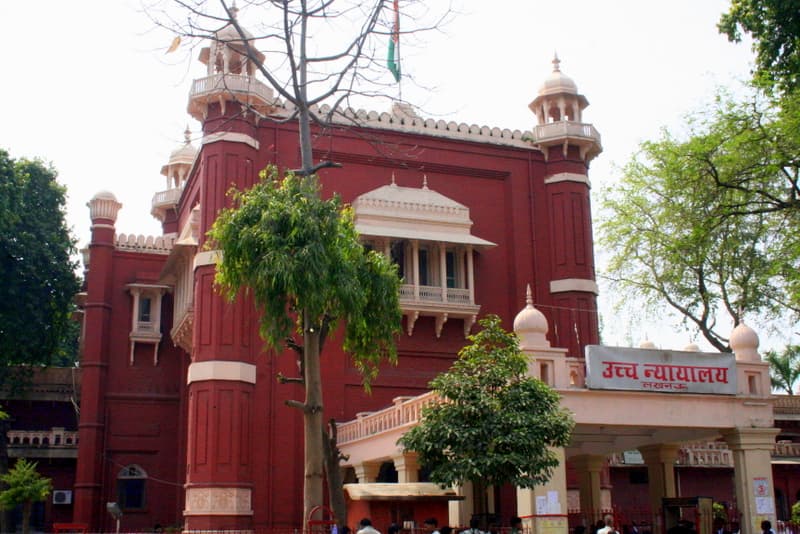
Every district has a Motor Accident Claims Tribunal, and in Lucknow the tribunal sits within the district court complex. Under Section 166(2) a claim can be filed where the accident happened, where the claimant resides or carries on business, or where the vehicle owner or insurer's office is located, which gives an injured person real choice of forum.
The tribunal decides three questions: whether the accident was caused by the offending vehicle, who is liable to pay (owner, driver and the insurer), and how much compensation is just. It is a fault based inquiry, so the claimant must show rash or negligent driving, though the standard of proof is the civil balance of probabilities, not proof beyond reasonable doubt as in the parallel criminal case against the driver.
Because the process is documentary and evidence heavy, most claimants engage counsel who handle tribunal work regularly. If you are weighing whether a claim is worth pursuing, an early case assessment can estimate the likely award band before you commit.
The multiplier method: how the award is built
The tribunal builds a death compensation figure in a fixed sequence. First it fixes the deceased's monthly income. Then it adds a percentage for future prospects under Pranay Sethi. Then it deducts a share for the deceased's own personal expenses. The balance is annualised and multiplied by the age based multiplier from Sarla Verma. Finally, fixed conventional heads are added.
Future prospects under Pranay Sethi are added as follows. For a person with a permanent or salaried job: 50 percent if below 40, 30 percent between 40 and 50, and 15 percent between 50 and 60. For the self employed or those on fixed wages: 40 percent, 25 percent and 10 percent for the same age bands.
Personal expense deduction under Sarla Verma is roughly one third where there are two to three dependants, one fourth for four to six dependants, and one fifth for more than six. For a bachelor, the tribunal typically deducts half. The multiplier itself is drawn from the age table below, which is now settled across every High Court including the Allahabad High Court, Lucknow Bench.
| Age of deceased (years) | Multiplier (Sarla Verma) |
|---|---|
| 15 to 25 | 18 |
| 26 to 35 | 17 |
| 36 to 40 | 16 |
| 41 to 45 | 15 |
| 46 to 50 | 13 |
| 51 to 55 | 11 |
| 56 to 60 | 9 |
| 61 to 65 | 7 |
| 66 to 70 | 5 |
On top of the multiplier figure, Pranay Sethi fixed conventional heads: loss of estate, loss of consortium and funeral expenses, with a direction that these amounts be enhanced by 10 percent every three years. Tribunals in 2026 therefore apply the enhanced, not the original 2017, figures.
Income slabs and a worked example
To make the method concrete, consider a salaried man aged 35 earning 30,000 rupees a month, survived by a wife and two children. His notional income becomes 30,000 plus 50 percent future prospects, which is 45,000. One fourth is deducted for personal expenses (three dependants), leaving 33,750 a month, or 405,000 a year. The multiplier for age 35 is 17, so the loss of dependency is 6,885,000 rupees, before conventional heads and interest are added.
The table below shows how the base income figure moves once future prospects are added, which is where insurers most often understate the claim.
| Monthly income | Age band | Employment | Income after future prospects |
|---|---|---|---|
| Rs 20,000 | Below 40 | Salaried | Rs 30,000 (add 50%) |
| Rs 20,000 | Below 40 | Self employed | Rs 28,000 (add 40%) |
| Rs 40,000 | 40 to 50 | Salaried | Rs 52,000 (add 30%) |
| Rs 40,000 | 50 to 60 | Self employed | Rs 44,000 (add 10%) |
For a person with no proven income, tribunals adopt a notional minimum wage. In injury (non death) claims the structure changes: the award covers medical expenses, loss of actual earning during treatment, loss of future earning capacity in proportion to the disability certified, and compensation for pain, suffering and loss of amenities. Permanent disability claims turn heavily on the disability certificate, so getting a correct percentage from the medical board matters as much as the accident evidence.
Legal Consultation
Talk directly to Advocate Onkar Pandey
Explain your matter over a call or WhatsApp. If you take the case forward, the consultation fee adjusts into your overall fee, so there is no separate charge to begin.
No fault relief, interim payment and the limitation question
A claimant does not have to wait for the full trial to receive some money. Under the amended Act, Section 164 provides a fixed no fault payment of 500,000 rupees in case of death and 250,000 rupees for grievous hurt, payable without proving negligence. This replaced the older Section 140 scheme (which had fixed 50,000 rupees for death and 25,000 rupees for permanent disablement) after the Motor Vehicles (Amendment) Act, 2019 came into force. The Section 164 amount is adjusted against the final award.
On limitation, the position is often stated wrongly, so it is worth being precise. The original 1988 Act carried a six month limitation, but that bar was deleted by the 1994 amendment, so for many years a claim could be filed at any time on a satisfactory explanation of delay. The 2019 amendment reintroduced a limitation through the new Section 166(3), which requires a claim to be filed within six months of the accident. Claimants in Lucknow should therefore treat six months as the operative outer limit today and not rely on the older no limitation practice.
Because these deadlines and the interim relief mechanism interact, an accident claim is best filed promptly. This is a broader theme across compensation work: our note on medical negligence claims in UP and the consumer court route both show how delay quietly erodes an otherwise strong case.
A practitioner note from the Lucknow MACT
In my own tribunal practice before the Lucknow MACT, the single most common reason a family receives less than the law allows is that they accept the insurer's early settlement figure, which almost always leaves out future prospects and applies a suppressed income. I have repeatedly seen the addition of the correct future prospects percentage under Pranay Sethi move a death award upward by 30 to 50 percent, simply because the earlier calculation used bare salary.
My practical guidance to Lucknow claimants is threefold. First, preserve the accident record early: the FIR, the mechanical inspection report and the post mortem or injury report are the spine of the claim, and gaps in them are what insurers exploit at trial. Second, prove income with documents (salary slips, income tax returns, or a genuine employer certificate), because an unproved income forces the tribunal onto a minimum notional wage that badly undervalues a real earner. Third, do not settle before the disability percentage is finalised in injury cases, since a higher certified disability directly raises the loss of future earning capacity.
For serious spinal, head or amputation injuries, the compensation can run into several tens of lakhs, and these are matters worth litigating fully rather than compromising. Where an insurer disputes negligence outright, the claim often ends up tested on appeal before the Allahabad High Court, Lucknow Bench, which is why the tribunal record has to be built correctly from day one. If you are unsure whether an offer on the table is fair, our civil litigation practice can benchmark it against the Pranay Sethi calculation before you sign.
About the Author
Advocate Onkar Pandey practises before the Allahabad High Court, Lucknow Bench, and the district courts and tribunals at Lucknow, handling motor accident, criminal, property and family matters. He is enrolled with the Bar Council of Uttar Pradesh (enrolment number UP 4825-1999) and regularly appears in compensation claims before the Lucknow Motor Accident Claims Tribunal.
For a considered assessment of a motor accident claim or an insurer's settlement offer, you can reach the chamber at +91 98392 71553 or through the contact page. This article is general legal information and not a substitute for advice on the facts of your specific case.
Frequently Asked Questions
Who can file a motor accident compensation claim?+
An injured person can file for themselves. In a fatal accident, the legal heirs and dependants of the deceased (spouse, children, parents) can file under Section 166 of the Motor Vehicles Act. The claim is filed before the Motor Accident Claims Tribunal, which in Lucknow sits in the district court complex.
Is there a time limit to file a MACT claim?+
Yes. After the Motor Vehicles (Amendment) Act, 2019, the reintroduced Section 166(3) requires a claim to be filed within six months of the accident. The earlier no limitation practice, which existed after the 1994 amendment deleted the original bar, no longer applies. File promptly and do not assume delay will be excused.
How is death compensation calculated?+
The tribunal fixes the deceased's monthly income, adds future prospects under Pranay Sethi (up to 50 percent), deducts a share for personal expenses, annualises the balance and multiplies it by the age based multiplier from Sarla Verma. It then adds fixed conventional heads for loss of estate, consortium and funeral expenses, plus interest.
What is the no fault compensation under Section 164?+
Section 164 of the amended Act provides a fixed payment of 500,000 rupees in case of death and 250,000 rupees for grievous hurt, payable without proving that the driver was negligent. This replaced the older Section 140 amounts and is adjusted against the final award.
Does the criminal case against the driver affect my compensation?+
No. The MACT claim is a civil compensation proceeding decided on the balance of probabilities and does not depend on the criminal court convicting the driver. You can pursue and win compensation even if the criminal case is pending or ends in acquittal, because the standards of proof are different.
Can I claim if the offending vehicle is untraced or uninsured?+
Yes. For hit and run cases where the vehicle is untraced, a solatium scheme provides fixed compensation. For uninsured vehicles, liability falls on the owner directly, and the tribunal can direct the owner to pay. A lawyer can advise which route fits your facts and how to enforce recovery.
How much does an injury claim cover?+
An injury claim covers actual medical expenses, loss of earning during treatment, loss of future earning capacity in proportion to the certified permanent disability, plus compensation for pain, suffering and loss of amenities. The disability percentage certified by the medical board strongly influences the final figure, so finalise it before settling.
Related Services
Get Expert Legal Advice in Lucknow
20+ years experience in criminal law at Lucknow High Court. Available 24/7 for emergencies.
Disclaimer: This article is for general information purposes only and does not constitute legal advice. Every case is unique and requires specific legal analysis. For advice specific to your situation, please consult Advocate Onkar Pandey or another qualified attorney in Lucknow.