Illegal Demolition Without Due Process Violates Article 300A: How Property Owners in UP Can Recover Land and Compensation After an Allahabad High Court Ruling
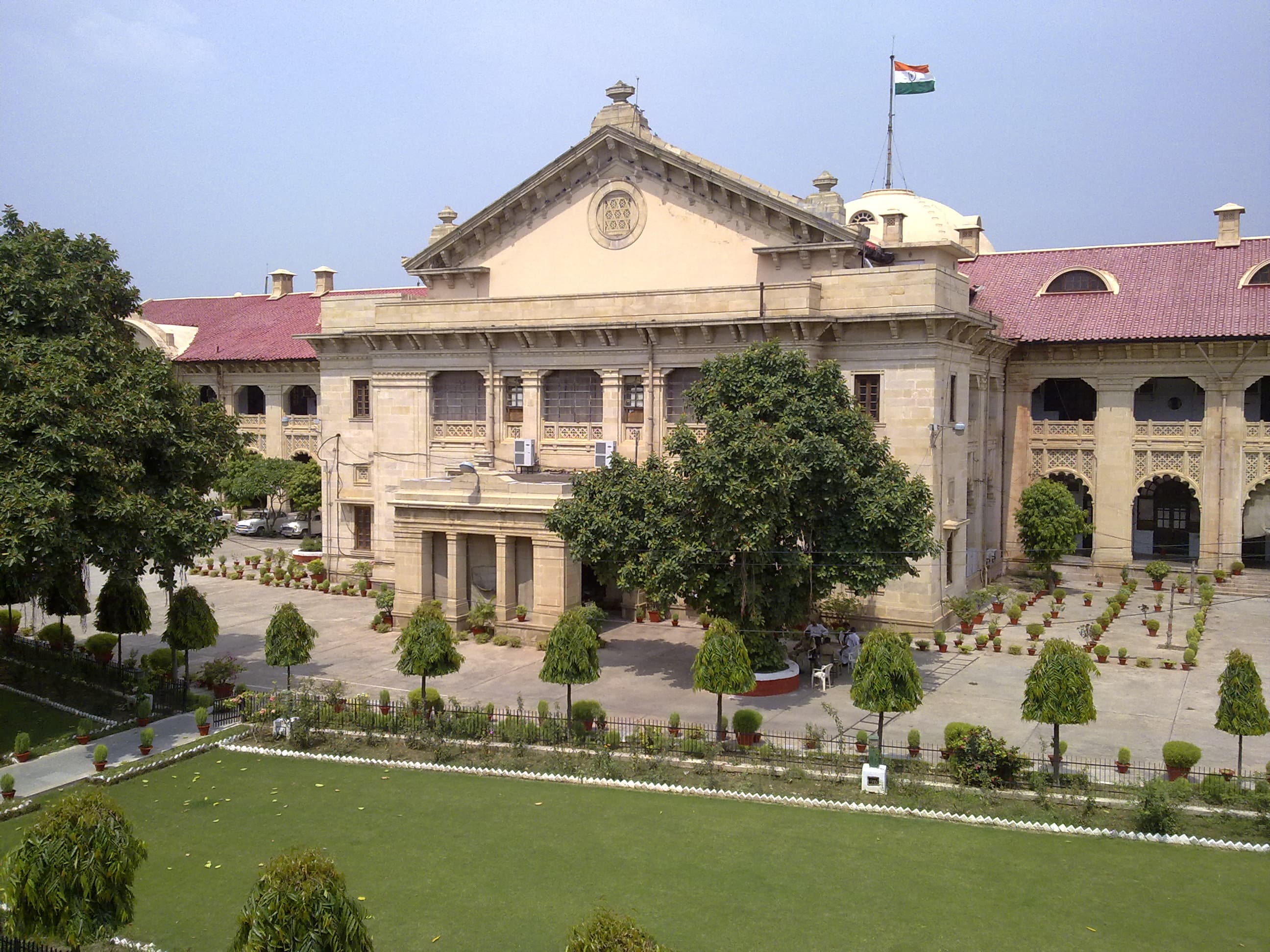
In a strongly worded judgment delivered by the Lucknow Bench of the Allahabad High Court in late 2025, Justice Alok Mathur reminded the State of Uttar Pradesh that the right to property is a constitutional right under Article 300A and cannot be extinguished by an officer with a file and a bulldozer. The Court directed restoration of land that had been struck off revenue records and ordered the State to pay ₹20 lakh in costs to the affected family. The ruling — Savitri Sonkar v. State of Uttar Pradesh (decided 19 December 2025) — is now being cited routinely in property dispute matters across UP.
For thousands of homeowners and farmers in Lucknow, Kanpur, Sitapur, Hardoi, Lakhimpur Kheri and other UP districts who have woken up to JCBs at their doorstep without a written notice, the central question is direct: what can be done after an illegal demolition, and is the State liable to restore the property? This article explains Article 300A, the procedural safeguards the Supreme Court has crystallised in the 2024 "bulldozer guidelines" judgment, the step-by-step legal remedies available before the Lucknow Bench, the documentation required, and the realistic timelines and fees. It is written for property owners, tenants in long possession, and successors-in-interest who have been deprived of land or structures without a proper hearing.
Table of Contents
Need Immediate Legal Help?
If you're facing a legal emergency in Lucknow, don't wait. Contact experienced criminal lawyer Advocate Onkar Pandey for immediate assistance.
What Article 300A Actually Says — and Why It Stops the Bulldozer
Article 300A of the Constitution of India provides: "No person shall be deprived of his property save by authority of law." Although the right to property was removed from the chapter of Fundamental Rights in 1978, it remains a constitutional right and a human right under Article 21 (right to life and dignity). The Supreme Court, in Vidya Devi v. State of Himachal Pradesh (2020) and reaffirmed in the November 2024 demolition guidelines case, held that the State cannot take possession of private property without following "authority of law," which means a statutory procedure that provides notice, hearing, and a reasoned order.
In the Savitri Sonkar matter, the Lucknow Bench found that the petitioner’s name had been struck off revenue records and her structures razed without any of these safeguards. The Court held that "arbitrary demolition is destructive of the rule of law" and that the State’s conduct violated both Article 300A and Article 14. Importantly, the Court directed not only restoration of the land but also payment of exemplary costs — a remedy that goes beyond mere quashing of the demolition order.
| Provision | What It Protects | Trigger for Court Intervention |
|---|---|---|
| Article 300A | Right to property — no deprivation without law | Demolition / dispossession without statutory procedure |
| Article 14 | Equality and non-arbitrariness | Selective targeting of one property; no reasoned order |
| Article 21 | Right to shelter as part of life and dignity | Residential demolition without rehabilitation |
Supreme Court Bulldozer Guidelines (2024) — The Procedure Authorities Must Follow
In In Re: Directions in the Matter of Demolition of Structures (November 2024), the Supreme Court issued binding guidelines that apply to every demolition by a state authority across India, including all municipal bodies, development authorities, and revenue officers in Uttar Pradesh. Any demolition that ignores these steps is illegal and the officers concerned can be personally held liable for contempt.
The mandatory procedural safeguards are:
- Show-cause notice with reasons: Served by registered post and pasted on the structure at least 15 days before any demolition.
- Personal hearing: The occupant must be given an opportunity to reply and produce title or possession documents before the designated officer.
- Reasoned written order: Mere oral instructions or political directions are not law; the order must record findings on illegality, alternative remedies, and proportionality.
- 15-day window after final order: To allow the occupant to approach a court or vacate voluntarily.
- Videography: The entire demolition must be recorded; the recording is to be preserved as part of the file.
- Bar on demolition as punishment: A demolition cannot be carried out merely because a family member is an accused in a criminal case — that is a function of the criminal court, not of the bulldozer.
If even one step is missed, the demolition is unconstitutional and reversible. The Lucknow Bench, applying these guidelines locally, has repeatedly stayed demolitions in 2026 where the show-cause notice was either backdated or never served.
Immediate Steps Within 48 Hours of an Illegal Demolition in UP
The first 48 hours after an illegal demolition determine whether you recover the property or lose it permanently to a fresh allottee. As a practising lawyer at the Lucknow Bench, the steps I advise clients to take are listed below in order:
- Photograph and video-record the site: Date and GPS-stamped images of the rubble, surviving boundary walls, neighbouring landmarks, and any uniformed officials still present.
- Lodge a written complaint at the local police station: Even if the police refuse to register an FIR, ensure the complaint is entered in the General Diary and obtain a copy. This protects you under BNSS Section 173.
- File an RTI under Section 6, RTI Act 2005: Ask the municipality or development authority for the show-cause notice, hearing records, demolition order, and the file noting. Absence of these documents is conclusive proof of illegality.
- Preserve title documents: Sale deed, mutation extract (khatauni), electricity bill, house tax receipt, ration card, Aadhaar showing the address. These establish possession even where formal title is disputed.
- Approach a lawyer for a writ petition: A petition under Article 226 must be filed before the Allahabad High Court Lucknow Bench within a few days. Delay weakens the prayer for restoration.
Legal Consultation
Talk directly to Advocate Onkar Pandey
Explain your matter over a call or WhatsApp. If you take the case forward, the consultation fee adjusts into your overall fee, so there is no separate charge to begin.
The Writ Petition Route — Article 226 Before the Lucknow Bench
The fastest and most effective remedy for an illegal demolition is a writ petition under Article 226 of the Constitution before the Allahabad High Court (Lucknow Bench, if the cause of action arose in any of the 18 districts within its territorial jurisdiction). Unlike a civil suit, a writ does not require payment of ad valorem court fee on the value of the property; it carries a fixed court fee and is decided on affidavits.
The petition should pray for the following reliefs:
- Quashing of the demolition order (if any was passed) and of the entry striking the petitioner’s name from revenue records.
- Restoration of the land to original boundaries, with reconstruction at State expense or payment of reconstruction cost.
- Mandamus directing the authorities to follow the 2024 Supreme Court guidelines.
- Compensation / exemplary costs — Savitri Sonkar set a benchmark of ₹20 lakh; courts have awarded between ₹5 lakh and ₹1 crore depending on the value of what was destroyed.
- Personal accountability of the officers concerned, to be recovered from their salary.
| Stage | Typical Timeline (Lucknow Bench, 2026) | Expected Outcome |
|---|---|---|
| Drafting & filing of writ petition | 3 to 7 days from instructions | Petition numbered, listed before roster Bench |
| First hearing & interim order | 1 to 3 weeks | Status quo on further construction by State; notice to respondents |
| Counter affidavit by State | 4 to 8 weeks | State produces records — often exposing absence of notice |
| Final hearing & reasoned judgment | 3 to 9 months | Restoration directions plus compensation |
Documents That Win Restoration — What Authorities Cannot Reproduce
In Article 300A cases, the petitioner does not have to prove perfect title; the petitioner has to prove peaceful possession on the date of demolition and that no proper procedure was followed. The State, on the other hand, must produce a complete paper trail. Officers can usually fabricate a backdated order, but they cannot fabricate the following — which is why these documents are decisive:
- Postal records: The registered post receipt and the tracking screenshot of the show-cause notice. If never dispatched, there is no notice.
- File noting and order sheet: Obtained under RTI, these reveal whether the demolition was ordered by a competent authority or merely on an oral direction.
- Videography of the demolition: Mandatory under the Supreme Court guidelines. Its absence is fatal to the State’s defence.
- Master plan and land-use records: Many demolitions are justified on the ground of "encroachment on green belt" or "road widening" but the master plan in fact shows residential use.
- Neighbouring witnesses: Sworn affidavits of adjoining property owners who confirm continuous possession.
Bring all documents in a chronological folder. The Lucknow Bench is known to read pleadings carefully and grant interim relief on the very first hearing where the State fails to produce a notice.
Compensation, Reconstruction Cost and Recovery from Officers
Restoration is not limited to handing back the land. Modern Article 300A jurisprudence — particularly after Savitri Sonkar and the 2024 Supreme Court guidelines — recognises three distinct heads of relief, which a well-drafted petition should claim together:
- Restitution: Physical restoration of boundary walls, structures, fittings and standing crops. Where the State pleads impracticability, the court directs payment of the assessed reconstruction cost based on a PWD or registered valuer’s report.
- Consequential damages: Loss of rent, business income, school fees of children displaced, medical expenses, and the cost of temporary shelter.
- Exemplary costs: A punitive amount, often ₹5 lakh to ₹25 lakh, to be recovered personally from the erring officers’ salary. This is what changes administrative behaviour over time.
The professional fee for filing and arguing such a writ petition at the Lucknow Bench typically ranges from ₹50,000 to ₹3,00,000+ depending on the value of the property, complexity of records, and number of respondents. A first consultation is usually offered to assess the strength of the case before committing to litigation.
When the Demolition Targets a Tenant, Successor or Bhumidhar in UP
A common defence by authorities in UP is that the occupant "is not the recorded owner" and therefore has no standing. This is legally wrong. Article 300A protects every person in lawful possession, not just the registered owner. The following categories are fully protected and have successfully obtained restoration orders from the Lucknow Bench:
- Bhumidhars and Sirdars under the UPZA & LR Act / UP Revenue Code 2006: Whose names appear in khatauni even without a registered sale deed.
- Heirs and successors: Where mutation has not yet been carried out but inheritance is undisputed; the court can order mutation along with restoration.
- Tenants in long possession: With electricity bills, rent receipts and Aadhaar address, even where the landlord has died or moved away.
- Joint family members and married daughters: Whose interest in ancestral property is protected even if the sale deed is in another family member’s name.
The Lucknow Bench has clarified that title disputes are to be resolved by a civil court, not by a bulldozer. If the State doubts ownership, the only lawful course is to file a suit for declaration — not to demolish the structure. This is consistent with the well-settled rule from the Allahabad High Court on mutation proceedings and is directly applicable to all property disputes in UP.
About the Author
Advocate Onkar Pandey is a practising lawyer at the Allahabad High Court Lucknow Bench with over 25 years of experience in property law, writ jurisdiction, criminal defence, and family matters. Enrolled with the Bar Council of Uttar Pradesh (No. UP/4825/1999), he regularly appears in Article 300A writ petitions arising out of demolitions across Lucknow, Sitapur, Hardoi, Lakhimpur Kheri, Barabanki, Rae Bareli, Unnao and other districts within the Lucknow Bench’s territorial jurisdiction. His chamber is at Chamber A-406, High Court, Lucknow, Awadh Bar, Uttar Pradesh 226001. For an urgent consultation after a demolition or notice of demolition, contact Advocate Onkar Pandey at +91 98392 71553 or via the contact page.
Frequently Asked Questions
What is the first thing I should do if my house has been demolished without notice in Lucknow?+
Within the first few hours, photograph and video-record the entire site with GPS-enabled images of the rubble, surviving boundary, and neighbouring landmarks. Lodge a written complaint at the nearest police station and obtain a stamped acknowledgement; if FIR is refused, ensure it is entered in the General Diary. File an RTI application to the demolishing authority asking for the show-cause notice, hearing record, and demolition order — absence of these documents will form the backbone of your writ petition. Then immediately consult a lawyer at the Lucknow Bench to file an Article 226 petition. Do not begin private reconstruction yet, because the State may use that as a pretext for fresh action.
Is Article 300A really a Fundamental Right after the 44th Constitutional Amendment?+
Article 300A is not part of the Fundamental Rights chapter, but the Supreme Court has consistently held that it is a constitutional right and also a human right read into Article 21. In Vidya Devi v. State of Himachal Pradesh and the November 2024 demolition guidelines case, the Court ruled that the State cannot take property except by "authority of law," which requires a statutory procedure, notice, and hearing. For practical purposes — including writ petitions before the Allahabad High Court — Article 300A carries the same enforceability as a fundamental right, and breach attracts not only quashing of the action but compensation and personal accountability of officers.
Can I file a writ petition if my name was only struck off revenue records and the structure not yet demolished?+
Yes, and you should file at once. A unilateral entry striking off your name from khatauni or municipal records is itself a deprivation of property within the meaning of Article 300A, because it strips you of the documentary basis of ownership and clears the way for re-allotment or demolition. The Lucknow Bench has repeatedly held that such entries made without notice are non est in law. A timely writ petition under Article 226 can secure interim status quo on any further coercive action, restoration of the entry, and a direction that any future correction must follow a quasi-judicial hearing. Acting before demolition is far easier than acting after.
How much compensation can I expect for an illegal demolition by the Lucknow Development Authority or Nagar Nigam?+
Compensation depends on three factors: the assessed reconstruction cost of what was destroyed, consequential damages such as displacement and loss of rent or business income, and exemplary or punitive costs imposed on the erring officers. In Savitri Sonkar v. State of UP the Lucknow Bench imposed ₹20 lakh in costs over and above restoration; other Allahabad High Court matters have ranged from ₹5 lakh for small structures to over ₹1 crore for commercial premises. The amount is usually recovered partly from the State exchequer and partly from the personal salary of the officers found responsible. A registered valuer’s report on the destroyed structure significantly strengthens the compensation prayer.
Does the Supreme Court’s 2024 bulldozer judgment apply if my family member is an accused in a criminal case?+
Yes — and in fact the judgment was delivered precisely to stop the practice of demolishing the homes of accused persons as a form of extra-judicial punishment. The Supreme Court has held that guilt in a criminal case must be decided by a competent criminal court following due trial, not by a development authority with a bulldozer. Demolition of a residence merely because someone in the family is named in an FIR violates Article 14 (selective targeting), Article 21 (right to shelter) and the presumption of innocence. The Lucknow Bench has issued contempt notices in 2026 to officers who proceeded despite this binding ruling.
Should I file a civil suit or a writ petition for an illegal demolition?+
For an illegal demolition by a State authority, a writ petition under Article 226 before the Allahabad High Court is almost always faster, cheaper, and more effective than a civil suit. A civil suit requires ad valorem court fee on the value of the property, can take 8 to 15 years, and primarily yields damages rather than restoration. A writ petition carries fixed court fee, is decided on affidavits within months, and can result in physical restoration of the property plus exemplary costs against the officers. A civil suit may be advisable only if there is a parallel private title dispute, in which case both proceedings can run together. An experienced lawyer can advise on the right mix after reviewing your records.
What happens if the authorities have already allotted my land to someone else after the demolition?+
Re-allotment does not extinguish your remedy. The Lucknow Bench has held that a transferee from the State who acquires land in the wake of an unconstitutional demolition is not a bona fide purchaser, because the State had no clean title to transfer. In such cases, the writ petition should implead the subsequent allottee, and the court can direct cancellation of the allotment along with restoration to the original owner. Where physical restoration becomes impossible due to construction by a third party, the State is directed to provide equivalent alternative land or to pay the full market value, in addition to exemplary costs. Speed matters here — file before construction reaches an irreversible stage.
Related Services
Get Expert Legal Advice in Lucknow
20+ years experience in criminal law at Lucknow High Court. Available 24/7 for emergencies.
Disclaimer: This article is for general information purposes only and does not constitute legal advice. Every case is unique and requires specific legal analysis. For advice specific to your situation, please consult Advocate Onkar Pandey or another qualified attorney in Lucknow.