Can a Government Employee Be Denied Pension During Pending Criminal Proceedings? The Allahabad HC Position
Quick Answer
Can the State withhold the pension of a retired government employee just because a criminal case or departmental inquiry is still pending against him? For thousands of Uttar Pradesh government servants, this is a real and frightening question — a lifetime of service suddenly held hostage to an un…
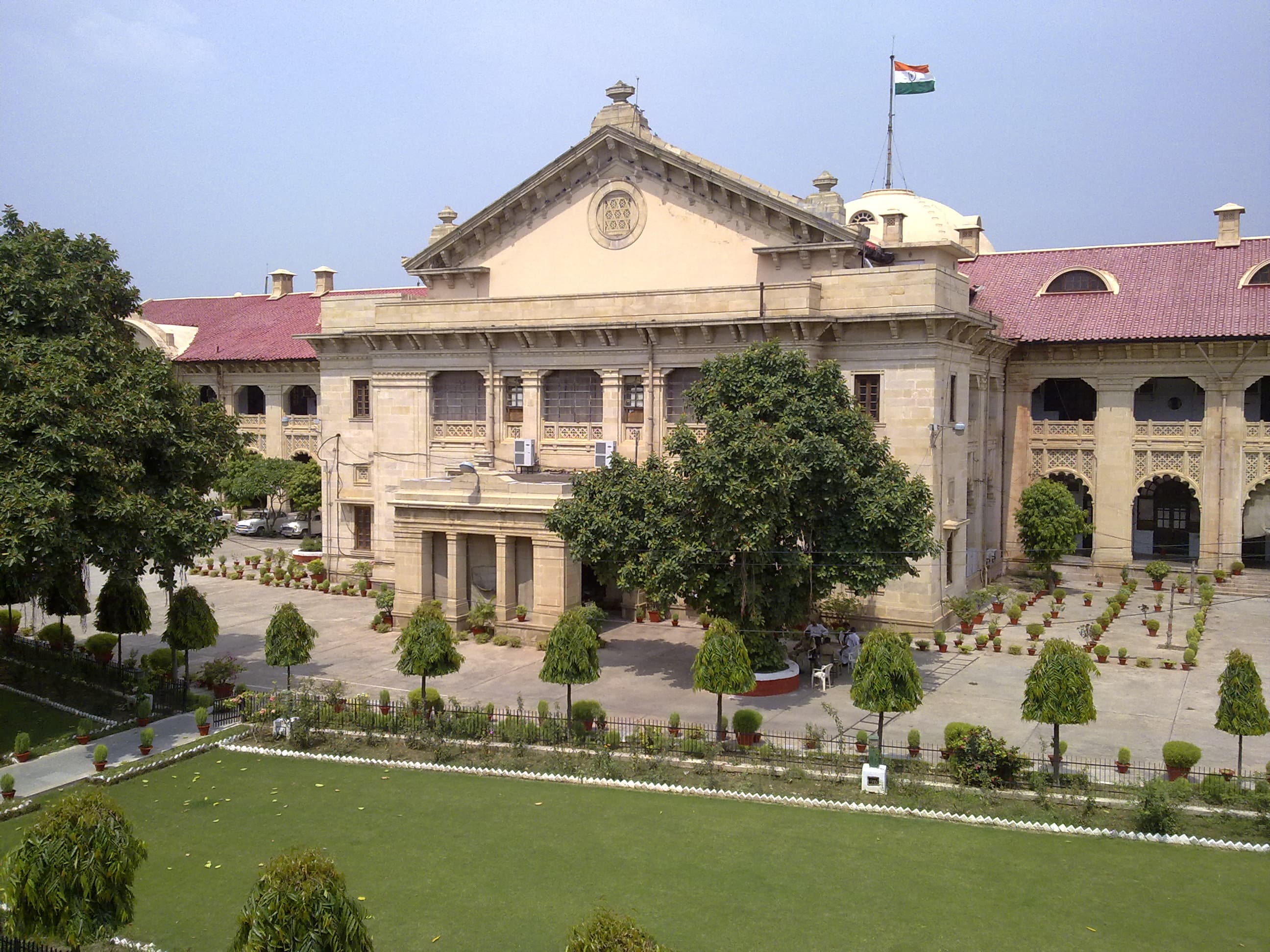
Can the State withhold the pension of a retired government employee just because a criminal case or departmental inquiry is still pending against him? For thousands of Uttar Pradesh government servants, this is a real and frightening question — a lifetime of service suddenly held hostage to an unfinished proceeding. The settled answer, repeatedly affirmed by the Allahabad High Court and the Supreme Court, is reassuring: pension is a hard-earned right, not a bounty that the government can grant or refuse at will. In State of Jharkhand v. Jitendra Kumar Srivastava (2013) 12 SCC 210, the Supreme Court held that in the absence of a specific rule, the government cannot withhold the full pension or gratuity of an employee even while departmental or judicial proceedings are pending. This article explains your pension rights as a UP government employee, the concept of provisional pension, when benefits can lawfully be withheld, and how a service law lawyer in Lucknow can help you recover what is yours.
Table of Contents
Need Immediate Legal Help?
If you're facing a legal emergency in Lucknow, don't wait. Contact experienced criminal lawyer Advocate Onkar Pandey for immediate assistance.
Pension Is a Right, Not a Bounty: The Constitutional Foundation
The starting point of every pension dispute is a principle the Supreme Court laid down decades ago and has never abandoned. In Deokinandan Prasad v. State of Bihar (1971) and the celebrated D.S. Nakara v. Union of India (1983) 1 SCC 305, the Court declared that pension is neither a bounty nor a gratuitous payment depending on the sweet will of the employer. It is property earned by long and continuous service, protected under Article 300A of the Constitution.
Because pension is property, it cannot be taken away except by authority of law. A pending criminal trial or an incomplete departmental inquiry is not, by itself, "authority of law" to deny the entire pension. The State must point to a specific statutory rule that permits withholding, and even then only to the extent the rule allows. As the Allahabad High Court frequently observes in service matters before its Lucknow Bench, administrative convenience or suspicion of misconduct is no substitute for a clear legal provision.
- Pension is deferred compensation for past service, not a reward for good conduct.
- It is protected property under Article 300A.
- It can be reduced or withheld only by an express rule, after due process.
Provisional Pension: What You Get While Proceedings Are Pending
The law does not leave a retired employee penniless while a case drags on. Under the Civil Service Regulations applicable in Uttar Pradesh and the corresponding CCS (Pension) Rules for central employees, a government servant against whom departmental or judicial proceedings are pending on the date of retirement is entitled to a provisional pension.
Provisional pension is paid at the full admissible rate of the regular pension during the pendency of the proceedings. What may be temporarily held back is the gratuity and certain terminal benefits — but even these must be released once the proceedings conclude, unless a penalty of recovery is actually imposed. The key distinctions are set out below.
| Benefit | During Pending Proceedings | After Proceedings Conclude |
|---|---|---|
| Monthly pension | Provisional pension at full rate | Regularised; arrears paid if any |
| Gratuity | Usually withheld until outcome | Released unless recovery ordered |
| Commutation | Deferred till regular pension sanctioned | Allowed on regularisation |
| Leave encashment | May be withheld | Released on exoneration |
The practical takeaway is simple: a pending criminal case cannot stop your monthly pension entirely. If the department refuses to release even provisional pension, that refusal is itself illegal and can be challenged before the State Public Services Tribunal or the High Court.
When CAN Pension or Gratuity Be Lawfully Withheld or Recovered?
The right to pension is strong, but it is not absolute. Uttar Pradesh service rules, mirroring Article 351-A of the Civil Service Regulations and Rule 8 of the CCS (Pension) Rules, do permit the government to withhold or withdraw pension — but only in narrowly defined situations and only after a proper procedure.
Withholding or recovery is permissible where:
- The employee is found guilty of grave misconduct or negligence in a duly concluded departmental inquiry relating to his service period.
- The employee is convicted in a criminal case arising out of conduct during service, and the conviction has attained finality.
- The proceedings were instituted while in service or within the limitation period prescribed by the rules (generally four years before institution).
Even then, two safeguards apply. First, the President or Governor's sanction (or the competent authority's order) is required before any reduction. Second, the employee must be given a reasonable opportunity to be heard. A pension cannot be slashed by a mere office order. Anyone facing such action should immediately consult a government service dispute lawyer, because procedural lapses are the most common ground on which these orders are set aside.
Legal Consultation
Talk directly to Advocate Onkar Pandey
Explain your matter over a call or WhatsApp. If you take the case forward, the consultation fee adjusts into your overall fee, so there is no separate charge to begin.
Suspension, Acquittal and Salary for the Suspension Period
A closely related issue arises when a serving employee is suspended because of arrest or detention in a criminal case. Under the UP Fundamental Rules and the Financial Handbook, a government servant detained in custody for more than 48 hours is deemed suspended. During suspension he draws a subsistence allowance, not full salary.
The Allahabad High Court has repeatedly held that where an employee is suspended solely on account of detention in jail, and is later acquitted with no departmental inquiry held against him, the suspension is unjustified. In such cases the court directs that the suspension be set aside and that the employee be paid full salary for the suspension period, treating it as duty.
| Situation | Entitlement During Suspension | On Acquittal / Exoneration |
|---|---|---|
| Suspended only due to jail detention | Subsistence allowance | Full pay for the period as duty |
| Suspended + departmental inquiry held | Subsistence allowance | Depends on inquiry outcome |
| Convicted in criminal case | Subsistence allowance | Penalty may follow; pay denied |
So an accused government employee in Lucknow who is ultimately acquitted is not merely back at his desk — he is entitled to be made financially whole for the period he was kept out. Pension calculation for that period is also protected, because the suspension period counts as qualifying service once regularised.
The Allahabad HC Lucknow Bench Approach in 2026
Recent decisions from the Lucknow Bench of the Allahabad High Court show the court's growing impatience with the State's habit of delaying pensionary dues. In a notable 2026 order, the Lucknow Bench dismissed eleven special appeals filed by the Uttar Pradesh government, refusing to condone filing delays ranging from 93 to 195 days that the State sought to excuse as routine "red tape."
The effect was to protect significant service benefits, including Old Pension Scheme entitlements for a group of Public Works Department junior engineers. The court's message was unambiguous:
- Bureaucratic delay is not "sufficient cause" to reopen settled pensionary claims.
- Once a benefit is judicially recognised, the State cannot stall its payment through serial appeals.
- A pensioner's claim is a recurring cause of action — delay by the department does not extinguish the right.
For UP employees, this trend is encouraging. The High Court has signalled that it will scrutinise the State closely when pension or retirement benefits are denied or delayed on thin grounds. A well-drafted writ petition before the Lucknow Bench remains the most effective remedy when a department refuses to release pension after a criminal case ends in acquittal or remains pending without conclusion.
Steps to Take If Your Pension Is Withheld in Uttar Pradesh
If you are a retired or retiring UP government employee whose pension has been stopped because of a criminal case or inquiry, do not simply wait for the proceeding to end. There are concrete steps you can take to protect your retirement benefits.
- Send a written representation to the pension-sanctioning authority demanding release of at least the provisional pension, citing the Civil Service Regulations.
- Obtain documents — your retirement order, the suspension or charge memo, the FIR, and any inquiry report — which establish the status of the proceedings.
- Approach the State Public Services Tribunal (Indira Bhawan, Lucknow) for service-related reliefs, where applicable.
- File a writ petition under Article 226 before the Allahabad High Court Lucknow Bench if the Tribunal route is unavailable or the violation is clear and ongoing.
The pension dispute often overlaps with the underlying criminal case, so coordinated handling matters. If the criminal proceedings themselves are baseless, a parallel step is to seek quashing of the FIR so that the cloud over your service record lifts. For the financial recovery side, a consultation with a service law advocate will help you choose between a Tribunal claim and a High Court writ, and frame the relief — provisional pension, full pension, gratuity release, and interest on delayed payment.
About the Author
Frequently Asked Questions
Can the UP government stop my entire pension because a criminal case is pending?+
No. Pension is a constitutionally protected right under Article 300A, not a discretionary bounty. The Supreme Court in State of Jharkhand v. Jitendra Kumar Srivastava (2013) held that in the absence of a specific rule, the government cannot withhold the full pension or gratuity merely because departmental or judicial proceedings are pending. Under the Civil Service Regulations, an employee retiring with proceedings pending is entitled to a provisional pension at the full admissible rate. Only gratuity and some terminal benefits may be temporarily held back, and even these must be released once the proceedings conclude unless a recovery penalty is actually imposed. If your department stops your monthly pension entirely, that refusal is illegal and can be challenged before the State Public Services Tribunal or the Allahabad High Court Lucknow Bench.
What is provisional pension and how much will I receive?+
Provisional pension is the pension paid to a government servant who retires while a departmental inquiry or criminal proceeding is still pending. Under the Civil Service Regulations applicable in Uttar Pradesh and the CCS (Pension) Rules for central employees, it is paid at the full rate of the regular pension that would otherwise be admissible. The only benefits that may be deferred during this period are gratuity, commutation, and sometimes leave encashment. Provisional pension continues until the proceedings conclude, after which the pension is regularised. If you are exonerated, the withheld benefits are released with arrears. The purpose of the provision is precisely to ensure that a retired employee is not left without income while a case he has not been convicted in remains unresolved.
When can pension or gratuity be lawfully withheld or recovered?+
Withholding or recovery is permitted only in narrow situations under Article 351-A of the Civil Service Regulations and Rule 8 of the CCS (Pension) Rules. These are: where the employee is found guilty of grave misconduct or negligence in a properly concluded departmental inquiry; where he is convicted in a criminal case arising from his service conduct and the conviction is final; and where the proceedings were instituted while in service or within the prescribed limitation period. Even then, the order must be passed by the competent authority (with the Governor's or President's sanction where required) and only after giving the employee a reasonable opportunity to be heard. A pension cannot be reduced by a casual office order, and procedural lapses frequently lead courts to set such orders aside.
I was suspended only because I was in jail, then acquitted. Do I get my full salary?+
Yes, in most such cases. Under the UP Fundamental Rules, an employee detained in custody for more than 48 hours is deemed suspended and draws only a subsistence allowance. The Allahabad High Court has repeatedly held that where suspension was based solely on jail detention and no departmental inquiry was held, an acquittal entitles the employee to have the suspension set aside and to receive full salary for the suspension period, treated as duty. This also protects your pension, because the period then counts as qualifying service. You should apply to the department for regularisation of the suspension period; if it refuses, a writ petition before the Lucknow Bench is the appropriate remedy. A service law lawyer can help frame the claim for back wages and consequential benefits.
Where do I challenge the denial of my pension in Lucknow?+
UP government employees generally have two forums. For most service-related disputes, the State Public Services Tribunal at Indira Bhawan, Lucknow, is the designated forum and can grant reliefs including release of pension and back wages. Where the Tribunal route is unavailable, or where the illegality is clear and ongoing, you can file a writ petition under Article 226 before the Allahabad High Court Lucknow Bench. The writ remedy is particularly effective because pension is a recurring cause of action, so departmental delay does not defeat your claim. Your petition should specifically seek release of provisional or full pension, gratuity, and interest on delayed payment. Coordinating the pension claim with the underlying criminal proceeding is important, so professional legal advice is strongly recommended.
Does delay by the government in releasing my pension hurt my case?+
Generally no — and the recent trend favours pensioners. The Allahabad High Court Lucknow Bench in 2026 dismissed eleven special appeals filed by the UP government, refusing to treat filing delays of 93 to 195 days as "sufficient cause" and protecting Old Pension Scheme benefits for a group of PWD junior engineers. Because pension is a recurring right, courts hold that departmental delay does not extinguish your entitlement; you can claim arrears for the period within limitation. The State's "red tape" excuses are increasingly rejected. If your pension has been delayed for months or years after retirement or acquittal, you may also be entitled to interest on the delayed amount. Keep all dates and correspondence documented, as they strengthen both your entitlement and your interest claim.
I am a UP government employee facing a criminal case but I am about to retire. Can the department delay my retirement to keep me in service?+
The department cannot postpone your date of superannuation. You must be allowed to retire on the due date, and if departmental or judicial proceedings are pending, the pension is sanctioned provisionally while gratuity and commutation may be withheld until the proceedings conclude. This flows from Rule 351-A of the Civil Service Regulations as applied in UP, and the Allahabad High Court has repeatedly held that retirement itself cannot be blocked merely because a case is pending.
After I am acquitted in the criminal case, will I automatically get the gratuity and arrears that were withheld?+
An honourable acquittal generally entitles you to release of withheld gratuity, commutation, and any arrears, but it is not always automatic and departments often sit on the file. If the department does not release the amounts within a reasonable time after the acquittal becomes final, you can file a writ petition before the Allahabad High Court Lucknow Bench seeking release with interest for the delayed period.
Related Guides
Related Services
Get Expert Legal Advice in Lucknow
20+ years experience in criminal law at Lucknow High Court. Available 24/7 for emergencies.
Disclaimer: This article is for general information purposes only and does not constitute legal advice. Every case is unique and requires specific legal analysis. For advice specific to your situation, please consult Advocate Onkar Pandey or another qualified attorney in Lucknow.