Your rights if a food inspector suspends your eatery without notice in India
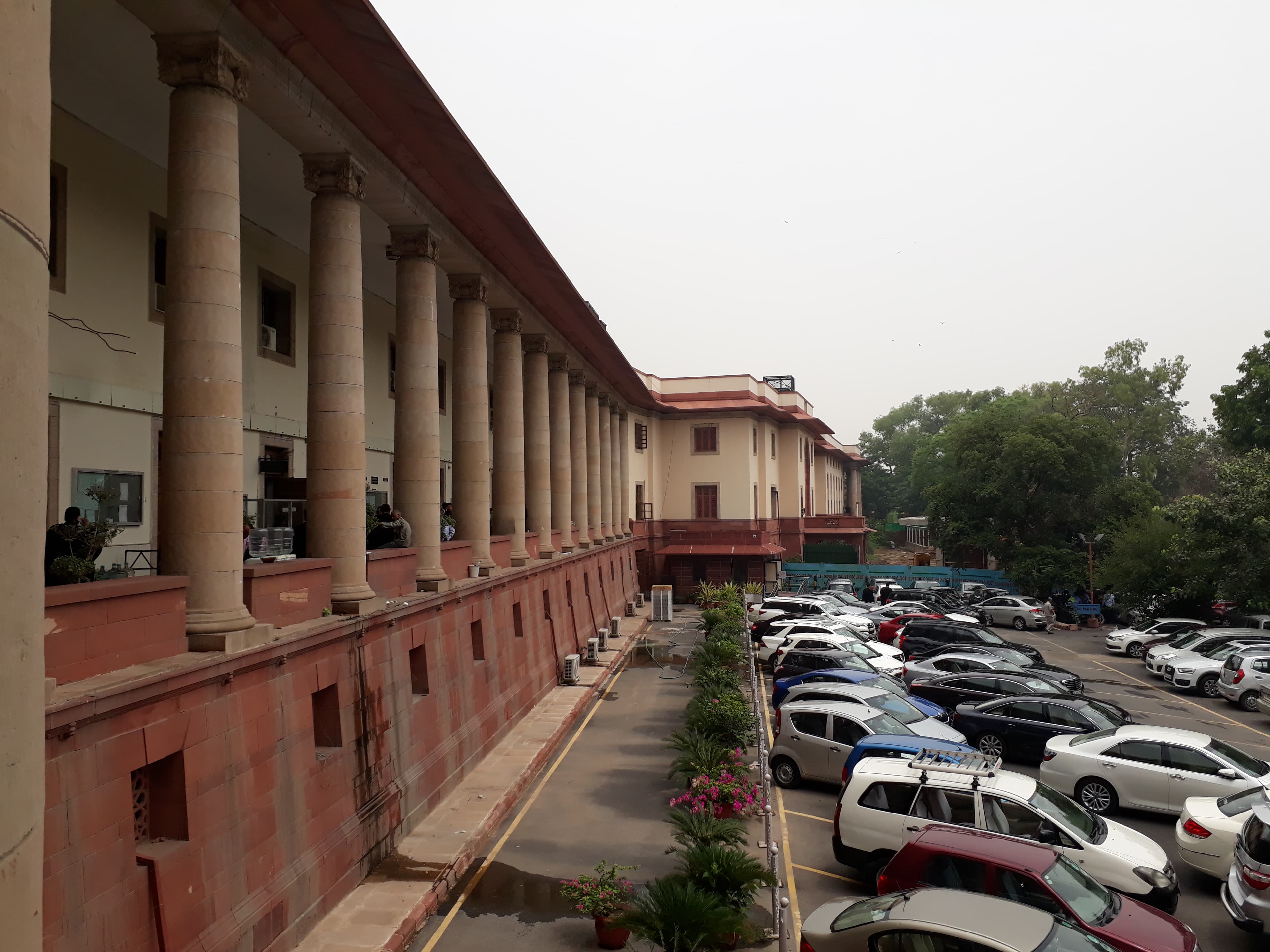
Food eatery suspension without notice in Lucknow can stop daily sales, affect employees, spoil stock, and damage the business reputation. A restaurant owner is not required to accept an abrupt closure as final. The immediate legal remedies may include a written representation to the food authority, a request for revocation or review, and an urgent writ petition under Article 226 before the Allahabad High Court, Lucknow Bench.
The central question is whether the Food Safety and Standards Act, 2006 was followed. Section 32 ordinarily provides for an improvement notice. Section 32(3) permits immediate suspension without a prior improvement notice only where it is required in the interest of public health and reasons are recorded. The authority must identify the alleged risk and act proportionately.
This guide explains the Lucknow and Uttar Pradesh procedure, the papers generally needed, realistic costs, and the relief an owner can seek. For related civil legal advice, assistance from an Allahabad High Court lawyer, or कानूनी सहायता, obtain advice promptly because every day of closure may create fresh loss.
Table of Contents
Need Immediate Legal Help?
If you're facing a legal emergency in Lucknow, don't wait. Contact experienced criminal lawyer Advocate Onkar Pandey for immediate assistance.
What legal remedies does a restaurant owner have?
An owner can challenge an arbitrary suspension by asking the food authority to withdraw or modify the order and by approaching the High Court for urgent relief. The principal court remedy is a petition under Article 226 seeking certiorari to quash the order, mandamus for restoration of the licence or permission, and an interim stay allowing the eatery to reopen.
The authority’s power must be connected to the Food Safety and Standards Act, 2006. Section 31 concerns licensing, Sections 36 and 38 concern the statutory structure and inspection powers, and Section 32 sets out the improvement notice route. A food safety officer cannot treat an inspection report as an unlimited power to close a business indefinitely.
- Written representation: Ask the Designated Officer to supply the order, inspection report, sampling record, photographs, test report, and reasons for immediate action.
- Statutory response: Give a compliance plan, request a fresh inspection, and seek withdrawal or reduction of the suspension.
- High Court writ: Challenge absence of notice, absence of recorded public-health reasons, lack of jurisdiction, disproportionality, or denial of a meaningful opportunity to respond.
- Inspection and prosecution defence: Keep the suspension issue separate from any sample prosecution or adjudication proceeding and answer each proceeding within its deadline.
Article 14 guards against arbitrary State action and Article 19(1)(g) protects the right to carry on a lawful business, subject to reasonable restrictions. In Kaushal Kishore v. State of Uttar Pradesh, (2023) 4 SCC 1, the Supreme Court reaffirmed that executive action remains open to constitutional scrutiny. A petition may also rely on the due-process reasoning in State of U.P. v. Radhey Shyam, 2020s writ line, Allahabad High Court.
If the inspection has also led to an FIR or criminal complaint, coordinate the response with a criminal lawyer in Lucknow and review the separate criminal remedy.
When can immediate suspension without notice be lawful?
Section 32 is the starting point. An improvement notice ordinarily tells the food business operator what contravention must be corrected and gives an opportunity to comply. Immediate suspension under Section 32(3) is exceptional: the officer must be able to show that postponing action would threaten public health, and the reasons for taking immediate action must be recorded.
A bare statement such as unsafe food or unhygienic premises may be insufficient where the order does not identify the specific defect, affected food, sample result, or health risk. The court will examine the inspection material and whether the action taken is proportionate to the recorded breach.
| Situation | Likely legal issue | Owner response |
|---|---|---|
| Minor cleanliness defect with no urgent risk recorded | Why was an improvement notice not issued? | Seek withdrawal and file compliance photographs |
| Adulterated or contaminated food linked to immediate risk | Emergency action may be defended under Section 32(3) | Request the test report and challenge errors in sampling or reasons |
| Order signed by an officer without shown authority | Jurisdiction and statutory delegation | Ask for designation details and challenge the order |
| Closure continued without review | Proportionality and unreasonable duration | Seek interim reopening subject to conditions |
The Bombay High Court line referred to in Orchid Healthcare Pvt. Ltd. v. State of Maharashtra, 2026 treated immediate closure as requiring a genuine and recorded public-health basis. The Poornima Restaurant/FDA suspension matters, 2026 are also useful persuasive material on fairness and proportionality, although neither is a Supreme Court or Allahabad High Court ruling.
Where the statute provides a procedure, the authority should follow it. That is the approach associated with State of U.P. v. Kaushal Kumar, 2024-2025 Allahabad High Court writ precedent. The strength of a challenge depends on the actual order, inspection record, and urgency claimed by the department.
Step-by-step procedure in Lucknow and Uttar Pradesh
Do not reopen by force, remove the seal, or obstruct another inspection. Those steps can create separate allegations and make interim relief harder. Preserve the condition of the premises and begin a documented response on the same day.
- Obtain the order: Take a clear copy showing the date, officer, licence number, statutory provision, allegations, duration, and reasons. If the order was pasted at the premises, photograph it with the date and location.
- Request the record: Ask for the inspection report, sample memo, laboratory report, photographs, seizure memo, notices, and the identity of the Designated Officer.
- Prepare compliance: Correct sanitation, storage, pest-control, water, labelling, staff hygiene, and temperature-record issues. Keep invoices and dated photographs rather than making unsupported claims.
- Submit representation: Address the Designated Officer and copy the relevant district food safety office. Ask for an urgent hearing, fresh inspection, withdrawal of suspension, and permission to operate subject to reasonable conditions.
- Prepare the writ: If the order causes continuing closure or the authority does not respond, file before the appropriate roster of the Allahabad High Court, Lucknow Bench. Matters concerning the Lucknow district are ordinarily presented at the Lucknow Bench.
- Seek interim relief: Ask the court to stay operation of the suspension, permit controlled reopening, direct a fresh inspection, or require the department to decide the representation within a fixed period.
The writ should explain why an alternative departmental response is inadequate in the circumstances, especially where the business is closed immediately and the order contains no recorded emergency reasons. A restaurant owner can also review the rights when authorities do not provide written grounds of arrest if officers have detained the owner during the inspection.
- Attach the FSSAI licence, renewal papers, rent or ownership proof, trade permissions, and identity documents.
- Attach the suspension order, inspection material, photographs, purchase invoices, test reports, and previous compliance records.
- Attach the representation, proof of service, any departmental reply, employee details, and a short loss statement.
- Include a chronology and an affidavit explaining facts within the owner’s personal knowledge.
Legal Consultation
Talk directly to Advocate Onkar Pandey
Explain your matter over a call or WhatsApp. If you take the case forward, the consultation fee adjusts into your overall fee, so there is no separate charge to begin.
What relief can the Allahabad High Court grant?
The Lucknow Bench may first consider whether the order shows a legal basis for immediate suspension and whether the department’s action has caused continuing business injury. The court can issue notice to the State, call for instructions, and decide an interim application. Urgent listing is not automatic, so the petition must clearly show the date of closure, daily impact, and the immediate public-health facts relied upon by the officer.
Possible orders include staying the suspension, directing a fresh inspection, allowing reopening after specified sanitation measures, requiring the authority to decide a representation, or setting aside an order passed without statutory reasons. The court may also refuse immediate reopening if laboratory material indicates a serious and continuing health risk.
| Relief requested | Purpose | Possible condition |
|---|---|---|
| Certiorari | Quash an illegal suspension or closure order | Fresh proceedings according to Section 32 |
| Mandamus | Direct inspection, hearing, or decision on representation | Compliance report within a stated period |
| Interim stay | Prevent continuing operation of the suspension | Reopening after hygiene verification |
| Limited reopening | Permit restricted operations while proceedings continue | Specified menu, testing, or monitoring conditions |
A court will distinguish a procedural defect from a proven safety emergency. The owner should admit and correct genuine defects while challenging the failure to issue an improvement notice or record reasons for emergency action.
Keep proof of every compliance step. A dated sanitation contract, pest-control certificate, water test, staff medical record, temperature log, and purchase register can help the court assess whether interim reopening can occur safely. Guidance on consumer-related food disputes may be relevant where customers have already raised complaints, but it does not replace the suspension challenge.
Where loss of income affects employees or business obligations, obtain separate advice on available civil remedies and contractual claims.
Costs, timelines, and documents
Fees depend on urgency, the length of the record, the number of respondents, and whether hearings continue after the first order. The figures below are practical estimates for Lucknow and are not a government fee schedule. Court fees, typing, notarisation, photocopying, travel, laboratory review, and service expenses may be additional.
| Work | Typical professional fee in Lucknow | Practical time |
|---|---|---|
| Document review and written representation | ₹5,000–₹15,000 | 1–3 working days |
| Urgent writ with stay application | ₹35,000–₹90,000 | Preparation in 2–5 working days |
| Contested writ after notice | ₹60,000–₹1,50,000 or more | Depends on affidavits and hearings |
| Technical or laboratory record review | ₹10,000–₹30,000 additional | 3–10 working days |
In practice before the Lucknow Bench, an urgent stay application may be placed for consideration within about 1–7 working days when the closure and urgency are properly shown. First listing or admission commonly takes about 1–3 weeks, subject to the roster, filing defects, court workload, and service requirements.
- FSSAI licence, application, renewal, and inspection history
- Suspension or closure order with envelope, photographs, and video of sealing
- Inspection report, sample documents, laboratory report, and seizure memo
- Rent deed or ownership proof, GST or trade records, and municipal permissions
- Invoices, hygiene logs, pest-control papers, water reports, and staff records
- Representation to the Designated Officer and proof that it was received
- Daily loss calculation supported by sales records, wages, rent, and perishable stock
Owners should avoid delaying for several weeks while stock and goodwill deteriorate. A prompt representation can create a useful record even when a writ petition is filed later, and consultation fees can adjust into the case fee if the owner proceeds, so there is no separate charge to begin.
Practitioner's Note from the Lucknow Bench
In our practice before the Lucknow Bench, such applications are typically prepared for urgent listing when the suspension order is recent and the premises remain sealed or commercially unusable. We file in the Lucknow Bench where the cause of action concerns Lucknow, and we verify the current roster before presentation because listing depends on the bench assigned to administrative and food-safety matters.
Judges generally ask for the impugned order, licence, inspection report, laboratory or sampling material, photographs, the representation made to the department, and a clear explanation of the immediate health risk alleged by the authority. We also keep dated compliance papers and a short loss statement ready so the court can consider controlled reopening rather than an unsupported request.
An urgent stay application is often taken up within 1–7 working days, while first listing may take 1–3 weeks depending on filing defects and court load. In Lucknow, a written representation generally costs ₹5,000–₹15,000, an urgent writ with stay application commonly costs ₹35,000–₹90,000, and a contested writ may cost ₹60,000–₹1,50,000 or more, apart from court and documentation expenses.
About the Author
Frequently Asked Questions
Can a food safety officer suspend my restaurant without giving prior notice?+
Section 32 of the Food Safety and Standards Act, 2006 ordinarily uses an improvement notice before harsher action. Section 32(3) permits immediate suspension without prior notice only where it is required in the interest of public health and reasons are recorded. If the order merely alleges general unhygienic conditions without identifying an urgent risk, the owner may challenge it before the Designated Officer and under Article 226 before the Allahabad High Court, Lucknow Bench. An urgent stay application may be considered within 1–7 working days, subject to listing and filing requirements.
Should I first approach the food department or directly file a writ petition?+
A written representation is usually useful because it requests the record, documents compliance, and gives the authority an opportunity to correct the order. Direct writ proceedings may be justified where the eatery is sealed, the order has no reasons, the officer lacks shown authority, or continuing closure is causing serious loss. The petition should explain the urgency and attach proof of the representation if one was made. The Lucknow Bench may direct a fresh inspection or decision within a fixed period instead of ordering immediate reopening.
Which documents are needed for a Lucknow High Court challenge?+
Keep the suspension or closure order, FSSAI licence, inspection report, sample memo, laboratory report, seizure memo, photographs, videos, and all notices. Also collect rent or ownership proof, trade permissions, purchase invoices, hygiene and pest-control records, water test reports, staff records, the written representation, proof of delivery, and a supported loss statement. The petition is normally accompanied by an affidavit and chronology. Missing technical records should be requested in writing from the Designated Officer.
How long can it take to obtain a stay against the suspension?+
An urgent stay request may be listed in approximately 1–7 working days where the closure, public-health allegations, and business loss are clearly shown. Admission or first listing commonly takes 1–3 weeks, but the actual period depends on the Lucknow Bench roster, filing objections, service, and court workload. A court may grant interim reopening, order a fresh inspection, or require the department to decide the representation. There is no guaranteed timeline, and a serious contamination report may lead the court to deny immediate reopening.
Can I reopen the eatery after filing the writ petition?+
Filing a writ petition does not by itself cancel a suspension order. Reopening without written permission or an interim court order may lead to allegations of breach, removal of a seal, or obstruction. Ask specifically for an interim stay, controlled reopening, or permission after fresh inspection. The court may impose conditions concerning sanitation, food categories, testing, temperature records, or departmental monitoring. Follow every condition and preserve proof of compliance.
What is the approximate cost of challenging a food suspension in UP?+
A written representation in Lucknow commonly costs ₹5,000–₹15,000. An urgent writ petition with a stay application commonly costs ₹35,000–₹90,000, while a contested writ may cost ₹60,000–₹1,50,000 or more depending on the record and hearings. Court fees, filing, typing, notarisation, photocopying, service, travel, and technical laboratory review may be additional. Confirm the complete fee arrangement before filing and ask whether the consultation fee adjusts into the case fee if you proceed.
Related Services
Get Expert Legal Advice in Lucknow
20+ years experience in criminal law at Lucknow High Court. Available 24/7 for emergencies.
Disclaimer: This article is for general information purposes only and does not constitute legal advice. Every case is unique and requires specific legal analysis. For advice specific to your situation, please consult Advocate Onkar Pandey or another qualified attorney in Lucknow.