FIR Quashing on Merits: Supreme Court's 2026 Direction to High Courts and How It Helps UP Accused
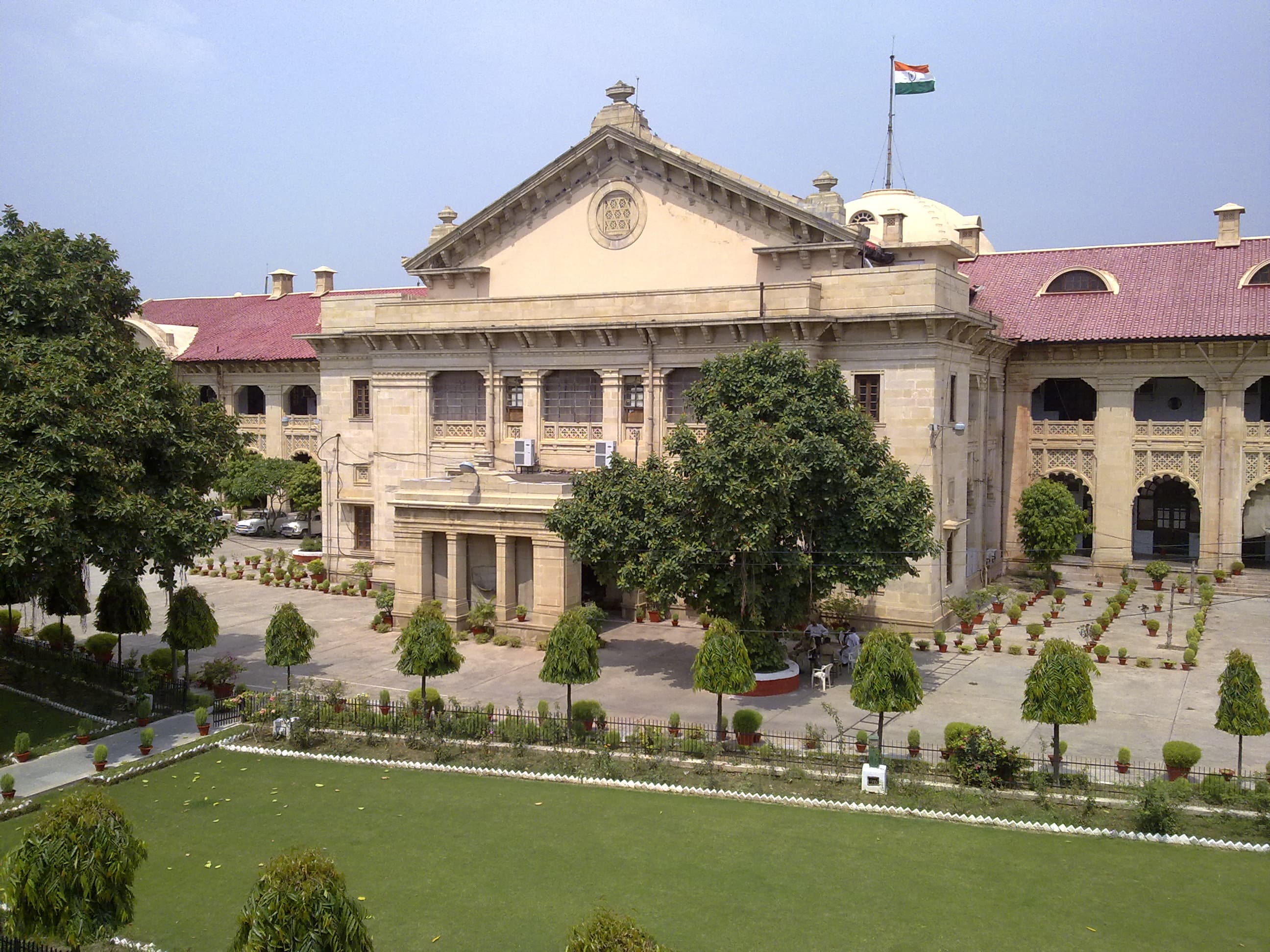
In March 2026, the Supreme Court of India delivered a decisive correction to a habit several High Courts had fallen into — disposing of FIR quashing petitions by merely directing the police to "follow arrest guidelines" or "act in accordance with law", rather than actually deciding whether the FIR deserved to survive. The Court held this was an abdication of judicial duty and ruled that every quashing petition under Section 482 CrPC (now Section 528 BNSS) must be decided on its merits.
For accused persons in Uttar Pradesh facing motivated FIRs — in property feuds, matrimonial breakdowns, business fall-outs and political rivalries — this judgment is a major shield. It forces the Allahabad High Court Lucknow Bench and other forums to actually engage with whether the FIR discloses any offence, instead of pushing the petitioner back into the police machinery. If you are weighing a quashing petition, speak to our team first — strategy at the threshold matters more than later.
Table of Contents
Need Immediate Legal Help?
If you're facing a legal emergency in Lucknow, don't wait. Contact experienced criminal lawyer Advocate Onkar Pandey for immediate assistance.
What the Supreme Court Actually Said in March 2026
The Supreme Court was hearing appeals where High Courts had received well-pleaded petitions under Section 482 CrPC / Section 528 BNSS to quash FIRs, and had disposed of them with one-line directions like "the petitioner may approach the Investigating Officer" or "police shall follow Arnesh Kumar guidelines". The Bench was unambiguous.
- High Courts cannot dispose of a quashing petition by merely directing the police to follow arrest or investigation guidelines.
- A petition under Section 482 CrPC / 528 BNSS requires the Court to apply its mind to whether the FIR discloses any offence at all.
- Avoiding adjudication is an abdication of judicial responsibility, not judicial economy.
- The High Court is not confined to reading only the four corners of the FIR — it can examine evidence collected during investigation, surrounding circumstances, and events before and after the complaint.
- Where the FIR is a clear abuse of process — for example, dressing up a civil dispute as a criminal offence — the High Court must quash, not defer.
The ruling reinforces the Bhajan Lal framework (1992), which set out seven categories where quashing is appropriate. For the people of UP — where false FIRs frequently arise from property disputes and family quarrels — this is a working safeguard, not an academic one.
Why This Ruling Matters Specifically in Uttar Pradesh
UP has the highest absolute number of FIRs registered every year of any State. A significant share are cross-FIRs, retaliatory complaints filed after a property registry, a matrimonial breakdown, or a business dispute. Earlier, many such petitioners would find their quashing petitions disposed of with directions to the police — leaving them exposed to fresh arrest, custody, and chargesheet.
The Supreme Court's March 2026 ruling shifts this in three concrete ways:
- Higher quality hearings: The Lucknow Bench and Allahabad principal seat must now record reasoned findings — the routine "dismissed as not pressed" or "approach IO" orders are no longer safe.
- Better leverage for accused in UP: A petitioner can argue, with this judgment cited, that the Court is bound to look at investigation papers if filed.
- Reduced fear of arrest while petition pending: Combined with the November 2025 Mihir Rajesh Shah ruling on written grounds of arrest, the accused now has a stronger interim protection ecosystem.
This is particularly useful for false dowry cases under Section 85 BNS (old 498A IPC), property-related cheating FIRs, and SC-ST Act misuse cases — three high-frequency abuse categories at the Lucknow Bench.
Bhajan Lal Categories — When Will an FIR Be Quashed?
The Bhajan Lal categories remain the foundation of every quashing petition. The March 2026 ruling does not replace them — it forces High Courts to actually apply them. Use the table below to assess whether your FIR fits one of these categories.
| Category | Type of FIR | Typical UP Example |
|---|---|---|
| 1 | Allegations, even if taken at face value, do not disclose any offence | Civil non-payment dressed up as Section 318 BNS cheating |
| 2 | Allegations are absurd or inherently improbable | Allegation that ₹50 lakh dowry was demanded by a salaried clerk |
| 3 | FIR is barred by law (limitation, sanction not obtained) | Government servant case without Section 197 CrPC sanction |
| 4 | FIR is manifestly attended with mala fide / personal grudge | Cross-FIR filed days after a property registry |
| 5 | FIR does not constitute a cognisable offence — only a non-cognisable one | Allegations of insult or trespass without injury under wrong section |
| 6 | Statutory remedy provided is being bypassed | Negotiable Instruments Act matter dressed as criminal breach of trust |
| 7 | FIR is a tool to wreak vengeance | Allegations filed only after husband seeks divorce |
A trained criminal lawyer in Lucknow will map your FIR to one or more of these categories before drafting. A petition that does not name the category clearly is the kind of petition the Supreme Court warned against in March 2026.
Legal Consultation
Talk directly to Advocate Onkar Pandey
Explain your matter over a call or WhatsApp. If you take the case forward, the consultation fee adjusts into your overall fee, so there is no separate charge to begin.
Step-by-Step Procedure to File an FIR Quashing Petition at Lucknow
The procedural rigour matters as much as the legal grounds. Here is the working sequence we follow at our chamber for petitions before the Allahabad High Court Lucknow Bench.
- Obtain a certified copy of the FIR from the relevant police station or via the UP Police citizen portal.
- Gather supporting documents — sale deed, registry, marriage records, message exchanges, payment receipts — anything that shows the FIR is an abuse of process.
- Draft the petition under Section 528 BNSS (Section 482 CrPC for FIRs registered before July 1, 2024).
- Frame the question of law — name the Bhajan Lal category, cite the March 2026 ruling, and the Constitution Bench rulings on writ jurisdiction.
- File along with a stay application seeking interim protection from arrest and from coercive action until disposal.
- Serve the State and complainant through proper notice — the High Court will not hear ex parte at the merits stage.
- Attend hearings — typically 2 to 4 dates between admission and final disposal; chargesheet filed during pendency does not defeat the petition.
If the FIR has not yet led to arrest, you may parallelly file an anticipatory bail application under Section 482 BNSS to be on the safe side.
Can FIR Be Quashed After Chargesheet Is Filed?
This is the most common question asked at the consultation stage. The short answer is yes. The Supreme Court has repeatedly held — and reaffirmed in 2026 — that the High Court's power under Section 482 CrPC / 528 BNSS is not extinguished by the filing of a chargesheet.
- A chargesheet is only a further step by the investigating agency — it does not validate an FIR that was bad at inception.
- If the original FIR did not disclose an offence, the chargesheet built on it cannot magically cure that defect.
- However, the burden on the petitioner is higher after chargesheet — the Court will examine the statements under Section 161 CrPC, recoveries, and the broader investigation record.
- Voluntary compromise between parties is a separate ground; the Supreme Court has clarified that compoundability in non-heinous offences (e.g., simple hurt, cheating without large public injury) supports quashing.
- In serious offences — rape, murder, dacoity, offences against the State — compromise alone will not lead to quashing, even after chargesheet.
The March 2026 ruling clarifies that the High Court can look at evidence collected during investigation — this expressly entitles the petitioner to point to a weak chargesheet, contradictions in 161 statements, or absence of recovery as grounds for quashing.
What Mistakes Should You Avoid as a Petitioner?
The Supreme Court's March 2026 push for "merits-based" decisions also raises the bar for petitioners. A vague, poorly-drafted quashing petition will now invite dismissal on merits — which is far harder to recover from than a non-speaking dismissal.
- Do not file before reading the FIR carefully. Many petitions are filed on hearsay; the actual FIR may already be narrow enough not to require quashing.
- Do not rely only on "false implication". Mere assertion is insufficient — point to documentary contradiction.
- Do not bypass anticipatory bail if arrest is imminent. Quashing typically takes 2-6 months; an arrest in between can derail the proceeding.
- Do not file in the wrong forum. FIRs registered in Lucknow / Awadh / Rohilkhand districts go to the Lucknow Bench; FIRs from western UP go to the principal seat at Allahabad.
- Do not delay. Filing after long investigation, recoveries, or arrest weakens the petition. Move when the FIR is fresh.
For matrimonial-cycle FIRs, our companion guidance on divorce, maintenance and cross-FIR strategy may be useful before deciding on quashing alone.
How Long Does an FIR Quashing Petition Take in UP?
Timelines vary, but the data from our practice over the last 18 months is reasonably consistent at the Allahabad HC Lucknow Bench.
| Stage | Typical Timeline | What Happens |
|---|---|---|
| Filing to first listing | 1-3 weeks | Petition numbered, listed for admission |
| Admission with interim protection | First or second hearing | Stay on coercive action / arrest, notice to State |
| Counter affidavit by State | 4-8 weeks after notice | Investigation status filed |
| Rejoinder by petitioner | 2-4 weeks | Reply to State's counter |
| Final hearing | 3-6 months from filing | Merits-based reasoned order |
Compared to a Sessions Court trial, which can take 3-7 years, a quashing petition is a far quicker resolution — provided your facts justify it. To know whether your case is suitable, book a consultation.
About the Author
Advocate Onkar Pandey is a senior criminal and property lawyer practising at the Allahabad High Court Lucknow Bench. Bar Council enrolment number UP 4825/1999. He has handled FIR quashing petitions across Awadh and Rohilkhand for over two decades — across matrimonial, property, business and cheque dispute matters. He regularly advises clients on the intersection of FIR quashing, anticipatory bail and parallel civil remedies.
Office: Chamber A-406, High Court, Lucknow, Awadh Bar, UP 226001. Phone: +91 98392 71553. Email: advonpandey@gmail.com. For a confidential first reading of your FIR and a clear assessment of whether quashing is the right route, reach the chamber here.
Frequently Asked Questions
What is the Supreme Court's March 2026 ruling on FIR quashing in simple terms?+
The Supreme Court ruled that High Courts cannot dispose of FIR quashing petitions by simply directing the police to follow guidelines or by asking the petitioner to approach the Investigating Officer. Every quashing petition under Section 482 CrPC or Section 528 BNSS must be decided on its merits — meaning the Court must actually consider whether the FIR discloses an offence at all. The Court also clarified that the High Court is not restricted to reading only the FIR; it can examine evidence collected during investigation, surrounding circumstances, and the conduct of parties before and after the complaint. For accused persons in UP, this is a real safeguard against motivated FIRs being kept alive through procedural drift.
Can my FIR be quashed if a chargesheet has already been filed?+
Yes. The Supreme Court has consistently held that the High Court's inherent power under Section 482 CrPC, now Section 528 BNSS, is not extinguished by the filing of a chargesheet. If the original FIR did not disclose an offence — for instance, where a civil dispute over land payment was dressed up as cheating — the chargesheet cannot cure that defect. The burden on the petitioner is, however, higher after chargesheet: the High Court will look at the Section 161 statements, recoveries, and the overall investigation. The March 2026 ruling actually helps here, because it expressly entitles the High Court to evaluate the strength of the investigation record.
Which court should I approach for FIR quashing — Lucknow Bench or Allahabad principal seat?+
It depends on where the FIR is registered. FIRs registered in the 24 districts of Awadh and Rohilkhand — including Lucknow, Sitapur, Hardoi, Bareilly, Gonda, Faizabad and others — are heard at the Lucknow Bench of the Allahabad High Court. FIRs from western UP and other districts go to the principal seat at Allahabad. Filing in the wrong forum results in dismissal on territorial grounds, so confirm the police station district before drafting. A local criminal lawyer in Lucknow will make this assessment as the first step and also advise on whether to combine the quashing petition with an anticipatory bail application.
How much does an FIR quashing petition cost in Uttar Pradesh?+
Fees vary depending on the complexity of the case, the number of accused, whether a chargesheet has been filed, and whether interim protection from arrest is needed. A typical FIR quashing petition at the Lucknow Bench involves drafting fees, court fees, vakalatnama and clerkage, and appearance fees across two to four hearings. Most established chambers will quote a transparent lump sum at the consultation stage, with separate billing if the matter goes for review or to the Supreme Court. Beware of fixed online quotes that promise quashing without first reading the FIR — every petition must be tailored to the facts. Speak to the lawyer before paying anything.
What are the strongest grounds for getting an FIR quashed?+
The classic grounds are the seven Bhajan Lal categories: the allegations on the face of the FIR do not disclose an offence; the allegations are absurd or inherently improbable; the FIR is barred by law such as limitation or absence of sanction; the FIR is manifestly malicious; the FIR alleges only non-cognisable offences; a statutory remedy is being bypassed; and the FIR is a tool of personal vengeance. Beyond these, compromise between parties in compoundable offences and serious gaps in investigation after chargesheet are powerful supporting grounds. The petition must explicitly identify which category applies — vague pleadings of false implication are now insufficient after the March 2026 ruling.
Can I file an FIR quashing petition without first approaching the Magistrate?+
Yes. The High Court's power under Section 528 BNSS is independent of the Magistrate's powers under Sections 173 to 175 BNSS. You do not need to first exhaust remedies before the Magistrate. However, where the alleged grievance is limited — for example, you only want to register your version of events, or you want the police to register your counter-complaint — the Magistrate route may be faster and cheaper. A criminal lawyer will assess whether the facts justify directly invoking High Court jurisdiction or whether a Magistrate-level application is the appropriate first step. Consult before filing; the choice of forum heavily affects timelines.
Will my FIR quashing petition protect me from arrest while it is pending?+
Not automatically. The petition itself does not stay arrest — you must specifically pray for, and the Court must grant, an interim order restraining coercive action. Most quashing petitions in UP are filed together with a prayer for interim protection from arrest, and the Lucknow Bench routinely grants such protection where the petition is well-pleaded. If the petition is at the principal seat at Allahabad, the same practice applies. Where the High Court has not granted interim protection but arrest is imminent, the parallel route is a regular or anticipatory bail application under Section 482 or 483 BNSS. The two remedies can run alongside each other.
Related Services
Get Expert Legal Advice in Lucknow
20+ years experience in criminal law at Lucknow High Court. Available 24/7 for emergencies.
Disclaimer: This article is for general information purposes only and does not constitute legal advice. Every case is unique and requires specific legal analysis. For advice specific to your situation, please consult Advocate Onkar Pandey or another qualified attorney in Lucknow.