FIR Quashing Under Section 528 BNSS: The Supreme Court's Four-Step Test and How the Allahabad High Court Lucknow Bench Applies It
Quick Answer
FIR quashing is the legal remedy that lets a person trapped in a false or baseless criminal case get the First Information Report — and the entire investigation flowing from it — struck down by the High Court before the case ever reaches trial. For thousands of people in Lucknow and a…
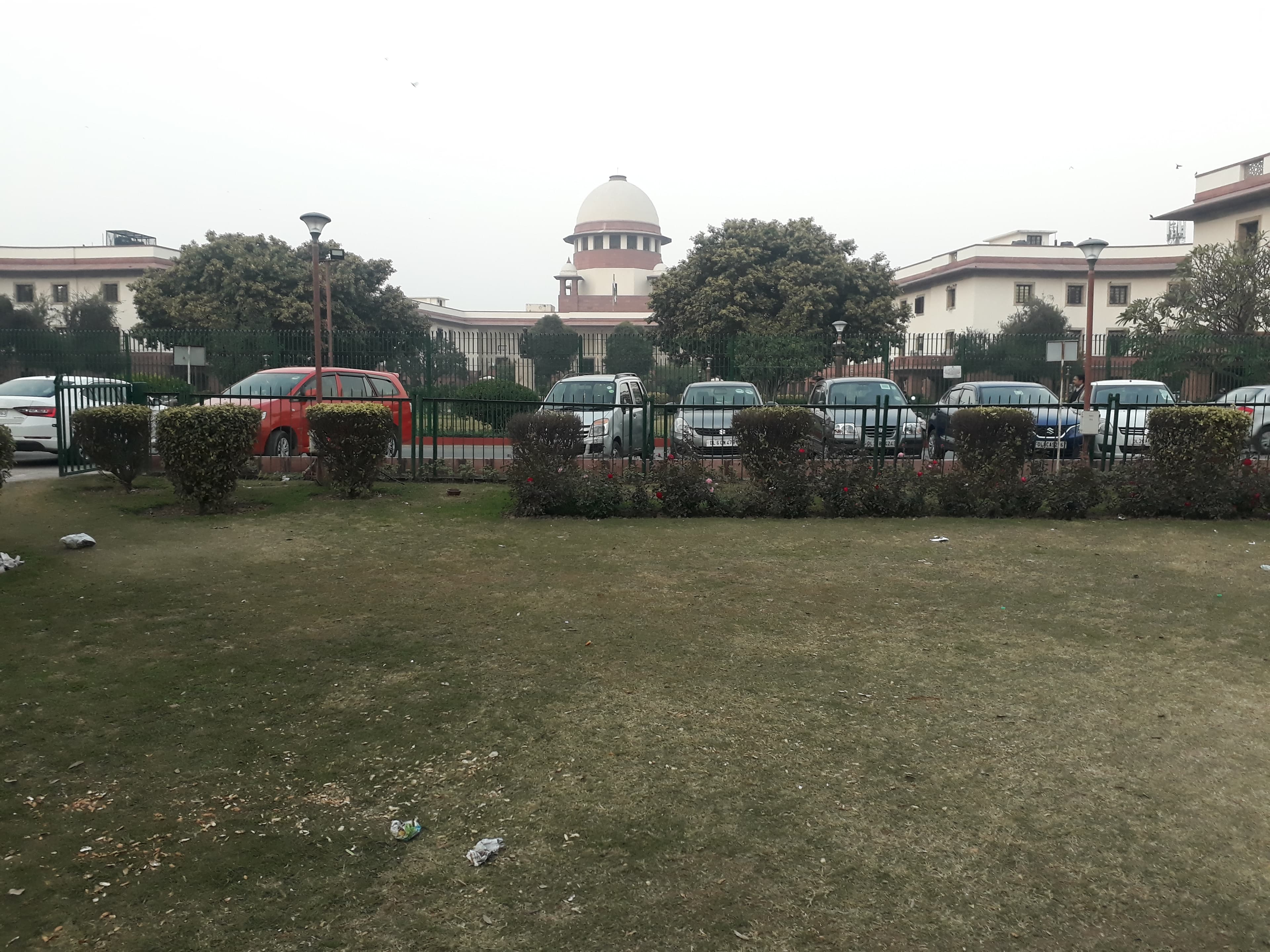
FIR quashing is the legal remedy that lets a person trapped in a false or baseless criminal case get the First Information Report — and the entire investigation flowing from it — struck down by the High Court before the case ever reaches trial. For thousands of people in Lucknow and across Uttar Pradesh who wake up to a malicious FIR lodged by a business rival, an estranged spouse, or a neighbour in a property feud, this is often the only escape. The power lives in Section 528 of the Bharatiya Nagarik Suraksha Sanhita, 2023 (BNSS), the successor to Section 482 of the old CrPC.
In Pradeep Kumar Kesarwani v. State of Uttar Pradesh (decided 9 September 2025), the Supreme Court set aside an Allahabad High Court order and laid down a clear four-step test that every High Court must now apply before deciding whether to quash criminal proceedings. This guide explains that test in plain language, the grounds on which the Allahabad High Court Lucknow Bench actually quashes FIRs, how quashing works when parties settle, and the step-by-step procedure. If you are facing a false case, a FIR quashing lawyer in Lucknow can assess your grounds quickly.
Table of Contents
Need Immediate Legal Help?
If you're facing a legal emergency in Lucknow, don't wait. Contact experienced criminal lawyer Advocate Onkar Pandey for immediate assistance.
What FIR Quashing Means Under Section 528 BNSS
Quashing means asking the High Court to use its inherent powers to cancel an FIR, a chargesheet, or an entire criminal proceeding because letting it continue would be an abuse of the legal process. It is not a trial on guilt or innocence — it is the court stopping a case that should never have started.
Since 1 July 2024, the petition is filed under Section 528 BNSS instead of the old Section 482 CrPC. The language and the scope are the same; only the number has changed. The power is exercised exclusively by the High Court, which for Lucknow and the surrounding districts means the Allahabad High Court Lucknow Bench.
The court typically intervenes in situations such as:
- The FIR discloses no offence even if every word is taken as true.
- The allegations are absurd, inherently improbable, or motivated by personal vendetta.
- A purely civil dispute — a money claim, contract breach, or property matter — has been dressed up as a crime.
- The parties have genuinely settled a private dispute.
Because quashing ends the case at the threshold, courts use the power sparingly. A well-drafted petition by a criminal lawyer in Lucknow that pins the facts to one of these recognised grounds has a far stronger chance of success.
The Supreme Court's Four-Step Test (Pradeep Kumar Kesarwani v. State of UP)
The most important recent development for anyone seeking to quash an FIR in Uttar Pradesh is the structured framework the Supreme Court laid down in Pradeep Kumar Kesarwani v. State of Uttar Pradesh (Criminal Appeal No. 3831 of 2025), decided by Justice J.B. Pardiwala and Justice Sandeep Mehta on 9 September 2025. The Court set aside an Allahabad High Court refusal to quash and gave High Courts a clear, four-question test.
The four steps a High Court must work through are:
| Step | The Question the High Court Must Ask |
|---|---|
| 1. Material strength | Is the accused’s defence material sound, reasonable and indubitable? |
| 2. Contradiction | Does that material rule out the assertions made in the charge? |
| 3. Refutation | Is the accused’s material such that the prosecution cannot justifiably refute it? |
| 4. Abuse of process | Would continuing the trial be an abuse of court process and fail the ends of justice? |
The Court held that when all four conditions are answered affirmatively, the High Court’s judicial conscience should lead it to quash the proceedings. The ruling also reinforced that summoning a person on vague, delayed and uncorroborated allegations is itself an abuse of process. For a Lucknow accused, this test is a powerful drafting blueprint — a quashing petition should now be argued step by step against these exact four questions.
Common Grounds on Which the Lucknow Bench Quashes an FIR
Over years of practice before the Lucknow Bench, certain fact patterns repeatedly succeed in quashing while others rarely do. Knowing which bucket your case falls into is the first realistic step.
| Ground for Quashing | Typical Example | Likelihood |
|---|---|---|
| No offence made out | FIR contents, even if true, disclose no crime | Strong |
| Civil dispute disguised as crime | Loan recovery filed as cheating/criminal breach of trust | Strong |
| Mala fide / vendetta | FIR after a property or business fallout | Moderate |
| Settlement between parties | Matrimonial or neighbour dispute resolved | Strong (non-heinous) |
| Heinous offence (murder, rape) | Serious bodily crime against society | Weak |
The recurring theme is that courts protect genuine prosecutions while striking down the misuse of criminal law as a private weapon. Many false cases in Uttar Pradesh arise from property and land disputes, where a civil claim is converted into a criminal FIR to pressure the other side.
The court reads the FIR as a whole and in context. It will not conduct a mini-trial or weigh disputed evidence; it only asks whether, accepting the allegations at face value, a cognizable offence is even disclosed. Where it is not, quashing follows.
Legal Consultation
Talk directly to Advocate Onkar Pandey
Explain your matter over a call or WhatsApp. If you take the case forward, the consultation fee adjusts into your overall fee, so there is no separate charge to begin.
Quashing an FIR on the Basis of Settlement or Compromise
A large share of quashing petitions at the Lucknow Bench rest on a compromise between the parties. This route is especially common in matrimonial and family disputes — including Section 498A dowry-harassment cases — and in neighbour or money quarrels.
The guiding principle comes from the Supreme Court in Gian Singh v. State of Punjab: even a non-compoundable offence can be quashed on settlement if the dispute is essentially private or personal in nature and continuing the prosecution would serve no public interest. Where a husband and wife reconcile or take a mutual divorce, the High Court can quash the connected FIR.
Key limits to keep in mind:
- Heinous and serious offences — murder, rape, dacoity, serious offences against society — cannot be quashed merely because the parties settle.
- The court must be satisfied the settlement is voluntary and not the product of coercion or fraud.
- Predominantly commercial, matrimonial, family and civil-flavoured disputes are the natural candidates.
If your case is a matrimonial or maintenance dispute that both sides now want to bury, a settlement-based quashing is often the cleanest exit. A consultation can confirm whether your offence qualifies.
Step-by-Step: Filing a Quashing Petition at the Lucknow Bench
A quashing petition is a High Court proceeding and must be drafted with precision. Rushed or vaguely worded petitions are dismissed at the admission stage. The broad procedure is as follows.
- Obtain the FIR and key documents — a certified FIR copy, any chargesheet, and supporting material that shows the case is false or civil in nature.
- Identify your ground — map the facts onto a recognised ground (no offence, civil dispute, mala fide, or settlement) and the four-step test.
- Draft the petition under Section 528 BNSS — filed before the Allahabad High Court Lucknow Bench, impleading the State of UP and the complainant.
- Annex a settlement deed — if quashing is sought on compromise, attach the duly executed agreement and affidavits.
- Appear at the admission hearing — the court may issue notice, call for a status report, or stay the investigation.
- Final hearing and order — the court decides whether to quash, partly quash, or dismiss the petition.
Timelines vary widely — a settlement matter may conclude in a few hearings, while a contested petition can take months. Because the High Court’s inherent power is discretionary, the quality of drafting and oral argument by your criminal defence lawyer often decides the outcome.
Mistakes That Get a Quashing Petition Dismissed
Many petitions fail not because the case lacked merit but because of avoidable errors. Watching for these protects your one realistic shot at quashing.
- Asking the court to weigh evidence — quashing is not a trial; arguing disputed facts invites dismissal with liberty to face trial.
- Filing too late — long, unexplained delay weakens a mala fide argument and suggests an afterthought.
- Forcing a settlement onto a heinous offence — serious crimes against society will not be quashed on compromise.
- Vague, sweeping allegations of bias without documents to back the claim of vendetta.
- Ignoring the four-step test — after Pradeep Kumar Kesarwani, a petition that does not address each step is far less persuasive.
Equally, do not assume that a strong civil defence automatically means quashing — the FIR must independently fail to disclose an offence. If the High Court declines to quash, the accused can still pursue anticipatory or regular bail and contest the case on merits at trial. A measured, ground-anchored petition almost always beats an emotional one.
About the Author
Advocate Onkar Pandey is a practicing lawyer at the Allahabad High Court Lucknow Bench with extensive experience in criminal law, family law, and civil litigation. With a deep understanding of the Indian legal system and years of courtroom experience in Lucknow courts, Advocate Pandey provides practical legal guidance to clients across Uttar Pradesh. For legal consultation regarding FIR quashing under Section 528 BNSS, contact Advocate Onkar Pandey for expert advice tailored to your specific situation.
Frequently Asked Questions
Can an FIR be quashed after the chargesheet is filed?+
Yes. The High Court’s power under Section 528 BNSS (old Section 482 CrPC) is wide enough to quash an FIR, the investigation, the chargesheet, or even proceedings after summoning. Filing of the chargesheet does not extinguish the right to seek quashing. In Pradeep Kumar Kesarwani v. State of UP (2025), the Supreme Court reaffirmed that summoning on vague, delayed and uncorroborated allegations is an abuse of process that the High Court can stop. That said, the longer the case has progressed, the more carefully the court scrutinises the petition. The safest approach is to act early once it is clear the FIR is false or discloses no offence, rather than waiting for the trial to advance.
How much time does FIR quashing take at the Lucknow Bench?+
There is no fixed timeline because quashing is a discretionary High Court remedy. A petition based on a genuine settlement between parties — common in matrimonial and neighbour disputes — may be decided within a few hearings, sometimes in two to four months. A contested petition, where the State and complainant oppose quashing, can take several months to over a year depending on the cause list and whether a status report is called. The court may grant interim protection, such as a stay on arrest or investigation, while the petition is pending. Quality drafting that directly addresses the Supreme Court’s four-step test usually speeds up a favourable hearing.
What is the Supreme Court's four-step test for quashing?+
In Pradeep Kumar Kesarwani v. State of Uttar Pradesh (9 September 2025), the Supreme Court directed High Courts to ask four questions before quashing: (1) Is the accused’s defence material sound, reasonable and indubitable? (2) Does that material rule out the charge’s assertions? (3) Is the material such that the prosecution cannot justifiably refute it? (4) Would continuing the trial be an abuse of process and fail the ends of justice? When all four are answered affirmatively, the court’s judicial conscience should lead it to quash the proceedings. This test gives a clear blueprint for drafting a strong quashing petition before the Allahabad High Court Lucknow Bench.
Can a 498A dowry case FIR be quashed on settlement?+
Yes, in many cases. Although Section 498A (now reflected in the Bharatiya Nyaya Sanhita) is non-compoundable, the Supreme Court in Gian Singh v. State of Punjab held that the High Court can quash such matrimonial FIRs when the dispute is essentially private and the parties have genuinely settled — for example through reconciliation or mutual-consent divorce. The court must be satisfied the settlement is voluntary and free of coercion. Heinous offences are not covered, but ordinary matrimonial cruelty and dowry-harassment allegations usually qualify. If both spouses want to close the matter, a settlement-based quashing petition is often the cleanest resolution. Consult a family law advocate to confirm eligibility.
What is the difference between Section 482 CrPC and Section 528 BNSS?+
They are functionally the same power, only renumbered. Section 482 CrPC was the provision preserving the High Court’s inherent powers to prevent abuse of process and secure the ends of justice. From 1 July 2024, the new criminal procedure code — the Bharatiya Nagarik Suraksha Sanhita, 2023 (BNSS) — replaced the CrPC, and the same inherent power now appears in Section 528 BNSS. The scope, the wording, and the case law built over decades all continue to apply. For FIRs registered after July 2024, the petition is titled under Section 528 BNSS; for older matters, references to Section 482 CrPC may still appear. The remedy and grounds remain identical.
Can a civil dispute filed as a criminal FIR be quashed?+
Yes, and this is one of the strongest grounds before the Lucknow Bench. Indian courts repeatedly hold that the criminal process cannot be used as a tool to pressure someone in what is really a civil dispute — such as a loan recovery, a contract disagreement, or a property and land dispute. When a money or property claim is dressed up as cheating or criminal breach of trust with no genuine criminal ingredient, the High Court can quash the FIR. The court reads the FIR as a whole and asks whether, even taken at face value, it discloses a cognizable offence. If the dispute is purely civil in substance, quashing is the appropriate remedy.
Related Guides
Related Services
Get Expert Legal Advice in Lucknow
20+ years experience in criminal law at Lucknow High Court. Available 24/7 for emergencies.
Disclaimer: This article is for general information purposes only and does not constitute legal advice. Every case is unique and requires specific legal analysis. For advice specific to your situation, please consult Advocate Onkar Pandey or another qualified attorney in Lucknow.