FIR Quashing at Allahabad High Court Lucknow Bench: Cost, Timeline, and Real Case
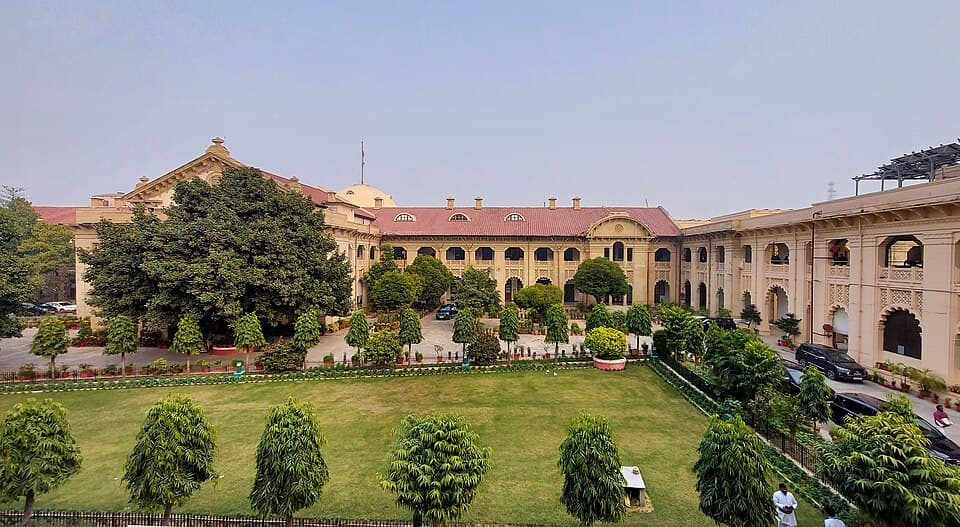
If you have received a notice or your name appears in an FIR, your first question is usually: can this FIR be quashed - and what will it cost? This article gives you direct, practice-based answers from the Allahabad High Court Lucknow Bench.
- FIR quashing is possible but not guaranteed. The High Court exercises this power sparingly, only in cases that meet the legal tests laid down by the Supreme Court.
- Cost range: Rs. 30,000 to Rs. 1,50,000 in total - depending on the complexity of the offence, whether the State opposes, and how many hearings are needed.
- Timeline: 3 to 6 months for routine matters. Contested cases where the State files a strong counter-affidavit can stretch to 10 to 12 months.
- Not all FIRs can be quashed. Cases involving heinous offences (murder, rape, dacoity), clear evidence of cognizable crimes, and strong public interest are almost never quashed.
- Real case handled at this office: App. U/s 482 No. 8849/2022 - the application was dismissed, but the court protected the applicant's bail rights. Below we explain why that still mattered.
If your FIR involves a civil dispute dressed up as a criminal complaint, a false case, or a compounded offence, a Section 528 BNSS petition at the Lucknow Bench is worth exploring. Contact us for a initial consultation before you decide.
Table of Contents
Need Immediate Legal Help?
If you're facing a legal emergency in Lucknow, don't wait. Contact experienced criminal lawyer Advocate Onkar Pandey for immediate assistance.
When Can an FIR Be Quashed Under Section 528 BNSS?
Section 528 of the Bharatiya Nagarik Suraksha Sanhita 2023 (BNSS) replaced Section 482 of the CrPC with effect from 1 July 2024. The power and the legal tests remain the same. The Allahabad High Court follows the framework set by the Supreme Court in State of Haryana v. Bhajan Lal [1992 Supp (1) SCC 335], which listed seven grounds on which an FIR or criminal proceeding can be quashed:
- Ground 1 - No offence disclosed: The allegations in the FIR, even if taken entirely at face value, do not make out any offence against the accused.
- Ground 2 - No legal sanction: The FIR is manifestly attended with mala fide intent or is filed with a patently unlawful purpose, such as pressuring the accused in a civil or property dispute.
- Ground 3 - Allegations absurd or improbable: The allegations are so inherently improbable and preposterous that no prudent person could ever reach a just conclusion based on them.
- Ground 4 - Cognisance barred by law: The offence is one where the court is barred from taking cognisance - for example, because the required prior sanction to prosecute has not been obtained.
- Ground 5 - Civil dispute disguised as criminal: The dispute is essentially civil (money, property, contract) and the FIR is a weapon to coerce a settlement rather than a genuine criminal complaint.
- Ground 6 - Offence compounded or complainant settled: The parties have genuinely settled, particularly in matrimonial and cheque-dishonour cases, and no public interest demands continued prosecution.
- Ground 7 - No prima facie case: The uncontroverted allegations, even if accepted in full, do not establish a prima facie case against the accused for the offence charged.
What types of FIRs cannot be quashed?
- Murder (Section 302 IPC / Section 103 BNS) and other heinous offences
- Sexual assault and offences under POCSO Act
- Organised crime, dacoity, and terrorism cases
- FIRs where solid forensic or documentary evidence already exists
- Cases where a large number of victims are involved and public interest is at stake
If your case falls under a criminal lawyer's typical territory - cheque bounce, 498-A matrimonial harassment, property disputes lodged as criminal cases, or Section 506 criminal intimidation - there is a real chance of quashing at the Allahabad High Court Lucknow Bench.
How Long Does FIR Quashing Take at Lucknow Bench?
The honest answer: 3 to 6 months is the typical range for an uncontested or lightly contested petition. If the State files a strong counter-affidavit and the matter is listed for detailed arguments, expect 9 to 12 months. Below is the stage-by-stage breakdown from actual practice.
| Stage | What Happens | Typical Time |
|---|---|---|
| Stage 1: Filing and First Admission Hearing | Petition filed in Registry; case listed before the appropriate Bench; court decides whether to issue notice and grant interim stay on arrest | 1 to 3 weeks from filing |
| Stage 2: Notice to State and Counter-Affidavit | Court issues notice to the State of UP; the Government Advocate files a counter-affidavit; complainant may also be allowed to file a reply | 6 to 12 weeks |
| Stage 3: Arguments | Both sides argue on merits; court may ask for case diary or charge sheet; in complex cases multiple hearing dates are given | 4 to 12 weeks depending on the Bench's schedule |
| Stage 4: Final Order | Court either quashes the FIR, dismisses the petition, or passes any interim directions | 1 to 4 weeks after arguments conclude |
Key factors that slow a petition down:
- State files a detailed counter-affidavit disputing the applicant's version
- The offence is a serious one (Section 307 attempt to murder, Section 308 culpable homicide) and the court is cautious
- Multiple accused persons have filed separate petitions
- Complainant engages a private counsel to oppose the quashing
- High Court vacation periods (summer and winter) reduce working weeks
In the same period as your quashing petition, you should also consider anticipatory bail or regular bail at the Sessions Court or High Court - both applications can run simultaneously, which is often the smarter strategy.
The Real Cost of FIR Quashing - What You Are Paying For
Clients often ask for a single number. The honest answer is that the total cost depends on three variables: the severity of the offence, whether the petition is contested, and how many hearings are required. The table below reflects actual practice at the Allahabad High Court Lucknow Bench.
| Cost Component | Typical Range | Notes |
|---|---|---|
| Advocate fee (end-to-end) | Rs. 25,000 to Rs. 1,20,000 | Simple cases (cheque bounce, 498-A with settlement) are at the lower end. Contested matters with serious offences are at the higher end. |
| Court filing fee | Rs. 500 to Rs. 2,000 | Nominal fee payable to the High Court Registry; varies slightly by type of application |
| Drafting and documentation | Rs. 2,000 to Rs. 5,000 | Affidavits, typed copies, certified copies of FIR and charge sheet |
| Miscellaneous (stamps, service, notary) | Rs. 1,000 to Rs. 3,000 | Stamp duty on affidavits, process fee for serving notice on State |
| Total - Simple/Uncontested | Rs. 30,000 to Rs. 60,000 | Civil dispute disguised as criminal, or settled matrimonial case |
| Total - Contested/Complex | Rs. 75,000 to Rs. 1,50,000 | State files counter; multiple hearings; serious offence (307, 308, 420 with large amount) |
What is NOT included above:
- Sessions Court or trial court fees if parallel bail proceedings are running
- Costs of compromise deed or affidavit from the complainant (if settlement is part of the strategy)
- Travel costs if the client is not based in Lucknow
A word on fee structures: at this office, the fee is discussed transparently at the first consultation. No hidden costs are added mid-case. If the matter turns out to be substantially more complex than initially presented, that conversation happens before any additional fee is asked.
Legal Consultation
Talk directly to Advocate Onkar Pandey
Explain your matter over a call or WhatsApp. If you take the case forward, the consultation fee adjusts into your overall fee, so there is no separate charge to begin.
App No. 8849/2022 - What Happened in a Real Case (Dismissed But Bail Retained)
Most law firm websites show only victories. This section describes a case that was dismissed - and explains why the outcome still protected the client.
Case: Bindheshwari Prasad Pandey v. State of U.P. through Principal Secretary, Home Department, Lucknow and Another
Case Number: Application U/S 482 No. 8849 of 2022
Court: Allahabad High Court, Lucknow Bench
Judge: Hon'ble Justice Ajai Kumar Srivastava-I
Date: 30 November 2022
Advocates for Applicant: Onkar Pandey, Prakash Chandra Baranwal
Background: The applicant sought quashing of a charge sheet filed against him under Sections 323, 504, 506, and 308 IPC (voluntarily causing hurt, intentional insult, criminal intimidation, and culpable homicide not amounting to murder). The FIR originated from Police Station Kotwali Bikapur, District Ayodhya.
What the court decided: The application was dismissed. The court applied the settled principle that "the power of quashing criminal proceedings should be exercised very sparingly and with circumspection and that too in the rarest of the rare cases." Given the nature of Section 308 IPC (culpable homicide not amounting to murder) in the charge sheet, the court was not prepared to quash proceedings at the preliminary stage without full trial.
Why bail rights being retained still mattered: Even though the quashing petition failed, the court expressly recorded that the applicant retained the right to:
- Apply for bail before the appropriate court
- File a discharge application at the Sessions Court at the appropriate stage
- Claim expeditious consideration given that no specific role of actual assault was attributed to him in the charge sheet
This is significant. A dismissed quashing petition is not the end of the road. The court's observations about no specific assault role being attributed can be used as a strong argument in bail proceedings and at the discharge stage. The applicant's liberty was protected through a different but equally valid legal route.
Lesson for clients: FIR quashing and bail are not either/or choices. Even when quashing fails, the arguments made in the petition - and the court's observations - can directly strengthen the bail application. This is why both strategies are often run together by an experienced criminal lawyer at Lucknow.
You can verify this case on Indian Kanoon (App U/s 482 No. 8849 of 2022).
What Weakens an FIR Quashing Application
Filing a weak quashing petition does more harm than good. It puts your version on the court record in an unfavourable way and can be used against you in trial. Below are the most common reasons petitions fail or are withdrawn.
- The offence is serious and evidence is documentary. If the FIR involves Section 307, 302, 376, or dacoity, and there is a medical report, forensic evidence, or video footage supporting the prosecution, the court will not interfere with the FIR at this stage.
- Multiple independent witnesses support the FIR. When four or five unrelated eyewitnesses have made statements under Section 161 CrPC, a quashing court is unlikely to hold that no prima facie case exists.
- The applicant has prior criminal antecedents. Courts look at the applicant's history. A prior conviction or pending cases for similar offences reduce the court's willingness to quash.
- The petition is filed too late. If the charge sheet has been filed, cognisance has been taken, and the trial is at an advanced stage, quashing becomes harder - though not impossible for the right type of case.
- No genuine settlement in matrimonial cases. In 498-A IPC cases, courts typically want to see a registered compromise deed or an affidavit from the complainant before quashing. A claimed settlement without evidence will be dismissed.
- Suppression of material facts. If the petition does not disclose the complete background - such as prior assault history or an earlier attempt at compromise that broke down - the court will dismiss it for suppression once the State files its counter-affidavit.
- Purely technical grounds with no merit. Filing a quashing petition solely because the FIR was delayed (which is a ground for scrutiny, not automatic quashing) without substantive merits will not succeed.
The right approach before filing is a frank assessment with a High Court lawyer familiar with Lucknow Bench practice - including a candid look at the counter-affidavit the State is likely to file. If the facts strongly support the FIR, a FIR quashing petition may not be the best first move. Bail or a discharge application at the Sessions Court might be the more effective strategy.
About Advocate Onkar Pandey
Advocate Onkar Pandey practises criminal and property law at the Allahabad High Court Lucknow Bench and in the subordinate courts of Uttar Pradesh. His practice includes FIR quashing petitions, bail and anticipatory bail, criminal appeals, and property disputes before the civil and revenue courts.
He has appeared in Section 482 CrPC and Section 528 BNSS matters involving a range of offences - from matrimonial disputes and cheque dishonour cases to serious IPC offences including Section 307 and 308. His approach combines a realistic assessment of quashing prospects with a parallel bail strategy where quashing alone is uncertain.
- Practice areas: FIR quashing, bail and anticipatory bail, criminal defense, property disputes, service law matters
- Court: Allahabad High Court (Lucknow Bench), Sessions Courts, District Courts across UP
- Location: Lucknow, Uttar Pradesh
If you have received a notice, your name is in an FIR, or a charge sheet has been filed against you, contact Advocate Onkar Pandey for a consultation before deciding whether to file a quashing petition, apply for bail, or pursue another remedy.
Frequently Asked Questions
Can any FIR be quashed at Allahabad High Court?+
No. The Allahabad High Court can quash an FIR only when it meets specific legal tests - the leading test being the seven-category framework from State of Haryana v. Bhajan Lal (1992). FIRs involving heinous offences like murder (Section 302 IPC / Section 103 BNS), rape, or dacoity where evidence already exists are almost never quashed. FIRs that are more likely to be quashed include those arising from civil or property disputes lodged as criminal complaints, matrimonial cases where both parties have genuinely settled, and cases where the allegations do not disclose any cognisable offence at all.
How much does FIR quashing cost at Allahabad High Court Lucknow Bench?+
The total cost ranges from Rs. 30,000 to Rs. 1,50,000 depending on the complexity of the case. Simple or uncontested matters - such as a cheque bounce case or a 498-A case with a genuine settlement - typically cost Rs. 30,000 to Rs. 60,000. Contested matters where the State files a strong counter-affidavit and multiple hearings are required range from Rs. 75,000 to Rs. 1,50,000. The court filing fee itself is nominal (Rs. 500 to Rs. 2,000). The bulk of the cost is the advocate fee, which depends on the number of hearings and the seriousness of the offence.
How long does FIR quashing take at Lucknow Bench?+
For routine cases, expect 3 to 6 months from filing to final order. The process has four stages: filing and admission hearing (1 to 3 weeks), notice to State and counter-affidavit (6 to 12 weeks), arguments (4 to 12 weeks), and final order (1 to 4 weeks). If the State strongly opposes and files a detailed counter-affidavit, or if the offence is serious and requires multiple rounds of arguments, the total timeline can extend to 9 to 12 months. Court vacations (summer and winter) also add to the overall time.
Can I apply for FIR quashing and bail at the same time?+
Yes - and this is often the smarter strategy. A bail application before the Sessions Court or High Court and a Section 528 BNSS quashing petition at the High Court can run simultaneously. In fact, App No. 8849/2022 at this office is an example where the quashing petition was dismissed, but the court's observations directly supported the bail application by recording that no specific assault role was attributed to the applicant. Running both applications together means that even if one fails, the arguments made and the court's observations in the other proceeding are not wasted.
What happens if the FIR quashing petition is dismissed?+
A dismissed quashing petition does not end your options. The court often makes observations even while dismissing - for example, noting that no specific role was assigned to the accused, or that the matter is essentially civil in nature. These observations can be used in bail proceedings before the Sessions Court, in a discharge application at the trial stage, and potentially in a fresh quashing petition if significant new facts emerge. You can also continue to defend yourself in the trial court with a plea of not guilty and appropriate evidence. The dismissed petition itself does not amount to a finding of guilt.
Is compromise with the complainant required for FIR quashing?+
It depends on the type of case. For matrimonial offences under Section 498-A IPC (cruelty to wife), cheque dishonour cases under Section 138 NI Act, and other essentially private disputes, the Allahabad High Court generally expects either a genuine settlement or a strong reason why quashing is warranted even without one. For cases involving public interest - such as offences against the State, corruption, or violence affecting third parties - a private compromise between the parties is not enough to secure quashing, as the court considers the larger public interest. A frank assessment with a lawyer before filing will tell you whether a settlement is necessary in your case.
Will I have to travel to Lucknow repeatedly for my FIR quashing petition, or can my lawyer appear for me?+
In most FIR quashing petitions under Section 528 BNSS your advocate appears on your behalf and your personal presence is not required at every date, since these are heard on legal submissions rather than oral evidence. You may need to be available for verification of the petition and, in compromise-based quashing, the parties are sometimes asked to appear or verify the settlement before the court. Discuss with your counsel whether any date requires you to be physically present at the Lucknow Bench.
Can I get an interim stay on my arrest while the FIR quashing petition is pending in Lucknow?+
Yes, the High Court can grant interim protection, commonly directing that no coercive action be taken against you or that your arrest be stayed while the quashing petition is heard. This relief is discretionary and depends on the nature of the offence and the material on record, and it is not automatic in serious cases. Many petitioners file the quashing petition together with a prayer for interim protection so that they are shielded during the pendency.
Related Services
Get Expert Legal Advice in Lucknow
20+ years experience in criminal law at Lucknow High Court. Available 24/7 for emergencies.
Disclaimer: This article is for general information purposes only and does not constitute legal advice. Every case is unique and requires specific legal analysis. For advice specific to your situation, please consult Advocate Onkar Pandey or another qualified attorney in Lucknow.