FIR Quashing for Cognizable Offences in UP: What the 2026 Allahabad High Court Ruling Means for You
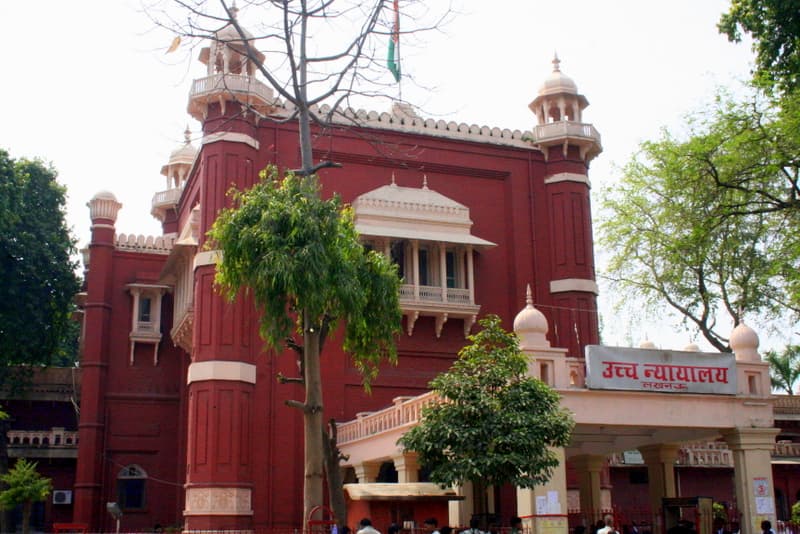
FIR quashing under Section 528 BNSS (formerly Section 482 CrPC) is one of the most sought-after remedies for individuals facing false or frivolous criminal cases in Uttar Pradesh. Every year, thousands of petitions are filed before the Allahabad High Court's Lucknow Bench seeking to quash First Information Reports — but many of these petitions fail, especially when the underlying allegation involves a cognizable offence.
In 2026, a significant ruling by the Allahabad High Court in Devendra Kumar Singh v. State of Uttar Pradesh (2026 AHC LKO 26045) reaffirmed a critical principle: courts cannot and must not thwart a lawful investigation by quashing an FIR simply because the accused finds it inconvenient. When the FIR discloses a cognizable offence on its face, the High Court will generally decline to interfere with the police investigation.
If you or a family member is facing a criminal case in Lucknow or anywhere in UP, understanding when FIR quashing works — and when it will not — is essential before approaching the High Court. This guide explains the 2026 ruling, the legal framework under BNSS, the grounds on which quashing succeeds or fails, and what alternative remedies exist when a quashing petition is refused.
Table of Contents
Need Immediate Legal Help?
If you're facing a legal emergency in Lucknow, don't wait. Contact experienced criminal lawyer Advocate Onkar Pandey for immediate assistance.
What Is FIR Quashing and Which Court Has the Power?
FIR quashing is a legal remedy through which a person named in an FIR approaches the High Court to nullify the criminal proceedings entirely. Once an FIR is quashed, the police cannot investigate the case further, no chargesheet can be filed, and the accused is freed from the threat of arrest in that particular case.
The power to quash FIRs is vested in the High Court under Section 528 of the Bharatiya Nagarik Suraksha Sanhita, 2023 (BNSS) — the provision that replaced the old Section 482 of the CrPC after July 2024. The Allahabad High Court at its Lucknow Bench exercises this jurisdiction for cases arising in Lucknow, Faizabad, Gonda, Sitapur, and several other districts of eastern and central UP.
Key features of the FIR quashing power under Section 528 BNSS:
- It is an inherent power of the High Court — meaning it exists to prevent abuse of the process of law.
- It is discretionary — the court decides case by case whether quashing is warranted.
- It is not an appeal against the FIR — it is a constitutional remedy to prevent injustice.
- It can be sought even before chargesheet is filed, or after, depending on the stage of the case.
Filing a well-drafted quashing petition before the Allahabad High Court's Lucknow Bench requires a thorough understanding of the FIR allegations, the applicable law, and the specific grounds that justify High Court intervention.
The 2026 Allahabad HC Ruling: Investigation Cannot Be Stopped for Cognizable Offences
In Devendra Kumar Singh v. State of Uttar Pradesh (2026 AHC LKO 26045), the Allahabad High Court's Division Bench examined a petition seeking to quash an FIR registered under provisions of the Bharatiya Nyaya Sanhita, 2023 (BNS) alleging assault and criminal intimidation — offences that are cognizable in nature.
The High Court firmly reiterated a long-standing principle: when the FIR discloses, on its face, the commission of a cognizable offence, the High Court should not ordinarily exercise its inherent power under Section 528 BNSS to quash the FIR, as such interference would thwart the lawful investigation that the police are obligated to conduct.
The court's reasoning rests on the division of authority in the criminal justice system:
- The police have a statutory duty to investigate every cognizable offence reported through an FIR.
- The Magistrate takes cognizance and decides whether the chargesheet warrants trial.
- The High Court's role under Section 528 BNSS is preventive — to stop abuse of process — not to substitute its judgment for the police's investigative function.
This ruling draws a clear boundary: the High Court's inherent powers cannot be used as a tool to escape a legitimate investigation into serious criminal conduct. If the FIR contains specific factual allegations of a cognizable offence, the court will allow the investigation to proceed before evaluating the merits of the case.
Cognizable vs Non-Cognizable Offences: Why the Distinction Matters
The outcome of any FIR quashing petition in UP depends heavily on whether the offence alleged is cognizable or non-cognizable. This is one of the most practically important distinctions in Indian criminal procedure, and understanding it can determine whether approaching the High Court for quashing makes strategic sense.
| Feature | Cognizable Offence | Non-Cognizable Offence |
|---|---|---|
| Police power to arrest | Without warrant | Only with Magistrate's warrant |
| Police power to investigate | Without Magistrate's order | Requires Magistrate's permission |
| FIR registration | Mandatory (Section 173 BNSS) | Not mandatory — NCR filed instead |
| Examples under BNS | Murder, robbery, rape, dacoity, assault causing hurt, cheating above ₹50,000 | Assault without hurt, defamation, public nuisance |
| FIR quashing likelihood | Difficult — court allows investigation first | Higher — court can intervene more readily |
In UP, the majority of FIRs that reach the Allahabad High Court involve cognizable offences, making the 2026 ruling directly relevant to most accused persons. If you are facing an FIR for offences like assault, theft, cheating, or criminal intimidation, the court will likely allow the investigation to proceed before evaluating your quashing petition.
To assess whether your specific FIR can be quashed at the Lucknow Bench, consult an experienced criminal lawyer in Lucknow who can analyse the FIR's contents against the applicable sections of the BNS and BNSS.
Legal Consultation
Talk directly to Advocate Onkar Pandey
Explain your matter over a call or WhatsApp. If you take the case forward, the consultation fee adjusts into your overall fee, so there is no separate charge to begin.
When FIR Quashing IS Allowed: Grounds That Allahabad HC Accepts
Despite the strict standard for cognizable offences, the Allahabad High Court does quash FIRs in UP — but only when clear exceptional grounds exist. The Supreme Court laid down these grounds comprehensively in State of Haryana v. Bhajan Lal (1992) and they continue to apply under the BNSS framework.
Grounds on which the Lucknow Bench may allow FIR quashing in Uttar Pradesh:
- The FIR's allegations, even if taken as true at face value, do not disclose any cognizable offence.
- The FIR is manifestly absurd or inherently improbable, or based on allegations that are physically impossible.
- The FIR was registered to convert an essentially civil dispute — such as a property boundary disagreement or money recovery matter — into a criminal case with malicious intent.
- The offence alleged is compoundable and the parties have already reached a genuine settlement and filed a joint application for quashing.
- Continuation of criminal proceedings would amount to abuse of the court process — for example, where the FIR is used as a tool of harassment rather than for genuine justice.
- The offence is barred by limitation or is covered by a prior acquittal or conviction (double jeopardy principles).
The most successful quashing petitions involve matrimonial disputes where the parties have reached a mutual settlement, or cases where documentary evidence clearly demonstrates the FIR is a counter-blast to a civil property or financial dispute. In such cases, the Lucknow Bench routinely grants relief under Section 528 BNSS, even for cognizable offences, when the underlying dispute has been fully resolved between the parties.
Step-by-Step: How to File an FIR Quashing Petition at Lucknow Bench
If you believe your FIR falls within the accepted grounds for quashing, here is the step-by-step procedure for filing a petition at the Allahabad High Court's Lucknow Bench:
- Consult a criminal lawyer registered at Allahabad HC — the petition must be drafted and filed by an advocate enrolled with the High Court Bar Association at Lucknow.
- Obtain a certified copy of the FIR — under Section 173 BNSS, both the informant and the accused have a right to receive a copy of the FIR free of cost. If the police refuse, the Magistrate can be approached directly.
- Compile supporting documents — these include the FIR copy, related case documents (bail orders, remand papers), settlement deed if applicable, and any documentary evidence supporting the grounds for quashing.
- Draft the petition under Section 528 BNSS — the petition must clearly articulate the grounds, cite relevant Supreme Court and High Court precedents, and explain why continuation of the FIR constitutes abuse of process or fails to disclose a cognizable offence.
- File before the appropriate Bench at Lucknow — the High Court assigns FIR quashing matters to specific benches based on the nature of offence and district of origin.
- Service of notice on the State and complainant — the court issues notice to the UP government through the Additional Government Advocate and to the original complainant before hearing the petition on merits.
- Apply for interim stay simultaneously — you can request the court to stay any coercive action, including arrest and investigation, pending final disposal of the petition.
The timeline at the Lucknow Bench typically ranges from 3 to 9 months for straightforward cases and up to 18–24 months for contested matters involving serious cognizable offences. Seeking anticipatory bail in parallel is strongly recommended to protect liberty during this period.
What to Do If Your FIR Quashing Petition Is Rejected
A rejection of an FIR quashing petition is not the end of the road. Several important legal options remain available to protect your liberty and rights in UP courts even after the High Court declines to quash the FIR.
Option 1: Apply for Anticipatory Bail (Section 482 BNSS)
If you fear arrest after the quashing petition is rejected, you can immediately file for anticipatory bail in Lucknow before the Sessions Court or the High Court. Anticipatory bail protects you from arrest even while the investigation continues, giving your lawyer time to build a defence strategy.
Option 2: Challenge Before the Supreme Court (Article 136)
If the High Court rejects your quashing petition and you believe the rejection is legally erroneous, you can approach the Supreme Court via a Special Leave Petition (SLP). This option is typically pursued in cases involving important questions of law or where lower court orders are clearly contrary to established Supreme Court precedent.
Option 3: Cooperate with Investigation and Seek Discharge
In many cases — particularly for bailable offences — cooperating with the investigation while securing regular bail is a practical approach. After the chargesheet is filed, if it is weak on facts or law, your lawyer can argue for discharge under Section 250 BNSS at the trial court level, effectively ending the criminal proceedings without a full trial.
Option 4: Settle the Dispute if It Is Compoundable
If the offence is compoundable under the Second Schedule of BNSS, reaching a genuine settlement with the complainant and approaching the court jointly can lead to quashing even at a later stage. Courts in UP are receptive to such applications, especially in matrimonial, civil-origin, and minor property-related FIRs.
If you are unsure which option fits your situation best, contact Advocate Onkar Pandey for a case-specific evaluation of your options in Lucknow.
About the Author
Advocate Onkar Pandey is a practicing lawyer at Lucknow High Court with extensive experience in criminal law, family law, and civil litigation. With a deep understanding of the Indian legal system and years of courtroom experience in Lucknow courts, Advocate Pandey provides practical legal guidance to clients across Uttar Pradesh. For legal consultation regarding FIR quashing and criminal defence in UP, contact Advocate Onkar Pandey for expert advice tailored to your specific situation.
Frequently Asked Questions
What is the difference between Section 528 BNSS and the old Section 482 CrPC for FIR quashing?+
Section 528 of the Bharatiya Nagarik Suraksha Sanhita, 2023 (BNSS) is the direct replacement for Section 482 of the old Code of Criminal Procedure (CrPC), which was repealed in July 2024. Both provisions preserve the inherent powers of the High Court to prevent abuse of the process of law and to secure the ends of justice. The grounds for quashing an FIR remain substantially the same — the shift is primarily in nomenclature and not in legal principle. All Allahabad High Court and Supreme Court judgments interpreting Section 482 CrPC continue to be applicable as precedent for Section 528 BNSS petitions filed today. If your FIR was registered before July 2024, the petition is still filed under Section 528 BNSS, as procedural law applies prospectively from the date of filing. Your criminal lawyer in Lucknow will ensure the petition cites the correct provision.
Can an FIR for murder, rape, or dacoity be quashed in Uttar Pradesh?+
In practice, it is extremely rare for the Allahabad High Court to quash FIRs involving serious cognizable offences like murder (Section 103 BNS), rape (Section 63 BNS), or dacoity (Section 310 BNS). These offences are non-compoundable, carry severe sentences, and require thorough police investigation. The 2026 Allahabad HC ruling specifically reinforces that investigation into cognizable offences should not be thwarted by the High Court's inherent powers. However, if the FIR is entirely false and supported by strong documentary proof — for instance, alibi evidence, CCTV footage, or a clear motive of vendetta — a petition may still be filed. The bar for success is extremely high, and courts often direct the matter for investigation rather than ordering outright quashing in such serious offences.
How long does an FIR quashing petition take at the Allahabad High Court Lucknow Bench?+
The timeline for FIR quashing cases at the Allahabad High Court's Lucknow Bench varies significantly based on complexity and court load. A straightforward case — particularly where parties have already settled and jointly filed an application — can be disposed of in 3 to 6 months. Contested cases involving serious cognizable offences, the UP government as a party, or complex factual disputes may take 9 months to 2 years or longer. An interim stay on arrest or investigation can usually be obtained at the first or second hearing, providing immediate relief during the pendency of the petition. Filing during vacation benches or making urgent mentions before the Chief Justice can accelerate timelines in exceptional circumstances involving imminent arrest.
What documents are required to file an FIR quashing petition at Allahabad HC?+
The core documents required for a Section 528 BNSS petition at the Allahabad High Court's Lucknow Bench include: a certified or attested copy of the FIR, the case diary if available, any remand or bail orders passed by lower courts, the chargesheet if already filed, and supporting evidence for the grounds of quashing — such as settlement deeds, civil court orders, or documentary proof of innocence. You will also need a vakalatnama authorising your advocate to appear on your behalf, court fee stamps as prescribed by the High Court Rules, and a concise synopsis of the case facts. If interim protection from arrest is sought simultaneously, an additional affidavit explaining the urgency and risk must be annexed to the petition. Your criminal lawyer in Lucknow will compile and verify all documents before filing.
Can I get interim protection from arrest while my FIR quashing petition is pending?+
Yes. When you file an FIR quashing petition under Section 528 BNSS, you can simultaneously file an application for interim stay of arrest. The Allahabad High Court regularly grants interim orders directing that no coercive action be taken against the petitioner — meaning police cannot arrest you — while the quashing petition is being heard. This is particularly common in cases involving cognizable but bailable offences, matrimonial disputes, and property-related FIRs where the petition discloses a prima facie case for quashing. The interim stay is not automatic; your advocate must make a compelling argument at the first hearing. Alternatively, if the quashing petition is pending without interim protection, you may also approach the Sessions Court for anticipatory bail under Section 482 BNSS to secure your liberty in the meantime.
If my FIR is based on a civil dispute like property or money, can it be quashed?+
Yes — this is one of the strongest grounds for FIR quashing in UP courts. If the FIR has been filed to convert an essentially civil dispute into a criminal case — for example, a money recovery dispute dressed up as a cheating allegation, or a property boundary conflict turned into criminal trespass — the Allahabad High Court can and does quash such FIRs. The court examines whether the core dispute is civil in nature and whether the criminal complaint is being used as a pressure tactic to gain leverage in a parallel civil proceeding. You must demonstrate clearly through documents — prior civil notices, pending civil suits, recovery agreements, or mutation records — that the dispute is primarily civil. If there is also genuine criminal conduct beyond the civil element, such as actual physical assault, the quashing petition may succeed only partially or may be refused.
Can a settled matrimonial FIR be quashed even for non-compoundable offences?+
This is one of the most frequently litigated questions in UP courts. In Gian Singh v. State of Punjab (2012) and subsequently in Narinder Singh v. State of Punjab (2014), the Supreme Court held that even non-compoundable offences can be quashed by the High Court when parties have settled their matrimonial dispute and continuing prosecution would serve no public purpose. The Allahabad High Court has consistently applied this principle, particularly for FIRs registered under Section 85 BNS (cruelty to wife, replacing 498A IPC) and related dowry offences. If you and your spouse have reached a full and final settlement through mutual consent divorce or a comprehensive MOU, a joint application for quashing can succeed even if the original offence was technically non-compoundable. The court carefully weighs the factual background and the genuineness of the settlement before granting relief.
Related Services
Get Expert Legal Advice in Lucknow
20+ years experience in criminal law at Lucknow High Court. Available 24/7 for emergencies.
Disclaimer: This article is for general information purposes only and does not constitute legal advice. Every case is unique and requires specific legal analysis. For advice specific to your situation, please consult Advocate Onkar Pandey or another qualified attorney in Lucknow.