Family Court Ignored Key Evidence of Cohabitation and Child's Birth: Allahabad HC Revives Woman's Maintenance Claim
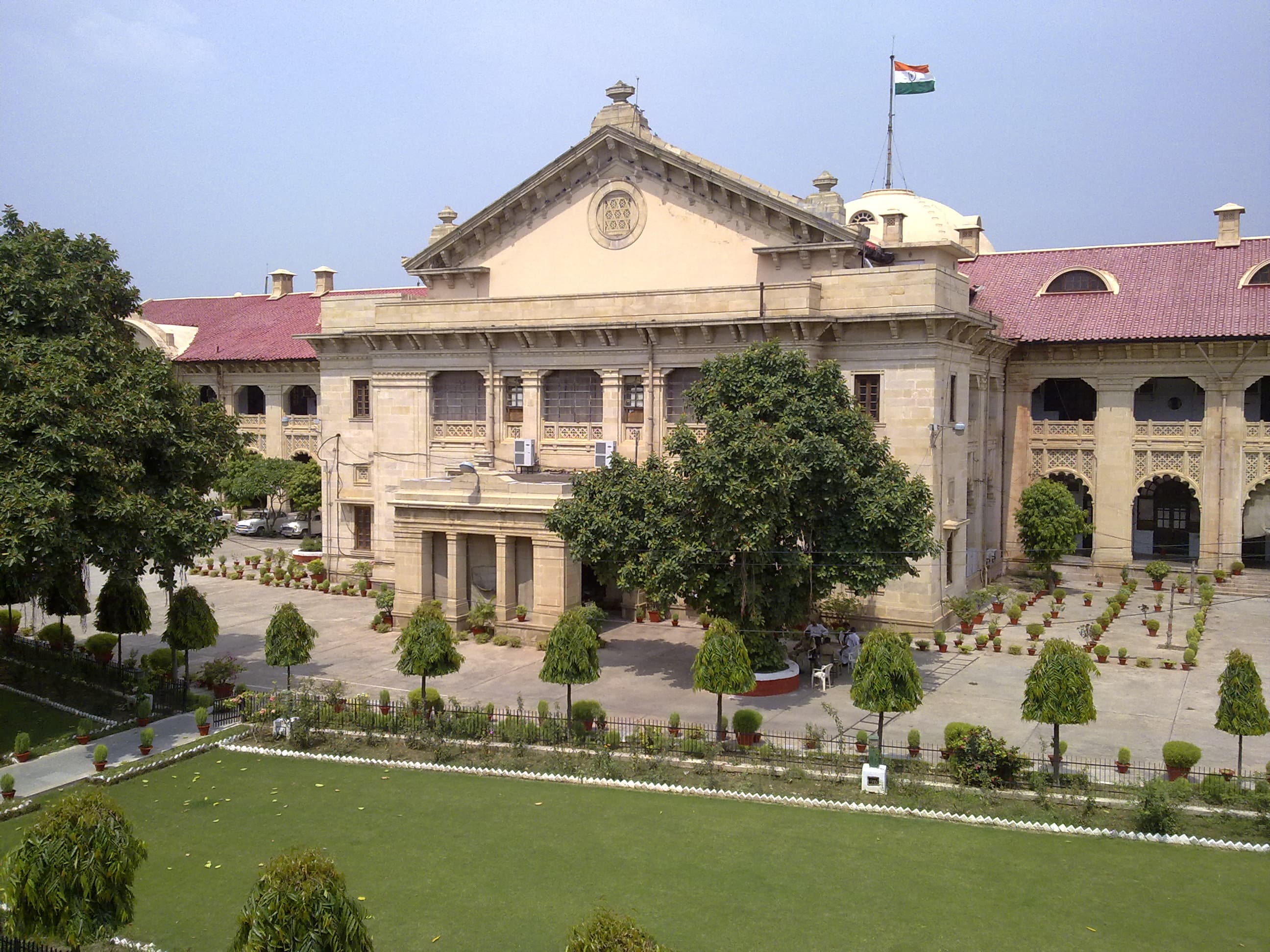
The Allahabad High Court recently delivered a crucial judgment, reviving a woman's maintenance claim under Section 125 CrPC (now Section 144 BNSS), after the Family Court had ignored key evidence of cohabitation and the child's birth. The High Court held that mere allegations by the husband cannot defeat a maintenance claim, especially when documentary proof of the relationship and the child's paternity exists. This ruling reinforces that substantive justice must prevail over technical objections. For residents of Lucknow and across Uttar Pradesh, this judgment is a significant step in protecting the rights of wives and children. If you are facing a similar situation, consult a seasoned family lawyer Lucknow to understand your legal remedies.
Table of Contents
Need Immediate Legal Help?
If you're facing a legal emergency in Lucknow, don't wait. Contact experienced criminal lawyer Advocate Onkar Pandey for immediate assistance.
Background of the Case: When a Family Court Overlooked Critical Evidence
The case originated when a woman filed a maintenance petition under Section 125 CrPC (now Section 144 BNSS) before the Family Court in Lucknow. She claimed that she was legally married to the respondent, they lived together as husband and wife, and a child was born from the relationship. She submitted documentary evidence such as the marriage certificate, birth certificate of the child, and photographs of the couple together.
Despite this, the Family Court dismissed her petition, citing a lack of proof of valid marriage and cohabitation. The court gave more weight to the husband's bare denial rather than the documentary evidence presented by the wife. This dismissal prompted the wife to approach the Allahabad High Court, Lucknow Bench.
The High Court found that the Family Court had failed to properly appreciate the evidence on record. The husband's mere allegation that the marriage was not valid could not outweigh the positive evidence of cohabitation and the child's birth. The High Court set aside the Family Court's order and remanded the matter for fresh consideration, directing the Family Court to evaluate all evidence properly.
- Key evidence ignored: Marriage certificate, child's birth certificate, and photographs of the couple together.
- Husband's defense: Bare denial of marriage and cohabitation, without any documentary proof.
- High Court's finding: Family Court committed a grave error by not considering the documentary evidence.
Legal Principles Established by the Allahabad High Court
The High Court relied on several key legal principles, drawn from both Supreme Court precedents and its own earlier rulings. These principles are crucial for any maintenance dispute in Uttar Pradesh.
- Mere allegations cannot defeat maintenance: A husband cannot avoid his obligation by simply denying the marriage or paternity. The court must examine documentary evidence like birth certificates and photographs.
- Parental support does not absolve the husband: As held in Wife in distress entitled to maintenance (Allahabad HC, June 17, 2026), the fact that the wife's parents support her financially does not reduce the husband's duty. Parental income is not the wife's income.
- Child's birth is a critical factor: The birth of a child during the alleged cohabitation is strong circumstantial evidence of a marital relationship. Ignoring this violates the principle of substantive justice.
- 25% of income as benchmark: Citing Rajnesh vs Neha (2021) 2 SCC 324, the court noted that 25% of the husband's monthly income is a reasonable starting point for maintenance.
These principles ensure that family courts do not mechanically reject maintenance claims based on technicalities. For detailed guidance, contact a family lawyer Lucknow.
Key Evidence That Must Be Considered in Maintenance Cases
This judgment underscores the types of evidence that family courts must consider before rejecting a maintenance claim. The following table summarizes the critical evidence and its relevance.
| Type of Evidence | Relevance in Maintenance Claim |
|---|---|
| Marriage Certificate | Primary proof of valid marriage; if unavailable, other evidence like photographs or witness statements can be used. |
| Child's Birth Certificate | Establishes paternity and the fact of cohabitation around the time of conception. |
| Photographs/Video | Visual proof of the couple living together as husband and wife. |
| Bank/Financial Records | Shows joint accounts, shared expenses, or financial support from the husband. |
| Correspondence | Letters, emails, or WhatsApp chats acknowledging the relationship or the child. |
The Allahabad High Court held that ignoring such evidence amounts to a miscarriage of justice. If your case has been dismissed due to lack of evidence, consult a criminal lawyer Lucknow for filing a revision or appeal.
Legal Consultation
Talk directly to Advocate Onkar Pandey
Explain your matter over a call or WhatsApp. If you take the case forward, the consultation fee adjusts into your overall fee, so there is no separate charge to begin.
How to Challenge a Family Court Order in Allahabad High Court
If a Family Court in Lucknow or elsewhere in Uttar Pradesh has ignored crucial evidence and dismissed your maintenance claim, you have the following remedies:
- File a Revision Petition under Section 19 of the Family Courts Act, 1984 before the High Court. This is the most common remedy.
- File a Criminal Revision before the High Court under its revisional jurisdiction, challenging the legality or propriety of the maintenance order. For maintenance orders, a petition under Article 227 of the Constitution can also be filed before the High Court.
- File a Petition under Article 227 of the Constitution for supervisory jurisdiction of the High Court. This is often faster than a revision.
The timeline for filing a revision is 90 days from the date of the order. For an Article 227 petition, there is no strict limitation, but it should be filed without undue delay. For expert assistance, contact Advocate Onkar Pandey.
Fee Structure and Timeline for Maintenance Cases in Lucknow
Understanding the costs and timelines involved is crucial for litigants. The following table provides a general estimate based on the Lucknow Family Court and Allahabad High Court, Lucknow Bench.
| Stage | Estimated Timeline | Approximate Fees (INR) |
|---|---|---|
| Filing Maintenance Petition in Family Court | 3-6 months for first hearing | Court fees: minimal (₹100-500); Lawyer fees: ₹5,000-₹15,000 |
| Evidence and Cross-Examination | 6-12 months | Lawyer fees: ₹10,000-₹30,000 per hearing |
| Final Order from Family Court | 1-2 years from filing | As above |
| Revision/Petition before High Court | 6-12 months for disposal | Lawyer fees: ₹15,000-₹40,000 |
| Execution of Maintenance Order | 3-6 months | Lawyer fees: ₹5,000-₹10,000 |
These are indicative figures. Actual costs may vary based on the complexity of the case and the lawyer's experience. For a precise estimate, schedule a consultation.
Important Provisions Under the New BNSS 2023
The Bharatiya Nagarik Suraksha Sanhita (BNSS) 2023 has replaced the Code of Criminal Procedure (CrPC). For maintenance cases, the relevant sections are:
- Section 144 BNSS (old Section 125 CrPC): Liability to maintain wives, children, and parents. This is the substantive provision for claiming maintenance.
- Section 145 BNSS (old Section 126 CrPC): Procedure for maintenance — includes the power to order interim maintenance and the procedure for inquiry.
- Section 145(2) BNSS (old Section 126(2) CrPC): Allows the court to take evidence in the absence of the respondent if service is proved.
- Section 146 BNSS (old Section 127 CrPC): Alteration in maintenance allowance — allows for increase or decrease based on changed circumstances.
It is important to note that the BNSS is now in force across India, including Uttar Pradesh. All new petitions should be filed under the BNSS. For any confusion regarding the new code, consult a criminal lawyer Lucknow.
Practical Tips for Women Seeking Maintenance in Uttar Pradesh
Based on the recent Allahabad High Court judgment and other rulings, here are practical tips for women filing a maintenance claim in Lucknow or anywhere in UP:
- Collect all documentary evidence: Marriage certificate, child's birth certificate, photographs, and any communication from the husband.
- File the petition promptly: Do not delay. The right to maintenance accrues from the date of the petition.
- Do not rely solely on oral testimony: The court gives more weight to documents. Ensure you have proof of cohabitation and the child's birth.
- Do not be deterred by the husband's denial: As the High Court held, mere allegations cannot defeat a claim supported by evidence.
- Seek legal help early: A lawyer experienced in family law can guide you on the best strategy. Contact Advocate Onkar Pandey for a consultation.
Remember, the law is on your side. The Allahabad High Court has consistently protected the rights of women and children. Do not lose hope if the Family Court initially rejects your claim.
Conclusion: A Victory for Substantive Justice
The Allahabad High Court's decision to revive the woman's maintenance claim is a strong message to all Family Courts in Uttar Pradesh. They must not ignore key evidence of cohabitation and a child's birth while deciding maintenance petitions. The judgment reinforces that substantive justice must triumph over technical objections.
For women in Lucknow and across UP, this ruling provides a solid legal foundation to challenge unjust orders. If you are facing a similar situation, do not hesitate to seek expert legal advice. The High Court has shown that it will correct errors of lower courts.
- Key takeaway: Family Courts must evaluate all evidence, especially documentary proof of cohabitation and child's birth.
- Next step: If your claim was dismissed, file a revision or Article 227 petition before the High Court.
- Expert help: Contact Advocate Onkar Pandey at +91 98392 71553 for a consultation.
About the Author
Advocate Onkar Pandey is a practicing lawyer at the Allahabad High Court Lucknow Bench with over 25 years of experience in criminal law, bail matters, FIR quashing, and family law. Enrolled with the Bar Council of Uttar Pradesh (No. UP/4825/1999), he provides expert legal guidance to clients across Uttar Pradesh from his chamber at A-406, High Court, Lucknow. For a consultation on maintenance claims and family law matters, contact Advocate Onkar Pandey at +91 98392 71553.
Frequently Asked Questions
What is the time limit to file a maintenance petition under Section 144 BNSS?+
There is no strict limitation period for filing a maintenance petition under Section 144 BNSS (old Section 125 CrPC). However, the right to maintenance accrues from the date of the petition. It is advisable to file the petition as soon as possible after the husband refuses or neglects to maintain you. Delay may affect the quantum of arrears but not the right itself.
Can I claim maintenance if my husband denies the marriage?+
Yes. As held by the Allahabad High Court, mere denial by the husband is not enough to defeat a maintenance claim. If you have documentary evidence such as a marriage certificate, child's birth certificate, or photographs showing cohabitation, the court will consider that evidence. The High Court has repeatedly held that substantive evidence must prevail over bare allegations.
What is the maximum maintenance amount I can claim?+
There is no fixed maximum amount. The court determines maintenance based on the husband's income, the wife's needs, and the standard of living during the marriage. Citing Rajnesh vs Neha (2021) 2 SCC 324, the Allahabad High Court has held that 25% of the husband's monthly income is a reasonable benchmark. However, the court can award more or less depending on the facts.
Can I get interim maintenance during the pendency of the case?+
Yes. Under Section 145 BNSS (old Section 126 CrPC), the court has the power to grant interim maintenance during the pendency of the main petition. This is usually decided at the first hearing itself. The husband cannot avoid payment by delaying the case. If the husband fails to pay interim maintenance, the court can stop his defense or even order attachment of his property.
What if the husband refuses to pay maintenance after the court order?+
If the husband does not comply with the maintenance order, you can file an execution petition before the same court. The court can order attachment of his salary, bank accounts, or property. In extreme cases, the court can also issue a warrant for his arrest. For effective execution, you should engage a lawyer experienced in family law.
Can I claim maintenance for my child even if I am earning?+
Yes. As per the Allahabad High Court ruling in 2024, an earning mother need not be compulsorily impleaded, but her income must be considered to determine a fair amount. The father's obligation to maintain the child cannot be avoided even if the mother is earning. The responsibility is shared, and the father must contribute proportionately.
What is the difference between maintenance under Section 144 BNSS and the Protection of Women from Domestic Violence Act?+
Section 144 BNSS (old Section 125 CrPC) provides a summary remedy for maintenance to wives, children, and parents. It is a criminal proceeding. The Domestic Violence Act, 2005 provides a civil remedy for relief including maintenance, residence, and protection orders. You can file both simultaneously. Maintenance under DV Act is often higher as it considers the wife's standard of living. For guidance, consult a family lawyer.
Related Services
Get Expert Legal Advice in Lucknow
20+ years experience in criminal law at Lucknow High Court. Available 24/7 for emergencies.
Disclaimer: This article is for general information purposes only and does not constitute legal advice. Every case is unique and requires specific legal analysis. For advice specific to your situation, please consult Advocate Onkar Pandey or another qualified attorney in Lucknow.