False FIR Filed Against You? How to Quash It at Allahabad High Court Lucknow Bench
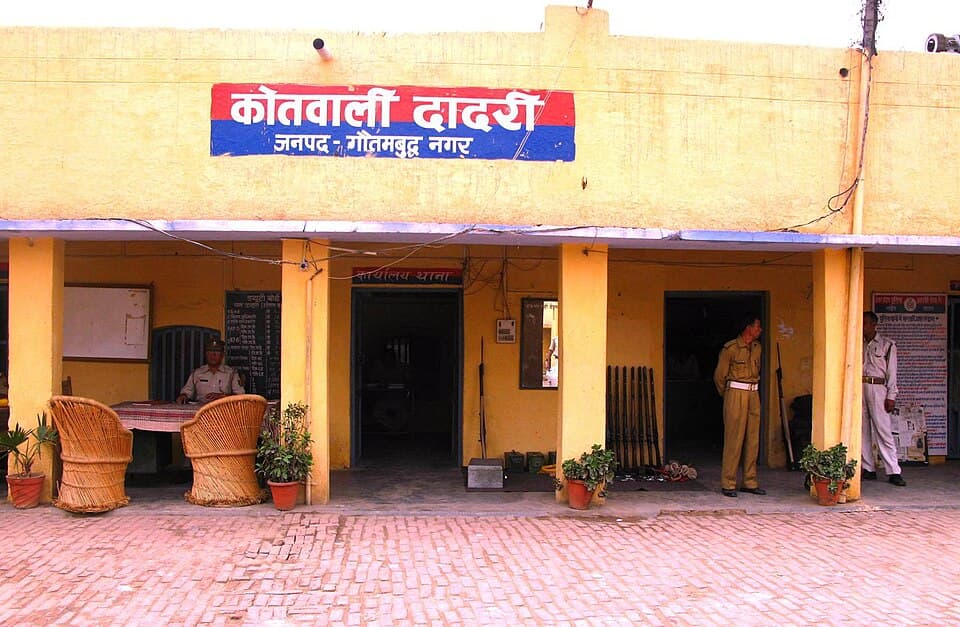
A false FIR can destroy a career, a family's reputation, and a person's freedom - sometimes long before any court even examines whether the allegations are true. If you or a family member has been named in a malicious or fabricated FIR in Uttar Pradesh, FIR quashing at the Allahabad High Court is often the fastest and most effective remedy. Here are the facts you need to know before taking any step:
- Section 528 BNSS 2024 (which replaced Section 482 CrPC from 1 July 2024) gives the Allahabad High Court the power to quash any FIR, charge sheet, or criminal proceeding to prevent abuse of the court's process.
- The Bhajan Lal test - seven grounds laid down by the Supreme Court in State of Haryana v. Bhajan Lal, 1992 Supp (1) SCC 335 - is still the binding standard the Allahabad High Court applies in every quashing petition.
- Not every "false" FIR will be quashed. The court reads the FIR on its face. If the allegations, taken at face value, disclose a prima facie offence, the court will not quash - even if you believe the FIR is entirely invented.
- Timeline: A quashing petition at the Lucknow Bench typically takes 3 to 6 months for a final hearing, though an interim stay of arrest or investigation can be obtained within the first 2 to 4 weeks.
- Even when quashing fails, the High Court routinely protects the applicant's bail rights - as happened in App U/s 482 No. 8849 of 2022 (Bindheshwari Prasad Pandey vs State of U.P.) at the Lucknow Bench.
This article covers what makes an FIR "false" in legal terms, the seven Bhajan Lal grounds, the documents you need, the App 8849/2022 case from the Lucknow Bench, and a step-by-step guide to filing a quashing petition. If you are facing a malicious FIR in UP and need immediate legal advice, contact Advocate Onkar Pandey for a consultation.
Table of Contents
Need Immediate Legal Help?
If you're facing a legal emergency in Lucknow, don't wait. Contact experienced criminal lawyer Advocate Onkar Pandey for immediate assistance.
What Makes an FIR 'False' in the Eyes of the Law?
Many people approach a lawyer saying "the FIR is completely false" - but courts do not use that phrase as a legal test. The question the Allahabad High Court actually asks is more precise: do the allegations in the FIR, taken entirely at face value, disclose a cognisable offence or not?
There are two distinct situations that are often confused:
- False FIR (no offence disclosed at all): The allegations, even if accepted as true, do not amount to any criminal offence under the IPC or BNSS. For example, a civil property dispute dressed up as theft or cheating, where every fact alleged is actually a contractual breach rather than a crime.
- Weak case (offence claimed but evidence lacking): The FIR does allege a crime on its face - such as assault or criminal intimidation - but you believe the facts are fabricated and no evidence exists. This is a harder case to quash; the court may say "let the trial court examine the evidence."
Courts have also recognised a third category: FIRs filed with clear malicious intent to harass, where the complainant has an obvious motive (a property dispute, a business rivalry, a domestic fallout) and has twisted a civil matter into a criminal complaint. In such cases, the High Court can quash even if the allegations technically mention a cognisable offence, because permitting prosecution would be an abuse of the court's process.
The difference between these categories determines which legal strategy to use. A criminal lawyer in Lucknow experienced in quashing matters will examine the FIR text carefully before advising whether a quashing petition, an anticipatory bail application, or both together is the right approach.
| Type of FIR | What It Means | Quashing Likelihood |
|---|---|---|
| No offence disclosed on face of FIR | Allegations, even if true, do not amount to any crime | High - falls squarely in Bhajan Lal Ground 1 |
| Civil dispute dressed as criminal case | Property, money, or contract dispute lodged as cheating or criminal breach of trust | High - established pattern recognised by HC |
| Malicious/harassment FIR | Filed to settle scores; complainant has clear motive; prior civil proceedings between parties | Moderate to High - requires strong supporting evidence |
| Factually fabricated but legally disclosing an offence | FIR alleges a real crime but the facts are invented; no evidence | Low at quashing stage - court refers to trial |
The 7 Bhajan Lal Grounds: When the Allahabad High Court Will Quash an FIR
The Supreme Court in State of Haryana v. Bhajan Lal, 1992 Supp (1) SCC 335 laid down seven illustrative grounds under which the High Court can exercise its inherent power to quash an FIR or criminal proceedings. These grounds remain binding law under Section 528 BNSS 2024 (the successor to Section 482 CrPC). Every FIR quashing petition at Allahabad High Court is tested against this framework.
- No prima facie offence disclosed: The allegations in the FIR, even if accepted entirely as true, do not constitute any cognisable offence. This is the strongest ground - if the FIR itself does not make out a crime, no prosecution can be allowed to proceed.
- Allegations are absurd or inherently improbable: The allegations made are so patently absurd and inherently improbable that no reasonable person can ever reach a just conclusion that there is sufficient ground for proceeding against the accused.
- Unrebuttable legal bar to prosecution: There is an express legal bar to the institution and continuation of proceedings - for example, a statutory limitation period has expired, or the offence alleged is barred by a specific law.
- Criminal proceedings are an abuse of process: The proceedings are manifestly attended with mala fide intent and have been instituted with the sole object of harassing or injuring a specific individual - a personal vendetta disguised as a criminal complaint.
- Allegations are made to wreck out a civil dispute: The FIR is essentially a civil dispute (property, contract, money) which has been given the colour of a criminal offence to coerce the opposite party. This is one of the most commonly invoked grounds before the Allahabad High Court in property and matrimonial matters.
- No cognisable offence, only a private wrong: Where the dispute is essentially of a private nature and the allegations do not involve any element of public wrong - the FIR is being used as a substitute for civil litigation.
- Settled compromise or compoundable offence: Where the offence alleged is compoundable (legally capable of being settled between the parties) and the parties have arrived at a genuine, voluntary settlement - the High Court can quash the proceedings to put an end to further litigation.
| Ground No. | What It Means | Common Example in UP Cases |
|---|---|---|
| 1 | FIR does not disclose any offence on its face | FIR for "cheating" filed over a failed loan repayment with no dishonest intent element |
| 2 | Allegations are absurd or inherently improbable | FIR claiming the accused was present at two places at the same time |
| 3 | Legal bar to prosecution exists | FIR filed years after limitation period under the relevant Act expired |
| 4 | Mala fide/harassment prosecution | FIR by business partner after a civil suit between them was decided against complainant |
| 5 | Civil dispute dressed as criminal case | Property partition dispute filed as "criminal trespass" or "assault" |
| 6 | Private wrong, no public element | Family money dispute filed as criminal breach of trust |
| 7 | Compoundable offence and genuine settlement reached | Cheque bounce (Section 138 NI Act) case where full payment made and complainant consents |
It is important to understand that these are illustrative grounds, not an exhaustive list. The High Court retains a broader inherent jurisdiction to prevent any gross injustice - but outside these seven grounds, quashing is exceptional and requires compelling facts.
Documents You Need to Prove a False FIR
A quashing petition is not decided on the accused's word alone. The Allahabad High Court examines documents to assess whether the petition has merit. Before filing, your criminal lawyer in Lucknow should gather the following:
- Certified copy of the FIR: This is the foundation. Your lawyer will analyse the FIR text line by line - checking whether each allegation maps to a specific element of the offence charged, and whether any allegation is so vague or impossible that it cannot survive scrutiny.
- Prior civil/property dispute records: If a property case, partition suit, revenue court proceeding, or civil injunction was already running between you and the complainant before the FIR was filed, these records are powerful evidence of motive. Courts have consistently held that a pre-existing civil dispute between the parties is a strong indicator of mala fide intent behind the FIR.
- Witness statements/affidavits: Affidavits from persons who were present at the alleged incident, or who can establish that the event simply did not happen as described in the FIR, can be placed on record as supporting documents.
- Evidence of the complainant's pattern of filing FIRs: If the complainant has previously filed FIRs against other neighbours, relatives, or business rivals that were later found to be false or were closed without charge sheet, certified copies of those case diaries or closure reports are useful to demonstrate a pattern of misuse of the criminal process.
- Any prior correspondence between the parties: Legal notices, WhatsApp messages, or letters showing the dispute was always civil in nature and was only escalated to an FIR after a failed settlement attempt.
- Bail order (if bail already granted): If the Sessions Court or Magistrate has already granted bail or anticipatory bail, the order's reasoning can assist in showing the court's initial view of the case's weakness.
The single most common mistake in false FIR quashing petitions is filing without adequate supporting documents. The court will not quash an FIR simply because the petitioner says it is false - the falsity or malice must be supported by something on the record.
Legal Consultation
Talk directly to Advocate Onkar Pandey
Explain your matter over a call or WhatsApp. If you take the case forward, the consultation fee adjusts into your overall fee, so there is no separate charge to begin.
The Real Case: App U/s 482 No. 8849 of 2022 at Lucknow Bench (Petition Dismissed, Bail Rights Retained)
One of the cases handled by Advocate Onkar Pandey at the Allahabad High Court Lucknow Bench was App U/s 482 No. 8849 of 2022 - Bindheshwari Prasad Pandey vs State of U.P., decided on 30 November 2022 in Court No. 15.
The applicant had been named in Case Crime No. 569 of 2021 at Faizabad, with charges under Sections 323, 504, 506, and 308 IPC - covering voluntarily causing hurt, criminal intimidation, and the serious charge of attempt to cause death by an act that endangers life. The petition sought quashing of the FIR and the criminal proceedings arising from it under Section 482 CrPC.
What happened: The Lucknow Bench dismissed the quashing petition. This is a common outcome when the FIR, on its face, discloses the elements of serious offences (here, Section 308 IPC - attempt to cause death). The court found that the matter required examination of evidence at trial rather than quashing at the pre-trial stage.
The crucial point - bail rights were retained: Even while dismissing the quashing petition, the court preserved the applicant's right to seek bail. This is standard practice at the Allahabad High Court: a dismissed quashing petition does not mean the accused is left without remedy. The bail remedy - whether through the Sessions Court or the High Court's bail jurisdiction - remains fully open.
This case illustrates a critical strategic lesson:
- Quashing and bail are two separate remedies. When quashing is unlikely to succeed because the FIR discloses a prima facie offence on its face, filing only for bail (or pursuing bail alongside the quashing petition) may serve the client better in the short term.
- A dismissed quashing petition is not the end. The applicant retains full rights to seek bail, to challenge the charge sheet, and - most importantly - to seek discharge at the trial court stage if the evidence on record does not support the charges.
- Section 308 IPC cases are hard to quash. Charges involving attempt to cause culpable homicide are treated seriously by the High Court; the threshold for quashing such an FIR is very high. The court typically insists that such allegations be tested by evidence at trial.
You can verify the case on Indian Kanoon: App 8849/2022 on Indian Kanoon.
Step-by-Step: How to File a False FIR Quashing Petition at the Lucknow Bench
Filing a FIR quashing petition at the Allahabad High Court Lucknow Bench involves a clear procedural sequence. Here is the step-by-step process:
- Consult a High Court lawyer immediately: As soon as an FIR is registered, consult a lawyer experienced in quashing matters at the Lucknow Bench. The lawyer will assess whether quashing, anticipatory bail, or both is the right strategy based on the FIR text and facts. Early legal advice prevents costly mistakes such as filing a premature petition without adequate documents.
- Obtain FIR and case diary: Get a certified copy of the FIR from the police station or through the court. The lawyer will also attempt to obtain the case diary (though the police are not obliged to share it in full at this stage) to assess the state of investigation.
- Prepare petition and affidavit: The quashing petition is filed along with a sworn affidavit by the applicant detailing the facts, the grounds for quashing, and the supporting documents. The petition must cite the relevant Bhajan Lal grounds that apply to the specific facts.
- File before the High Court Registrar: The petition is filed at the Allahabad High Court Lucknow Bench filing counter. Filing fees are paid, and the case is listed for admission before a bench.
- Admission hearing - seek interim stay: At the first hearing (typically within 2 to 4 weeks of filing), the court decides whether to admit the petition and whether to grant an interim order staying the arrest, the investigation, or both. This interim protection is critical and should be sought urgently if the applicant fears imminent arrest.
- Notice to State and complainant: After admission, the court issues notice to the State (UP Government / police) and the complainant. They file their counter-affidavit opposing the quashing.
- Final hearing: Both sides argue. The court decides whether to quash the FIR, dismiss the petition, or pass a modified order (such as protecting bail rights while declining to quash).
| Stage | Activity | Typical Timeline |
|---|---|---|
| 1 | Consult lawyer, obtain FIR copy, assess strategy | Day 1 to Day 7 |
| 2 | Prepare and file quashing petition | Day 7 to Day 14 |
| 3 | Admission hearing; apply for interim stay of arrest | Week 2 to Week 4 |
| 4 | State and complainant file counter-affidavits | Month 1 to Month 3 |
| 5 | Rejoinder affidavit filed by petitioner | Month 3 to Month 4 |
| 6 | Final hearing and judgment | Month 4 to Month 6 |
Important note on parallel bail application: A quashing petition does not automatically give protection from arrest. If the applicant has not already been arrested, an anticipatory bail application should be filed at the Sessions Court or the High Court simultaneously. Waiting only for the quashing petition to be decided - which may take 3 to 6 months - without seeking bail protection is a serious risk.
About Advocate Onkar Pandey
Advocate Onkar Pandey is a criminal lawyer practicing at the Allahabad High Court Lucknow Bench and the Sessions Courts in Uttar Pradesh. His practice covers FIR quashing petitions, bail and anticipatory bail, criminal defense, and property-related criminal matters.
He has appeared in quashing petitions, bail applications, and criminal trial matters at the Lucknow Bench including cases involving serious IPC charges such as Sections 308, 307, 376, and 420. In App U/s 482 No. 8849 of 2022 (Bindheshwari Prasad Pandey vs State of U.P.), he represented the applicant at the Lucknow Bench in a Section 308 IPC quashing matter.
For a consultation on a false FIR matter, anticipatory bail, or any criminal case in UP, contact Advocate Onkar Pandey.
Frequently Asked Questions
Can the Allahabad High Court quash an FIR that is completely false?+
Yes - but only if the FIR meets one of the seven Bhajan Lal grounds, most importantly that the allegations, even if taken as true, do not disclose any cognisable offence. If the FIR on its face does disclose an offence (for example, assault or criminal intimidation) but you believe the facts are fabricated, the High Court will ordinarily say the accused should challenge the evidence at trial rather than seeking quashing at the pre-trial stage. The court does not conduct a mini-trial on the FIR - it reads the FIR on its face.
What is the Bhajan Lal test for FIR quashing?+
State of Haryana v. Bhajan Lal (1992 Supp (1) SCC 335) is the Supreme Court judgment that established seven illustrative grounds for quashing an FIR or criminal proceedings under Section 482 CrPC (now Section 528 BNSS 2024). The most commonly used grounds are: (1) the FIR does not disclose any offence even if the allegations are fully accepted; (4) the proceedings are manifestly mala fide and filed solely to harass the accused; and (5) the FIR is essentially a civil dispute dressed up as a criminal case. All courts in India, including the Allahabad High Court, apply this test.
How long does false FIR quashing take at the Allahabad High Court Lucknow Bench?+
A quashing petition at the Lucknow Bench typically reaches a final hearing in 4 to 6 months from the date of filing. An interim order staying the arrest or investigation can be obtained at the admission hearing, which usually comes within 2 to 4 weeks of filing. The timeline depends on the urgency with which the matter is listed, the complexity of the facts, and whether the State and complainant file their replies promptly.
Can I get anticipatory bail while the FIR quashing petition is pending?+
Yes - and this is strongly recommended. A quashing petition by itself does not protect you from arrest unless the court specifically stays the arrest at the admission stage. If you have not been arrested yet, an anticipatory bail application should be filed at the Sessions Court or the High Court simultaneously with (or even before) the quashing petition. If the quashing petition is later dismissed, the anticipatory bail still remains in force for the offences for which it was granted, protecting you from custodial arrest. See our guide to bail and anticipatory bail for more details.
What if the police file the charge sheet before the quashing petition is decided?+
A quashing petition filed against the FIR automatically covers any subsequent charge sheet arising from the same FIR - the court's inherent power under Section 528 BNSS extends to quashing the entire criminal proceeding, not just the FIR document. However, once a charge sheet is filed and the Magistrate takes cognisance, the legal landscape changes slightly: the accused can also apply for discharge before the trial court under Section 227 CrPC (now Section 250 BNSS) as an additional or alternative remedy. Your lawyer should monitor the case diary and move quickly if a charge sheet is imminent.
What is the difference between FIR quashing and seeking discharge at trial?+
FIR quashing under Section 528 BNSS is a pre-trial remedy filed at the High Court - you are asking the High Court to stop the entire criminal proceeding before it even reaches the Magistrate for framing of charges. Discharge under Section 250 BNSS (equivalent to old Section 227 CrPC) is a trial-stage remedy filed before the Sessions Court - you are asking the Sessions Judge to discharge you from the case after the charge sheet is filed, on the ground that the evidence on record is insufficient to frame a charge. Quashing is faster and more complete but harder to get if the FIR discloses a prima facie offence. Discharge is available at a later stage and allows the court to examine the full charge sheet and documents, not just the FIR text.
Does filing a quashing petition affect my bail?+
No - filing a quashing petition does not affect an existing bail or anticipatory bail order. The two remedies are independent. In App U/s 482 No. 8849 of 2022, the Allahabad High Court Lucknow Bench dismissed the quashing petition but specifically preserved the applicant's right to seek bail. Even if the quashing petition is dismissed, the accused can seek bail from the Sessions Court or the High Court and challenge the charge sheet at the trial stage.
Related Services
Get Expert Legal Advice in Lucknow
20+ years experience in criminal law at Lucknow High Court. Available 24/7 for emergencies.
Disclaimer: This article is for general information purposes only and does not constitute legal advice. Every case is unique and requires specific legal analysis. For advice specific to your situation, please consult Advocate Onkar Pandey or another qualified attorney in Lucknow.