Bias in Departmental Enquiry: When the Same Officer Wears Three Hats — UP Government Servants' Rights Before the Allahabad High Court Lucknow Bench
Quick Answer
If the same officer who framed your charge-sheet also conducted your enquiry, passed the punishment order, and then dismissed your appeal , your departmental proceeding is almost certainly tainted by bias. For a government servant in Uttar Pradesh, this is one of the strongest grounds to get a pu…
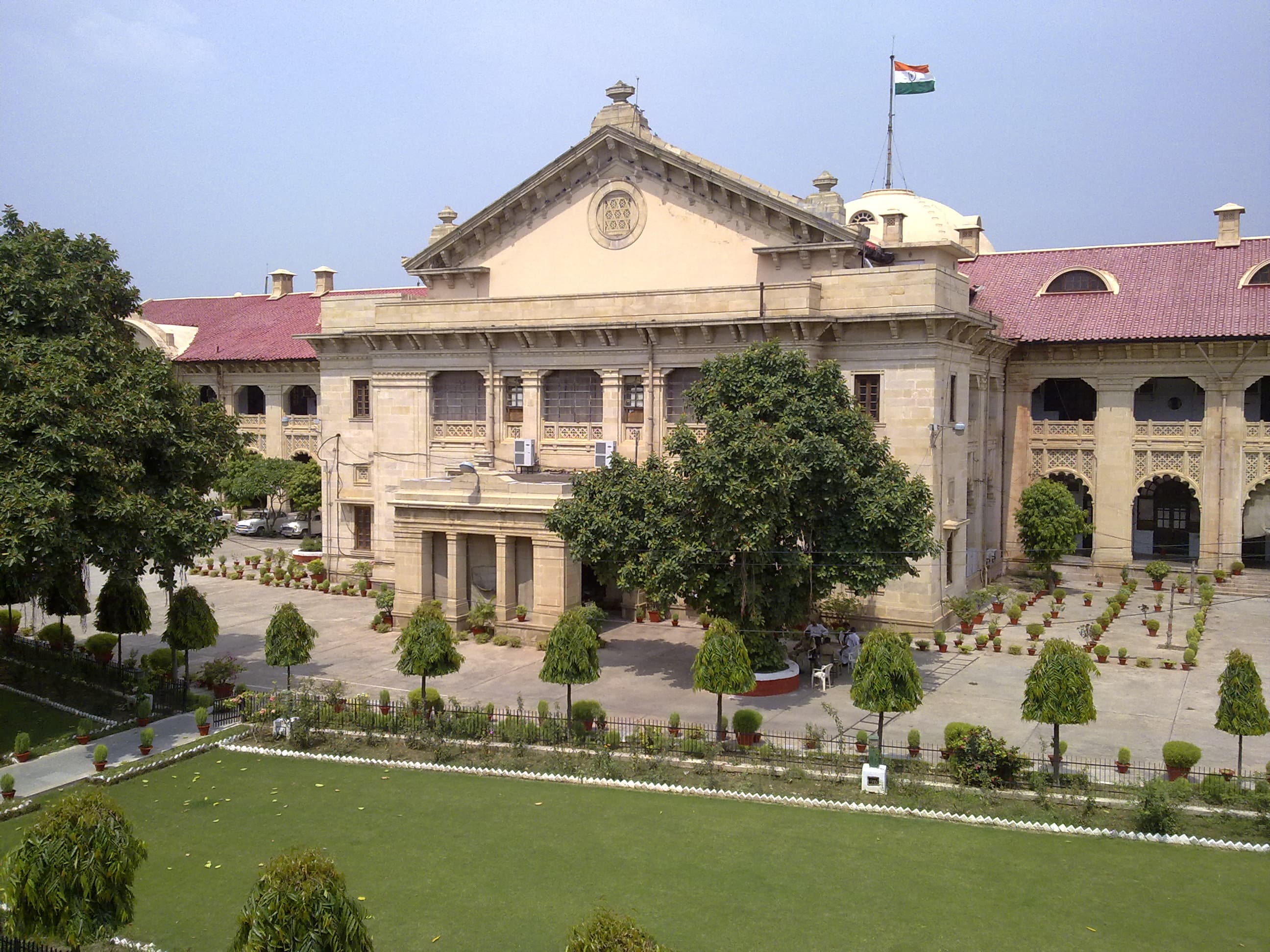
If the same officer who framed your charge-sheet also conducted your enquiry, passed the punishment order, and then dismissed your appeal, your departmental proceeding is almost certainly tainted by bias. For a government servant in Uttar Pradesh, this is one of the strongest grounds to get a punishment order or suspension quashed before the Allahabad High Court Lucknow Bench. The principle is ancient and simple — nemo judex in causa sua, no person can be a judge in their own cause. The Lucknow Bench recently underlined this by imposing a cost of Rs 25,000 on the State of UP after a single senior officer acted as enquiry officer, disciplinary authority and appellate authority in the same case, keeping the employee suspended for nearly five years on half pay. This guide explains, in plain language, what bias means in a departmental enquiry, how the UP Government Servant (Discipline and Appeal) Rules, 1999 protect you, and the exact steps to challenge a biased enquiry. Advocate Onkar Pandey, a service law lawyer in Lucknow with over 25 years before the High Court, sets out each remedy in sequence.
Table of Contents
Need Immediate Legal Help?
If you're facing a legal emergency in Lucknow, don't wait. Contact experienced criminal lawyer Advocate Onkar Pandey for immediate assistance.
What Counts as Bias in a Departmental Enquiry?
Bias means a real likelihood that the authority deciding your case cannot bring an open, impartial mind to it. In service law, the law does not require you to prove actual malice — a reasonable apprehension of bias in the mind of a fair-minded person is enough to vitiate the proceeding.
The most common and most fatal form is where one officer performs multiple roles in the same case. Each stage of a disciplinary proceeding is meant to be an independent check on the previous one. When those checks collapse into a single person, the safeguards built into the UP service rules become meaningless.
- Personal bias — the authority has a prior relationship, grudge, or interest in the employee or the outcome.
- Official bias / role overlap — the same officer acts as complainant, enquiry officer, disciplinary authority, or appellate authority.
- Pecuniary bias — the authority has any financial stake, however small, in the result.
- Pre-judgment bias — the officer has already expressed a firm opinion of guilt before the enquiry concludes.
The classic test laid down by the Supreme Court is whether there is a "real likelihood" or "reasonable suspicion" of bias. Justice must not only be done — it must manifestly be seen to be done. This is why the Allahabad High Court treats role-overlap as an automatic violation of natural justice.
The Three Distinct Roles — and Why One Person Cannot Hold All
A fair departmental proceeding under the UP Government Servant (Discipline and Appeal) Rules, 1999 is built on a separation of functions. Each role is a separate mind applying itself afresh. Collapsing them defeats the entire structure of appellate review.
| Role | Function | Independence Required |
|---|---|---|
| Enquiry Officer | Conducts the enquiry, records evidence, submits findings | Must be neutral; cannot be the complainant or a witness |
| Disciplinary Authority | Considers the report and decides the punishment | Must independently weigh the findings, not rubber-stamp them |
| Appellate Authority | Hears the appeal against the punishment | Must be superior to and different from the disciplinary authority |
The logic is obvious. If the officer who recorded the evidence is also the one who decides guilt, he is effectively reviewing his own findings. If he then hears the appeal, he is sitting in judgment over his own punishment order. No genuine reconsideration is possible.
The Allahabad High Court has repeatedly held that an appellate authority must record its own reasons and independently appreciate the material — it cannot simply reproduce the disciplinary authority's findings. When the same person occupies both chairs, this independent application of mind is structurally impossible, and the order is liable to be quashed.
What the Allahabad High Court Lucknow Bench Recently Held
The issue is not academic. In a recent decision, the Lucknow Bench of the Allahabad High Court came down heavily on the State of Uttar Pradesh for exactly this defect. A government employee had been kept under suspension for almost five years, drawing only 50% of his salary as subsistence allowance, while a single senior officer functioned as enquiry officer, disciplinary authority and appellate authority in the same matter.
The Court found this to be a textbook violation of natural justice and imposed a cost of Rs 25,000 on the State for the bias and the prolonged, illegal continuation of the suspension. The key takeaways for any UP government servant are:
- Role overlap by a single officer is, by itself, sufficient to vitiate the proceeding — you need not separately prove malice.
- An open-ended suspension stretching over years, without a concluded enquiry, is an independent ground of challenge.
- Courts can award costs against the department where the breach of procedure is gross.
The same Bench has also clarified, in a separate matter, that an employer may re-suspend an employee even without a formal reinstatement order after a suspension is quashed — so the relief you seek must be carefully framed. This is where precise drafting by a service law advocate matters.
Legal Consultation
Talk directly to Advocate Onkar Pandey
Explain your matter over a call or WhatsApp. If you take the case forward, the consultation fee adjusts into your overall fee, so there is no separate charge to begin.
Your Safeguards Under the UP Discipline and Appeal Rules, 1999
The UP Government Servant (Discipline and Appeal) Rules, 1999 are the backbone of every departmental proceeding in the State. Knowing the relevant rules lets you spot a defective enquiry early.
Suspension is governed by Rule 4, which permits it only in defined situations — when a disciplinary enquiry is contemplated or pending, when a criminal investigation into connected charges is ongoing, or by deemed suspension on detention exceeding 48 hours. The first proviso requires that the allegation be so serious that, if proved, it may warrant a major penalty. A routine or mechanical suspension order is itself open to challenge.
- Rule 7 — sets out the full procedure for imposing major penalties, including charge-sheet, enquiry, and a reasonable opportunity to defend.
- Charge-sheet and documents — you are entitled to all listed documents and the list of witnesses relied upon against you.
- Enquiry report — you must be supplied a copy before any punishment, so you can represent against it.
- Subsistence allowance — a suspended employee is entitled to subsistence allowance, and a long suspension on reduced pay attracts judicial scrutiny.
If any of these safeguards is missing — no document supply, no separate enquiry officer, no chance to reply to the report — the proceeding is procedurally defective. These are the exact defects the Lucknow courts look for when deciding whether to quash an order.
How to Challenge a Biased Departmental Enquiry: Step-by-Step
You should challenge bias methodically, building a paper trail at each stage. Raising the objection at the right time is critical — silence can later be read as a waiver of the right to a fair enquiry.
- Object in writing during the enquiry — the moment you realise the enquiry officer is also the complainant or disciplinary authority, file a written objection demanding a separate, neutral enquiry officer.
- Demand all documents and the enquiry report — insist on copies of the charge-sheet documents, witness statements, and the enquiry findings before any punishment is decided.
- File a departmental appeal — under the Rules, 1999, appeal to the proper appellate authority, expressly pleading bias and role overlap.
- Approach the High Court or Tribunal — file a writ petition under Article 226 before the Allahabad High Court Lucknow Bench seeking a writ of certiorari to quash the order.
| Stage | Remedy | Ground to Plead |
|---|---|---|
| During enquiry | Written objection to enquiry officer | Role overlap / reasonable apprehension of bias |
| After punishment | Departmental appeal under Rules 1999 | Violation of natural justice; no independent mind |
| Final stage | Writ petition (Article 226) | Certiorari to quash; mala fide / arbitrary order |
Because the High Court will usually ask whether you exhausted the departmental appeal, do not skip stages. A well-drafted appeal also preserves your factual record for the writ stage. To understand the parallel remedy of challenging the suspension itself, see how a service law lawyer frames both reliefs together.
The Writ Remedy Before the Allahabad High Court Lucknow Bench
When the department fails to act fairly, the constitutional remedy lies under Article 226 before the High Court. The Court does not sit as an appellate body on the facts — it examines whether the decision-making process was fair, lawful, and free of bias.
What the High Court Will Examine
- Whether the enquiry officer, disciplinary authority and appellate authority were genuinely different persons.
- Whether you were supplied documents and the enquiry report and given a real opportunity to defend.
- Whether the appellate authority recorded its own reasons or merely echoed the punishment order.
- Whether the suspension was proportionate and not indefinitely prolonged.
What Relief You Can Obtain
If bias is established, the High Court can issue a writ of certiorari quashing the punishment or suspension order, often with a direction to hold a fresh enquiry by a neutral officer and, where the breach is gross, with costs against the State. In suitable cases the Court also directs payment of back wages and consequential benefits.
Litigation before the Lucknow Bench requires precise pleadings and the full departmental record. It is almost always wise to consult a service law advocate before filing, so the petition is framed to survive the State's standard objection that you should have exhausted the departmental appeal first.
Practical Checklist: Protecting Yourself in a Departmental Enquiry
Government servants often lose strong cases simply because they did not document the unfairness as it happened. Bias is far easier to prove on paper than from memory. From the day you receive the charge-sheet, keep the following safe.
- A copy of the charge-sheet, the suspension order, and every notice received from the department.
- Written objections you filed, with the inward/dispatch number or acknowledgement.
- Proof that the same officer appears in more than one role — compare the signatures and designations on each order.
- Records of subsistence allowance paid and the duration of suspension.
| Document | Why It Matters |
|---|---|
| Charge-sheet + memo | Shows what you were accused of and by whom |
| Enquiry & punishment orders | Reveals whether one officer signed across roles |
| Appeal order | Shows if the appellate authority applied an independent mind |
Sending objections by registered post or through the official dak, rather than orally, creates the dated proof courts rely on. If criminal charges are also pending against you arising from the same incident, coordinate your defence carefully — outcomes in a criminal case and a departmental enquiry are governed by different standards of proof and can move on separate tracks.
About the Author
Frequently Asked Questions
Can the same officer be my enquiry officer, disciplinary authority and appellate authority?+
No. Each role in a departmental proceeding under the UP Government Servant (Discipline and Appeal) Rules, 1999 is meant to be performed by a separate, independent authority. The enquiry officer records evidence, the disciplinary authority decides punishment, and the appellate authority — who must be superior — reviews that decision. When a single officer holds all three roles, he ends up reviewing his own findings, which makes any genuine appeal impossible. The Allahabad High Court Lucknow Bench treats this role overlap as a clear violation of natural justice (nemo judex in causa sua) and has quashed such orders, in one case even imposing Rs 25,000 costs on the State. You need not prove actual malice — a reasonable apprehension of bias is enough to challenge the order.
How long can a UP government employee be kept under suspension?+
There is no fixed maximum, but suspension is meant to be a temporary measure pending enquiry, not a punishment in itself. Under Rule 4 of the UP Discipline and Appeal Rules, 1999, an employee may be suspended when a disciplinary enquiry is contemplated or pending, when a criminal investigation into connected charges is ongoing, or on detention exceeding 48 hours. Courts scrutinise long, open-ended suspensions closely. The Allahabad High Court has criticised the State for keeping an employee suspended for nearly five years on 50% subsistence allowance without concluding the enquiry. A prolonged suspension without progress in the enquiry is an independent ground to file a writ petition before the Lucknow Bench seeking revocation and back wages.
What is bias in a departmental enquiry and how do I prove it?+
Bias means a real likelihood that the deciding authority cannot bring an impartial mind to your case. You do not have to prove actual ill-will — Indian service law applies the test of a reasonable apprehension of bias in the mind of a fair-minded person. The strongest and easiest form to prove is role overlap: the same officer acting as complainant, enquiry officer, disciplinary authority or appellate authority. You prove it by comparing the signatures and designations on the charge-sheet, enquiry report, punishment order and appeal order. Other forms include personal bias (a prior grudge), pecuniary bias (a financial stake), and pre-judgment (the officer declared you guilty before the enquiry ended). Document each instance in writing as it occurs.
Should I object to a biased enquiry officer during the enquiry or wait?+
Object immediately and in writing. The moment you discover that the enquiry officer is also the complainant, a witness, or the disciplinary authority, file a written objection demanding a separate, neutral officer, and keep the dispatch or acknowledgement proof. Raising the objection early is critical because if you participate silently throughout the enquiry, the department and the court may later treat your silence as a waiver of the right to a fair hearing. A contemporaneous written objection preserves the ground for your departmental appeal and, ultimately, for a writ petition under Article 226 before the Allahabad High Court Lucknow Bench. Always send such objections through registered post or the official dak channel rather than orally.
Can the Allahabad High Court quash my punishment order for procedural defects?+
Yes. Under Article 226, the High Court can issue a writ of certiorari quashing a punishment or suspension order where the decision-making process was unfair, biased, or violated the UP Discipline and Appeal Rules, 1999. The Court does not re-appreciate the evidence like an appellate body — it examines whether the procedure was lawful: were the three authorities genuinely different, were you supplied documents and the enquiry report, did the appellate authority record its own reasons, and was the suspension proportionate. If bias or breach of natural justice is shown, the Court can quash the order, direct a fresh enquiry by a neutral officer, award back wages, and even impose costs on the State. However, the Court usually expects you to have first exhausted the departmental appeal.
Am I entitled to a copy of the enquiry report before punishment?+
Yes. Supply of the enquiry officer's report to the delinquent employee before the disciplinary authority imposes any penalty is a settled requirement of natural justice. The report contains the findings of guilt or innocence, and you are entitled to make a representation against it to the disciplinary authority. If the department imposes punishment without first giving you the report and a chance to respond, the order is procedurally defective and can be set aside. Always make a written demand for the report and retain proof of the request. Non-supply of the enquiry report, combined with role overlap by a single officer, is among the strongest combinations of grounds to get a punishment order quashed by the Allahabad High Court Lucknow Bench.
Related Guides
Related Services
Get Expert Legal Advice in Lucknow
20+ years experience in criminal law at Lucknow High Court. Available 24/7 for emergencies.
Disclaimer: This article is for general information purposes only and does not constitute legal advice. Every case is unique and requires specific legal analysis. For advice specific to your situation, please consult Advocate Onkar Pandey or another qualified attorney in Lucknow.