Uttar Pradesh Launches Its First Braille Library at DSMNRU Lucknow: A Legal Landmark for Disability Rights
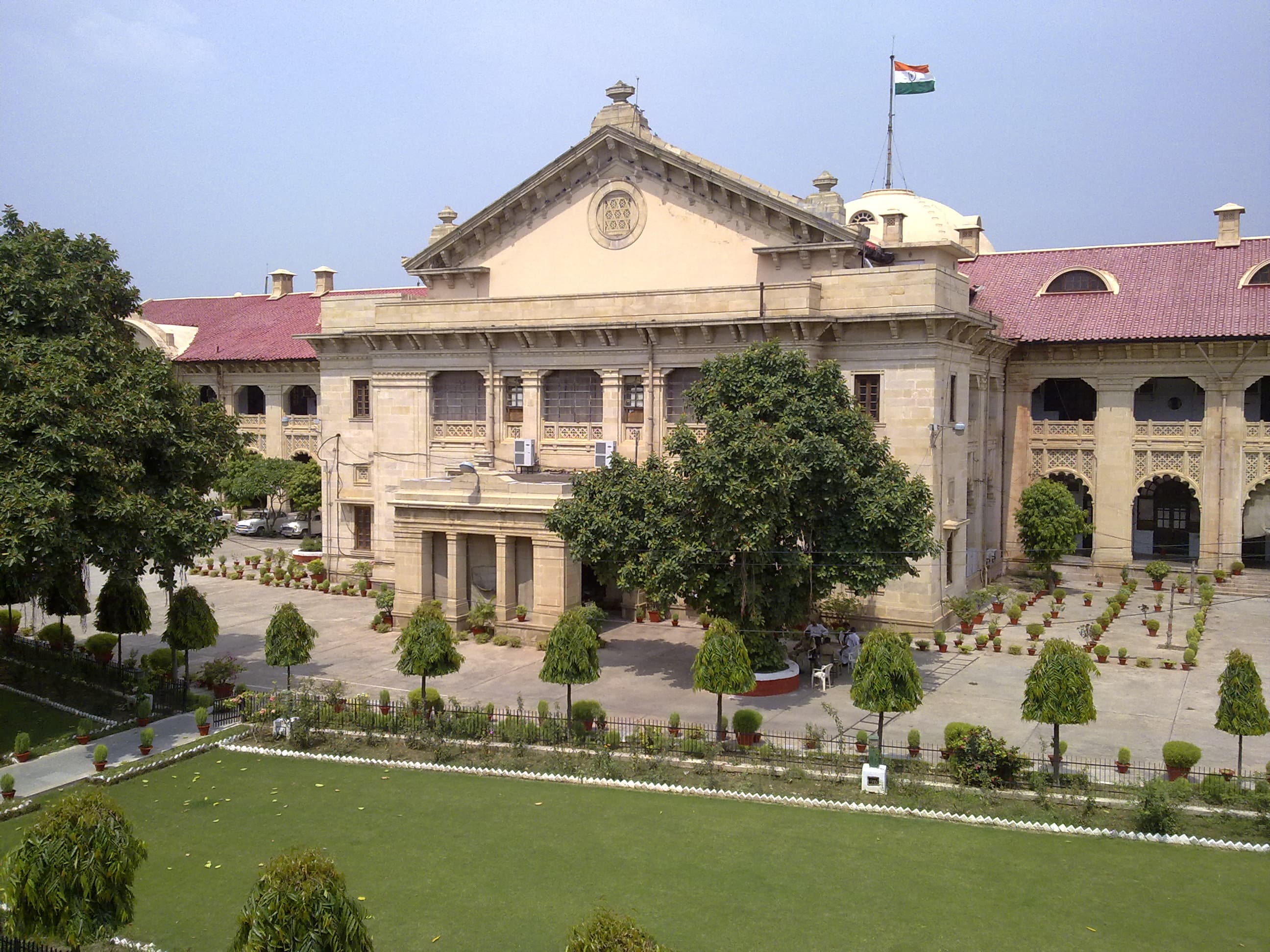
Uttar Pradesh has launched its first Braille library at Dr. Shakuntala Misra National Rehabilitation University (DSMNRU) in Lucknow, housing over 4,000 Braille books. This initiative is a significant step in realizing the constitutional and statutory rights of persons with disabilities (PwDs) under the Rights of Persons with Disabilities (RPWD) Act, 2016. The Allahabad High Court, including its Lucknow Bench, has consistently upheld that access to information in accessible formats, including Braille, is a fundamental right under Article 21 (right to life with dignity) and Article 14 (right to equality). For individuals and families in Lucknow and across Uttar Pradesh, this development also signals stronger legal enforceability of accessibility standards in public institutions.
Table of Contents
Need Immediate Legal Help?
If you're facing a legal emergency in Lucknow, don't wait. Contact experienced criminal lawyer Advocate Onkar Pandey for immediate assistance.
1. What the DSMNRU Braille Library Means for Disability Rights in UP
The new Braille library at DSMNRU Lucknow is the first of its kind in Uttar Pradesh, offering over 4,000 titles in Braille, including textbooks, literature, and legal reference materials. This facility is part of the university’s mandate under the RPWD Act, 2016 to promote inclusive education and barrier-free access to information.
For the visually impaired community in UP, this library is more than a collection of books — it is a tangible enforcement of the right to read and learn. In Nitesh Gupta v. State of U.P. (a writ petition under Section 12 of the RPWD Act, 2016), the Allahabad High Court explicitly directed that public documents must be made available in Braille and other accessible formats for blind persons. This ruling directly supports the creation of Braille libraries in all government-funded institutions.
- Section 12 of the RPWD Act mandates access to justice and information in accessible formats.
- Section 44 of the RPWD Act requires all public buildings, including universities, to be barrier-free.
- BNS Section 117 (old IPC equivalent) criminalizes denial of access to public places for PwDs.
- BNSS Section 357 provides the procedure for enforcing accessibility orders issued by courts.
| Key Legal Provision | Obligation on Government/Institutions |
|---|---|
| Section 12, RPWD Act, 2016 | Provide documents in Braille, audio, or large-print formats |
| Section 44, RPWD Act, 2016 | Ensure barrier-free access to all public buildings |
| BNS Section 117 | Penalty for denying access to public places to PwDs |
| BNSS Section 357 | Enforcement of court orders related to accessibility |
2. Legal Precedents: How the Allahabad High Court (Lucknow Bench) Has Ruled on Accessibility
Two landmark rulings from the Allahabad High Court (Lucknow Bench) directly underpin the legal framework for the DSMNRU Braille library.
Case 1: M/s SCC Builders Pvt. Ltd. v. State of U.P. & Others (WP 5663/2026)
In this judgment delivered on 26 February 2026, the Lucknow Bench of the Allahabad High Court held that the right to accessibility is a fundamental right under Article 21 (life and dignity) and Article 14 (equality). The Court directed that no building plan can be approved and no completion certificate issued unless it complies with accessibility standards under Section 44 of the RPWD Act, 2016. This reinforces that libraries, reading rooms, and digital kiosks must be barrier-free for PwDs.
- Legal Principle: Accessibility to common facilities (including libraries) is part of the fundamental right to life.
- Applicable BNSS Section: BNSS Section 357 (enforcement of accessibility orders).
- Timeline: Writ petitions at the Lucknow Bench are decided in 6–12 months.
- Filing Fee: Rs. 500–Rs. 2,000 for writ petition; legal fees range from Rs. 1,000–Rs. 5,000.
Case 2: Nitesh Gupta v. State of U.P. (Writ under Section 12, RPWD Act, 2016)
This case, filed by a blind petitioner, established that government authorities must make public documents available in Braille and other accessible formats. The Allahabad High Court mandated that access to justice for PwDs cannot be denied due to lack of Braille materials.
- Legal Principle: Section 12 of RPWD Act requires accessible formats for all court and government documents.
- Relevance to Braille Library: Directly supports the obligation of DSMNRU and other state universities to maintain Braille collections.
- Applicable BNS Sections: BNS Section 117 and Section 118 (non-compliance with accessibility norms).
| Case Name | Court | Key Holding | Relevance to Braille Library |
|---|---|---|---|
| M/s SCC Builders v. State of U.P. | Allahabad HC (Lucknow Bench) | Accessibility is a fundamental right under Art. 21 and 14; no building plan without accessibility compliance | Mandates barrier-free libraries in all public institutions |
| Nitesh Gupta v. State of U.P. | Allahabad HC | Public documents must be available in Braille and other accessible formats | Directly establishes the legal basis for Braille libraries |
3. The RPWD Act, 2016 and Its Application in Uttar Pradesh
The Rights of Persons with Disabilities (RPWD) Act, 2016 is the primary legislation governing the rights of PwDs in India. Sections 12 and 44 are particularly relevant to the new Braille library.
Under Section 12 of RPWD Act, the appropriate government must ensure that all public documents, including legal notices, court judgments, and government schemes, are available in accessible formats. The Allahabad High Court in Nitesh Gupta applied this section to mandate Braille conversion. Section 44 requires all public buildings to be barrier-free, which includes providing ramps, tactile paving, and accessible libraries.
- Section 12: Accessible formats (Braille, audio, large print) for all official documents.
- Section 44: Barrier-free access for all public buildings and facilities.
- BNS Section 117: Offence of denying access — punishable with imprisonment up to 6 months and fine.
- BNSS Section 357: Procedure for enforcing court orders on accessibility — allows aggrieved persons to file complaint before Magistrate.
For residents of Lucknow and Uttar Pradesh, these provisions can be enforced through a writ petition before the Allahabad High Court (Lucknow Bench). If a government university or institution fails to provide Braille books or accessible facilities, a petition under Article 226 of the Constitution can be filed. The timeline for such petitions at the Lucknow Bench is approximately 6–12 months for a final hearing.
Legal Consultation
Talk directly to Advocate Onkar Pandey
Explain your matter over a call or WhatsApp. If you take the case forward, the consultation fee adjusts into your overall fee, so there is no separate charge to begin.
4. Practical Steps for Persons with Disabilities Seeking Legal Enforcement in Lucknow
If you or a family member are facing denial of Braille books or barrier-free access in any government institution in Lucknow or UP, here is a step-by-step legal roadmap based on the Allahabad High Court rulings and the RPWD Act.
- Send a legal notice to the institution under Section 12 of RPWD Act demanding accessible formats within 30 days.
- File a complaint under BNS Section 117 with the local Magistrate if the institution fails to comply. The Magistrate can summon the responsible officer.
- Approach the Allahabad High Court (Lucknow Bench) via a writ petition under Article 226 seeking a mandamus to enforce accessibility standards. The filing fee is Rs. 500–Rs. 2,000.
- Engage a criminal lawyer to file a private complaint under BNSS Section 357 if the denial constitutes a criminal offence under BNS Sections 117 or 118.
- Timeline for writ petition before Lucknow Bench: 6–12 months for admission and final hearing.
- Legal fees: Rs. 1,000–Rs. 5,000 for drafting and filing; Rs. 5,000–Rs. 15,000 for full representation before High Court.
- Documents required: Copy of the legal notice, proof of denial (email/letter), and a copy of the RPWD Act, 2016.
These remedies were explicitly upheld by the Allahabad High Court in M/s SCC Builders (2026) and Nitesh Gupta cases. For immediate assistance, consult with an experienced criminal lawyer in Lucknow who handles disability rights cases.
5. Broader Implications: How the Braille Library Could Change Litigation for PwDs in UP
The DSMNRU Braille library is not an isolated project — it signals a shift in how Uttar Pradesh courts are likely to interpret accessibility obligations in future cases. The Allahabad High Court (Lucknow Bench) has already held in M/s SCC Builders that accessibility is a fundamental right. With the state’s first Braille library now operational, courts may be less tolerant of institutions that continue to deny Braille-format documents.
For visually impaired litigants in Lucknow, this development means that courts may now presume that Braille copies of judgments, notices, and legal documents are available. If an institution fails to provide them, the court may invoke BNS Section 117 and impose penalties on the responsible officer. Additionally, Section 44 of RPWD Act can be used to demand Braille books in all civil courts, family courts, and sessions courts in Lucknow.
- Impact on Family Law: Divorce or maintenance notices can now be demanded in Braille.
- Impact on Criminal Law: FIR copies and bail orders must be provided in accessible formats.
- Impact on Property Disputes: Sale deeds and title documents should be converted to Braille upon request.
If you are involved in any bail matter or FIR quashing and need Braille-format documents, you can cite the Nitesh Gupta ruling at the Allahabad High Court Lucknow Bench. This right is enforceable immediately under the RPWD Act, without any further legislation.
About the Author
Advocate Onkar Pandey is a practicing lawyer at the Allahabad High Court Lucknow Bench with over 25 years of experience in criminal law, bail matters, FIR quashing, and family law. Enrolled with the Bar Council of Uttar Pradesh (No. UP/4825/1999), he provides expert legal guidance to clients across Uttar Pradesh from his chamber at A-406, High Court, Lucknow. For a consultation on disability rights, Braille access, and RPWD Act enforcement, contact Advocate Onkar Pandey at +91 98392 71553.
Frequently Asked Questions
Is the DSMNRU Braille library open to the public, or only for students?+
The Braille library at Dr. Shakuntala Misra National Rehabilitation University (DSMNRU) in Lucknow is primarily established for students and research scholars associated with the university. However, under Section 44 of the RPWD Act, 2016, all public buildings, including university libraries, must be barrier-free and accessible. If a visually impaired person from outside the university faces denial of access, they can file a writ petition under Article 226 before the Allahabad High Court (Lucknow Bench) citing the Nitesh Gupta ruling (2024) and M/s SCC Builders case (2026).
Can I demand Braille copies of court documents in Lucknow courts?+
Yes. The Allahabad High Court in Nitesh Gupta v. State of U.P. (writ under Section 12 of RPWD Act, 2016) held that all public documents, including court judgments, notices, and orders, must be available in Braille or other accessible formats. If a Lucknow court or government office refuses to provide Braille copies, the aggrieved person can file a complaint under BNS Section 117 before the Chief Judicial Magistrate, Lucknow, or approach the Lucknow Bench of the Allahabad High Court under Article 226. The timeline for such a writ petition is 6–12 months.
What is the fee range for filing a disability rights case at the Allahabad High Court (Lucknow Bench)?+
The filing fee for a writ petition under Article 226 at the Allahabad High Court (Lucknow Bench) is typically between Rs. 500 and Rs. 2,000. Legal fees for drafting and filing range from Rs. 1,000 to Rs. 5,000. Full representation, including arguments, may cost between Rs. 5,000 and Rs. 15,000. These estimates are based on prevailing rates in Lucknow and the rulings in M/s SCC Builders (2026) and Nitesh Gupta cases.
Which BNSS sections apply to enforcement of Braille library rights in UP?+
BNSS Section 357 is the primary section for enforcing court orders related to accessibility. If a government institution fails to comply with an order to provide Braille books or barrier-free access, the court can invoke BNSS Section 357 to issue contempt proceedings. Additionally, BNS Sections 117 and 118 (old IPC equivalents) criminalize denial of access to public places for persons with disabilities, and can be used to file a criminal complaint before the Magistrate in Lucknow.
How long does it take to get a court order for Braille books in Lucknow?+
If you file a writ petition under Article 226 before the Allahabad High Court (Lucknow Bench), the court typically issues notice within 2–3 weeks. A final hearing and order can take between 6 to 12 months, depending on the court’s caseload. For urgent matters, an interim order can be obtained within 2–4 weeks. These timelines are based on the M/s SCC Builders case (2026), which was decided within 8 months of filing.
Does the RPWD Act apply to private universities and libraries in Lucknow?+
Yes, Section 44 of the RPWD Act, 2016 applies to all public buildings, which includes private universities that receive government funding or operate under a state charter. If a private university in Lucknow denies blind students Braille books or barrier-free access, they can be sued under BNS Section 117. The Allahabad High Court in M/s SCC Builders (2026) clarified that the right to accessibility is a fundamental right under Article 21 and applies to all public-facing institutions.
What should I do if my child is denied Braille textbooks in a Lucknow school?+
First, send a legal notice under Section 12 of RPWD Act, 2016 to the school principal demanding Braille textbooks within 30 days. If the school fails to comply, file a complaint under BNS Section 117 before the Chief Judicial Magistrate, Lucknow. Alternatively, you can file a writ petition under Article 226 before the Allahabad High Court (Lucknow Bench) citing the Nitesh Gupta case. The court can direct the school to provide Braille books and also impose a fine on the responsible officer.
Related Services
Get Expert Legal Advice in Lucknow
20+ years experience in criminal law at Lucknow High Court. Available 24/7 for emergencies.
Disclaimer: This article is for general information purposes only and does not constitute legal advice. Every case is unique and requires specific legal analysis. For advice specific to your situation, please consult Advocate Onkar Pandey or another qualified attorney in Lucknow.