Compulsory Retirement Under FR 56(j): What the Allahabad HC Lucknow Bench Held in 2026 and How UP Government Employees Can Defend Themselves
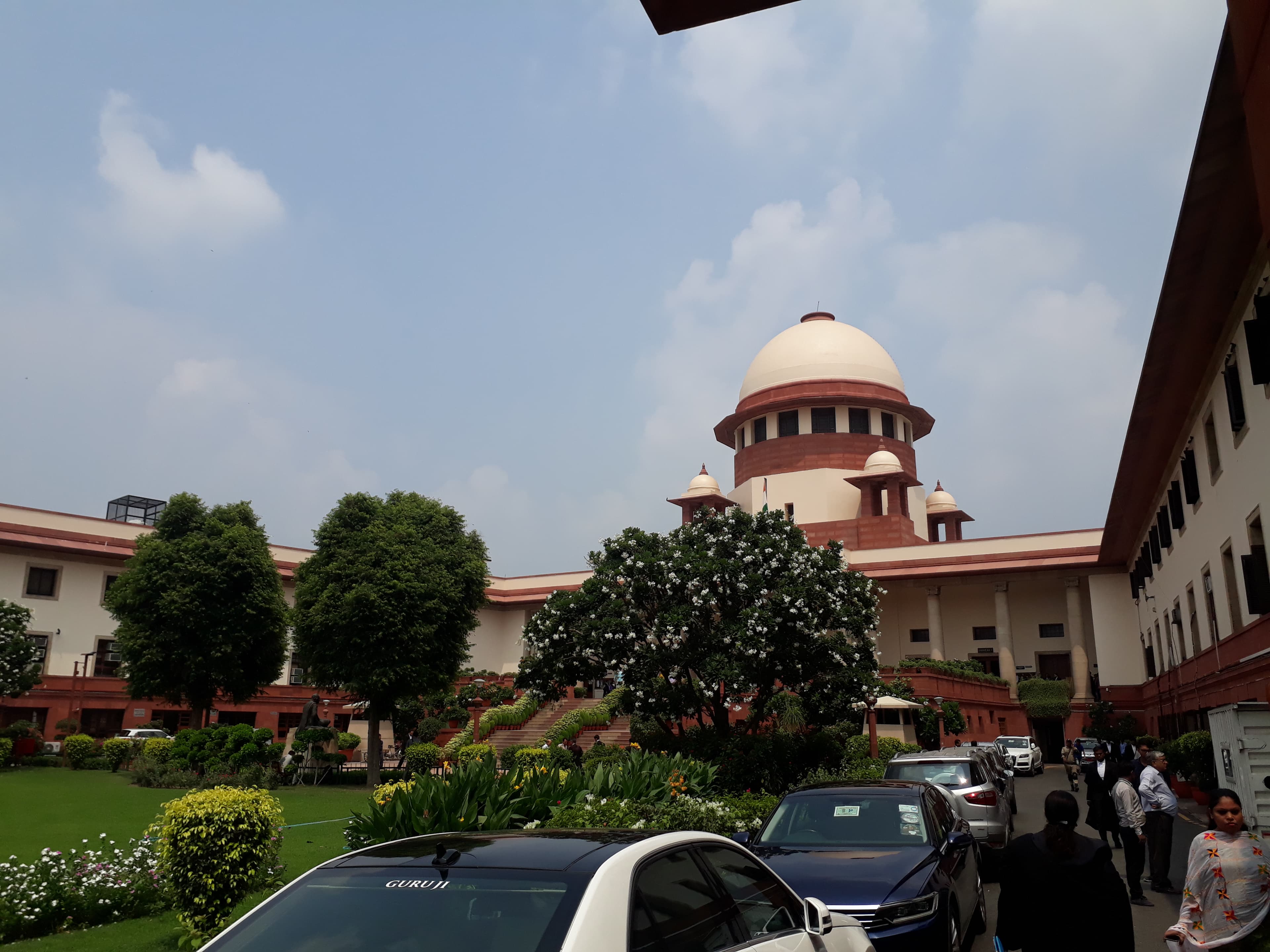
Compulsory retirement under FR 56(j) is one of the most feared service actions a government employee in Uttar Pradesh can face — it carries the financial sting of premature exit without the stigma of a formal punishment, yet permanently ends a career. A recent Allahabad High Court Lucknow Bench ruling in 2026, upholding the compulsory retirement of a senior IRS officer, has sharply tightened the law in favour of the State. The Court confirmed that a Review Committee may look at the entire service record, including allegations from quashed chargesheets and adverse entries that predate a promotion.
For UP government servants — whether in the Secretariat, district administration, Income Tax, public sector banks, or police — this judgment changes the defence calculus. This guide explains FR 56(j), the new judicial standard, the grounds on which compulsory retirement can still be challenged, and the steps to take if you receive a notice. For tailored service law advice, speak to a Lucknow advocate before responding.
Table of Contents
Need Immediate Legal Help?
If you're facing a legal emergency in Lucknow, don't wait. Contact experienced criminal lawyer Advocate Onkar Pandey for immediate assistance.
What FR 56(j) Actually Permits the Government to Do
Fundamental Rule 56(j), read with Rule 48 of the CCS (Pension) Rules, allows the appropriate authority to retire a government servant in public interest after giving three months' notice (or pay in lieu) once the employee:
- Has attained the age of 50 or 55 years (depending on Group A/B/C and the service rules), or
- Has completed 30 years of qualifying service, whichever is earlier.
This is not a punishment. It is an administrative power exercised through a Review Committee that periodically screens employees nearing the threshold. The retired employee continues to receive full pension and retirement benefits, but the career ends. In UP, a parallel power exists under Fundamental Rule 56(c) of the UP Financial Handbook for State government servants, and similar provisions apply to corporations and PSUs.
Because no formal charge is framed and no inquiry is required, the employee gets very limited opportunity to defend himself before the decision is taken. The challenge lies almost entirely in post-retirement litigation before the Central Administrative Tribunal (CAT) Lucknow or the Allahabad High Court Lucknow Bench.
The 2026 Allahabad HC Lucknow Bench Ruling — IRS Officer Case
In 2026, a Division Bench of the Allahabad High Court at Lucknow, comprising Justice Sangeeta Chandra and Justice Amitabh Kumar Rai, dismissed a writ petition filed by a Commissioner of Income Tax who had been compulsorily retired by an order of the President of India under FR 56(j). The CAT Lucknow had earlier upheld the retirement, and the High Court confirmed the same.
The petitioner argued that the Review Committee could not have relied on:
- A chargesheet that had been quashed by an earlier court order,
- Adverse entries from periods before his last promotion (on the reasoning that a clean promotion "wipes the slate"),
- Stale departmental allegations not pursued for years.
The Bench rejected each ground. It held that for the limited purpose of "public interest" review under FR 56(j), the Committee is entitled to look at the entire service record. A quashed chargesheet may still indicate a pattern of conduct. Pre-promotion adverse entries remain relevant because FR 56(j) is not a disciplinary inquiry but a holistic suitability assessment. The order, the Court ruled, did not suffer from illegality, arbitrariness, or malice.
Quashed Chargesheets and Pre-Promotion Entries — The New Battleground
The biggest takeaway from the Lucknow Bench's 2026 ruling is that the protective wall many government servants relied on — that a quashed chargesheet or pre-promotion adverse remarks cannot be reopened — has been substantially weakened. This affects thousands of UP government employees and PSU officers approaching the FR 56(j) threshold.
| Material the Committee can use | Earlier position (broadly understood) | Position after the 2026 Allahabad HC ruling |
|---|---|---|
| Quashed chargesheet | Cannot be relied upon | Can be looked at as part of overall service record |
| Pre-promotion adverse entries | Often treated as "wiped" by promotion | Relevant for FR 56(j) review |
| Recent uncommunicated ACRs | Cannot be used unless communicated | Unchanged — still cannot be used |
| Closed/stale departmental complaints | Doubtful | Permissible as part of overall pattern |
What has not changed: uncommunicated adverse entries — entries the employee never saw and never had an opportunity to represent against — still cannot be used to support compulsory retirement. This continues to be the strongest ground of challenge before CAT or the High Court.
Legal Consultation
Talk directly to Advocate Onkar Pandey
Explain your matter over a call or WhatsApp. If you take the case forward, the consultation fee adjusts into your overall fee, so there is no separate charge to begin.
Grounds on Which Compulsory Retirement Can Still Be Set Aside
Even after the 2026 ruling, the doors to a writ petition or original application before CAT are not closed. UP government servants can challenge an FR 56(j) order on these grounds:
- Reliance on uncommunicated adverse entries — if the entries that tipped the decision were never communicated, the order is bad in law.
- Use of stale material in isolation — purely old material, with no recent adverse track, cannot be the sole basis.
- Non-application of mind — if the Review Committee mechanically adopted a list without recording reasons.
- Mala fides — proof of personal animosity, political pressure, or targeting.
- Breach of natural justice in adverse entry stage — entries never put to the officer for representation.
- Procedural irregularities — wrong reviewing authority, defective notice, or violation of cadre-specific procedures.
The legal strategy is to attack the process of review rather than the merits of the public-interest decision, because courts continue to grant the State wide discretion on the latter. A focused consultation with a service-law advocate in Lucknow at the earliest stage is critical.
What to Do When You Receive an FR 56(j) Notice in UP
If you are a Group A, B, or C government servant in UP and you have received a three-month notice of retirement under FR 56(j) — or you fear one — act quickly. The clock is short and remedies must be invoked while the order is fresh.
- Preserve every document — appointment letter, promotion orders, all ACRs/APARs you have ever signed, any disciplinary correspondence, vigilance clearance certificates.
- Apply for your complete service record under the RTI Act from the Establishment section of your department.
- Identify uncommunicated adverse entries — these are the strongest ground of challenge.
- Send a representation against the order to the appointing authority, supported by documentary proof.
- File an Original Application before CAT Lucknow (for Central employees) within the limitation period — typically one year from the order, but earlier is better.
- For State employees, file a writ petition under Article 226 before the Allahabad High Court Lucknow Bench.
- Pray for interim stay of the operation of the retirement order, restoration of duty, and back-wages.
Do not resign in protest, do not accept the retirement benefits unconditionally without a "without prejudice" letter, and do not represent without legal vetting — every word will be tested in court.
Forum, Limitation, and Practical Timelines in Lucknow
The forum depends on the cadre. Central Government employees (IAS, IPS, IRS, Central Secretariat, Railways, PSU officers under Central jurisdiction) approach CAT Lucknow Bench at Vipin Khand, Gomti Nagar. UP State Government employees, Nagar Nigam, and UP PSU staff approach the Allahabad High Court Lucknow Bench under Article 226. Some UP statutory bodies have internal grievance mechanisms that must be exhausted first.
| Stage | Forum | Typical Timeline |
|---|---|---|
| Representation against order | Appointing authority | 30–90 days |
| Original Application (Central employees) | CAT Lucknow | 1–2 years for final order |
| Writ petition (State employees) | Allahabad HC Lucknow Bench | 1–3 years |
| Appeal from CAT | Allahabad HC Lucknow Bench (Division Bench) | 2–4 years |
| Final appeal | Supreme Court (SLP) | 3–6 years |
Interim relief — a stay on the operation of the order — is the single most important early outcome. Without it, the officer's career is effectively over even if he eventually wins on the merits. A well-drafted prayer for interim protection, backed by documentary proof of the procedural flaw, is therefore the first priority.
Compulsory Retirement vs Dismissal vs Voluntary Retirement — Know the Difference
Government servants in UP often confuse these three exits. The differences are crucial for pension, gratuity, and future employability:
| Mode of Exit | Trigger | Pension/Gratuity | Stigma |
|---|---|---|---|
| Compulsory Retirement under FR 56(j) | Public interest, by Review Committee | Full pension, gratuity payable | No formal stigma |
| Dismissal/Removal (CCS CCA Rules) | Disciplinary inquiry, proved misconduct | Pension may be reduced or forfeited | Stigma attached |
| Voluntary Retirement (Rule 48 CCS Pension) | Employee's own application | Full benefits with weightage | No stigma |
| Compulsory retirement as punishment | Outcome of inquiry under CCS CCA Rule 11 | Full benefits but punitive label | Stigma attached |
Crucially, FR 56(j) retirement is non-stigmatic. That distinction has constitutional weight: a stigmatic order requires inquiry, while a non-stigmatic public-interest retirement does not. This is exactly why governments prefer this route, and why employees must focus the legal challenge on procedural flaws rather than trying to convert the case into a disciplinary one.
Cost, Documentation, and What a Good Service-Law Advocate Will Do
A serious FR 56(j) challenge is document-driven, not argument-driven. The Court will look at what the Review Committee saw, what it did not see, and what it ignored. Preparing the brief takes weeks. Expect the matter to involve multiple ACRs/APARs, vigilance status reports, promotion records, and any past departmental files.
Typical professional steps include:
- RTI applications to obtain the complete service record and the Review Committee minutes
- Tabulation of every adverse entry — communicated vs uncommunicated, represented vs unrepresented
- Drafting an Original Application or writ petition with focused prayers
- Securing interim stay at the first hearing
- Cross-examination of departmental witnesses where the State leads evidence
- Pursuing the case through CAT, the Allahabad HC Lucknow Bench, and (if needed) the Supreme Court
Costs vary by complexity and the level of the post, but the cost of not challenging in time is far higher — once back-wages are denied and the order attains finality, recovery becomes nearly impossible. For a focused first opinion on whether your case has merit and what the timeline looks like, consult Advocate Onkar Pandey in Lucknow before sending any representation in writing.
About the Author
Advocate Onkar Pandey is a practicing lawyer at the Lucknow High Court with extensive experience in service law, criminal law, family law, and civil litigation. He regularly represents UP government servants, Central Government employees, PSU officers, and bank staff before CAT Lucknow and the Allahabad High Court Lucknow Bench in matters involving compulsory retirement under FR 56(j), departmental inquiries, suspension challenges, promotion disputes, and pension recoveries. With a deep understanding of the Indian legal system and years of courtroom experience in Lucknow courts, Advocate Pandey provides practical legal guidance to clients across Uttar Pradesh. For legal consultation regarding compulsory retirement under FR 56(j) or any other service law issue, contact Advocate Onkar Pandey for expert advice tailored to your specific situation.
Frequently Asked Questions
What is compulsory retirement under FR 56(j) and how is it different from dismissal?+
Compulsory retirement under Fundamental Rule 56(j) allows the government to retire a Group A/B/C employee in "public interest" after attaining 50 or 55 years (depending on rank) or 30 years of service. Unlike dismissal, it is not a punishment — no chargesheet, no inquiry, no stigma. The retired employee gets full pension and gratuity. Dismissal under the CCS (CCA) Rules, by contrast, follows a formal inquiry, attaches stigma, and can reduce or forfeit pension. The two are constitutionally different: dismissal needs natural-justice safeguards, while FR 56(j) is an administrative power. That is why challenges against FR 56(j) succeed on procedural grounds, not on the merits of the "public interest" finding.
Can a quashed chargesheet be used against me in an FR 56(j) review in UP after 2026?+
Yes — and this is the most significant change after the 2026 Allahabad High Court Lucknow Bench ruling upholding the compulsory retirement of an IRS officer. The Division Bench held that a Review Committee can look at the entire service record for the limited purpose of an FR 56(j) review, even if a chargesheet was earlier quashed by a court. The logic is that FR 56(j) is not a disciplinary proceeding, so the strict bar against using quashed material does not apply. However, the Court did not say quashed material can be the sole basis. If the only material against you is a quashed chargesheet with no recent adverse track, the order may still be struck down as arbitrary.
Where do I file a challenge against compulsory retirement in Lucknow?+
It depends on your cadre. Central Government employees — IAS, IPS, IRS, Railways, Income Tax, Central Secretariat, and Central PSU officers — must file an Original Application before the Central Administrative Tribunal (CAT), Lucknow Bench at Vipin Khand, Gomti Nagar. UP State Government employees, Nagar Nigam staff, and UP PSU/Corporation employees file a writ petition under Article 226 of the Constitution before the Allahabad High Court Lucknow Bench. Some statutory bodies have internal departmental appeals that must be exhausted before approaching court. Appeals from CAT go to a Division Bench of the Allahabad HC, and finally to the Supreme Court by Special Leave Petition. Filing the wrong forum wastes critical time, so verify your cadre before drafting.
What is the time limit to challenge compulsory retirement under FR 56(j)?+
For CAT, the limitation is generally one year from the date of the impugned order under Section 21 of the Administrative Tribunals Act, 1985. For a writ petition before the Allahabad High Court, there is no rigid statutory limitation, but courts insist on filing within a "reasonable period" — typically interpreted as 90 days to 6 months. Delay must be explained on affidavit. However, the practical timeline is shorter: you should approach an advocate within the three-month notice period itself, ideally before the retirement takes effect, so an interim stay can preserve your duty status. Once you accept terminal benefits without protest, the doctrine of acquiescence may weaken your case.
What are the strongest grounds to set aside an FR 56(j) order?+
The strongest ground remains reliance on uncommunicated adverse entries — ACRs or APARs that you never saw and never represented against. The Supreme Court has consistently held that such entries cannot support compulsory retirement. Other strong grounds include: complete non-application of mind by the Review Committee (no reasons recorded), mala fides (proof of personal vendetta or political pressure), reliance only on extremely stale material with no recent adverse track, and procedural irregularities like wrong reviewing authority or defective service of notice. Weak grounds — that rarely succeed — include disputing the merits of the public-interest finding or arguing that promotion "wiped" earlier entries. After the 2026 ruling, the wipe-the-slate argument is largely closed for UP.
Do I lose my pension and gratuity if I am compulsorily retired under FR 56(j)?+
No. Compulsory retirement under FR 56(j) is non-punitive, so all pensionary benefits remain fully payable — basic pension, dearness relief, gratuity, leave encashment, GPF/NPS corpus, and post-retirement medical benefits (CGHS/State equivalents). This is a key constitutional distinction from dismissal, where pension may be reduced or forfeited under the relevant pension rules. However, do not accept the benefits "unconditionally" while you intend to litigate — endorse a "without prejudice to rights" letter, or your conduct may later be cited as acquiescence. If you ultimately win the writ petition or OA, you become entitled to reinstatement, continuity of service, and back-wages, with the previously paid retirement benefits adjusted against the dues.
Can a Review Committee retire me only on the basis of one bad ACR?+
Generally no — one adverse ACR in an otherwise clean career is rarely sufficient. Courts require a "consistent pattern" of poor performance or integrity concerns. A single recent adverse entry, especially if not preceded by formal counselling or a previous warning, can be challenged as disproportionate and arbitrary. However, the threshold differs for integrity-related entries (corruption, dishonesty), where even one credible adverse remark, properly communicated and considered, can support retirement. The Review Committee is expected to look at the full record across multiple years. If your retirement order rests on a single thin entry, it is one of the strongest cases for setting aside before CAT Lucknow or the Allahabad HC Lucknow Bench.
Related Services
Get Expert Legal Advice in Lucknow
20+ years experience in criminal law at Lucknow High Court. Available 24/7 for emergencies.
Disclaimer: This article is for general information purposes only and does not constitute legal advice. Every case is unique and requires specific legal analysis. For advice specific to your situation, please consult Advocate Onkar Pandey or another qualified attorney in Lucknow.