Compassionate Appointment for Married Daughters in Uttar Pradesh: The Supreme Court's 2026 Ruling, Eligibility, and How to Challenge a Rejection
Quick Answer
A compassionate appointment is a government job given to a dependent of an employee who dies in service, so that the family is not pushed into destitution overnight. For decades, married daughters in Uttar Pradesh were quietly shut out of this benefit — treated as if marriage transferred th…
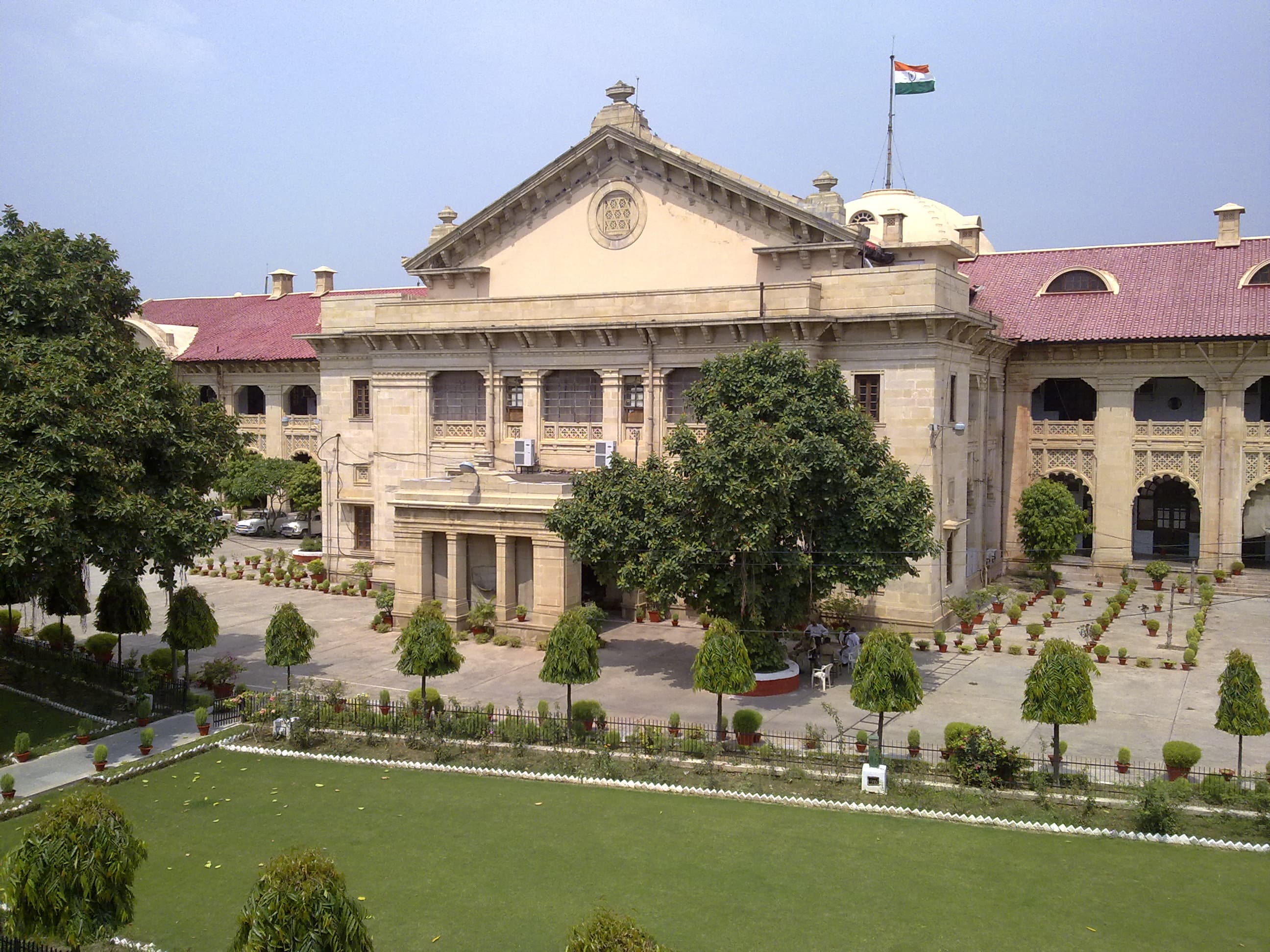
A compassionate appointment is a government job given to a dependent of an employee who dies in service, so that the family is not pushed into destitution overnight. For decades, married daughters in Uttar Pradesh were quietly shut out of this benefit — treated as if marriage transferred them to another family and ended their claim on their dead parent. That position has now been decisively rejected. On 2 June 2026, the Supreme Court in Kulsum Nisha v. State of U.P. held that a daughter cannot be excluded from compassionate benefits merely because she is married, striking down the discriminatory part of UP’s own rules as a violation of Articles 14 and 15 of the Constitution.
If your father or mother was a UP government employee who died in harness, and your application was rejected only because you are a married woman, that rejection is now on very weak legal ground. This guide explains what compassionate appointment is, who qualifies under UP rules, exactly what the Supreme Court decided, and how to challenge a wrongful rejection by writ petition before the Allahabad High Court. For a case-specific opinion you can contact our office.
Table of Contents
Need Immediate Legal Help?
If you're facing a legal emergency in Lucknow, don't wait. Contact experienced criminal lawyer Advocate Onkar Pandey for immediate assistance.
What Is Compassionate Appointment — and Why It Exists
Compassionate appointment is an exception to the normal rule of open recruitment. Ordinarily, every government post must be filled through advertisement and competition. The compassionate scheme allows the State to appoint one dependent of a deceased employee without that process, purely to tide the family over the sudden financial crisis caused by the breadwinner’s death while in service.
Because it is an exception, the courts have always insisted on two things: the death must have occurred while in service (“dying in harness”), and the family must be in genuine financial distress. It is a welfare measure, not an inheritance and not a hereditary right to the dead person’s post.
- Purpose: immediate relief from financial hardship, not a reward or a property right.
- Trigger: death of a government servant while still in service (or, in some rules, medical invalidation).
- Beneficiary: a dependent family member — spouse, son, or daughter — as defined by the applicable rules.
- Nature: a one-time concession, to be applied for within the time limit prescribed by the scheme.
In Uttar Pradesh, these appointments are governed mainly by the U.P. Recruitment of Dependents of Government Servants Dying in Harness Rules, 1974, as amended. Disputes over who counts as a “dependent” are a recurring area of service and government job litigation, and the married-daughter question was one of the most contested of all.
The Kulsum Nisha Ruling — Married Daughters Cannot Be Excluded
The flashpoint was a 2019 Government Order of the State of Uttar Pradesh that excluded married daughters from the very definition of “family” for compassionate benefits. In Kulsum Nisha v. State of U.P., decided on 2 June 2026, a Bench of the Supreme Court comprising Justice P.S. Narasimha and Justice Alok Aradhe held that this exclusion is unconstitutional.
Kulsum Nisha had sought transfer of a fair price shop licence in her favour on compassionate grounds after her mother’s death. Her application was rejected solely because she was married, relying on the 2019 order. The Supreme Court set aside that rejection and the contrary view taken by some benches of the Allahabad High Court.
| Issue | Old Position in UP | After Kulsum Nisha (June 2026) |
|---|---|---|
| Married daughter as “family” | Excluded by 2019 Government Order | Cannot be excluded merely due to marriage |
| Constitutional test | Treated as policy discretion | Violates Articles 14 and 15(1) |
| Comparison with sons | Sons eligible whether married or not | Daughters must be treated on par with sons |
The core reasoning is simple but powerful: a married son never loses his claim, so denying a married daughter the same benefit is discrimination on the ground of sex and marital status alone. Where the State or the High Court’s Lucknow Bench has wrongly applied the old rule, the remedy is to approach the Allahabad High Court afresh.
Why Marital Status Cannot Be a Bar — Articles 14 and 15
The decision rests on two pillars of the Constitution that every government scheme must respect. Article 14 guarantees equality before the law, and Article 15(1) forbids the State from discriminating against any citizen on grounds only of religion, race, caste, sex, or place of birth.
Excluding a married daughter while admitting a married son fails this test in the most direct way. The classification is based purely on the daughter’s sex and her changed marital status, neither of which has any rational link to the object of the scheme — relieving a dependent family’s financial distress.
- Dependency, not marriage, is the real test — the question is whether the applicant genuinely depended on the deceased, not whether she has a husband.
- Equal treatment of sons and daughters is now constitutionally required; a rule that treats them differently on marriage is liable to be struck down.
- An assumption that a married woman belongs only to her husband’s family is a stereotype the courts have repeatedly rejected.
This mirrors a broader shift in Indian law — the same equality logic that made daughters equal coparceners in ancestral property now governs compassionate appointment. Families fighting these overlapping rights often need both civil litigation support and service-law advice in tandem.
Legal Consultation
Talk directly to Advocate Onkar Pandey
Explain your matter over a call or WhatsApp. If you take the case forward, the consultation fee adjusts into your overall fee, so there is no separate charge to begin.
Eligibility and Conditions for Compassionate Appointment in UP
Even after Kulsum Nisha, compassionate appointment is not automatic. The applicant must still satisfy the conditions built into the UP Dying in Harness Rules. The married-daughter ruling removes one unlawful barrier; it does not waive the genuine eligibility requirements that apply to everyone.
The key conditions a UP applicant must ordinarily meet are summarised below.
| Condition | What It Means |
|---|---|
| Death in service | The government servant must have died while still in service (dying in harness) |
| Eligible dependent | Spouse, son, or unmarried/married daughter dependent on the deceased |
| Financial need | The family must be in genuine financial distress without the appointment |
| Time limit | Application within the period prescribed by the rules from the date of death |
| Suitability | The applicant must meet minimum qualifications for the post offered |
Two cautions matter in practice. First, compassionate appointment is meant to meet an immediate crisis, so long unexplained delay in applying can defeat the claim. Second, the post offered is normally a Class III or Class IV post suited to the applicant’s qualifications, not a post of the family’s choosing. Sorting out which rule and time-limit applies to your case is exactly where focused service-law advice prevents avoidable rejections.
How to Challenge a Rejection — Writ Petition Before the High Court
If your application has been rejected only because you are a married daughter, the rejection now runs against a binding Supreme Court judgment. The remedy is not to give up or to keep sending representations, but to challenge the order judicially. Government job disputes are decided by writ petition under Article 226 before the Allahabad High Court and its Lucknow Bench.
The usual sequence is as follows.
- Obtain the rejection order in writing. A written order recording the ground of refusal is essential evidence; insist on it.
- Send a representation citing Kulsum Nisha v. State of U.P. and asking the department to reconsider in light of the law.
- File a writ petition under Article 226 before the Allahabad High Court (Lucknow Bench for the Lucknow region) challenging the rejection.
- Plead the constitutional ground — that exclusion on marital status violates Articles 14 and 15 and is covered squarely by the Supreme Court ruling.
- Seek a direction to consider your application on merits, treating you on par with a son.
Because service-law limitation and procedure are unforgiving, it is wise to act quickly and with proper drafting. Representing dependents before the Lucknow Bench of the Allahabad High Court in exactly these matters is a core part of our service and job-dispute practice.
Common Reasons Applications Are Rejected — and How to Answer Them
Departments reject compassionate applications for several recurring reasons, only some of which are legally sound after the 2026 ruling. Knowing which objection you face decides whether the answer is a fresh document or a writ petition.
- “You are a married daughter.” This is no longer a valid ground after Kulsum Nisha; it is directly challengeable.
- “The family is not in financial distress.” A genuine ground — but it must be assessed fairly, not assumed; income and dependency evidence answers it.
- “The application is time-barred.” Delay can be fatal, but a properly explained delay, especially one caused by the department’s own wrong rejection, can be condoned.
- “No suitable post is vacant.” The State cannot use this as a permanent excuse; courts have directed consideration when posts exist.
- “You do not meet the qualifications.” Valid for the specific post, but the applicant may qualify for a lower post.
The practical lesson is that a rejection letter is the beginning of the fight, not the end. Each ground has a documented answer, and the constitutional grounds are now firmly on the applicant’s side. A measured combination of representation and, where needed, litigation usually produces the best outcome.
About the Author
Advocate Onkar Pandey is a practicing lawyer at Lucknow High Court with extensive experience in criminal law, family law, and civil litigation. With a deep understanding of the Indian legal system and years of courtroom experience in Lucknow courts, Advocate Pandey provides practical legal guidance to clients across Uttar Pradesh. For legal consultation regarding compassionate appointment and service-law disputes in UP, contact Advocate Onkar Pandey for expert advice tailored to your specific situation.
Frequently Asked Questions
Can a married daughter get compassionate appointment in UP in 2026?+
Yes. After the Supreme Court’s decision in Kulsum Nisha v. State of U.P. on 2 June 2026, a married daughter cannot be denied compassionate appointment or compassionate benefits in Uttar Pradesh merely because she is married. The Court held that the 2019 Government Order excluding married daughters from the definition of “family” violates Articles 14 and 15 of the Constitution. A married son never loses this benefit, so denying a married daughter the same right is sex-based discrimination. You still have to satisfy the other conditions — death of the parent in service, genuine financial dependency, and applying within the prescribed time — but marital status alone is no longer a lawful bar.
What law governs compassionate appointment in Uttar Pradesh?+
Compassionate appointment in UP is governed mainly by the U.P. Recruitment of Dependents of Government Servants Dying in Harness Rules, 1974, along with subsequent government orders and the specific service rules of the concerned department. These rules define who is a dependent, the time limit for applying, and the posts that may be offered. Over and above the rules, the Constitution applies — so any rule or order that discriminates on sex or marital status can be struck down, as happened in Kulsum Nisha v. State of U.P. (2026). Because departments often apply outdated government orders, it is important to check both the current rules and the latest court rulings before accepting a rejection.
Is compassionate appointment a right or a concession?+
It is a concession, not an absolute right, and the courts have repeatedly said so. The purpose is to relieve the sudden financial distress a family faces when a serving government employee dies, not to give heirs a hereditary claim on the dead person’s post. This is why genuine financial need and timely application matter so much. However, while the appointment itself is discretionary, the State must exercise that discretion lawfully and without discrimination. It cannot, for instance, admit married sons but reject married daughters. So although no one can demand a job as of right, every eligible dependent has a right to be considered fairly and on equal terms.
How do I challenge a rejected compassionate appointment in Lucknow?+
Government job and service disputes are challenged by a writ petition under Article 226 of the Constitution before the Allahabad High Court, with the Lucknow Bench hearing matters from the Lucknow region. First, get the rejection in writing so the exact ground is on record. Then send a representation citing the relevant rule and, if your refusal was based on marital status, the Kulsum Nisha judgment. If that fails, file a writ petition asking the Court to quash the rejection and direct the department to consider your application on merits, treating you on par with a son. Service-law limitation is strict, so act promptly and have the petition drafted properly by a service-law advocate.
Is there a time limit to apply for compassionate appointment in UP?+
Yes. Compassionate appointment is meant to meet an immediate crisis, so the rules prescribe a time limit running from the date of the employee’s death, and long unexplained delay can defeat the claim. The exact period depends on the applicable rules and government orders in force at the time. That said, courts have condoned delay where it was caused by the department’s own wrongful rejection or by genuine circumstances beyond the applicant’s control. If you were wrongly refused as a married daughter and time has passed, the delay attributable to that illegal rejection can often be explained. The safest course is to apply as early as possible and to document every step.
Does dependency or marriage decide a daughter's eligibility?+
Dependency decides it, not marriage. The whole object of compassionate appointment is to support those who genuinely depended on the deceased government servant. After Kulsum Nisha v. State of U.P. (2026), the Supreme Court has made clear that a daughter’s marital status cannot be used to presume she has stopped being part of her parent’s family or stopped being dependent. What the department may legitimately examine is whether you were in fact dependent on the deceased and whether the family is in real financial distress. Evidence such as residence, financial records, and the absence of other earning members helps establish dependency. Marriage by itself is irrelevant to that genuine inquiry.
Related Guides
Related Services
Get Expert Legal Advice in Lucknow
20+ years experience in criminal law at Lucknow High Court. Available 24/7 for emergencies.
Disclaimer: This article is for general information purposes only and does not constitute legal advice. Every case is unique and requires specific legal analysis. For advice specific to your situation, please consult Advocate Onkar Pandey or another qualified attorney in Lucknow.