Can a Section 138 Cheque Bounce Case Be Quashed Before Trial? — What the Supreme Court Held in 2026 and What It Means in Lucknow
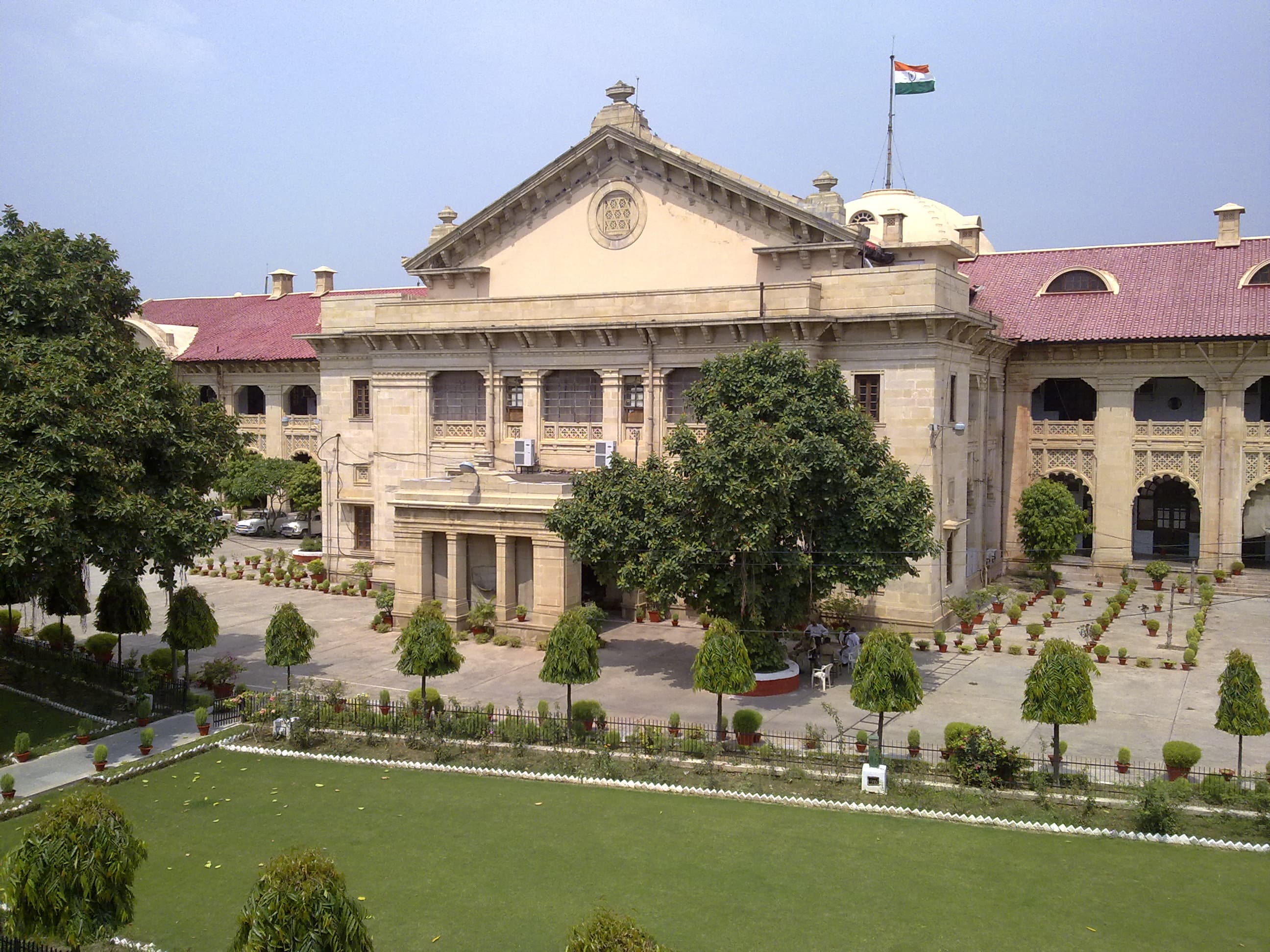
If you have received summons in a cheque bounce case under Section 138 of the Negotiable Instruments Act, your first instinct is usually to ask whether the complaint can be quashed before trial. In a significant 2026 ruling, the Supreme Court made the answer clear: once the basic ingredients of Section 138 are made out, a court cannot quash the complaint at the pre-trial stage merely because the accused claims there was no legally enforceable debt.
In Renuka v. State of Maharashtra (2026 INSC 327), decided on 7 April 2026, the Court held that the statutory presumption under Section 139 cannot be brushed aside in a summary manner. Whether the cheque covered a real debt is a question of evidence that belongs to trial, not to a quashing petition.
In this guide, Advocate Onkar Pandey explains when a cheque bounce case in Lucknow can — and cannot — be quashed, what the Section 139 presumption means for you, and the realistic defence options before the Allahabad High Court's Lucknow Bench.
Table of Contents
Need Immediate Legal Help?
If you're facing a legal emergency in Lucknow, don't wait. Contact experienced criminal lawyer Advocate Onkar Pandey for immediate assistance.
The Five Ingredients of a Section 138 Offence
A cheque bounce complaint is not made out by a bounced cheque alone. The complainant must satisfy five statutory ingredients under Section 138 of the Negotiable Instruments Act, 1881. If any one is missing, the case is genuinely vulnerable; if all are present, a pre-trial quashing petition will usually fail.
| Step | Requirement | Time Limit |
|---|---|---|
| 1 | Cheque issued to discharge a debt or liability | Within validity (3 months) |
| 2 | Cheque presented and dishonoured by the bank | Within cheque validity |
| 3 | Demand notice sent to drawer | Within 30 days of dishonour |
| 4 | Drawer fails to pay | Within 15 days of notice |
| 5 | Complaint filed before Magistrate | Within 30 days of the 15-day default |
These deadlines are strict. A complaint filed late, or without a valid demand notice, can be challenged. But the moment the complainant shows cheque issuance, dishonour, notice and non-payment, the law presumes the rest in his favour — which is exactly why a defence built only on "there was no debt" cannot succeed before trial.
What the Supreme Court Held in Renuka v. State of Maharashtra (2026)
The dispute in Renuka v. State of Maharashtra (2026 INSC 327) turned on a single question: can a Magistrate or High Court throw out a Section 138 complaint at the threshold by deciding there was no legally enforceable debt? The bench of Justices J.K. Maheshwari and Atul S. Chandurkar said no.
The key holdings were:
- The presumption under Section 139 of the NI Act "cannot be dislodged in a summary manner" by merely contending the cheque was not for a legally enforceable debt.
- Once the basic ingredients of Section 138 are established, the presumption of debt automatically arises in the complainant's favour.
- This presumption shifts the burden to the drawer (accused) to rebut it — but only at trial, through evidence, not at the pre-trial stage.
- Dismissing the case before trial "would amount to ignoring the statutory presumption" and wash away a key safeguard prematurely.
The Court therefore restored the complaint for a full trial on merits before the Magistrate. For anyone facing a cheque case in Lucknow, the message is direct: the courtroom for your defence is the trial court, not a quashing bench. A criminal lawyer in Lucknow will build the rebuttal as trial evidence, not as a shortcut petition.
Why Section 139 Makes Pre-Trial Quashing So Difficult
Section 139 of the NI Act says that once a cheque is admitted, the court "shall presume" the cheque was issued to discharge a debt or liability. This is a reverse-burden provision — it flips the usual rule that the prosecution proves everything. In a cheque case, the accused must disprove the debt.
This single section explains why quashing under Section 482 BNSS rarely works in 138 matters:
- A quashing court only looks at whether the complaint, taken at face value, discloses an offence — it does not weigh defence evidence.
- Because Section 139 presumes the debt, the complaint almost always discloses an offence on its face.
- Defences like "the cheque was a security cheque", "it was misused", or "there was no loan" are questions of fact that need cross-examination.
The Supreme Court in Rangappa v. Sri Mohan (2010) had already held that the Section 139 presumption includes the existence of a legally enforceable debt. Renuka reaffirms that line for the BNSS era: the presumption is real, it operates from the start, and it cannot be defeated on affidavit alone.
Legal Consultation
Talk directly to Advocate Onkar Pandey
Explain your matter over a call or WhatsApp. If you take the case forward, the consultation fee adjusts into your overall fee, so there is no separate charge to begin.
When a Cheque Bounce Case CAN Be Quashed
The Renuka ruling does not make Section 138 cases unbreakable. It only bars quashing on the "no debt" argument before evidence. There remain narrow but genuine grounds where the Allahabad High Court at Lucknow can and does quash a complaint at the threshold.
| Ground for Quashing | Why It Works |
|---|---|
| Demand notice not sent within 30 days | Mandatory ingredient missing |
| Complaint filed beyond limitation | Time-barred, no offence |
| Cheque for a time-barred or non-existent debt on admitted facts | No legally enforceable liability at all |
| Accused is not the drawer or signatory | No vicarious liability without role |
| Parties have settled and compounded | Section 147 NI Act allows compounding |
The strongest real-world exit is settlement and compounding: Section 138 is a compoundable offence, so if both sides agree, the case can be closed even after conviction. A High Court lawyer in Lucknow can also seek quashing where the very facts pleaded by the complainant show no liability — for instance, a blank security cheque admitted as such. Outside these pockets, the defence belongs to trial.
How to Defend a Cheque Bounce Case at Trial in Lucknow
If quashing is not available, the correct strategy is to rebut the Section 139 presumption during trial. The accused does not need proof beyond reasonable doubt — only a probable defence that makes the debt doubtful. Indian courts accept this lower standard.
- Reply to the demand notice promptly, raising your defence in writing — silence is later read against you.
- Gather documentary evidence: bank statements, income tax returns, and proof that no loan or transaction existed.
- Cross-examine the complainant on the source of funds — if he cannot show capacity to lend the cheque amount, the presumption weakens.
- Lead evidence that the cheque was a security cheque or blank cheque misused after the relationship soured.
The Bansilal v. Chandanbai and Basalingappa v. Mudibasappa line of cases confirms that proving the complainant lacked the financial capacity to advance the sum can rebut the presumption. These are trial tasks. Engaging a criminal defence advocate early, before the first hearing, gives the best chance of building this record properly in the CJM and Sessions courts at Lucknow.
Forums and Timeline for a Cheque Case in Lucknow
A cheque bounce complaint in Lucknow follows a fixed path through the courts. Knowing the forum at each stage helps the accused avoid wrong filings and missed deadlines.
| Stage | Forum in Lucknow | Remedy |
|---|---|---|
| Complaint and trial | Judicial Magistrate / CJM, Lucknow | Summons trial under Section 138 |
| Quashing (narrow grounds) | Allahabad High Court, Lucknow Bench | Section 528 BNSS / Article 226 |
| Appeal against conviction | Sessions Court, Lucknow | Appeal under BNSS |
| Compounding / settlement | Any stage, including High Court | Section 147 NI Act |
A 138 trial is meant to be summary and fast, but in practice can run one to three years. The accused should not ignore summons — non-appearance can lead to a bailable or non-bailable warrant. If you believe the complaint is an abuse of process on admitted facts, a quashing petition is worth exploring; otherwise, focus on trial defence. A short consultation with a cheque bounce lawyer at the outset can tell you honestly which road fits your case.
About the Author
Advocate Onkar Pandey is a practicing lawyer at the Allahabad High Court Lucknow Bench with over 25 years of experience in criminal law, cheque bounce and Negotiable Instruments Act matters, family law, and civil litigation. Enrolled with the Bar Council of Uttar Pradesh (No. UP/4825/1999), he defends and prosecutes Section 138 complaints before the Magistrate and Sessions courts in Lucknow and files quashing petitions before the High Court. For legal consultation regarding a cheque bounce case quashing before trial, contact Advocate Onkar Pandey at +91 98392 71553, chamber A-406, High Court, Lucknow.
Frequently Asked Questions
Can a cheque bounce case under Section 138 be quashed before trial?+
Generally no, if the basic ingredients are present. In Renuka v. State of Maharashtra (2026 INSC 327), the Supreme Court held that a Section 138 complaint cannot be quashed at the pre-trial stage merely by arguing there was no legally enforceable debt. The Section 139 presumption automatically arises once cheque issuance, dishonour, notice and non-payment are shown, and it can only be rebutted by evidence at trial. Quashing remains possible only on narrow grounds — a missing or late demand notice, a time-barred complaint, the accused not being the signatory, or a settlement. For everything else, the defence must be presented at trial before the Magistrate in Lucknow, not in a quashing petition before the High Court.
What is the Section 139 presumption in a cheque bounce case?+
Section 139 of the Negotiable Instruments Act says the court "shall presume" that a cheque was issued to discharge a debt or liability once the cheque is admitted. It is a reverse-burden provision: instead of the complainant proving the debt, the accused must disprove it. The Supreme Court in Rangappa v. Sri Mohan (2010) and again in Renuka (2026) confirmed that this presumption covers the existence of a legally enforceable debt. The accused can rebut it by raising a probable defence — for example, by showing the complainant had no financial capacity to lend the amount, or that the cheque was a misused security cheque. This rebuttal is led during trial through cross-examination and documents, which is why pre-trial quashing rarely works.
On what grounds can a Lucknow court still quash a 138 complaint?+
The Allahabad High Court at Lucknow can quash a Section 138 complaint at the threshold only where the defect appears on the face of the complaint. Common valid grounds include: the demand notice was not sent within 30 days of dishonour; the complaint was filed beyond the limitation period; the accused is not the drawer or authorised signatory of the cheque; the cheque was admittedly for a time-barred or non-existent debt; or the parties have settled and compounded the matter under Section 147. Because Section 138 is compoundable, settlement can close the case even after conviction. A quashing petition that simply argues "there was no debt" will fail, because that is a question of evidence reserved for trial under the Section 139 presumption.
What happens if I ignore the summons in a cheque bounce case?+
Ignoring summons in a Section 138 case is a serious mistake. The Magistrate can issue a bailable warrant, and on continued non-appearance, a non-bailable warrant for your arrest. The trial can also proceed and conclude in your absence in some circumstances, leading to conviction, a fine up to twice the cheque amount, or imprisonment up to two years. The correct step is to appear, engage a lawyer, and either contest the case at trial or explore settlement. If you are out of station, your advocate can seek exemption from personal appearance under the BNSS. Never assume a cheque case will simply lapse — respond to the first summons and protect yourself from warrants and an ex-parte conviction.
How can I rebut the presumption and win a cheque bounce trial?+
You rebut the Section 139 presumption by raising a probable defence — not proof beyond reasonable doubt, just enough doubt about the debt. Practical steps: send a written reply to the demand notice stating your defence; produce bank statements and income tax returns showing no loan was given or received; and cross-examine the complainant on his source of funds. The Supreme Court in Basalingappa v. Mudibasappa (2019) held that if the complainant cannot show the financial capacity to advance the cheque amount, the presumption is weakened. Evidence that the cheque was a blank or security cheque misused after a dispute also helps. All of this is done at trial before the CJM or Magistrate in Lucknow, with a criminal defence lawyer building the record.
Is a Section 138 cheque bounce case civil or criminal?+
It is technically a criminal offence with a strong civil-recovery character. Section 138 makes dishonour of a cheque for insufficient funds a criminal offence punishable with imprisonment up to two years or a fine up to twice the cheque amount, or both. However, the real purpose is to help the payee recover money, which is why the offence is compoundable under Section 147 and courts actively encourage settlement. The accused faces a criminal trial before a Magistrate, but the dominant remedy sought is compensation. Because of this hybrid nature, a separate civil suit for recovery can also run alongside the 138 case. A criminal lawyer in Lucknow can advise whether to contest, settle, or both.
Related Services
Get Expert Legal Advice in Lucknow
20+ years experience in criminal law at Lucknow High Court. Available 24/7 for emergencies.
Disclaimer: This article is for general information purposes only and does not constitute legal advice. Every case is unique and requires specific legal analysis. For advice specific to your situation, please consult Advocate Onkar Pandey or another qualified attorney in Lucknow.