Belated 498A FIR Against In-Laws: How the Supreme Court's March 2026 Ruling Helps UP Families
On 25 March 2026, in 2026 INSC 297, the Supreme Court of India delivered a sharp corrective to a pattern that has been bleeding UP families dry — FIRs under Section 498A IPC (now Section 85 BNS) filed years after the marriage, dragging in elderly parents-in-law, unmarried sisters-in-law and distant relatives on vague and omnibus allegations. The Court quashed proceedings against the in-laws where the complaint was registered six years and seven months after the marriage and held that vague allegations plus unexplained delay are a textbook abuse of process.
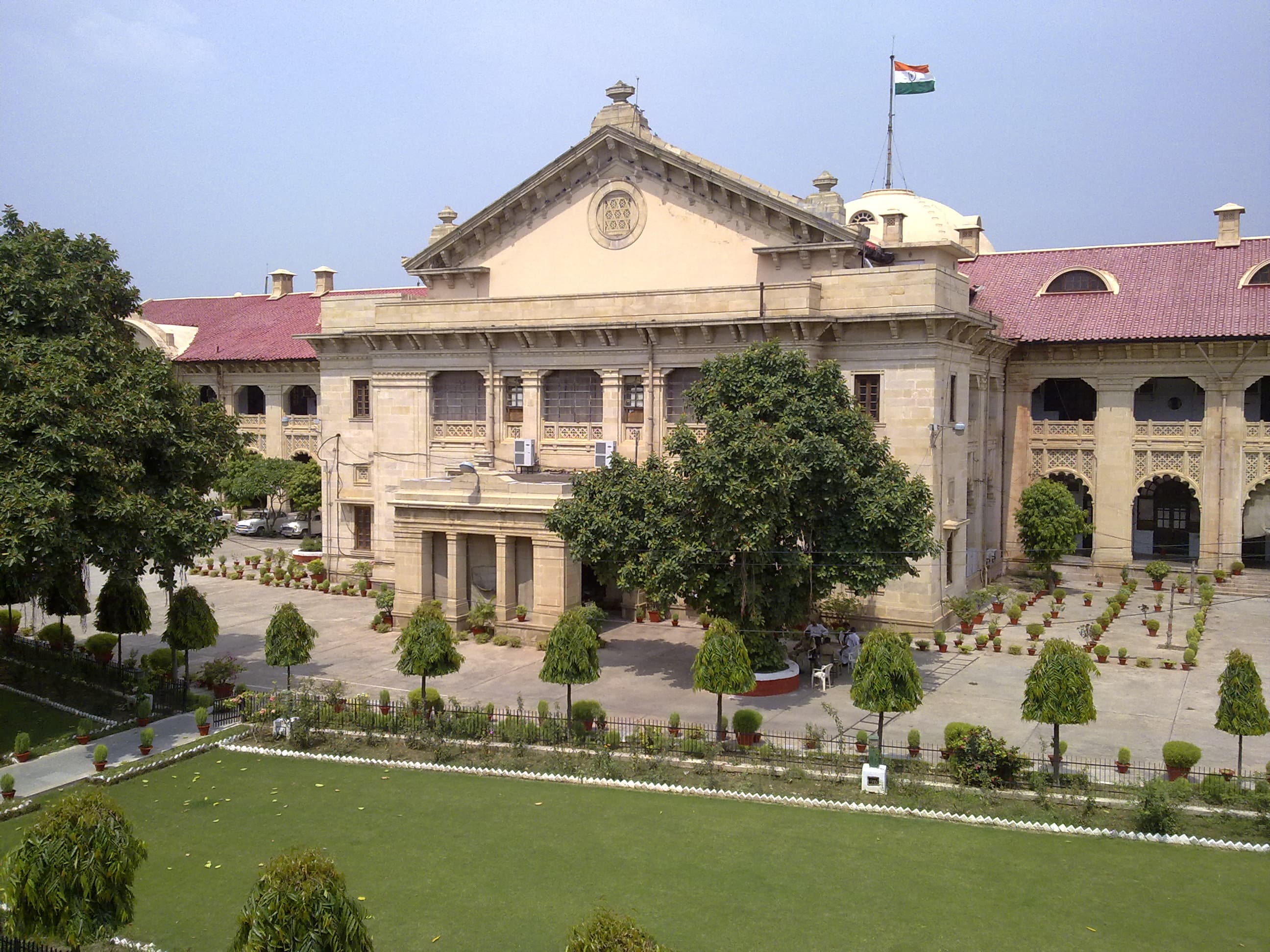
For accused families across Lucknow, Kanpur, Bareilly and the rest of Uttar Pradesh, this ruling is a lifeline. It directly aids FIR quashing petitions before the Allahabad High Court's Lucknow Bench and strengthens the negotiating position of relatives who were never even living with the couple. If your family has just received a notice or arrest threat in a stale 498A complaint, speak to our chamber before responding to the Investigating Officer.
Table of Contents
Need Immediate Legal Help?
If you're facing a legal emergency in Lucknow, don't wait. Contact experienced criminal lawyer Advocate Onkar Pandey for immediate assistance.
What the Supreme Court Decided in 2026 INSC 297
The Bench of Justice B.V. Nagarathna and Justice Ujjal Bhuyan was hearing an appeal from Uttar Pradesh. The marriage had taken place in 2017. The FIR was registered in 2023 — over six and a half years later — naming the husband, parents-in-law and sister-in-law under Sections 498A, 323, 313 IPC and Sections 3 and 4 of the Dowry Prohibition Act. The Allahabad High Court had refused to quash the FIR. The Supreme Court reversed that.
- The Court held that vague and omnibus allegations against in-laws cannot sustain a 498A trial.
- The complaint contained no corroborative material — no medical record of alleged assault, no specific date, no specific demand.
- The six-year-plus delay between the events alleged and the registration of the FIR went unexplained.
- Continuing the prosecution against the parents-in-law and sister-in-law would amount to a misuse of the criminal justice system.
- The proceedings against the in-laws were quashed; the case against the husband was, however, allowed to continue.
The Court repeated the warning from earlier rulings — that "citizens should not dawdle on their rights." Long unexplained silence followed by a sudden criminal complaint is itself a red flag.
Why Belated 498A FIRs Are So Common in Uttar Pradesh
Uttar Pradesh records one of the highest numbers of Section 498A / Section 85 BNS FIRs in the country. A large share of these are filed long after the marital relationship has effectively broken down, often as a counter-move to one of the following triggers.
- The husband or his family files for divorce or judicial separation in the Family Court.
- A maintenance demand is rejected or reduced under Section 144 BNSS (old Section 125 CrPC).
- A child custody application is pending and is going against the complainant.
- A property dispute arises over jewellery, joint flat, or in-laws' ancestral land.
- The wife's family pre-empts an anticipated divorce notice with a 498A complaint.
In each of these patterns, the 498A FIR is not a contemporaneous complaint about harassment — it is a tactical filing years after the fact. The Supreme Court's 2026 INSC 297 ruling, read with the March 2026 quashing-on-merits ruling, gives an experienced criminal lawyer in Lucknow two strong, parallel arguments before the High Court.
What the Court Means by Vague and Omnibus Allegations
The expression "vague and omnibus" is now a working test before the Allahabad High Court. It refers to a complaint that names multiple relatives but fails to ascribe a specific role, act, date or demand to each accused. Use the table below to identify whether a complaint against your family qualifies.
| Specific Allegation (Sustainable) | Omnibus Allegation (Quashable) |
|---|---|
| On 12 March 2021 at our house in Gomti Nagar, my father-in-law slapped me and demanded ₹5 lakh in cash. | My in-laws used to harass me for dowry from time to time. |
| My sister-in-law withheld my jewellery worth ₹2.4 lakh listed in receipt dated 14.11.2020. | My sister-in-law was always involved in the harassment. |
| On 5 January 2022 my husband pushed me down the stairs causing fracture (medical report enclosed). | My husband and his family used to beat me whenever they felt like it. |
| Specific demand for Maruti Brezza car on 4 February 2021 — WhatsApp screenshot enclosed. | Demands for car and gold were made repeatedly. |
The Supreme Court's stress is on particulars. Where the FIR consists only of the right-column phrases, a quashing petition under Section 528 BNSS / Section 482 CrPC is a strong remedy — especially against non-resident parents-in-law and married sisters-in-law who lived in a different city.
Legal Consultation
Talk directly to Advocate Onkar Pandey
Explain your matter over a call or WhatsApp. If you take the case forward, the consultation fee adjusts into your overall fee, so there is no separate charge to begin.
Step-by-Step Procedure to Quash a Belated 498A FIR at Lucknow
The High Court will not quash an FIR on a casual oral plea. The petition needs to be structured carefully. Here is the working sequence we follow for matrimonial-cycle 498A petitions before the Allahabad High Court Lucknow Bench.
- Secure certified copies of the FIR, any statement under Section 173 BNSS (old Section 161 CrPC), and the chargesheet if filed.
- Build a timeline chart — date of marriage, date of separation, date of any divorce or maintenance proceeding, date of FIR. Six-year-plus gaps are decisive.
- Collect proof of non-residence for parents-in-law and sisters-in-law — ration card, voter ID, electricity bills, passport stamps, employer letters.
- Identify omnibus paragraphs in the FIR by numbering each allegation and marking which ones contain no date, no place or no specific role.
- Draft under Section 528 BNSS, citing 2026 INSC 297, Geeta Mehrotra (2012), Kahkashan Kausar (2022) and the March 2026 quashing-on-merits ruling.
- File a stay application seeking interim protection from arrest under Section 35 BNSS for the in-laws while the petition is pending.
- Parallelly secure anticipatory bail from Sessions if arrest looks imminent before admission of the quashing petition.
The first three to four weeks after FIR registration are the most critical. Action delayed in this window often means avoidable arrest, even where the merits eventually justify quashing.
Husband vs In-Laws — Why the Court Treats Them Differently
Notice that in 2026 INSC 297, the Supreme Court quashed proceedings only against the parents-in-law and sister-in-law. The case against the husband was allowed to continue. This is not an accident. Indian courts have, since Geeta Mehrotra (2012) and Kahkashan Kausar (2022), drawn a structural distinction.
- The husband is the primary accused in a matrimonial dispute and is presumed to have had day-to-day interaction with the wife.
- Relatives — especially those not residing with the couple — cannot be roped in on the assumption that they were "part of the family".
- Where a sister-in-law is married and living separately, courts almost routinely quash 498A against her unless specific acts on specific dates are pleaded.
- Where parents-in-law are elderly, retired and not part of the matrimonial home, the same logic applies.
- The husband's own quashing petition will be tested on the merits of the specific allegations — usually it is rejected at the FIR stage, and the relief route is regular or anticipatory bail, followed by acquittal at trial.
This is why matrimonial defence strategy in UP is rarely a single document — it is a coordinated set of filings: quashing for the relatives, bail for the husband, and a maintenance defence in the Family Court.
Realistic Timelines for a 498A Quashing Petition in UP
The Lucknow Bench is currently disposing of matrimonial quashing petitions within 4-9 months from filing, provided the petitioner is well-prepared. The table below is from our chamber's running data for petitions decided in 2025-2026.
| Stage | Typical Timeline | What to Expect |
|---|---|---|
| Drafting and filing | 5-10 working days | Certified FIR copy, timeline, family affidavits attached |
| First listing | 1-3 weeks after filing | Admission, interim protection for in-laws considered |
| Notice to State and complainant | 2-4 weeks | Counter affidavit filing window opens |
| Counter and rejoinder | 6-12 weeks | Investigation status placed on record |
| Final hearing and reasoned order | 4-9 months from filing | Quashing for in-laws; case against husband continues |
If the matter is one where compromise between the parties is on the table, the Allahabad High Court can quash even the husband's portion under settled compoundability principles. To know whether your family's case fits that route, book a consultation.
Mistakes Families Make That Weaken a 498A Quashing Petition
A merits-based hearing — which the March 2026 ruling now mandates — also means a merits-based dismissal is possible. A poorly prepared petition will be dismissed on the same grounds it sought relief. We see the following recurring errors.
- Approaching the police station first to "explain the family side" — statements made there end up cited in the State's counter affidavit.
- Filing a joint petition for husband and in-laws when the merits for each are different. Separate but coordinated petitions are stronger.
- Ignoring the timeline chart — the strongest single page in a belated-FIR petition is a clean, dated chronology.
- Not annexing residence proof for non-resident relatives — voter ID, ration card and employer letters are essential.
- Delaying anticipatory bail until the IO calls for custodial interrogation — by then arrest may have already happened.
- Settling under pressure without independent legal advice — many "compromises" later collapse and revive the FIR.
If your family is also facing parallel proceedings — divorce petition, maintenance application, or a property mutation challenge — read our companion guidance on divorce, maintenance and cross-FIR strategy in UP before any single step is taken in isolation.
About the Author
Advocate Onkar Pandey is a practising criminal and matrimonial lawyer at the Allahabad High Court Lucknow Bench, with Bar Council enrolment UP 4825/1999. He has handled 498A quashing petitions across Awadh and Rohilkhand for over two decades, with particular focus on protecting elderly parents-in-law and non-resident relatives from omnibus matrimonial FIRs. He regularly advises on the intersection of FIR quashing, anticipatory bail and Family Court proceedings.
Office: Chamber A-406, High Court, Lucknow, Awadh Bar, UP 226001. Phone: +91 98392 71553. Email: advonpandey@gmail.com. For a confidential reading of your 498A FIR and a clear assessment of whether quashing is the right route for your family, reach the chamber here.
Frequently Asked Questions
What did the Supreme Court hold in 2026 INSC 297 about belated 498A FIRs?+
On 25 March 2026, in 2026 INSC 297, the Supreme Court quashed proceedings against the parents-in-law and sister-in-law of the husband in a Uttar Pradesh case. The marriage was in 2017; the FIR was registered in 2023, more than six and a half years later. The Court ruled that vague, omnibus allegations against in-laws — without specific dates, places or roles — combined with an unexplained delay of over six years amounted to abuse of the criminal justice system. The proceedings against the in-laws were quashed. The case against the husband, however, was allowed to continue. The ruling is now a leading authority for matrimonial FIR quashing petitions across UP.
Can the FIR against my husband also be quashed, or only against my in-laws?+
Courts treat the husband and in-laws differently. The husband is presumed to have had day-to-day interaction with the wife, so quashing at the FIR stage is harder unless the entire complaint is plainly absurd. For non-resident parents-in-law, married sisters-in-law and distant relatives, quashing is routinely granted where allegations are vague and omnibus. If both sides want a compromise, the Allahabad High Court can quash even against the husband under settled compoundability principles for non-heinous offences. The practical strategy in UP is usually to file separate but coordinated petitions — quashing for the in-laws and anticipatory bail for the husband — rather than a single combined application.
How long after the marriage is too late to file a 498A FIR?+
There is no fixed limitation under the BNS, but unexplained delay weakens the prosecution. Section 498A IPC (now Section 85 BNS) is a continuing offence, so isolated incidents can technically be alleged years later. However, the Supreme Court has held — most recently in 2026 INSC 297 — that delays of several years, without any explanation, are themselves a ground for quashing where allegations are also vague. In practice, FIRs filed more than three or four years after the events alleged invite a strong quashing argument before the Allahabad High Court Lucknow Bench, especially against relatives who are not part of the matrimonial home.
What proof should non-resident in-laws collect to support a quashing petition?+
Where the parents-in-law or married sister-in-law did not live with the couple, residence proof is decisive. Useful documents include voter ID, Aadhaar with separate address, electricity and water bills showing a different home, ration card, bank passbook with home address, employer's posting letter, passport stamps for overseas residence, and property tax receipts for the separate house. Also collect proof of when the relative last met the complainant — flight tickets, train tickets, employer leave records. A clean affidavit setting out the dates and places, supported by these documents, lets the High Court conclude that the relative could not have committed the day-to-day acts alleged.
Is anticipatory bail required if we have already filed a quashing petition?+
Yes, in most cases. A quashing petition takes 4-9 months to be decided. During that period, the Investigating Officer can still summon, interrogate and arrest under Section 35 BNSS. The High Court's interim stay on coercive action is helpful but not automatic — it depends on the strength of the petition at the admission stage. The safer course is to parallelly file an anticipatory bail application before the Sessions Court under Section 482 BNSS, especially for the husband and any in-law who is physically present in UP. Once anticipatory bail is granted, the quashing petition can be pursued without the constant fear of sudden arrest.
How much does a 498A quashing petition cost at the Lucknow Bench?+
Fees vary by lawyer, complexity and number of accused. For a standard matrimonial 498A quashing petition at the Allahabad High Court Lucknow Bench, professional fees typically range from ₹50,000 to ₹2,50,000 depending on whether the chargesheet has been filed, how many relatives are involved, and whether parallel proceedings such as divorce and maintenance are ongoing. Court fees and miscellaneous expenses (drafting, certified copies, affidavits) add another ₹10,000 to ₹25,000. Our chamber offers a fixed-fee structure for matrimonial quashing matters after a first consultation, so families know the full cost before signing the vakalatnama.
Related Services
Get Expert Legal Advice in Lucknow
20+ years experience in criminal law at Lucknow High Court. Available 24/7 for emergencies.
Disclaimer: This article is for general information purposes only and does not constitute legal advice. Every case is unique and requires specific legal analysis. For advice specific to your situation, please consult Advocate Onkar Pandey or another qualified attorney in Lucknow.