Bail in a Section 376 IPC Sexual Assault Case at Allahabad High Court Lucknow Bench
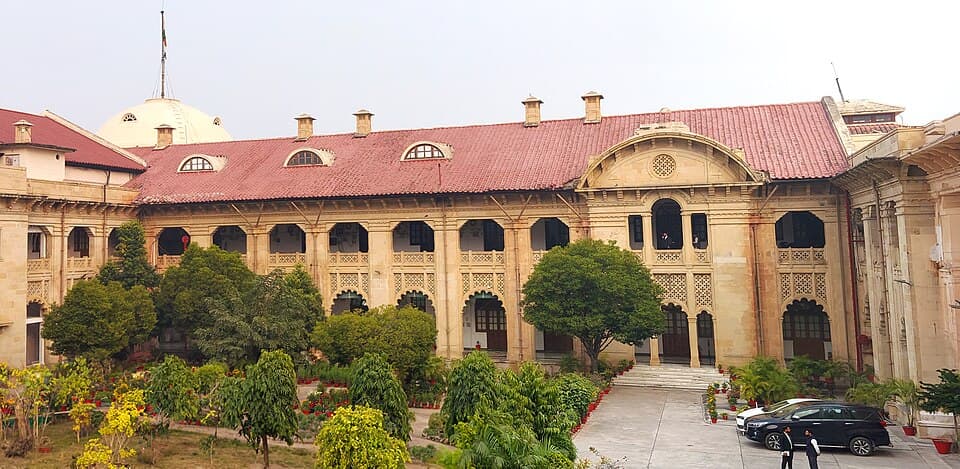
Bail in a Section 376 IPC sexual assault case is legally possible - but it is harder to obtain than bail in most other non-bailable offences. Families and accused persons often lose critical time believing bail is entirely out of reach. Here are the key facts:
- Section 376 IPC is non-bailable. Only the Sessions Court or the Allahabad High Court Lucknow Bench can grant bail - not the police or the Magistrate.
- Anticipatory bail was granted by the Lucknow Bench in Bail App. No. 1496 of 2022 (Akash Pandey vs State of U.P.) on 6 February 2023 - a case handled by Advocate Onkar Pandey where the court found the Section 164 CrPC statement did not substantiate the rape charge.
- The survivor's Section 164 CrPC statement is the single most important document the court reads in every 376 bail hearing.
- Four factors dominate every 376 bail decision: the nature of the Section 164 statement, DNA or forensic evidence, the accused's criminal history, and whether the relationship was alleged to be consensual.
- Under BNS 2023, Section 376 IPC is now Section 64 BNS - the same restrictions on bail apply under Section 480 BNSS (equivalent to Section 437(1) CrPC).
This article explains the legal restrictions on Section 376 bail, the factors the Allahabad High Court weighs, the outcome of Bail App. No. 1496/2022, the difference between regular bail and anticipatory bail in a 376 case, and what weakens a bail application. If you or your family member has been arrested or anticipates arrest under Section 376 IPC or Section 64 BNS in Uttar Pradesh, read this before approaching any court.
Table of Contents
Need Immediate Legal Help?
If you're facing a legal emergency in Lucknow, don't wait. Contact experienced criminal lawyer Advocate Onkar Pandey for immediate assistance.
Why Section 376 IPC Bail Is Harder Than Other Non-Bailable Offences
Most non-bailable offences allow a Magistrate to grant bail under Section 437 CrPC. Section 376 IPC is one of the offences specifically excluded from that ordinary path.
Section 437(1) CrPC - now mirrored in Section 480 BNSS 2024 - contains an express restriction: if the accused is charged with an offence punishable by death or life imprisonment, the Magistrate shall not grant bail unless there appear no reasonable grounds for believing the accusation. Rape under Section 376 IPC carries a minimum of 7 years and a maximum of life imprisonment. This means:
- The Magistrate who remands the accused after arrest has virtually no power to grant bail in a 376 case.
- Only the Sessions Court under Section 439 CrPC (Section 483 BNSS) or the High Court can grant regular bail.
- For anticipatory bail (before arrest), the application goes directly to the Allahabad High Court Lucknow Bench or the Sessions Court under Section 438 CrPC (Section 482 BNSS).
The elevated bar exists because the legislature recognised that sexual assault cases involve serious harm to the survivor and a risk of witness tampering if bail is granted lightly. The criminal defence lawyer handling a 376 bail must build a case that directly addresses this elevated bar - not just the general bail factors.
The Supreme Court has consistently held (see Shajan Skaria vs State of Kerala, 2024 INSC 625) that in serious sexual offence cases the court must weigh the gravity of the accusation against the accused's right to liberty, looking carefully at the quality of evidence placed before it at the bail stage.
The Factors the Allahabad High Court Weighs in a Section 376 Bail Application
The Lucknow Bench does not treat every Section 376 case identically. The court conducts a structured inquiry into the evidence available at the bail stage. Based on the judgments from this bench, the following factors are consistently examined:
| Factor | What the Court Asks | What Helps Bail |
|---|---|---|
| Section 164 CrPC Statement | Does the survivor's recorded statement before a Magistrate clearly establish the offence of rape? | Statement does not substantiate the charge, contains contradictions, or indicates a prior consensual relationship |
| DNA / Forensic Evidence | Is there scientific evidence linking the accused to sexual contact against the survivor's will? | DNA report not yet received, or report is inconclusive or negative |
| Nature of Alleged Relationship | Did the accused and survivor know each other? Was there prior voluntary contact? | Documented evidence of a prior consensual relationship - messages, social media, witnesses |
| Delay in Filing FIR | How much time passed between the alleged incident and the lodging of the FIR? | Substantial unexplained delay, suggesting false implication or a dispute that escalated |
| Criminal Antecedents | Does the accused have prior convictions or pending cases involving violence or sexual offences? | No prior criminal history, good reputation in the community |
| Risk of Tampering / Absconding | Is there a real risk the accused will interfere with witnesses or flee? | Permanent address, local roots, employed, family support, willingness to submit passport |
The court at the Lucknow Bench typically reads the FIR, the Section 164 statement, the charge-sheet (if filed), and the DNA / medical report before passing an order. A well-prepared bail application addresses each of these factors with supporting documents rather than relying on oral arguments alone.
How Anticipatory Bail Was Granted in Bail App. No. 1496 of 2022 at Lucknow Bench
Bail App. No. 1496 of 2022 (Criminal Misc Anticipatory Bail Application U/S 438 Cr.P.C.) was heard by Hon'ble Karunesh Singh Pawar, J. at Court No. 12, Allahabad High Court Lucknow Bench. The order was passed on 6 February 2023.
The accused: Akash Pandey, facing FIR Crime No. 163/2022 registered at Police Station Raje Sultanpur, District Ambedkar Nagar, under Sections 376 (rape), 313 (causing miscarriage without consent), 323 (causing hurt), 504 (intentional insult), and 506 (criminal intimidation) IPC.
The core argument: The defence, led by Advocate Onkar Pandey, placed before the court that:
- The applicant had been falsely implicated and the relationship between the parties had been consensual.
- The complainant's own statement under Section 164 CrPC recorded before the Magistrate did not substantiate the charge of rape.
- The applicant had no prior criminal record and posed no flight risk.
- There was no likelihood that the applicant would tamper with evidence or threaten prosecution witnesses if released.
The court's reasoning: Hon'ble Karunesh Singh Pawar, J. found that the Section 164 CrPC statement lacked corroboration of the rape charge, that the applicant had cooperated with the investigation, and that there was no criminal history. The court granted anticipatory bail with the following standard conditions:
- The applicant must not induce, threaten, or offer any inducement to witnesses and must not tamper with evidence.
- The applicant must not leave India without prior permission of the court.
- The applicant must attend all dates before the trial court unless formally exempted.
- Bail was granted with liberty to the court to cancel it upon breach of any condition.
This case illustrates the critical importance of the Section 164 statement in 376 bail proceedings. Where the survivor's recorded statement itself does not clearly establish the offence, the Lucknow Bench will weigh that fact heavily in favour of the applicant. The full order is available on Indian Kanoon at Doc No. 65102692.
If you are facing a similar situation, contact Advocate Onkar Pandey to assess the strength of the evidence against you before making any bail application.
Legal Consultation
Talk directly to Advocate Onkar Pandey
Explain your matter over a call or WhatsApp. If you take the case forward, the consultation fee adjusts into your overall fee, so there is no separate charge to begin.
Regular Bail vs Anticipatory Bail in a Section 376 Case
The choice between applying for anticipatory bail (before arrest) and regular bail (after arrest) depends entirely on the stage of the case. Making the wrong application at the wrong time wastes weeks and strengthens the prosecution's hand.
| Type of Bail | When to Apply | Applicable Law | Forum | Typical Timeline |
|---|---|---|---|---|
| Anticipatory Bail | FIR registered, arrest likely but not yet made | Section 438 CrPC / Section 482 BNSS | Sessions Court or High Court (Lucknow Bench) | 7 to 21 days from filing to order |
| Regular Bail (Sessions) | After arrest, remanded to judicial custody | Section 439 CrPC / Section 483 BNSS | Sessions Court (first application) | 14 to 30 days from filing |
| Regular Bail (HC) | Sessions Court rejected bail, or Sessions bail application pending too long | Section 439 CrPC / Section 483 BNSS | Allahabad High Court Lucknow Bench | 21 to 45 days from filing |
Key rule for 376 cases: if anticipatory bail has been refused by the Sessions Court, filing a fresh anticipatory bail application at the High Court is still available and often more effective because the High Court can appreciate the finer nuances of the evidence. The anticipatory bail process at Allahabad High Court requires a detailed application setting out the grounds, supported by the FIR, the Section 164 statement, and any documentary evidence of the alleged consensual nature of the relationship.
Once a chargesheet is filed, the window for anticipatory bail narrows sharply. At that stage, a regular bail application under Section 439 CrPC or Section 483 BNSS becomes the primary remedy.
What Weakens a Bail Application in a Section 376 Case
Many bail applications in Section 376 cases fail not because the accused is guilty but because the application is poorly prepared. Based on the pattern of rulings at the Lucknow Bench, the following factors consistently damage a bail application:
- A strong Section 164 CrPC statement: If the survivor has given a detailed, consistent, and credible statement before the Magistrate describing the assault, the court will be very reluctant to grant bail regardless of other factors. This is the single most damaging piece of evidence at the bail stage.
- Positive DNA match: If the forensic science laboratory report confirms the presence of the accused's DNA on the survivor's person or clothing, bail becomes substantially harder to obtain.
- Prior criminal history: Any prior conviction or pending case involving violence, sexual assault, or moral turpitude significantly damages credibility before the bail court.
- Allegations involving a minor: If the survivor is under 16, the offence falls under Section 376AB IPC (Section 65 BNS) with a minimum sentence of 20 years. Bail in such cases is extremely rare and almost never granted at the Sessions Court level.
- Gang rape (Section 376D IPC): Group sexual assault charges carry life imprisonment as the minimum sentence. The court applies the highest scrutiny and bail is rarely granted without exceptional circumstances.
- Repeated applications without fresh grounds: Filing a second or third bail application without a material change in circumstances is rejected by the court and creates a negative impression.
- Absconding or non-cooperation with investigation: If the accused evaded summons or was arrested after a period of absconding, the court will note this as evidence of flight risk.
A competent criminal lawyer at Lucknow will assess these factors before advising the accused on whether to apply for anticipatory bail at the Sessions level or to approach the High Court directly. Going to the wrong forum at the wrong time can waive important rights.
If you believe you have been falsely accused under Section 376 IPC, an FIR quashing petition at the High Court may run simultaneously with or instead of a bail application, depending on the strength of the evidence.
About Advocate Onkar Pandey
Advocate Onkar Pandey is a criminal defence lawyer practising at the Allahabad High Court Lucknow Bench and the district courts of Uttar Pradesh. He handles bail applications, anticipatory bail petitions, FIR quashing, and trial defence in serious criminal matters including cases under Sections 376, 302, 307, 498A IPC and their BNS equivalents.
- Bail App. No. 1496 of 2022: Secured anticipatory bail for the accused in a Section 376, 313, 323, 504, 506 IPC case before Hon'ble Karunesh Singh Pawar, J. at the Lucknow Bench - the Section 164 CrPC statement was successfully challenged as not substantiating the rape charge.
- Experience: Regular appearances before the Lucknow Bench in non-bailable matters including murder, rape, POCSO, and property disputes.
- Approach: Each bail application is built on a detailed analysis of the FIR, the Section 164 statement, the medical examination report, and the charge-sheet - not on standard arguments copied from precedent.
Frequently Asked Questions
Can bail be granted in a Section 376 IPC rape or sexual assault case?+
Yes. Section 376 IPC is non-bailable but not unbailable. Bail can be granted by the Sessions Court or the Allahabad High Court (Lucknow Bench) under Section 439 CrPC or Section 483 BNSS 2024. Anticipatory bail is available under Section 438 CrPC (Section 482 BNSS) before arrest. In Bail App. No. 1496 of 2022, the Lucknow Bench granted anticipatory bail where the survivor's Section 164 CrPC statement did not substantiate the rape charge. The strength of the prosecution's evidence - particularly the Section 164 statement and DNA report - determines whether bail is likely.
Can a person file for anticipatory bail if falsely accused of Section 376 IPC?+
Yes. If an FIR has been registered and the person apprehends arrest, they can file an anticipatory bail application under Section 438 CrPC (Section 482 BNSS 2024) before the Sessions Court or directly before the Allahabad High Court Lucknow Bench. The application must clearly set out the grounds - typically that the relationship was consensual, that the Section 164 statement does not support the allegation, or that the FIR has been lodged for extraneous reasons. Speed matters: the application must be filed before arrest to secure the protection of anticipatory bail.
What is the strongest ground for bail in a Section 376 case at the Lucknow Bench?+
The strongest single ground is a weak or contradictory Section 164 CrPC statement. If the survivor's statement recorded before a Magistrate does not clearly describe the commission of rape - or contains material contradictions with the FIR - the court finds it difficult to sustain the accusation at the bail stage. Secondary strong grounds include the absence of DNA evidence, a documented history of a prior consensual relationship, and a significant unexplained delay between the alleged incident and the FIR. All of these grounds were successfully argued in Bail App. No. 1496 of 2022 at the Lucknow Bench.
How long does bail take in a Section 376 IPC case at the High Court?+
At the Allahabad High Court Lucknow Bench, an anticipatory bail application in a Section 376 case typically takes 7 to 21 days from filing to the passing of an order, depending on the urgency noted in the application and the court's docket. A regular bail application after arrest usually takes 21 to 45 days at the High Court. Sessions Court bail hearings are typically faster - 14 to 30 days - but the High Court is often the stronger forum in serious 376 cases because judges there can more carefully assess the evidentiary material.
What is Section 376D IPC and is bail possible in a gang rape case?+
Section 376D IPC (gang rape) punishes sexual assault committed by two or more persons acting in furtherance of a common intention. It carries a minimum sentence of 20 years rigorous imprisonment and a maximum of life imprisonment. Under BNS 2023, it is Section 70. Bail in Section 376D cases is extremely rare. The minimum sentence of 20 years means courts apply the highest level of scrutiny. Bail is only granted in the rarest circumstances - typically where the identification of the accused is seriously in doubt, where the medical evidence does not support the charge, or where there is strong evidence of false implication by powerful witnesses. An experienced criminal lawyer must be consulted immediately.
Can bail be cancelled after it is granted in a Section 376 case?+
Yes. Bail in a Section 376 case can be cancelled by the court that granted it or by a superior court if the accused tampers with evidence, threatens or intimidates the survivor or prosecution witnesses, fails to attend trial court hearings, or violates any of the conditions imposed at the time of grant. In 376 cases, courts are especially vigilant about contact between the accused and the survivor after bail. The standard condition in every 376 bail order is a prohibition on contacting the survivor directly or indirectly. Breach of that condition is the most common ground for cancellation.
Section 376 IPC ki jagah naye kanoon mein kaun si dhaara lagti hai?+
For any rape committed on or after 1 July 2024, the charge is now framed under Section 64 of the Bharatiya Nyaya Sanhita (BNS) 2023, which replaced Section 376 IPC. If the alleged offence took place before that date, the FIR and trial still proceed under Section 376 IPC because the law applicable is the one in force on the date of the offence. In both situations the bail application before the Allahabad High Court Lucknow Bench is filed under Section 483 BNSS 2023 (the successor to Section 439 CrPC).
Rape case mein bail lete waqt kya victim ko court sunegi?+
Yes. Under Section 483 BNSS and the victim-protection provisions of the BNSS 2023, the prosecutrix has a right to be heard on a bail application in a sexual offence case, and courts in UP routinely issue notice to the informant. This is why the medical report, the delay in lodging the FIR, and any independent version of events are examined closely at the bail stage rather than left for trial.
Related Services
Get Expert Legal Advice in Lucknow
20+ years experience in criminal law at Lucknow High Court. Available 24/7 for emergencies.
Disclaimer: This article is for general information purposes only and does not constitute legal advice. Every case is unique and requires specific legal analysis. For advice specific to your situation, please consult Advocate Onkar Pandey or another qualified attorney in Lucknow.