Bail Rejected by Sessions Court in Uttar Pradesh? Your Legal Options & Next Steps
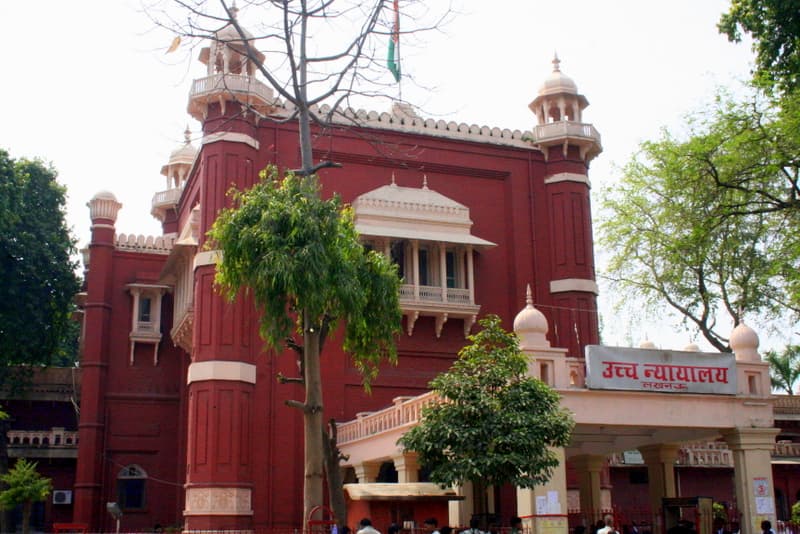
If your bail application has been rejected by the Sessions Court in Uttar Pradesh, it is a critical legal emergency. The immediate next step is to approach the Allahabad High Court, Lucknow Bench, under Section 484 of the Bharatiya Nagarik Suraksha Sanhita (BNSS), 2023. If you or a family member is in custody, call +91 98392 71553 immediately for a consultation. A bail rejection is not the end of the road; the High Court possesses wide discretionary powers to grant bail even after a lower court’s refusal. However, the strategy must shift significantly. You cannot simply re-file the same application. The law, as laid down by the Supreme Court in cases like State of Bihar v. Amit Kumar, mandates that a subsequent bail plea must be based on fresh grounds or a material change in circumstances, such as prolonged detention, filing of the charge-sheet, or a serious health condition. This article provides a clear roadmap on the remedies available, the correct legal procedure at the Lucknow Bench, associated costs, and realistic timelines. For expert legal representation in such criminal matters, it is crucial to act swiftly.
Table of Contents
Need Immediate Legal Help?
If you're facing a legal emergency in Lucknow, don't wait. Contact experienced criminal lawyer Advocate Onkar Pandey for immediate assistance.
Immediate Legal Remedy: Approach the High Court Under Section 484 BNSS
After a Sessions Court rejection, the primary and most effective remedy is to file a Regular Bail Application before the Allahabad High Court, Lucknow Bench, under Section 484 BNSS (which corresponds to the old Section 439 of the CrPC). This is not an appeal but a fresh application invoking the court’s original jurisdiction.
- Jurisdictional Power: The High Court has concurrent and superior powers to grant bail for any non-bailable offence, even if the Sessions Court has already refused.
- Legal Basis: Your petition must demonstrate that the Sessions Court order was perverse, arbitrary, or suffered from a material error of law or fact, as highlighted in Mahipal v. Rajesh Kumar.
- Procedure: The application must be filed through a competent High Court lawyer, accompanied by a certified copy of the impugned Sessions Court order, the FIR, case diary excerpts, and any other relevant documents.
- Urgency: If the accused has been in custody for a long period, an urgent mentioning can be requested before the court.
The table below contrasts the key bail provisions under the new BNSS:
| BNSS Section | Old CrPC Section | Purpose & Forum |
|---|---|---|
| Section 484 | Section 439 | Bail by High Court or Sessions Court in non-bailable cases (Primary remedy after rejection). |
| Section 483 | Section 437 | Bail by Magistrate/Sessions Court when accused is brought before them. |
| Section 482 | Section 438 | Anticipatory Bail (before arrest). |
| Section 479 | Section 436A | Bail as a right for undertrials who have served half the maximum sentence. |
Grounds for Filing a Fresh Bail Application in High Court
You cannot file a successive bail application on the same facts and grounds. The Supreme Court in State of Bihar v. Amit Kumar @ Bachcha Rai (2017) has firmly established this principle. Your High Court petition must be founded on new, substantive grounds. Acceptable grounds include:
- Change in Circumstances: This is the most critical factor. Examples include:
- Filing of the charge-sheet, which clarifies the prosecution’s case.
- Prolonged incarceration without trial, especially if it exceeds half the maximum sentence under Section 479 BNSS.
- Deterioration of the accused’s health, requiring specialized medical care not available in jail.
- Material witnesses turning hostile or new exculpatory evidence surfacing.
- Error in the Lower Court Order: Arguing that the Sessions Court misapplied the law, ignored relevant facts, or imposed excessively harsh conditions for bail that were not met.
- Parity: If identically placed co-accused have been granted bail by a higher court or even the same Sessions Court in a separate order.
- Trivial Role: Establishing that the accused played a minimal role compared to other main accused.
Merely stating that the rejection was “wrong” is insufficient. The petition must legally and factually distinguish the current plea from the rejected one.
Step-by-Step Procedure at Allahabad High Court, Lucknow Bench
Filing a bail application at the Lucknow Bench involves a systematic process. As a practicing lawyer here since 1999, I outline the typical workflow:
- Case Analysis & Ground Preparation: Obtain certified copies of the rejection order, FIR, case diary, and charge-sheet. Analyze them for fresh angles.
- Drafting the Bail Application: The application (Crl. Misc. Bail Application) must have a compelling narrative, cite relevant case laws (like Gudikanti Narasimhulu on liberty), and precisely state the changed circumstances.
- Filing & Court Fees: The application is filed in the High Court registry. The court fee is nominal (often a few hundred rupees), but total filing expenses, including notary, affidavit, and clerkage, typically range from ₹1,500 to ₹5,000.
- Listing & Hearing: The matter is usually listed within 1-2 weeks. On the first date, the court may seek a report from the State. In urgent custody matters, earlier dates can be requested.
- Argument & Order: Detailed arguments are heard on merits. The court may grant bail, dismiss the application, or impose specific conditions.
The table below estimates realistic timelines at the Lucknow Bench:
| Stage | Typical Timeframe (2026) | Notes |
|---|---|---|
| From Filing to First Listing | 1 to 3 weeks | Can be expedited for urgent medical or custody duration grounds. |
| From First Hearing to Final Order | 2 to 6 weeks | Depends on complexity, police objections, and bench roster. |
| Total Time (Filing to Decision) | 2 to 8 weeks | For ordinary cases; serious offences like those under BNS 103 (murder) may take longer. |
Legal Consultation
Talk directly to Advocate Onkar Pandey
Explain your matter over a call or WhatsApp. If you take the case forward, the consultation fee adjusts into your overall fee, so there is no separate charge to begin.
Can You Go Back to Sessions Court After High Court?
Generally, once the High Court rejects a bail application, a fresh application before the Sessions Court on the same grounds is not maintainable. The principle of judicial discipline prevents forum-shopping. However, two exceptional scenarios exist:
- Substantial & Subsequent Change: If a major new development occurs after the High Court rejection (e.g., the main complainant withdraws allegations, or the accused completes a significant further period of custody), a fresh application in Sessions Court may be considered, but it is an uphill battle.
- Different Offences or Cases: If the accused is facing multiple FIRs, rejection in one case does not bar a bail application in a separate case before the Sessions Court.
The safest and most authoritative course after any rejection is to approach the Supreme Court under Article 136 of the Constitution, though this involves higher costs and a different legal strategy. For most litigants, the sequence is: Magistrate -> Sessions Court -> High Court -> Supreme Court. Attempting to go back to a lower court after a higher court’s rejection without a drastic change in facts is likely to be dismissed summarily.
Costs, Lawyer Fees, and Bail Bond Amount
Understanding the financial implications is crucial for families. The costs break down into two parts: Court & Procedural Costs and Legal Fees.
- Court & Procedural Costs:
- Court Fee Stamp for Bail Application: Nominal (approx. ₹100-₹500).
- Certified Copies: ₹500 - ₹2,000 depending on pages.
- Notary, Affidavit, Process Serving: ₹1,000 - ₹2,500.
- Total Estimated Filing Expense: ₹1,500 to ₹5,000 (as noted in research).
- Lawyer’s Fees: This varies widely based on case complexity, offence seriousness (e.g., BNS 64 (rape) vs. a theft case), and lawyer experience. For a High Court bail matter after Sessions rejection, fees can range from ₹50,000 to several lakhs. A clear fee structure should be discussed upfront during consultation.
- Bail Bond & Surety Amount: If bail is granted, the court will set a bond amount and require one or more sureties. This amount is set by the court and can range from a few thousand rupees to lakhs, depending on the offence. The surety must provide proof of identity and solvency.
Critical Mistakes to Avoid After Bail Rejection
Panic-driven actions can harm your case. Avoid these common pitfalls:
- Filing an Identical Application: Submitting the same application to the High Court without highlighting new grounds or changed circumstances will lead to a quick dismissal, citing the Supreme Court’s judgment in Mahipal v. Rajesh Kumar.
- Delaying the High Court Filing: Time is of the essence, especially if the accused is in custody. Prolonged detention itself can become a ground, but delaying filing weakens the urgency argument.
- Incomplete Documentation: Filing without certified copies of the rejection order, FIR, and latest case diary entries is fatal. The court needs the complete record.
- Ignoring Alternative Strategies: While pursuing bail, explore parallel legal avenues if applicable, such as quashing of the FIR under Section 528 BNSS in appropriate cases, or seeking expedited trial.
- Not Complying with Procedural Formalities: Ensure all affidavits are properly sworn, applications are correctly numbered, and procedures of the Lucknow Bench are meticulously followed.
When to Consider Supreme Court Appeal
If the Allahabad High Court, Lucknow Bench, also rejects the bail application, the final recourse is a Special Leave Petition (SLP) before the Supreme Court of India under Article 136 of the Constitution. This is not a routine step and is considered in specific situations:
- Patent Miscarriage of Justice: Where the High Court order is manifestly unjust or violates fundamental principles of bail jurisprudence.
- Substantial Question of Law: The case involves an interpretation of law that has wider implications.
- Exceptional Circumstances: Extreme medical emergencies, proven mala fide arrest, or custody extending far beyond the probable sentence.
The Supreme Court, in its discretionary jurisdiction, does not re-appreciate evidence as a normal appellate court. It intervenes only in cases of gross error. The process is costly and time-consuming. Therefore, it is imperative that the High Court bail application is prepared and argued with utmost diligence to avoid the need for this final step.
About the Author
Advocate Onkar Pandey is a seasoned criminal lawyer practicing at the Allahabad High Court Lucknow Bench since 1999 (Bar Council No. UP/4825/1999). With over 25 years of litigation experience, he specializes in bail matters, FIR quashing, and criminal appeals. His chamber, located at Chamber A-406, High Court Lucknow, Awadh Bar, Uttar Pradesh 226001, has successfully handled numerous complex bail cases after Sessions Court rejections. He provides strategic legal counsel, ensuring robust representation grounded in the latest precedents like the BNSS 2023. For urgent legal assistance in bail matters or to schedule a consultation, contact him at +91 98392 71553 or via WhatsApp on the same number. You can also visit the contact page for more details.
Frequently Asked Questions
My bail was rejected by the Sessions Court in Lucknow. What is the very first thing I should do?+
The first and most critical step is to immediately consult a criminal lawyer practicing at the Allahabad High Court, Lucknow Bench. Time is of the essence, especially if the accused is in custody. The lawyer will analyze the rejection order, gather certified copies, and identify fresh grounds or changed circumstances to file a bail application under Section 484 BNSS in the High Court. Do not delay, as prolonged detention can itself become a ground for bail. For urgent guidance, you can call +91 98392 71553.
Can I file a second bail application in the Sessions Court after rejection?+
Yes, but only under strict conditions. As per the Supreme Court in State of Bihar v. Amit Kumar, a second or successive bail application is maintainable only if there is a material change in circumstances that occurred after the first rejection. Examples include the filing of the charge-sheet, a significant deterioration in health, or the accused completing a substantial further period in custody. Filing an identical application without new grounds will be dismissed. In most cases, after a Sessions Court rejection, the more appropriate forum is the High Court.
How long does it take to get bail from the High Court after Sessions rejection in Lucknow?+
At the Allahabad High Court, Lucknow Bench, the timeline for a regular bail application after Sessions rejection typically ranges from 2 to 8 weeks from filing to final order. The first listing usually occurs within 1-3 weeks. However, in cases of extreme urgency—such as medical emergencies or where the accused has already served a very long period as an undertrial—the hearing can be expedited. The duration depends on the court’s roster, the complexity of the case, and the promptness in filing a complete application.
What are the court fees and approximate cost for filing a High Court bail application in Lucknow?+
The official court fee stamp for a bail application is nominal, often between ₹100 to ₹500. However, the total filing expenses, including costs for certified copies of the order and FIR, notary fees, affidavit stamps, and process serving, typically range from ₹1,500 to ₹5,000. This does not include the lawyer’s professional fee, which varies significantly based on the case’s seriousness and complexity. It is essential to discuss the fee structure transparently with your advocate during the initial consultation.
What is the difference between Section 483 and Section 484 BNSS for bail?+
This is a crucial distinction under the new BNSS 2023. Section 483 BNSS (old CrPC 437) governs the power of a Magistrate or Sessions Court to grant bail when the accused is brought before them during investigation or trial. Section 484 BNSS (old CrPC 439) is the specific provision that empowers the High Court and the Court of Session to grant bail in non-bailable offences, including when an accused is in custody. After a Sessions Court rejection, you file under Section 484 BNSS in the High Court. This section gives the High Court wider discretion, including the power to set aside or modify any condition imposed by a lower court.
If the High Court also rejects bail, what is the last option?+
The final legal remedy is to file a Special Leave Petition (SLP) before the Supreme Court of India under Article 136 of the Constitution. This is an extraordinary discretionary jurisdiction. The Supreme Court will only entertain such a petition if there is a gross miscarriage of justice, a violation of fundamental rights, or a substantial question of law. It is not a routine appeal. The process is complex and costly. Therefore, it is imperative to build the strongest possible case at the High Court stage with expert legal representation to avoid the necessity of this final step.
Related Services
Get Expert Legal Advice in Lucknow
20+ years experience in criminal law at Lucknow High Court. Available 24/7 for emergencies.
Disclaimer: This article is for general information purposes only and does not constitute legal advice. Every case is unique and requires specific legal analysis. For advice specific to your situation, please consult Advocate Onkar Pandey or another qualified attorney in Lucknow.