Anticipatory Bail in Serious Offences in UP: How BNSS and the Allahabad High Court Changed the Rules
Quick Answer
If your family member is named in an FIR for a serious offence such as murder, dowry death, or rape in Uttar Pradesh, the first question is whether anticipatory bail can be filed at all. For decades, the answer in UP was a hard no — the state's CrPC amendment specifically barred Section 438 antic…
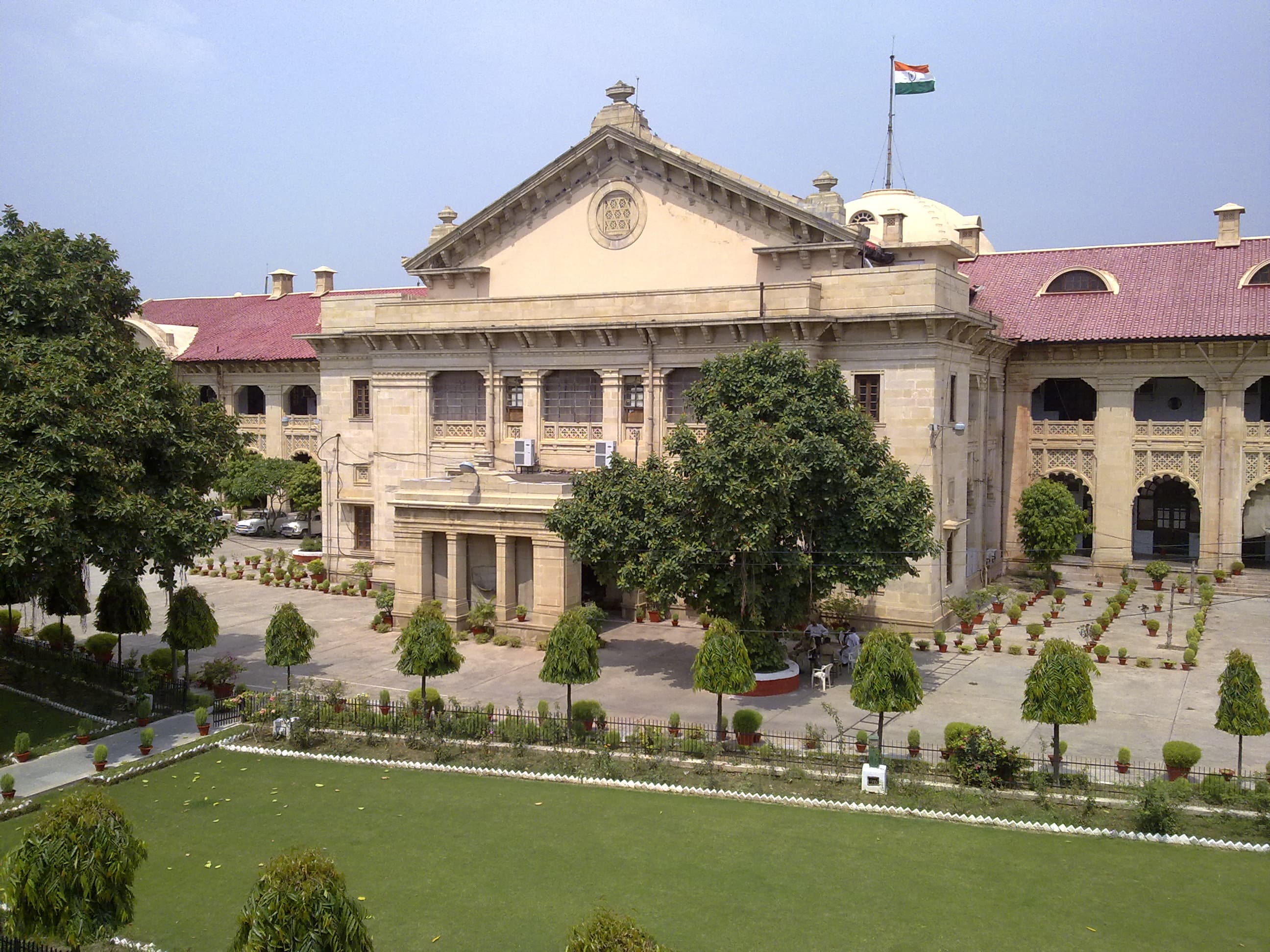
If your family member is named in an FIR for a serious offence such as murder, dowry death, or rape in Uttar Pradesh, the first question is whether anticipatory bail can be filed at all. For decades, the answer in UP was a hard no — the state's CrPC amendment specifically barred Section 438 anticipatory bail for offences punishable with death or life imprisonment.
That position has changed. The Allahabad High Court has now confirmed in a series of rulings that the new Bharatiya Nagarik Suraksha Sanhita (BNSS), 2023 overrides the UP-specific bar. Section 482 BNSS — the successor to Section 438 CrPC — contains no such exclusion, and the court has held the omission to be deliberate.
This guide explains what the rule change means in practice, when an anticipatory bail application is now maintainable in UP, the procedure before the Lucknow Bench, the conditions courts typically impose, and the situations where pre-arrest protection will still be refused.
Table of Contents
Need Immediate Legal Help?
If you're facing a legal emergency in Lucknow, don't wait. Contact experienced criminal lawyer Advocate Onkar Pandey for immediate assistance.
How the UP CrPC Amendment Blocked Anticipatory Bail for Decades
The original Section 438 CrPC, 1973, allowed any accused person facing arrest to move the Sessions Court or High Court for pre-arrest bail. Several states, including Uttar Pradesh, found this provision too liberal for grave offences and amended it locally.
The UP Amendment to Section 438 CrPC introduced a sweeping bar. Pre-arrest bail was excluded in:
- Offences punishable with death or life imprisonment
- Cases under the SC/ST (Prevention of Atrocities) Act
- Offences under the UP Gangsters Act
- Cases under the Narcotic Drugs and Psychotropic Substances Act, 1985
The result was that anyone accused under BNS Section 103 (murder), Section 80 (dowry death), Section 64 (rape) or comparable IPC provisions could only seek regular bail after arrest. Families had no choice but to wait for the police to act, surrender the accused, or face custody during investigation.
For people falsely implicated in cooked-up FIRs — a common complaint in property and family disputes in UP — the bar caused real hardship. Innocent persons spent weeks in judicial custody before regular bail came up for hearing.
What the Allahabad High Court Held in 2025-2026
The change began with Abdul Hameed v. State of U.P., decided by the Allahabad High Court on 3 July 2025. The bench examined whether the UP amendment to Section 438 CrPC could continue to apply once the BNSS replaced the CrPC on 1 July 2024.
The court answered in the negative. Key findings:
- Section 482 BNSS does not contain the bar that Section 438(6) CrPC carried after the UP amendment
- The omission was intentional — Parliament knew of the state amendment and chose not to replicate it
- State amendments to a repealed central law cannot survive into the successor statute
- BNSS, being a later central law, overrides the UP amendment by operation of Article 254 of the Constitution
The court has since extended this reasoning. In December 2025, an Allahabad bench held that the bar under Section 18 of the SC/ST Act also does not automatically apply to a Section 482 BNSS application, because that bar referred specifically to Section 438 CrPC, which no longer exists.
The Lucknow Bench has followed suit. In rulings concerning the UP Gangsters Act, the court accepted that a Section 482 BNSS application is maintainable even where the underlying FIR predates 1 July 2024, so long as the apprehension of arrest arises after the BNSS came into force.
Which Offences Are Now Open to Anticipatory Bail in UP
The practical effect of the Allahabad HC rulings is that an anticipatory bail application can now be filed in UP for any offence triable under the BNSS, subject to the court's discretion. There is no longer a category-based automatic bar.
The table below shows the major offences that were earlier barred and are now maintainable:
| Offence | BNS Section | Earlier UP Position | Position Under BNSS |
|---|---|---|---|
| Murder | Section 103 | Anticipatory bail barred | Maintainable, court's discretion |
| Dowry Death | Section 80 | Barred | Maintainable |
| Rape | Section 64 | Barred | Maintainable |
| Kidnapping for Ransom | Section 140 | Barred | Maintainable |
| Gangsters Act offences | UP Gangsters Act | Barred | Maintainable post-1 July 2024 |
| SC/ST Act offences | SC/ST Act | Section 18 bar | Bar held inapplicable |
Maintainable does not mean automatic. The court will still examine the gravity of allegations, prima facie evidence, the role attributed to the applicant, and the risk of absconding. The shift is procedural — the door is open — not a guarantee of relief.
Legal Consultation
Talk directly to Advocate Onkar Pandey
Explain your matter over a call or WhatsApp. If you take the case forward, the consultation fee adjusts into your overall fee, so there is no separate charge to begin.
Procedure for Filing Section 482 BNSS Application at Lucknow
An anticipatory bail application in UP can be filed before either the Sessions Court of the district or directly before the Lucknow Bench of the Allahabad High Court. For grave offences, most criminal lawyers prefer moving the High Court directly.
The standard sequence is:
- Engage a criminal lawyer and draft the Section 482 BNSS application, attaching the FIR copy, identity proof, and supporting affidavits
- File before the Lucknow Bench through the e-filing portal or counter, paying the prescribed court fee
- Receive the listing date — usually within 3 to 7 working days for fresh matters
- Mention the matter for urgent listing if the apprehension of arrest is immediate
- Attend the hearing; the State counsel files a counter-affidavit with the case diary
- Argue maintainability under BNSS, then merits — prior antecedents, alibi, false implication
- If the court is inclined, interim protection is granted with directions for the applicant to cooperate with investigation
The court typically asks the applicant to surrender within 24-48 hours of any final adverse order. Procedural compliance — appearing on listed dates, not influencing witnesses, not leaving the country — is non-negotiable.
If you are unsure whether to approach the Sessions Court or the High Court, a brief consultation with a Lucknow criminal lawyer will help you choose based on the offence and the strength of the FIR allegations.
Conditions Courts May Impose — and Limits Set by the Supreme Court
When a Section 482 BNSS application is allowed, the court invariably attaches conditions. Standard conditions include:
- Furnishing a personal bond and one or two sureties of a fixed amount
- Surrendering the passport with the Investigating Officer
- Cooperating with the investigation and appearing whenever called
- Not influencing witnesses or tampering with evidence
- Not leaving the territorial jurisdiction without prior court permission
The Supreme Court has, however, drawn clear limits on what conditions are permissible. In Vinay Kumar Yadav v. State of Bihar (March 2026), a division bench of Justices M.M. Sundresh and N.K. Singh held that an onerous condition imposed while granting anticipatory bail cannot be sustained, especially when it concerns the liberty of a person.
In that case the High Court had directed the applicant to deposit Rs. 2,60,000 with the informant as a condition for bail. The Supreme Court set aside this direction, observing that conditions must be proportionate and connected to the purpose of bail — not used as a back-door to enforce civil claims.
If the Lucknow Bench imposes a financial deposit or other harsh condition, the order can be challenged before the Supreme Court on the ground laid down in Vinay Kumar Yadav.
When Anticipatory Bail Will Still Be Refused
Even after the BNSS reform, anticipatory bail is not automatic in serious offences. The Lucknow Bench will normally refuse pre-arrest protection in the following situations:
- Specific role of the applicant in a heinous offence is supported by prima facie evidence
- The applicant is absconding or has previously evaded summons
- Recovery of weapon or stolen property is yet to be made and custodial interrogation is necessary
- The applicant has a long string of prior criminal antecedents
- There is a real risk of witnesses being intimidated, particularly in dowry death and rape cases
- The investigating officer establishes a clear need for custody to unearth the larger conspiracy
The Supreme Court has held that an absconding accused cannot claim anticipatory bail on the ground of parity with co-accused who have already secured relief. Each application is decided on its own facts.
If pre-arrest bail is refused, the next step is usually to surrender, secure regular bail, and consider filing a Section 528 BNSS petition for quashing the FIR if the case is patently false.
What This Means for Families Facing False FIRs in UP
For UP residents — particularly those caught in property disputes, family quarrels, or business rivalries that escalate into criminal complaints — the BNSS reform is a significant relief. The earlier blanket ban often resulted in arrests on weak FIRs simply because no pre-arrest remedy was available.
Practical takeaways:
- Do not panic if an FIR mentions an offence punishable with life imprisonment — pre-arrest bail is now an option
- Move quickly. The earlier you file, the better the chance of getting interim protection before arrest
- Document false implication: prior civil disputes, motive of the complainant, contradictions in the FIR
- Maintain clean conduct — do not threaten, contact, or visit the complainant
- Consider parallel remedies: FIR quashing under Section 528 BNSS if the case is wholly baseless
For experienced representation before the Sessions Court or the Allahabad High Court Lucknow Bench, you can consult Advocate Onkar Pandey for a case-specific strategy combining anticipatory bail and quashing petitions where appropriate.
About the Author
Advocate Onkar Pandey is a practicing lawyer at the Allahabad High Court, Lucknow Bench, with extensive experience in criminal law, bail and anticipatory bail matters, FIR quashing, family law, and civil litigation. With years of courtroom experience across the Lucknow district courts and the High Court, Advocate Pandey provides practical legal guidance to clients across Uttar Pradesh. For consultation regarding anticipatory bail in serious offences under BNSS, contact Advocate Onkar Pandey for advice tailored to the facts of your FIR.
Frequently Asked Questions
Can I file anticipatory bail in UP for a murder case under BNS Section 103?+
Yes. After the Allahabad High Court's ruling in Abdul Hameed v. State of U.P. (July 2025), an application under Section 482 BNSS is maintainable even for offences punishable with death or life imprisonment, including murder under BNS Section 103. The earlier UP CrPC amendment that barred such applications no longer applies, because the BNSS is a later central law and Section 482 BNSS contains no equivalent bar. However, maintainability does not mean the court will automatically grant relief. The Lucknow Bench will still examine the gravity of allegations, the role attributed to you, and your antecedents. A well-drafted application supported by evidence of false implication has a fair chance of securing interim protection.
Where should I file an anticipatory bail application in Lucknow?+
You have two options: the Sessions Court of the district where the FIR is registered, or directly the Lucknow Bench of the Allahabad High Court. For ordinary offences, the Sessions Court is the usual first forum. For grave offences, sensitive cases, or where the Sessions Court has refused, applications are filed before the High Court under Section 482 BNSS. Filing is done through the e-filing portal or at the counter, with court fee, FIR copy, identity proof, and supporting affidavits. Listing usually happens within 3 to 7 working days. Urgent mentioning is allowed if arrest is imminent. A criminal lawyer at Lucknow can help you choose the correct forum based on the FIR sections and circumstances.
What conditions can the court impose while granting anticipatory bail?+
Standard conditions include furnishing a personal bond with sureties, surrendering the passport, cooperating with the investigation, not influencing witnesses, and not leaving the jurisdiction without permission. The Supreme Court in Vinay Kumar Yadav v. State of Bihar (March 2026) clarified that conditions must be reasonable and proportionate. In that case, a direction to deposit Rs. 2,60,000 with the informant was set aside as onerous. Courts cannot use bail conditions to enforce civil claims or coerce settlements. If the Lucknow Bench imposes a heavy financial condition, you can move the Supreme Court for modification. Always read the operative directions carefully — non-compliance with any condition can result in cancellation of bail.
Does the SC/ST Act bar still block anticipatory bail in UP?+
No, not automatically. The Allahabad High Court held in December 2025 that the bar under Section 18 of the SC/ST (Prevention of Atrocities) Act referred specifically to Section 438 CrPC, which no longer exists. Since Section 482 BNSS is a different provision in a different statute, the Section 18 bar does not directly apply. That said, the underlying gravity of caste-atrocity allegations is still a strong factor against bail, and the court will examine prima facie material under the Act. Each case turns on whether the FIR genuinely makes out an offence under the SC/ST Act or whether the Act has been invoked to circumvent pre-arrest protection. A lawyer experienced in false FIR matters can assess the strength of the FIR before you file.
Can I get anticipatory bail in a UP Gangsters Act case?+
Yes, the Lucknow Bench has held that an anticipatory bail application under Section 482 BNSS is maintainable in a Gangsters Act case, even if the underlying FIR or charge sheet predates 1 July 2024 — the date BNSS came into force. The condition is that the apprehension of arrest must arise after that date. The Allahabad High Court has been cautious in granting relief in Gangsters Act matters, given the seriousness of the allegations and the typical pattern of multiple FIRs. You will need to demonstrate that the gang chart is weak, the FIRs cited do not establish a continuing criminal enterprise, or that you are being falsely linked to acts you did not participate in. Detailed antecedent records and FIR copies should be filed with the application.
How long does an anticipatory bail order remain in force in UP?+
The Supreme Court clarified in February 2026 that once anticipatory bail is granted, it ordinarily continues without a fixed expiry. The filing of a charge sheet, taking of cognizance, or issuance of summons does not automatically terminate the protection unless the court records special reasons. This is an important shift — earlier, several High Courts treated anticipatory bail as ending the moment the trial began. In UP, after a Section 482 BNSS order is passed in your favour, the protection will continue through the trial unless you breach a condition or the State successfully moves for cancellation. You must, however, attend every hearing and cooperate with the investigation. Absconding once protection is granted will lead to immediate cancellation.
Which section of the BNSS governs anticipatory bail, and can I apply before an FIR is even registered?+
Anticipatory bail is governed by Section 482 of the Bharatiya Nagarik Suraksha Sanhita, 2023 (the successor to the old Section 438 CrPC). You can apply the moment you have a reasonable apprehension of arrest for a non-bailable offence, even before an FIR is formally lodged, provided you can show the court a credible basis for that fear. In practice, at the Lucknow Bench a copy of the complaint, a legal notice, or specific threats of a false case are used to establish that apprehension.
What is the difference between anticipatory bail and regular bail in a serious offence?+
Anticipatory bail under Section 482 BNSS is sought before arrest and, if granted, means the police must release you on bail if and when they arrest you. Regular bail under Section 483 BNSS is sought after you are already arrested and in custody. For serious offences the court scrutinises anticipatory bail far more strictly and often prefers custodial interrogation, so the grounds and supporting material must be stronger.
Related Guides
Related Services
Get Expert Legal Advice in Lucknow
20+ years experience in criminal law at Lucknow High Court. Available 24/7 for emergencies.
Disclaimer: This article is for general information purposes only and does not constitute legal advice. Every case is unique and requires specific legal analysis. For advice specific to your situation, please consult Advocate Onkar Pandey or another qualified attorney in Lucknow.