Anticipatory Bail Cost at Allahabad High Court Lucknow Bench: Honest Fee Guide 2026
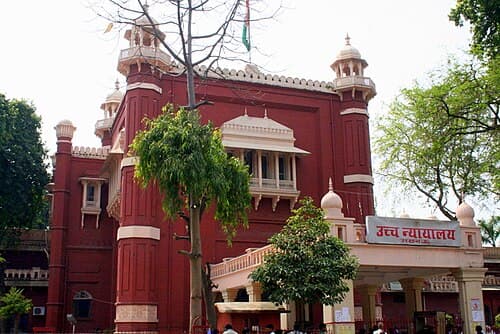
If someone in your family is apprehending arrest and you are searching for the cost of anticipatory bail at the Allahabad High Court Lucknow Bench, you deserve a straight answer - not vague ranges or evasive replies.
Based on actual practice at the Lucknow Bench, here is what you need to know upfront:
- Advocate fee for anticipatory bail (Sessions Court + High Court combined): Rs. 25,000 to Rs. 2,00,000 or more
- Court filing fee (the stamp/application charge): Rs. 500 to Rs. 2,000 - nominal and fixed
- Surety/bail bond amount (set by the court, paid by the family): Rs. 25,000 to Rs. 1,00,000 typically
- Sessions Court advocate fee (before escalating to HC): Rs. 5,000 to Rs. 25,000 additional, if a separate advocate handles that stage
This is not a price list - every case is different. A cheating case (IPC Section 420) is handled very differently from a murder case (IPC Section 302) or a POCSO matter. What this guide explains is why costs differ, what you are actually paying for, and how to protect yourself from being overcharged. If your matter requires anticipatory bail at the Lucknow Bench, read every section before you engage a lawyer.
Table of Contents
Need Immediate Legal Help?
If you're facing a legal emergency in Lucknow, don't wait. Contact experienced criminal lawyer Advocate Onkar Pandey for immediate assistance.
What You Are Actually Paying For: The 3 Cost Components
Most families think the "bail fee" is one single number they hand to the lawyer. In reality there are three separate costs, and confusing them leads to unpleasant surprises. Understanding each component clearly is the first step when planning for criminal defense in Lucknow.
| Cost Component | Who Pays It To | Typical Range (Lucknow Bench) | Notes |
|---|---|---|---|
| Advocate fee | Your lawyer | Rs. 25,000 - Rs. 2,00,000+ | Varies by IPC section, court level, hearings expected, advocate seniority |
| Court filing fee | Court (stamp/treasury) | Rs. 500 - Rs. 2,000 | Nominal and fixed; covers the application stamp duty |
| Surety/bail bond amount | Court (held as guarantee) | Rs. 25,000 - Rs. 1,00,000 | Set by the judge; not paid to the advocate; returned when case ends |
| Sessions Court fee (if applicable) | Sessions Court advocate | Rs. 5,000 - Rs. 25,000 | Only if a separate advocate handles the Sessions Court stage first |
Advocate fee - This is the professional fee for drafting the anticipatory bail application, researching relevant judgments, appearing before the court, and arguing the matter. It is variable and depends on the facts discussed in the next section.
Court filing fee - This is the stamp duty and application charge payable to the court at the time of filing. It is nominal - typically between Rs. 500 and Rs. 2,000 at both the Sessions Court and the High Court. If an advocate quotes you a large "court fee," ask for the exact receipt - the actual court charge is small.
Surety/bail bond amount - This is the amount the court orders as a guarantee that the accused will appear at every future hearing. It is NOT paid to the advocate. It is deposited with or guaranteed to the court - either through cash, property documents, or a fixed deposit. If the case concludes without forfeiture, this amount is returned. Many families confuse this with the advocate fee, which leads to significant misunderstandings.
What Makes Anticipatory Bail Expensive at Lucknow Bench
Five factors together determine the total cost. No two cases are identical, but understanding these variables helps you have an informed conversation with any lawyer before you agree on a fee.
1. The IPC sections in the FIR or complaint
This is the single biggest factor. Courts scrutinise serious offences far more rigorously. A murder allegation (IPC Section 302) or a rape allegation (IPC Section 376) requires far more extensive research, multiple hearings, and senior counsel. A property dispute-linked case (IPC Section 420, cheating) is procedurally simpler. Here is how sections broadly rank in terms of legal complexity and, therefore, fee impact:
- High complexity (and higher fees): IPC 302 (murder), IPC 376 (rape), POCSO Act offences, Narcotic Drugs and Psychotropic Substances (NDPS) Act - bail is difficult to secure, arguments require detailed preparation, multiple hearing dates are common
- Moderate complexity: IPC 420/120-B (cheating and criminal conspiracy), IPC 406 (criminal breach of trust), IPC 498-A (dowry harassment) - bail is grantable but courts examine the record carefully
- Lower complexity: IPC 323 (simple hurt), IPC 504/506 (criminal intimidation) - bail is usually straightforward at Sessions Court level itself
2. Number of anticipated hearings
At the Lucknow Bench, an anticipatory bail application in a serious matter can run for three to six hearing dates before final disposal. Each hearing requires the advocate's physical presence. An advocate who agrees to a fixed fee typically factors in the expected number of appearances. If the application gets more complicated, additional hearings mean additional cost in some fee arrangements.
3. Seniority of counsel
A designated Senior Advocate with decades of High Court experience commands a significantly higher brief fee than a junior advocate. For matters involving serious IPC sections or where the FIR is politically sensitive, a Senior Advocate's court standing can genuinely improve the outcome - but the cost reflects that standing. For straightforward matters, a well-prepared junior advocate at the Lucknow Bench can deliver the same result at a fraction of the cost.
4. Sessions Court vs. High Court
Under the law (Section 482 BNSS / Section 438 CrPC), anticipatory bail can be filed before either the Sessions Court or the High Court. For most cases, the approach is to first file before the Sessions Court and, if rejected, escalate to the Allahabad High Court Lucknow Bench. The High Court stage is more expensive: more complex drafting, higher advocate fees, and longer hearing lists. Some cases - particularly sensitive or high-profile ones - are filed directly at the High Court, which increases total cost.
5. Urban Lucknow vs. district courts in UP
Advocate fees in Lucknow city (where the High Court Bench sits) are higher than in smaller districts of Uttar Pradesh. A bail matter originating from a district FIR but argued at the Lucknow Bench will carry Lucknow rates for the High Court stage, plus potentially the district court's rates for the Sessions stage.
Honest Cost Breakdown by IPC Section
The table below reflects realistic fee ranges based on actual practice at the Allahabad High Court Lucknow Bench. These are advocate fees only - court filing fees and surety amounts are separate (described in other sections).
| IPC / Act Section | Type of Case | Sessions Court Range | High Court Range | Complexity |
|---|---|---|---|---|
| 323, 504, 506 | Hurt, criminal intimidation | Rs. 5,000 - Rs. 15,000 | Rs. 20,000 - Rs. 50,000 | Low |
| 420, 406 | Cheating, criminal breach of trust | Rs. 8,000 - Rs. 20,000 | Rs. 30,000 - Rs. 80,000 | Moderate |
| 420/120-B | Cheating with conspiracy (multi-accused) | Rs. 10,000 - Rs. 25,000 | Rs. 50,000 - Rs. 1,20,000 | Moderate-High |
| 498-A | Dowry harassment (matrimonial) | Rs. 8,000 - Rs. 20,000 | Rs. 25,000 - Rs. 70,000 | Moderate |
| 307 | Attempt to murder | Rs. 15,000 - Rs. 30,000 | Rs. 60,000 - Rs. 1,50,000 | High |
| 302 | Murder | Rs. 20,000 - Rs. 40,000 | Rs. 75,000 - Rs. 2,00,000+ | Very High |
| 376 / POCSO | Rape / sexual offence against minor | Rs. 20,000 - Rs. 40,000 | Rs. 75,000 - Rs. 2,00,000+ | Very High |
| NDPS Act | Drug offences (commercial quantity) | Rs. 15,000 - Rs. 35,000 | Rs. 70,000 - Rs. 2,00,000+ | Very High |
Important note: These ranges reflect typical advocate fees at the Lucknow Bench for anticipatory bail only. The underlying trial, if the matter proceeds, is separate. If an anticipatory bail application is rejected at Sessions Court and needs to be moved to the High Court, the High Court fee is in addition to the Sessions Court fee already paid.
For serious matters like IPC 302, 376, or POCSO, courts at the Lucknow Bench examine police diaries, medical reports, and the nature of allegations in detail. This directly increases the preparation time an advocate must invest - which is why the fee range is wider and higher. If you need to understand your specific situation in detail, contact us for a case assessment before committing to any fee.
Legal Consultation
Talk directly to Advocate Onkar Pandey
Explain your matter over a call or WhatsApp. If you take the case forward, the consultation fee adjusts into your overall fee, so there is no separate charge to begin.
The Surety Amount: What Most Families Get Wrong
One of the most common misunderstandings in bail matters - and one that causes genuine hardship - is the confusion between the advocate's fee and the surety amount ordered by the court.
Surety is not paid to your advocate. It is a court-ordered guarantee. When the court grants anticipatory bail, it also directs the accused to furnish a personal bond (their own undertaking) along with a surety from one or more third parties. The surety amount is the financial guarantee that the accused will appear at every future date. If the accused absconds, the court can forfeit this amount.
How courts at Lucknow Bench decide the surety quantum:
- The nature and gravity of the offence - serious sections mean higher surety requirements
- The financial capacity of the accused and the proposed surety person (the Supreme Court, in Moti Ram v. State of Madhya Pradesh, held that courts must not fix surety so high that it makes bail meaningless for poor accused persons)
- Whether the accused has prior criminal antecedents
- Whether there is any flight risk - does the accused have strong local roots, family, property?
- Whether the accused cooperated during investigation
At the Lucknow Bench, typical surety amounts for anticipatory bail applications range from Rs. 25,000 for minor offences to Rs. 1,00,000 or more for serious IPC sections. For NDPS or 302 matters, surety can be higher.
How to arrange surety:
- Property surety: A relative or friend who owns immovable property in UP can offer the property documents as surety. The court evaluates the property's valuation relative to the surety amount ordered.
- Cash surety: In some cases, the court accepts a cash deposit in the treasury as surety. This is returned when the case ends.
- Fixed Deposit (FD): Some courts accept a copy of an FD receipt as surety, with the bank lien marked in favour of the court.
If the family cannot produce a surety person, bail conditions remain unfulfilled even if the court has granted bail in principle. This is why arranging surety in advance - before the hearing - is an important part of bail planning. Your advocate should guide you on this proactively; if they do not, ask. For matters where both the FIR and anticipatory bail strategy need to be planned together, consult an advocate who has handled similar matters at the Lucknow Bench before.
How to Avoid Being Overcharged
There is no fixed price list for advocate fees in India - the Bar Council of India does not mandate exact charges for criminal matters, only that fees should be reasonable and commensurate with the advocate's standing and the case complexity. This flexibility benefits clients in complex cases but also creates room for overcharging in simpler ones.
What reasonable fees look like at Lucknow Bench:
- For a straightforward IPC 420 anticipatory bail filed first at Sessions Court, total advocate cost (Sessions + HC if escalated) should be in the Rs. 30,000 - Rs. 80,000 range from a competent junior advocate
- For a serious IPC 302 or 376 matter directly filed at the Lucknow Bench with a senior advocate, Rs. 1,00,000 to Rs. 2,00,000 is a realistic range
- Anything above Rs. 2,00,000 for a single anticipatory bail application (without a Senior Advocate designation) warrants scrutiny
Red flags to watch out for:
- Large upfront demand without case assessment: A credible advocate assesses the FIR, the sections, and the facts before quoting a fee. If someone quotes a very high fee before reading the case papers, be cautious.
- "Guarantee" of bail outcome: No advocate can guarantee the outcome of a bail hearing. Courts are independent. An advocate who guarantees result in exchange for a large fee should be avoided.
- Vague fee structure: Ask specifically: what does the fee cover? How many hearings? What happens if more hearings are needed? Is the Sessions Court stage included or separate?
- Conflating surety with advocate fee: If an advocate is demanding a large sum and bundling the surety amount into their fee quote, clarify in writing what the advocate fee is vs. the court surety requirement.
- No receipt or written understanding: While it is common practice in India to pay advocate fees in cash, ask for at least a written brief/vakalatnama that documents the engagement.
What to ask before you engage any advocate for bail at Lucknow Bench:
- Please read the FIR and tell me which court you recommend filing at first - Sessions Court or directly at the High Court - and why
- What is your fee for the Sessions Court stage and what is your fee for the High Court stage, if escalation is needed?
- How many hearing dates do you anticipate before disposal?
- What surety amount is the court likely to order in a matter like this?
- Are court filing charges (stamp duty) included in your fee or separate?
An advocate who answers these questions clearly and specifically is demonstrating both competence and transparency. If the answers are vague or evasive, seek a second opinion. You can also explore FIR quashing simultaneously - in some cases where the FIR itself is legally vulnerable, quashing the FIR at source is a more complete remedy than anticipatory bail alone.
About Advocate Onkar Pandey
Advocate Onkar Pandey is a criminal lawyer practising at the Allahabad High Court Lucknow Bench and district courts across Uttar Pradesh. He handles anticipatory bail, regular bail, FIR quashing, and criminal trial defence, with a focus on matters before the Lucknow Bench.
His practice covers:
- Anticipatory bail applications at Sessions Court and Allahabad High Court Lucknow Bench
- Regular bail after arrest in serious IPC and special legislation matters
- FIR quashing petitions under Section 528 BNSS (formerly Section 482 CrPC)
- Criminal defence in cases involving IPC 302, 376, 420, 498-A, POCSO, NDPS, and SC/ST Act
- Property and land disputes at the civil courts and High Court
Advocate Pandey provides a clear written assessment of each case before quoting fees, and does not charge for the initial consultation. Fee structures are explained transparently at the first meeting - covering advocate fees, expected hearing count, and surety requirements separately.
To discuss your anticipatory bail matter at the Lucknow Bench and receive an honest case assessment, contact Advocate Onkar Pandey.
Frequently Asked Questions
How much does anticipatory bail cost at Allahabad High Court Lucknow Bench?+
The total cost depends on the IPC sections in the FIR, the court level (Sessions Court alone or also High Court), and the seniority of the advocate engaged. For a moderate-complexity matter (like IPC 420 or 498-A) handled through both Sessions Court and the Lucknow Bench, expect a total advocate fee in the range of Rs. 30,000 to Rs. 1,00,000. For serious matters (IPC 302, 376, POCSO, NDPS), the High Court stage alone can cost Rs. 75,000 to Rs. 2,00,000 or more. Court filing fees are separate and nominal (Rs. 500 to Rs. 2,000). The surety/bail bond amount ordered by the court - typically Rs. 25,000 to Rs. 1,00,000 - is also separate from the advocate fee.
Is the surety amount included in the advocate's fee?+
No. The surety amount is completely separate from the advocate's fee. The advocate's fee is paid to your lawyer for legal services. The surety amount is a court-ordered guarantee that the accused will appear at future hearings - it is deposited with or guaranteed to the court through property documents, cash, or a fixed deposit. The surety amount is returned at the end of the case (unless forfeited due to absence). If any advocate quotes you a combined figure for both, ask them to provide a clear written breakup of advocate fee vs. surety requirement.
What happens if I cannot afford anticipatory bail?+
If you genuinely cannot afford legal representation, the Allahabad High Court and District Courts have a legal aid system. The Allahabad High Court Mid Income Group (MIG) Legal Aid Society covers litigants whose income falls within specified limits. Under this scheme, advocate fees are covered at a nominal rate. For persons below the income threshold, the State Legal Services Authority (SLSA) provides free legal representation. That said, for a paid case, costs can often be discussed and structured with the advocate - for instance, a phased payment where part of the fee is paid at filing and the balance after the hearing.
Is anticipatory bail more expensive than regular bail?+
Generally, yes - anticipatory bail is more expensive than regular bail filed after arrest. Anticipatory bail requires more detailed legal drafting (addressing why arrest is apprehended, why bail should be granted pre-arrest), more research into recent judgments on the specific IPC sections, and involves greater urgency since the application must be filed before arrest occurs. Regular bail (filed after arrest) at the High Court typically costs Rs. 11,000 to Rs. 50,000 for the advocate fee, depending on the matter. Anticipatory bail for the same offence at the High Court would generally cost more due to the additional complexity and pre-filing groundwork required.
Can I get a refund if anticipatory bail is denied?+
No - advocate fees in India are for services rendered, not for guaranteed outcomes. Courts are independent and no advocate can control the outcome of a bail hearing. If your anticipatory bail application is rejected at Sessions Court, the advocate's fee for that stage is consumed. If the matter is escalated to the High Court, that stage carries its own separate fee. This is standard practice and is consistent with Bar Council of India professional conduct rules, which prohibit contingency fees in litigation. Before engaging an advocate, confirm clearly what the fee covers - which court stages, how many hearings - so there are no disputes about scope later.
Why do fees vary so much between advocates for the same type of bail matter?+
Several legitimate factors cause variation: (1) Seniority and court standing - a Senior Advocate designated by the High Court commands significantly higher fees than a junior advocate. (2) Track record in similar matters - an advocate who has handled many IPC 302 bail matters at the Lucknow Bench can charge a premium. (3) Urgency - if the family needs filing the same day or within 24 hours, advocates may charge a premium for rearranging their schedule. (4) Geographic reach - an advocate who travels to the district court for the Sessions stage and then appears at the Lucknow Bench charges for both stages. (5) Case complexity - the same IPC section can have very different facts; a clean case with a clearly malicious FIR is simpler to argue than one with genuine evidence. Ask any advocate to explain their fee clearly in terms of which stages and how many appearances it covers.
What is transit anticipatory bail and is it cheaper than regular anticipatory bail?+
Transit anticipatory bail is a short-duration bail granted by a court outside the territorial jurisdiction of the FIR - specifically to protect the accused during the time they travel to the court that has jurisdiction over the case. For example, if an FIR is registered in Varanasi but the accused is in Lucknow, a Lucknow court may grant transit anticipatory bail to allow the person to travel to Varanasi and file proper anticipatory bail there. Transit bail is temporary and does not replace full anticipatory bail. The advocate fee for transit bail is generally lower (Rs. 10,000 to Rs. 40,000 range at the Lucknow Bench) since it is a shorter application, but it is a separate cost from the full anticipatory bail application that must follow. It is not a cost-saving alternative - it is a different and more limited remedy.
Related Services
Get Expert Legal Advice in Lucknow
20+ years experience in criminal law at Lucknow High Court. Available 24/7 for emergencies.
Disclaimer: This article is for general information purposes only and does not constitute legal advice. Every case is unique and requires specific legal analysis. For advice specific to your situation, please consult Advocate Onkar Pandey or another qualified attorney in Lucknow.